CNC Machine Controls Guide: Fanuc vs. Siemens vs. Haas vs. Mazatrol vs. OSP
The CNC control is the brain of every CNC machine — it interprets programs, controls axis motion, manages tool changes, and determines how operators interact with the machine on a daily basis. When buying a used CNC machine, the control system affects everything from operator training and programming workflow to service costs, parts availability, and resale value.
Used CNC machines in stock now
Browse all 94 used CNC machines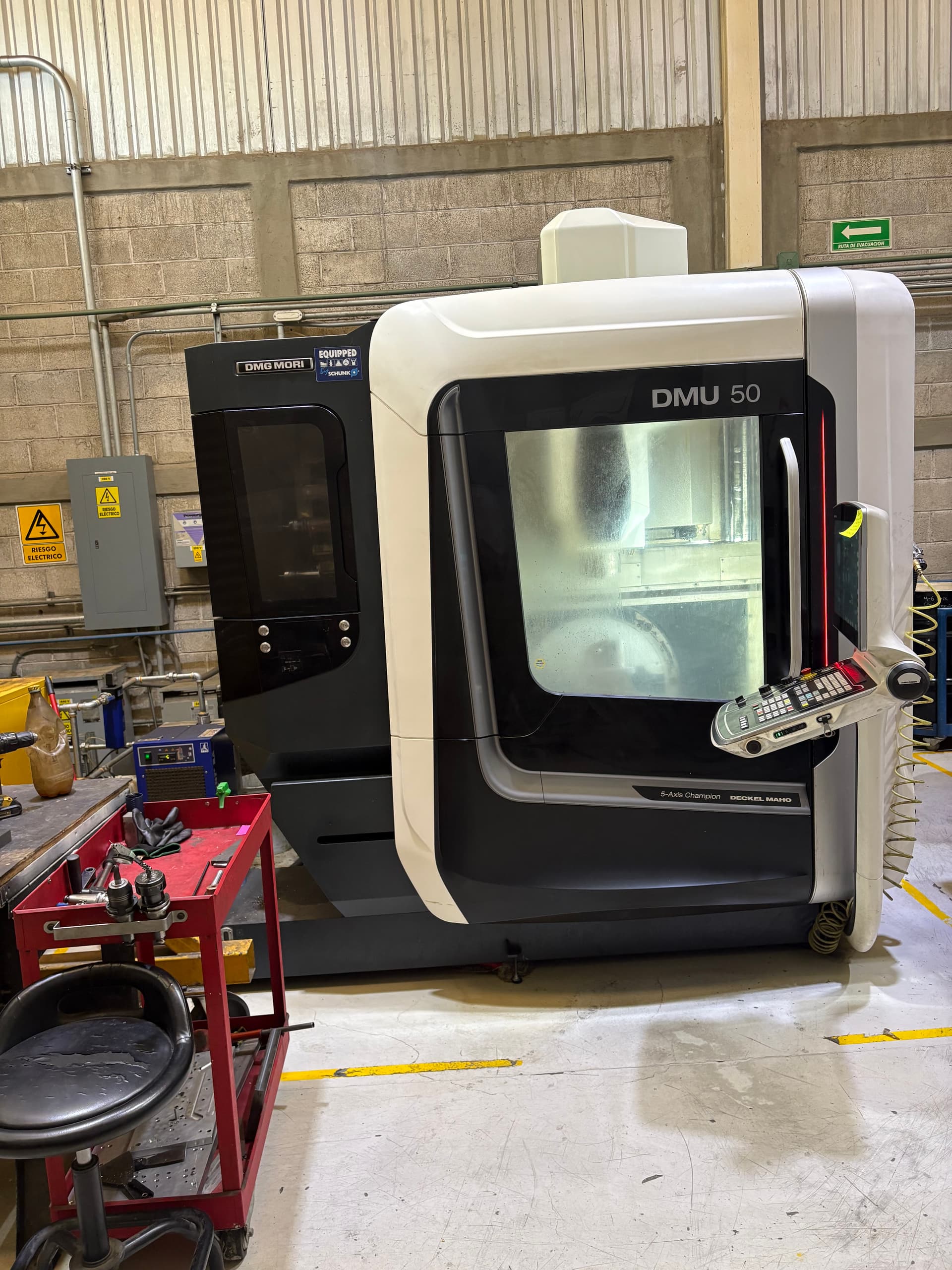
2018 DMG Mori DMU 50 5-Axis
Mexico
Lot 14
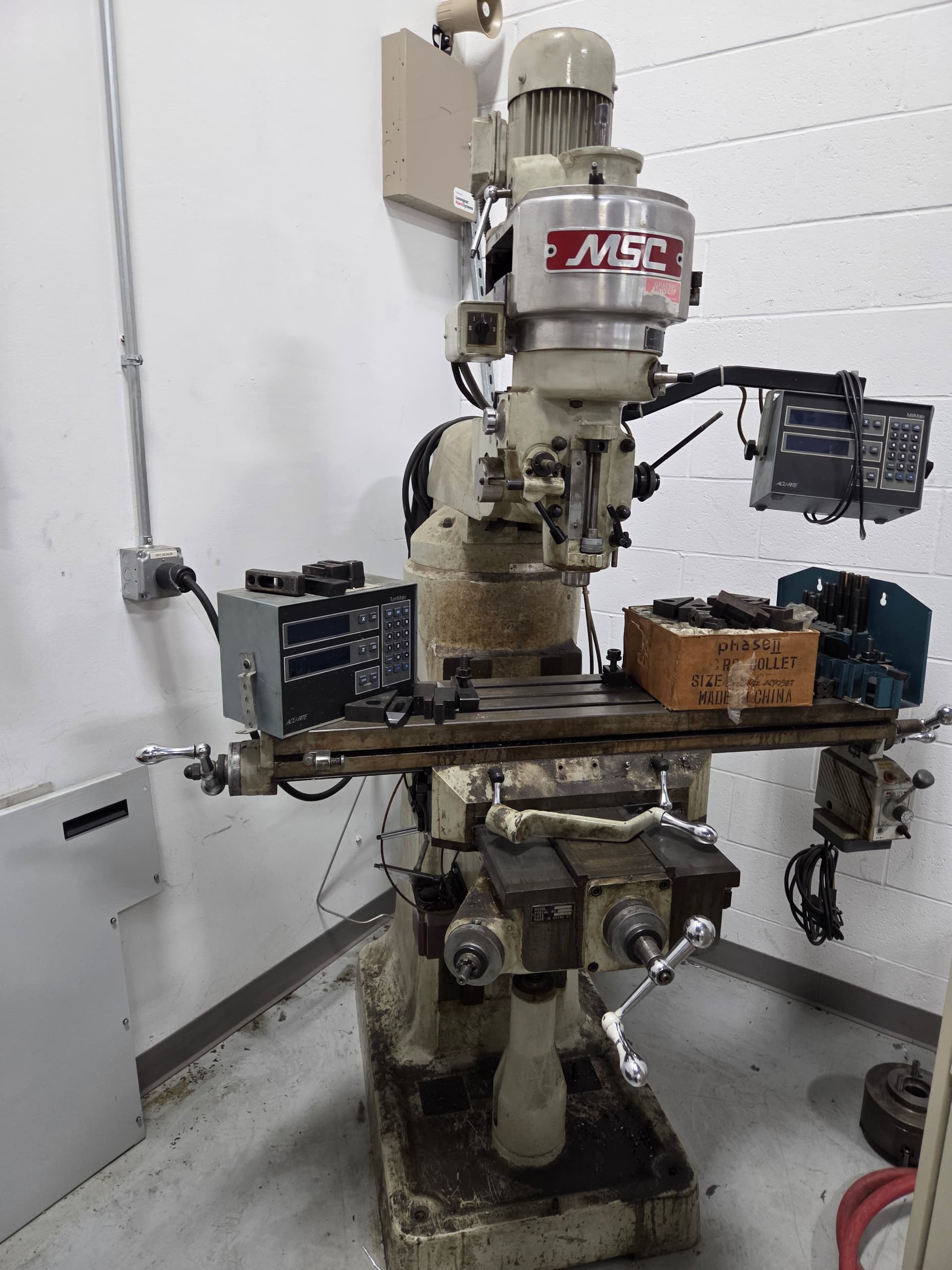
MSC Vertical Knee Mill
Wilmington, MA
Ends Tue, Oct 13, 10:00 AM CT
Lot 43A
Milwaukee Lot of Portable Bandsaw, Right Angle Drill and Fish Tape
Naperville, IL
Live auction · Tue, Oct 27, 10:00 AM CT
Lot 38
OTC Lot of (2) Stinger Bearing Separator / Push-Puller Sets
Naperville, IL
Live auction · Tue, Oct 27, 10:00 AM CT
Key Takeaways
- Fanuc dominates with 65%+ global market share — best service network, parts availability, and resale value
- 5 major control platforms — Fanuc, Siemens Sinumerik, Haas, Mazatrol, and Okuma OSP
- Control generation matters — current-gen controls (Fanuc 0i-F+, SmoothAi, OSP-P300A) command 30–50% premiums
- Conversational programming (Mazatrol, OSP IGP, Haas IPS) accelerates job shop work but limits operator portability
- Retrofits cost $15k–$60k+ and can extend a mechanically sound machine's life by 10–20 years
The Five Major CNC Control Platforms
65%+ global market share. Universal service, standard G-code, best resale value. The safest choice for production.
Siemens Sinumerik
Dominant in Europe; powerful 5-axis and multi-channel capability. Common on DMG Mori and German machines.
Exclusive to Haas machines. Fanuc-compatible G-code with intuitive interface. Best for new operators.
Mazak-only. Industry-leading conversational programming for job shops with frequent setup changes.
Okuma-only. Built in-house with matched servo system. Thermo-Friendly Concept and THINC API platform.
CNC Control Comparison at a Glance
| Factor | Fanuc | Siemens | Haas | Mazatrol | Okuma OSP |
|---|---|---|---|---|---|
| Market share | 65%+ | ~15% | Haas-only | Mazak-only | Okuma-only |
| G-code dialect | Fanuc (standard) | DIN/ISO + Siemens | Fanuc-compatible | EIA/ISO + Mazatrol | ISO + OSP |
| Conversational | Manual Guide i | ShopMill / ShopTurn | IPS / VPS | Mazatrol (industry-leading) | IGP |
| North American service | Excellent | Limited (vs Fanuc) | Excellent (HFOs) | Good (Mazak only) | Good (Okuma only) |
| Operator pool | Largest | Limited in N.A. | Large | Devoted but smaller | Smaller |
| Resale impact | Highest | 10–20% discount in N.A. | Strong | Strong | Strong |
Fanuc: The Industry Standard
Fanuc CNC controls dominate the global machine tool market. By most estimates, Fanuc controls are installed on more than 4.5 million CNC machines worldwide — more than all other control manufacturers combined. This installed base creates a self-reinforcing ecosystem: operators learn Fanuc first, shops standardize on Fanuc, and machine builders default to Fanuc because buyers demand it.
Fanuc Control Generations
| Generation | Era | Notes |
|---|---|---|
| 0i-Model A/B/C | Early 2000s | Older but still serviceable; Model A parts becoming scarce |
| 0i-Model D | 2008–2015 | Faster processing, USB standard, well-supported |
| 0i-Model F/TF/TF+ | 2015–present | 15" touchscreen, Ethernet, AI Servo tuning |
| 31i-Model A/B | 2005–present | High-end multi-axis; 31i-B5 adds 5-axis simultaneous (RTCP) |
| 32i-B | Latest | Current high-end with AI-assisted features |
Fanuc Strengths
Ubiquitous support: Every CNC service company works on Fanuc. Replacement parts — boards, drives, motors, displays, encoders — are available from Fanuc, authorized distributors, and third-party suppliers. This is the single biggest advantage of Fanuc: you will never be stranded without service options.
Standardized G-code: Fanuc G-code is the de facto standard that other controls emulate. CAM software post-processors are universally available for Fanuc. Operators trained on Fanuc can move between machines from different builders with minimal retraining.
Resale value: Machines with Fanuc controls consistently command higher resale prices than equivalent machines with less common controls, because buyers know they can get service and find operators.
Fanuc Limitations
Fanuc's interface has historically been more utilitarian than user-friendly. Programming at the control using manual data input (MDI) is functional but not intuitive for new operators. Fanuc does offer Manual Guide i (conversational programming) and iHMI (improved human-machine interface) on newer models, but the core experience remains G-code-centric. For shops that rely heavily on at-the-machine programming, other controls may offer a friendlier experience.
Siemens Sinumerik: European Precision
Siemens Sinumerik controls are the dominant CNC platform in Europe and common on German, Italian, and Swiss machine tools. In North America, you'll find Siemens controls primarily on DMG Mori machines (which offer Siemens or Heidenhain as alternatives to Fanuc), as well as European imports like Trumpf, Gildemeister, Spinner, and various grinding machine builders.
Sinumerik Models
- Sinumerik 840D (original, early 2000s): Powerful but runs on older hardware (NCU modules). Still functional but parts are increasingly expensive — board repair can run $5,000–$15,000+ per unit.
- Sinumerik 840D sl (solution line, 2007–present): Current-generation platform. Modular, faster processing, Ethernet-based (PROFINET), and significantly better parts availability. The "sl" is the version you want on a used machine.
- Sinumerik 828D: Mid-range control for simpler machines. Panel-based, lower cost, adequate for 3-axis milling and 2-axis turning.
- Sinumerik ONE: Newest generation, digital-twin capable. Rare on the used market yet.
Siemens Strengths
Advanced functionality: Sinumerik 840D sl is arguably the most technically capable CNC control available — exceptional support for complex kinematics, multi-channel operation, advanced 5-axis (Traori, cycle800), and high-speed machining functions. The control of choice for complex multi-axis machines.
ShopMill and ShopTurn: Built-in conversational programming with well-designed graphical interfaces — particularly intuitive for one-off and small-batch work.
Open architecture: Extensive customization through HMI (Advanced or Operate) and PLC (SIMATIC S7) programming. Machine builders can deeply customize the interface, macros, and automation integration.
Siemens in North America: Watch Service Coverage
Siemens CNC service infrastructure in North America is significantly smaller than Fanuc's. Fewer independent service companies specialize in Sinumerik, parts cost more, and machines with Siemens controls typically sell for 10–20% less than identical machines with Fanuc controls in N.A. (this reverses in Europe).
Haas: Simplicity and Value
Haas Automation builds its own CNC control for all Haas machines. The Haas control is not sold separately to other machine builders — it's exclusive to Haas equipment. This tight integration between machine and control is both a strength and a limitation.
Haas Control Features
The Haas control uses Fanuc-compatible G-code, so operators familiar with Fanuc programming can transition to Haas with minimal retraining. Haas adds its own proprietary features:
- Intuitive Programming System (IPS): Conversational programming that generates G-code from fill-in-the-blank prompts.
- Visual Programming System (VPS): Graphical interface for creating programs with visual feedback. More capable than IPS for complex parts.
- Next Generation Control (NGC): The current-generation Haas control with improved processing speed, better graphics, Wi-Fi connectivity, and expanded memory.
- Probing and work offset: Built-in probing cycles and wireless probing support standard or optional on all current Haas machines.
Haas Strengths
Ease of use: Widely regarded as one of the most intuitive CNC controls for new operators. The interface is clean, menus are logically organized — excellent for training environments and shops with less experienced operators.
Service network: Haas Factory Outlets (HFOs) provide factory-authorized sales and service across North America with parts stocked locally. This dealer-service model is one of Haas's competitive advantages.
Cost: Haas machines are the most affordable CNC machines from a major manufacturer — both new and used. The control is part of this value equation; you're getting a capable, well-supported control at a fraction of the cost of comparable Japanese or European machines.
Haas Limitations
Performance ceiling: The Haas control's processing speed and servo loop rates are adequate for general-purpose machining but may limit performance on complex simultaneous 5-axis work, high-speed surface machining, and demanding multi-axis interpolation.
Limited customization: Unlike Fanuc or Siemens, the Haas control offers limited access to PLC logic, custom macros (fewer variables and capability than Fanuc Macro B), and advanced automation integration.
Mazatrol: The Conversational Pioneer
Mazatrol is Mazak's proprietary CNC control, developed in-house and used exclusively on Mazak machines. Mazatrol is legendary for its conversational programming capability — it was one of the first controls to allow operators to program parts by describing the geometry and operations in a menu-driven interface rather than writing G-code line by line.
Mazatrol Generations
| Generation | Era | Status / Notes |
|---|---|---|
| T-Plus / M-Plus | 1990s | $15k–$40k machines; some parts becoming scarce |
| Fusion 640 | Early 2000s | PC-based, Ethernet, still well-supported |
| Matrix / Matrix 2 | 2008–2018 | Sweet spot on the used market — modern and affordable |
| SmoothAi | 2020–present | Current gen with AI features; premium pricing |
Mazatrol Strengths
Conversational programming: Mazatrol's defining feature. Operators describe part geometry and cutting operations in a structured, menu-driven format. The control calculates toolpaths, speeds, feeds, and tool selection automatically. An experienced Mazatrol operator can program a moderately complex part at the machine in minutes — enormously valuable in job shops where parts change frequently.
Dual programming: Mazatrol also accepts standard EIA/ISO G-code from CAM software. Shops can use Mazatrol conversational for simple parts and CAM-generated G-code for complex parts on the same machine.
Brand loyalty: Mazak has a devoted user base. Many shops standardize entirely on Mazak/Mazatrol because the conversational programming provides real productivity advantages — creating steady demand for used Mazak machines.
Mazatrol Limitations
Mazak-only: Operators trained only on Mazatrol may struggle to transition to G-code-based controls without retraining. Some hiring managers view heavy Mazatrol reliance as a limitation in operators' skill sets.
Service: Mazak provides service through its own regional technology centers and authorized distributors. Service quality is generally good but can be expensive — Mazak OEM parts carry premium pricing, and third-party options are limited.
Okuma OSP: Vertically Integrated Control
Okuma is one of the only machine tool builders that designs and manufactures its own CNC controls, servo drives, spindle motors, and encoders in-house. The OSP (Okuma Sampling Path) control is used exclusively on Okuma machines and is deeply integrated with the machine's mechanical and electrical systems.
OSP Generations
- OSP-U100M/U100L (late 1990s–2000s): Older but reliable. Found on Crown, Captain, Cadet series. Parts availability declining for some components.
- OSP-P200 / P300 (2006–2015): Windows-based platform with touchscreen, USB, Ethernet. Excellent value on the used market.
- OSP-P300A / P300SA (2015–present): Current generation including Machining Navi (chatter avoidance), Thermo-Friendly Concept, and 5-axis Auto Tuning.
OSP Strengths
Vertical integration: Because Okuma makes the control, drives, and motors as a matched system, OSP-equipped machines deliver exceptional servo performance and reliability. The control is optimized for the specific machine it runs.
THINC API: Okuma's open application platform allows third-party software to run directly on the OSP control. The most open and extensible platform of the proprietary controls.
Thermo-Friendly Concept: Thermal compensation technology maintains machining accuracy across temperature changes without waiting for warm-up. Built into the control's real-time compensation algorithms — a genuine competitive advantage for precision work.
Longevity: Okuma machines with OSP controls are known for extraordinary service life. Twenty-year-old Okuma machines producing precision parts daily is common.
OSP Limitations
Okuma-only ecosystem: Like Mazatrol, OSP is exclusive to one machine builder. Service must come from Okuma or authorized distributors — third-party support is limited.
Programming dialect: OSP uses a variant of ISO G-code with Okuma-specific codes. Operators moving between Fanuc and OSP need to learn the control's specific syntax, canned cycles, and coordinate system management.
Which Controls Hold Value Best on Used Machines?
| Tier | Controls | Value Retention |
|---|---|---|
| Highest | Fanuc 0i-TF/TF+, 31i-B, Mazatrol SmoothAi, Siemens 840D sl, OSP-P300A/SA | 50–70% of original value (machines < 8 years) |
| Good | Fanuc 0i-D/F, Mazatrol Matrix/Matrix 2, Haas NGC, OSP-P200/P300, older 840D sl | 25–45% (8–15 year old machines) |
| Declining | Fanuc 0i-A/B, Mazatrol Fusion 640, older Haas, OSP-U100, Siemens 840D (original) | Sells primarily on mechanical merit |
| Minimal | Fanuc 16i/18i/21i, Mazatrol T-Plus/M-Plus, very old Siemens | End-of-life parts; may be worth more as retrofit candidates |
Control Retrofit Options
When a machine is mechanically sound but the control is obsolete, a CNC retrofit can be an excellent investment. Retrofit involves replacing the CNC control, servo drives, motors, and wiring while retaining the machine's mechanical components.
| Retrofit Control | Best For | Typical Cost |
|---|---|---|
| Fanuc | Production environments needing full Fanuc support | $25,000 – $60,000+ |
| Siemens 828D / 840D sl | European machines; complex multi-axis | $30,000 – $70,000+ |
| Fagor 8065 | Cost-effective with N.A. support | $15,000 – $40,000 |
| Centroid Acorn / M400 | Tool room and lighter-duty machines | $5,000 – $20,000 |
A retrofit typically takes 2–6 weeks and should be performed by an experienced integrator. The result is essentially a new machine from the electrical standpoint with modern features, connectivity, and full parts support — at a fraction of the cost of a new machine.
Choosing the Right CNC Control: Key Decision Factors
Operator Familiarity
What controls does your team already know? Standardizing on one platform reduces training costs and programming errors.
Service Geography
Fanuc service is everywhere. Siemens, Mazak, and Okuma may be less accessible outside major manufacturing regions.
Work Type
Job shops benefit from conversational (Mazatrol, Haas IPS, OSP IGP). Production shops care more about processing speed.
Resale Value
Fanuc holds value best. Less common controls may sell at a discount — opportunity if you're comfortable with the platform.
Retrofit Potential
Mechanically sound machines with obsolete controls can be retrofitted for $15k–$60k+, extending life 10–20 years.
Future Plans
If selling in 5–10 years, Fanuc maximizes resale. If keeping long-term, workflow fit matters more than resale.
Frequently Asked Questions
Which CNC control is the most common and best supported?
Fanuc is by far the most widely used CNC control in the world, installed on an estimated 65% or more of all CNC machines. This dominance translates directly into service availability, parts supply, operator familiarity, and resale value. Virtually every CNC service company can work on Fanuc controls, used Fanuc parts are readily available, and finding operators who know Fanuc G-code is straightforward. If service and support availability is your primary concern, Fanuc is the safest choice.
Can you retrofit a new CNC control onto an older machine?
Yes — CNC control retrofits are common and can extend the useful life of a mechanically sound machine by 10-20 years. Typical retrofit options include Fanuc, Siemens, Fagor, Centroid, and Mach4 controls. A full CNC retrofit (control, drives, motors, wiring) typically costs $15,000–$60,000+ depending on machine size and complexity. Retrofits make economic sense when the machine's mechanical components (spindle, ball screws, ways) are in good condition but the original control is obsolete, unrepairable, or lacks modern features like USB transfer, Ethernet, and rigid tapping.
Does the CNC control affect machine resale value?
Absolutely. The control system is one of the biggest factors in used CNC machine pricing. Machines with current-generation controls (Fanuc 0i-TF+, 31i-B, Siemens 840D sl, Mazatrol SmoothAi) command significantly higher prices than identical machines with older controls. A Mazak with Mazatrol SmoothAi might sell for 30-50% more than the same model with older Mazatrol Matrix. Machines with obsolete controls that can no longer be serviced or updated may sell for little more than scrap value regardless of mechanical condition.
What is conversational programming and which controls offer it?
Conversational programming allows operators to program parts at the machine using menu-driven screens and fill-in-the-blank prompts instead of writing G-code. The control generates the toolpath internally. Mazak's Mazatrol, Okuma's OSP (Interactive Graphics Programming), Haas' Intuitive Programming System (IPS), and Hurco's WinMax are the most prominent conversational systems. Conversational programming is valuable in job shops where parts change frequently and operators need to program quickly at the machine. It is less common in production environments where parts are programmed in CAM software offline.
Browse Used CNC Machines at Meadoworks
Meadoworks stocks used CNC machines with Fanuc, Siemens, Haas, Mazatrol, and Okuma OSP controls from all major machine builders.Browse CNC & machining equipment →
Need help understanding the control system on a specific machine? Call 800-323-0307 or contact us online — our team can walk you through the control features and condition of any machine in our inventory.
