Haas vs Mazak CNC Machines: Complete Buyer's Comparison
Haas and Mazak are two of the most widely used CNC machine brands in North America. Haas is the value leader — offering reliable, American-made CNC machines at price points that make them accessible to shops of every size. Mazak is a Japanese-built premium brand known for cutting-edge technology, multi-tasking capabilities, and the Mazatrol conversational control. In this comparison, Meadoworks draws on decades of experience in the machine tool industry to help you understand how these two brands stack up across every factor that matters to buyers.
Used CNC machines in stock now
Browse all 93 used CNC machines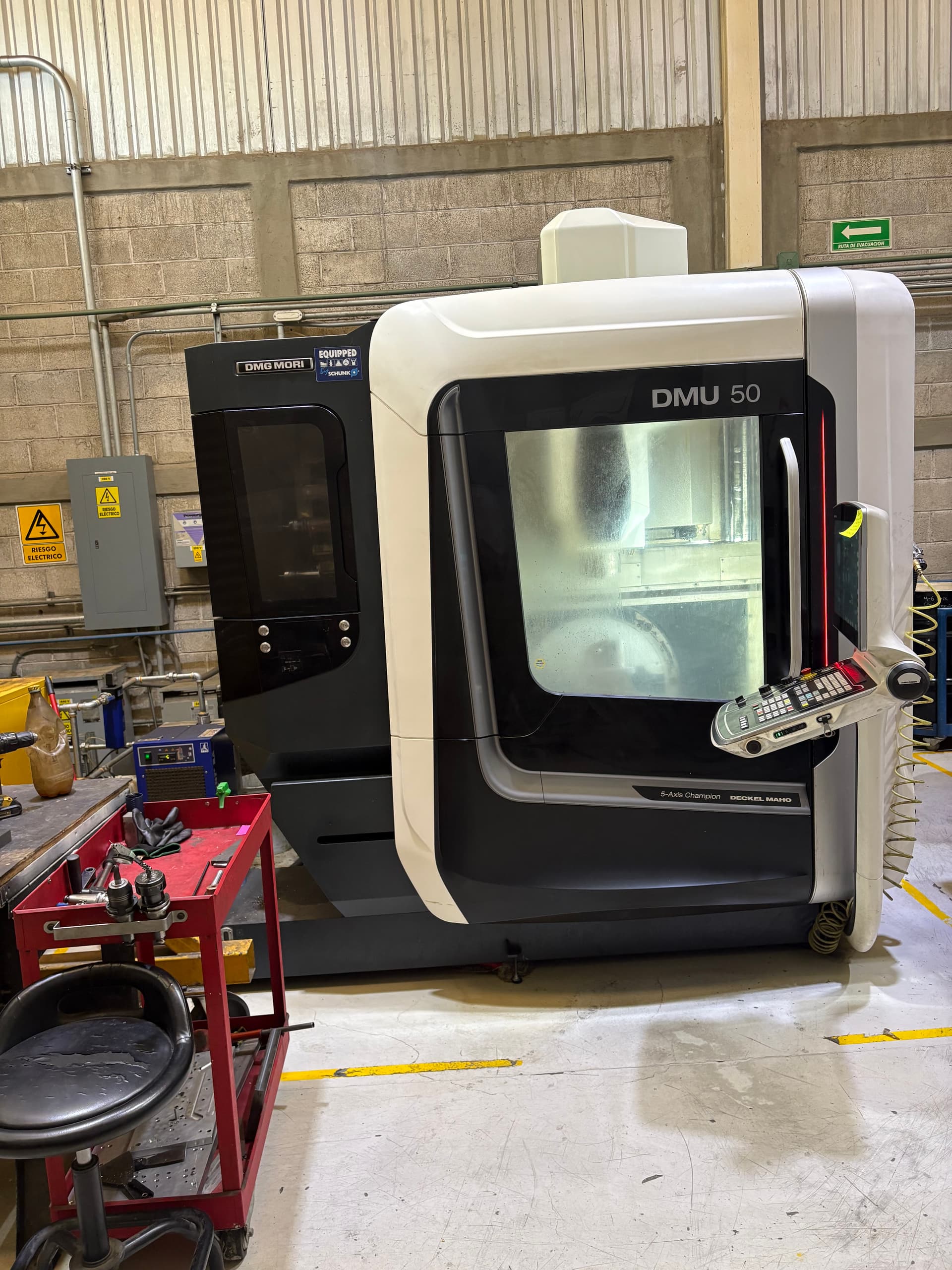
2018 DMG Mori DMU 50 5-Axis
Mexico
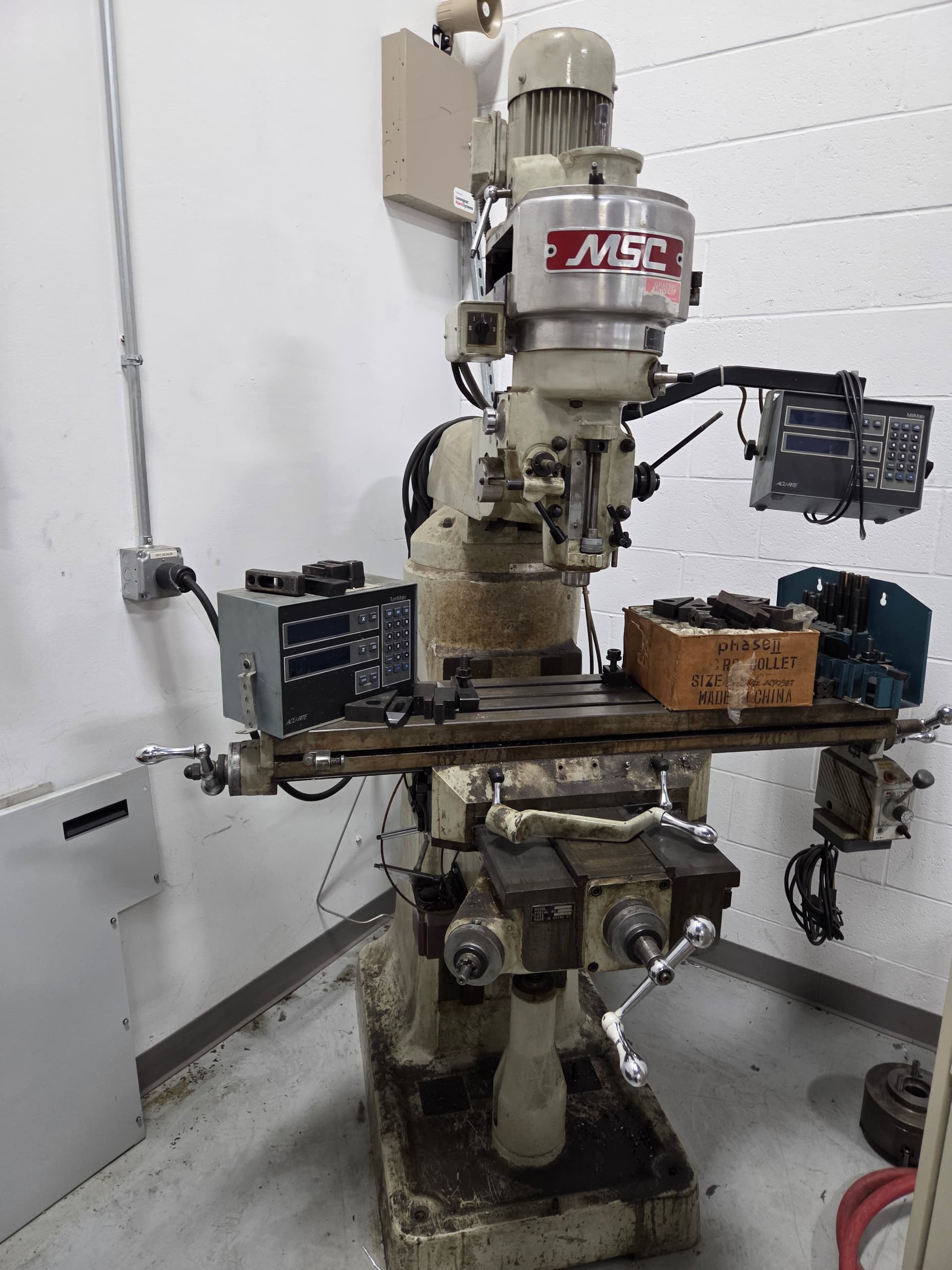
Lot 14
MSC Vertical Knee Mill
Wilmington, MA
Ends Tue, Oct 13, 10:00 AM CT
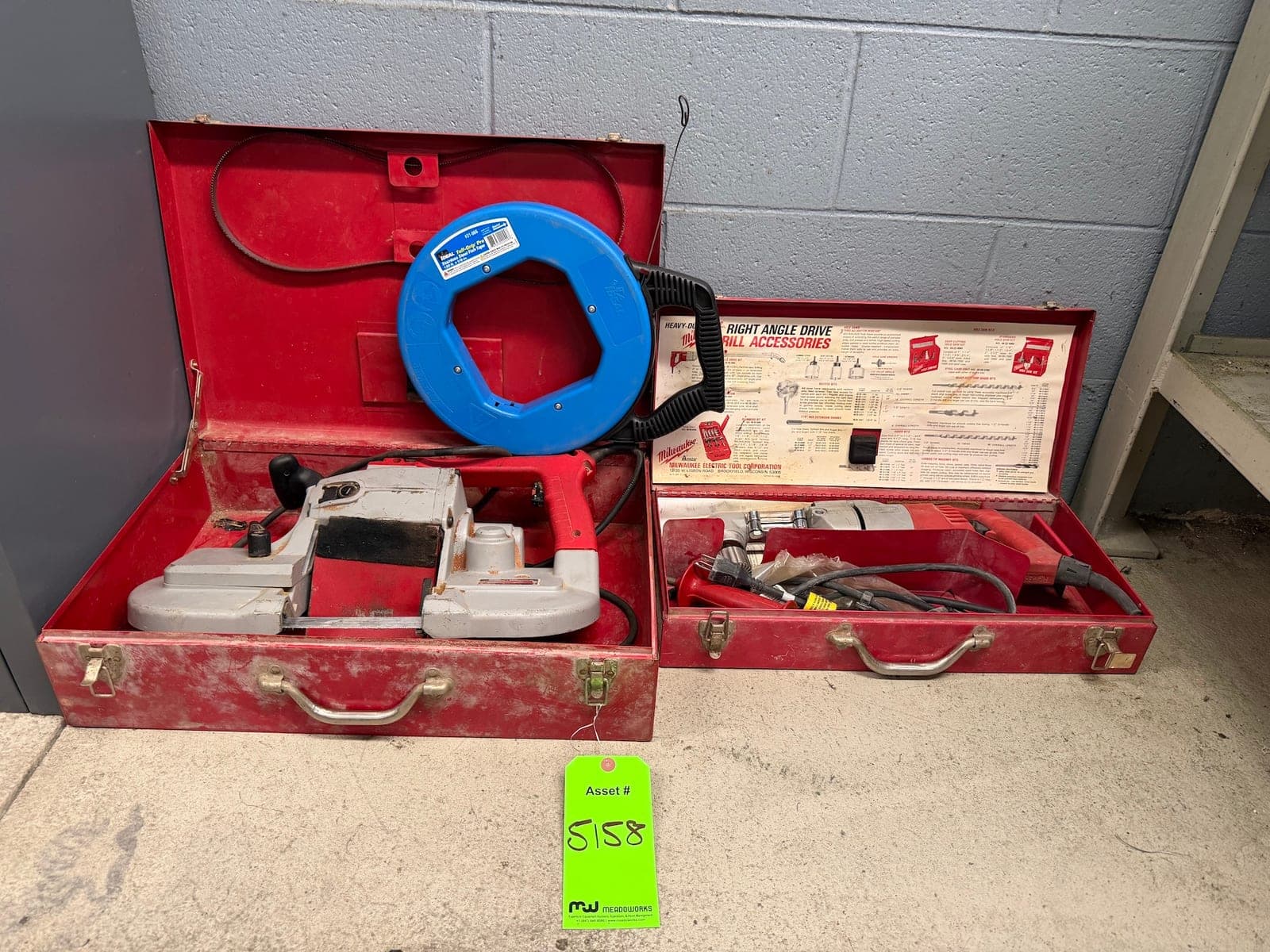
Lot 43A
Milwaukee Lot of Portable Bandsaw, Right Angle Drill and Fish Tape
Naperville, IL
Live auction · Tue, Oct 27, 10:00 AM CT
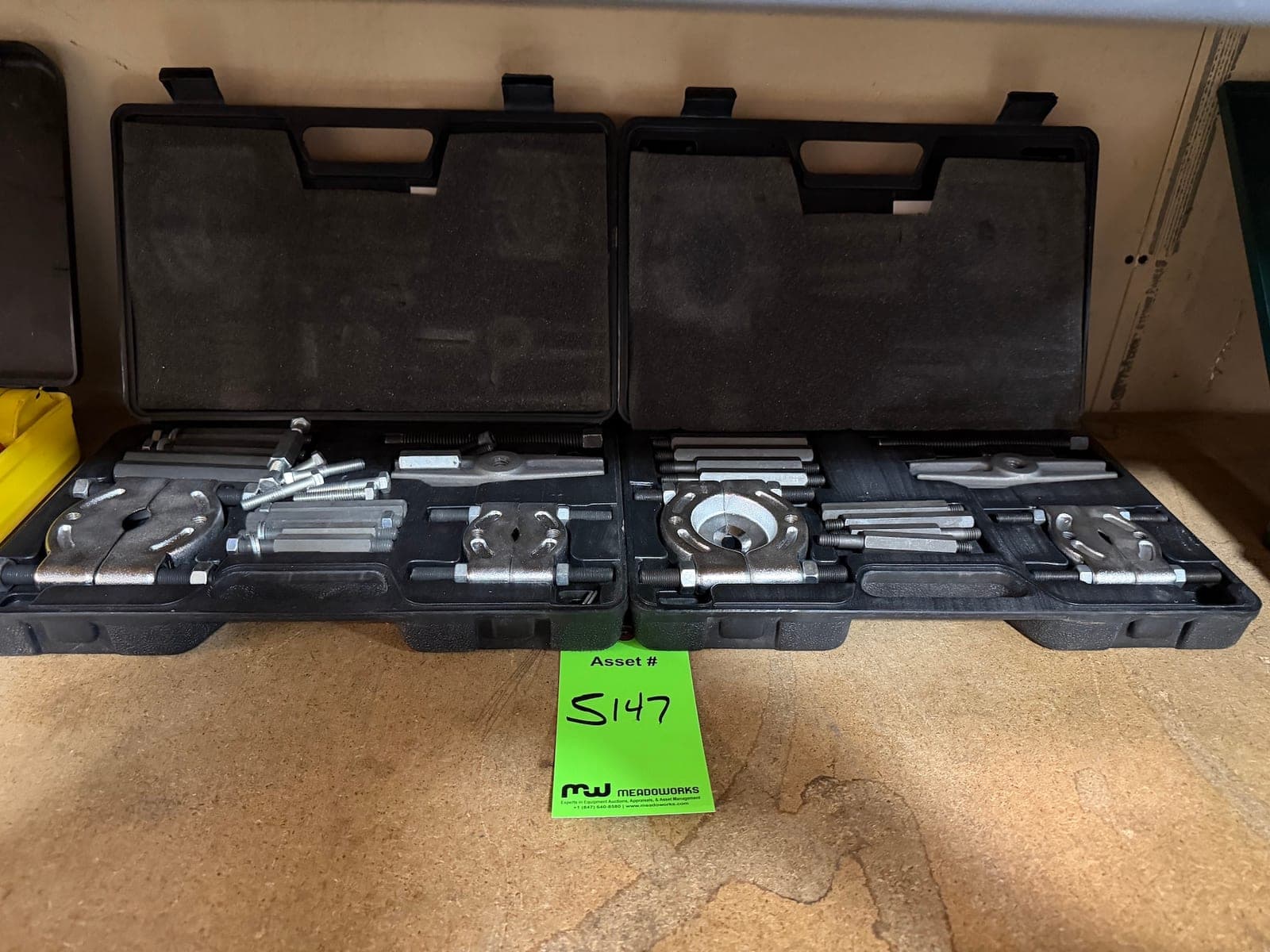
Lot 38
OTC Lot of (2) Stinger Bearing Separator / Push-Puller Sets
Naperville, IL
Live auction · Tue, Oct 27, 10:00 AM CT
Company Overview
Haas Automation
Haas Automation was founded in 1983 by Gene Haas in Oxnard, California, and is the largest machine tool builder in the Western Hemisphere. Every Haas machine is manufactured at the company's 1.1-million-square-foot facility in Oxnard. Haas built its reputation on delivering reliable, no-frills CNC machines at aggressive price points — a strategy that has made the Haas VF-2 the best-selling VMC in history. The company's product line includes vertical machining centers (VMCs), horizontal machining centers (HMCs), CNC lathes, 5-axis machines, and rotary tables.
Mazak (Yamazaki Mazak)
Yamazaki Mazak was founded in 1919 in Nagoya, Japan, and is one of the world's leading machine tool manufacturers. Mazak operates manufacturing plants in Japan, the United States (Florence, Kentucky), the UK, China, Singapore, and India. The company pioneered the Mazatrol conversational CNC control and is a leader in multi-tasking technology — machines that combine turning, milling, and other operations in a single setup. Mazak's product line spans CNC turning centers, VMCs, HMCs, 5-axis machines, multi-tasking machines (Integrex series), and laser cutting systems.
Controls: Haas vs Mazatrol
The control system is one of the most significant differences between these two brands and often the deciding factor for buyers.
Haas Control
Haas machines use a proprietary Haas CNC control that is designed from the ground up for simplicity. The control is G-code based with intuitive conversational programming features that allow operators to create programs directly at the machine for simple parts.
- Programming: Standard G/M code with visual quick code (VQC) conversational programming
- Interface: 15-inch color LCD with a physical keypad — straightforward and uncluttered
- Learning curve: Minimal — operators with basic G-code knowledge can be productive in hours, not days
- Customization: Macro B programming for custom cycles and automation
- Connectivity: Ethernet, USB, Wi-Fi (newer models); HaasConnect remote monitoring
- Limitations: Less capable than Mazatrol for complex conversational programming; fewer built-in process optimization features
Mazatrol (Mazak SmoothCNC)
Mazak's Mazatrol is a full conversational CNC control that has evolved over decades. The latest generation — SmoothCNC (SmoothG, SmoothX, SmoothAi) — features a large touchscreen interface, advanced process monitoring, and AI-powered optimization.
- Programming: Mazatrol conversational (dialogue-based), EIA/ISO G-code, and Solid Mazatrol (CAD-based)
- Interface: 19-inch touchscreen with intuitive graphical programming
- Learning curve: Moderate to steep — Mazatrol's conversational system is powerful but requires dedicated training
- Advanced features: Intelligent thermal shield, smooth machining control, voice advisor (SmoothAi), vibration suppression
- Connectivity: Mazak iSMART Factory integration, MTConnect, full Industry 4.0 capability
- Limitations: Proprietary nature means repairs and upgrades must go through Mazak; steeper training investment
For shops that already use CAM software and post-process to G-code, the Haas control is perfectly adequate and arguably faster for setup. For shops that program at the machine or run complex multi-tasking operations, Mazatrol's conversational programming is a major productivity advantage.
Build Quality and Construction
Haas machines are built for reliability and value. Castings are produced domestically, spindles are assembled in-house, and machines are designed for straightforward maintenance. Haas uses a utilitarian approach to construction — the machines are well-built for their price point but use standard components and simpler designs compared to premium builders.
- Cast iron construction with ribbed bases for rigidity
- Inline direct-drive spindles (standard) or gear-head spindles (optional on some models) up to 12,000 RPM standard, 15,000 or 30,000 RPM options
- Roller-type linear guideways (most models) or box ways (Super Speed and heavy-duty models)
- Good thermal stability under normal operating conditions
Mazak machines are built to a higher standard of rigidity, thermal stability, and precision. Mazak uses premium components throughout and designs machines for sustained high-performance production.
- Heavy, heavily-ribbed cast iron construction with FEM-optimized structures
- Built-in spindle motors with active thermal compensation (Intelligent Thermal Shield)
- Roller-type linear guideways with high preload for rigidity; box ways on heavy-cutting models
- Superior chip evacuation and coolant management systems
- Higher rapid traverse rates and faster tool change times across the lineup
The build quality difference is most apparent in sustained production environments. A Mazak running three shifts cutting hardened steel will maintain tighter tolerances over longer periods than a comparable Haas. For job shops running shorter runs and softer materials, the practical difference is less significant.
Product Line Comparison
Vertical Machining Centers (VMCs)
| Specification | Haas VF-2 | Mazak VCN-530C |
|---|---|---|
| Travels (X/Y/Z) | 30" × 16" × 20" | 41.3" × 20.9" × 20.1" |
| Table Size | 36" × 14" | 47.2" × 20.9" |
| Spindle Speed | 8,100 RPM (standard) | 12,000 RPM (standard) |
| Spindle Taper | CT 40 | CAT 40 / BT 40 |
| Tool Capacity | 20+1 (standard) | 30 (standard) |
| Rapid Traverse | 1,000 ipm | 1,575 ipm |
| Control | Haas CNC | Mazatrol SmoothG |
| New Price (approx.) | $55,000 – $75,000 | $120,000 – $160,000 |
CNC Lathes / Turning Centers
| Specification | Haas ST-20 | Mazak Quick Turn 200 |
|---|---|---|
| Max Turning Diameter | 10" | 12.6" |
| Max Turning Length | 21" | 20.5" |
| Spindle Speed | 4,000 RPM | 5,000 RPM |
| Spindle Bore | 2.5" | 3.0" |
| Turret Positions | 12 (BOT) | 12 (drum) |
| Live Tooling | Optional | Standard (most configs) |
| Control | Haas CNC | Mazatrol SmoothG |
| New Price (approx.) | $45,000 – $65,000 | $100,000 – $140,000 |
5-Axis Machines
Haas offers the UMC-500 and UMC-750 5-axis universal machining centers — entry-level 5-axis machines designed to make simultaneous 5-axis machining accessible. The UMC-750 is one of the most affordable true 5-axis machines on the market.
Mazak offers a far broader range of 5-axis and multi-tasking machines, including the VARIAXIS i-series (5-axis VMCs), the Integrex series (mill-turn multi-tasking), and the CV5-500 (compact 5-axis). Mazak's 5-axis lineup is significantly more diverse and capable, particularly for complex aerospace and medical parts requiring done-in-one multi-tasking.
Service and Support
Haas operates through a global network of Haas Factory Outlets (HFOs) — independently owned dealerships that provide sales, service, parts, and training. The HFO model ensures broad geographic coverage across North America with local service teams. Parts are competitively priced and widely available. Haas's simple machine design also makes third-party service and DIY maintenance more accessible.
Mazak provides service through its own direct service organization with regional service centers and factory-trained technicians. Mazak's service is highly capable but typically costs more per hour than HFO service. Parts are available through Mazak's distribution network; however, proprietary components (especially Mazatrol control parts) can be expensive. Mazak also offers comprehensive training programs at its Florence, Kentucky campus and regional technology centers.
Pros and Cons Summary
Haas: Strengths
- Price-to-performance value — lowest cost of entry for quality CNC machines
- Simple, intuitive control — minimal training required for new operators
- Low maintenance costs — parts are affordable and machines are designed for easy service
- Strong used market — high demand and liquidity; machines sell quickly
- Made in America — all machines manufactured in Oxnard, California
- HFO network — broad service coverage with local support
Haas: Considerations
- Lower rigidity and thermal stability vs. premium brands for demanding production work
- Limited multi-tasking and mill-turn options compared to Mazak
- Spindle and rapid speeds trail Mazak in standard configurations
- Less sophisticated process monitoring and optimization tools
Mazak: Strengths
- Superior build quality — heavier construction, better thermal management, higher sustained accuracy
- Mazatrol control — powerful conversational programming for shop-floor efficiency
- Multi-tasking leadership — Integrex series sets the standard for done-in-one machining
- Broader product range — from compact VMCs to large 5-axis and multi-tasking centers
- Higher production throughput — faster rapids, tool changes, and spindle speeds accelerate cycle times
- Industry 4.0 ready — iSMART Factory, MTConnect, SmoothAi
Mazak: Considerations
- Significantly higher purchase price — both new and used
- Higher service and parts costs, especially for Mazatrol control components
- Steeper learning curve for operators new to Mazatrol
- More complex machines require more skilled maintenance staff
Used Market Pricing
| Machine Type | Model Year Range | Used Haas Price | Used Mazak Price |
|---|---|---|---|
| VMC (mid-size) | 2010 – 2015 | $15,000 – $30,000 | $35,000 – $65,000 |
| VMC (mid-size) | 2015 – 2020 | $25,000 – $50,000 | $55,000 – $90,000 |
| CNC Lathe (10" chuck) | 2010 – 2015 | $12,000 – $25,000 | $30,000 – $55,000 |
| CNC Lathe (10" chuck) | 2015 – 2020 | $20,000 – $45,000 | $40,000 – $80,000 |
| 5-Axis VMC | 2015 – 2020 | $50,000 – $90,000 | $80,000 – $175,000 |
| Multi-Tasking (Integrex) | 2010 – 2020 | N/A | $75,000 – $200,000+ |
Haas machines consistently sell at lower price points on the used market, making them an excellent choice for shops looking to maximize their machine count on a limited budget. Mazak machines hold higher absolute values but depreciate at a similar rate in percentage terms.
Which Brand Should You Choose?
Choose Haas When:
- Budget is a primary consideration — Haas delivers the most machine per dollar
- You run a job shop with varied work and shorter production runs
- Your operators are comfortable with G-code and CAM-generated programs
- You want straightforward, low-cost maintenance and service
- You are expanding capacity and need multiple machines at a reasonable total investment
Choose Mazak When:
- You need sustained high-precision production with tight tolerances
- Multi-tasking or done-in-one machining will significantly reduce your cycle times and handling
- Your operators benefit from Mazatrol conversational programming at the machine
- You are running higher-volume production where faster cycle times justify the higher investment
- You need 5-axis capability beyond what Haas's UMC lineup offers
Frequently Asked Questions
Is Haas or Mazak better for a job shop?
For most small to mid-size job shops, Haas offers the best value proposition. Haas machines cost significantly less to purchase (new and used), are easy to learn and program, and have low maintenance costs. Mazak is the better choice if your shop runs higher volumes, needs faster cycle times, or requires more advanced multi-tasking capabilities. Many successful shops run both brands — Haas for general work and prototype runs, Mazak for production and high-precision jobs. Call Meadoworks at 800-323-0307 to discuss which machines fit your shop.
How much does a used Haas CNC cost compared to a used Mazak?
Used Haas CNC machines are generally 30–50% less expensive than comparable Mazak models. A used Haas VF-2 (2015–2020) typically sells for $25,000–$50,000, while a comparable Mazak VCN-530C might run $55,000–$90,000. Used Haas lathes like the ST-20 range from $20,000–$45,000, versus $40,000–$80,000+ for a Mazak Quick Turn 200. The gap narrows on older machines and widens on late-model or multi-axis equipment.
What is the difference between Haas control and Mazatrol?
The Haas control is a G-code-based CNC control designed for simplicity and ease of use. Operators can program directly at the machine using conversational prompts or standard G/M codes. Mazatrol is Mazak's proprietary conversational programming language that allows operators to program parts using interactive graphics and dialogue-based input without writing G-code. Mazatrol also accepts standard G-code (EIA/ISO). Mazatrol is more powerful for complex parts but has a steeper learning curve. The Haas control is often preferred in educational settings and small shops for its straightforward approach.
Which holds value better on the used market — Haas or Mazak?
Mazak machines generally hold a higher percentage of their original value on the used market. A 10-year-old Mazak typically retains 40–55% of its original price, while a comparable Haas retains 30–45%. However, because Haas machines cost significantly less new, the absolute dollar depreciation can be similar. Haas machines also sell faster on the used market due to high demand and a lower price point that appeals to a broader buyer base.
Find Used Haas & Mazak CNC Machines
Meadoworks stocks a wide selection of used CNC machines from Haas, Mazak, and all major manufacturers. Our team understands the strengths and trade-offs of every brand — we'll help you match the right machine to your application and budget.
Contact us or call 800-323-0307 to discuss your CNC equipment needs.
