Hydraulic vs Electric Injection Molding: Complete Comparison
The choice between hydraulic, all-electric, and hybrid injection molding machines is one of the most consequential decisions a molder can make. Each drive technology offers distinct advantages in energy consumption, precision, speed, maintenance costs, and upfront investment. At Meadoworks, we have spent over 50 years helping manufacturers navigate these trade-offs. This guide provides an objective, detailed comparison to help you choose the right technology for your application and budget — whether you are buying new or sourcing quality used equipment.
Used injection molding machines in stock now
Browse all 85 used injection molding machines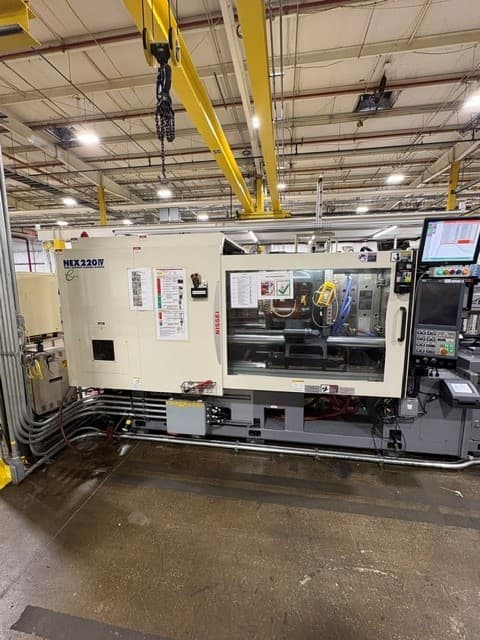
Lot 19
2019 Nissei NEX220IV Injection Molder
Albion, IN
Ends Thu, Oct 29, 10:00 AM CT
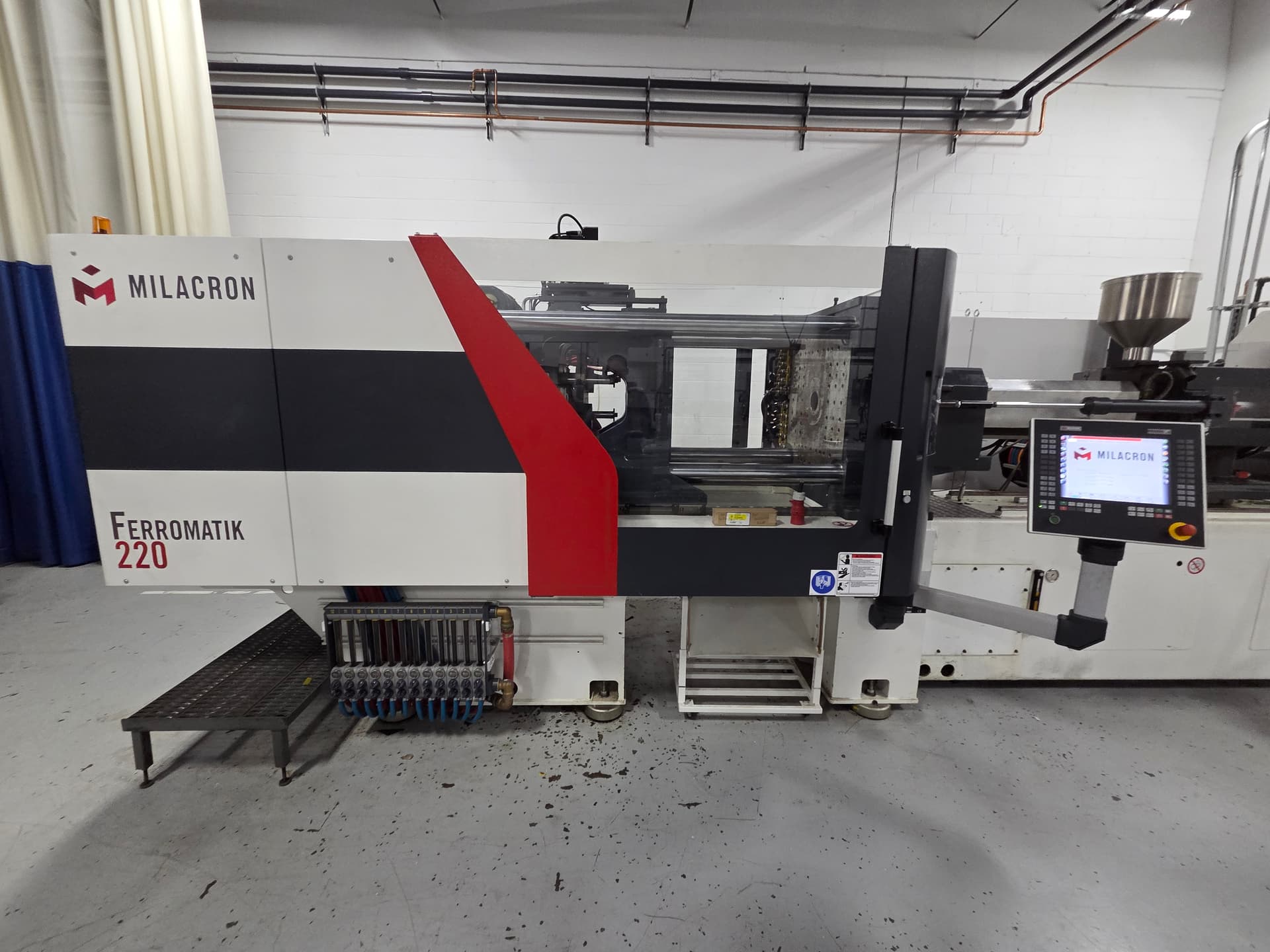
Lot 15
2016 Milacron Ferromatik 220 Ton Injection Molding Press - Only 2,718 Hours
Wilmington, MA
Ends Tue, Oct 13, 10:00 AM CT
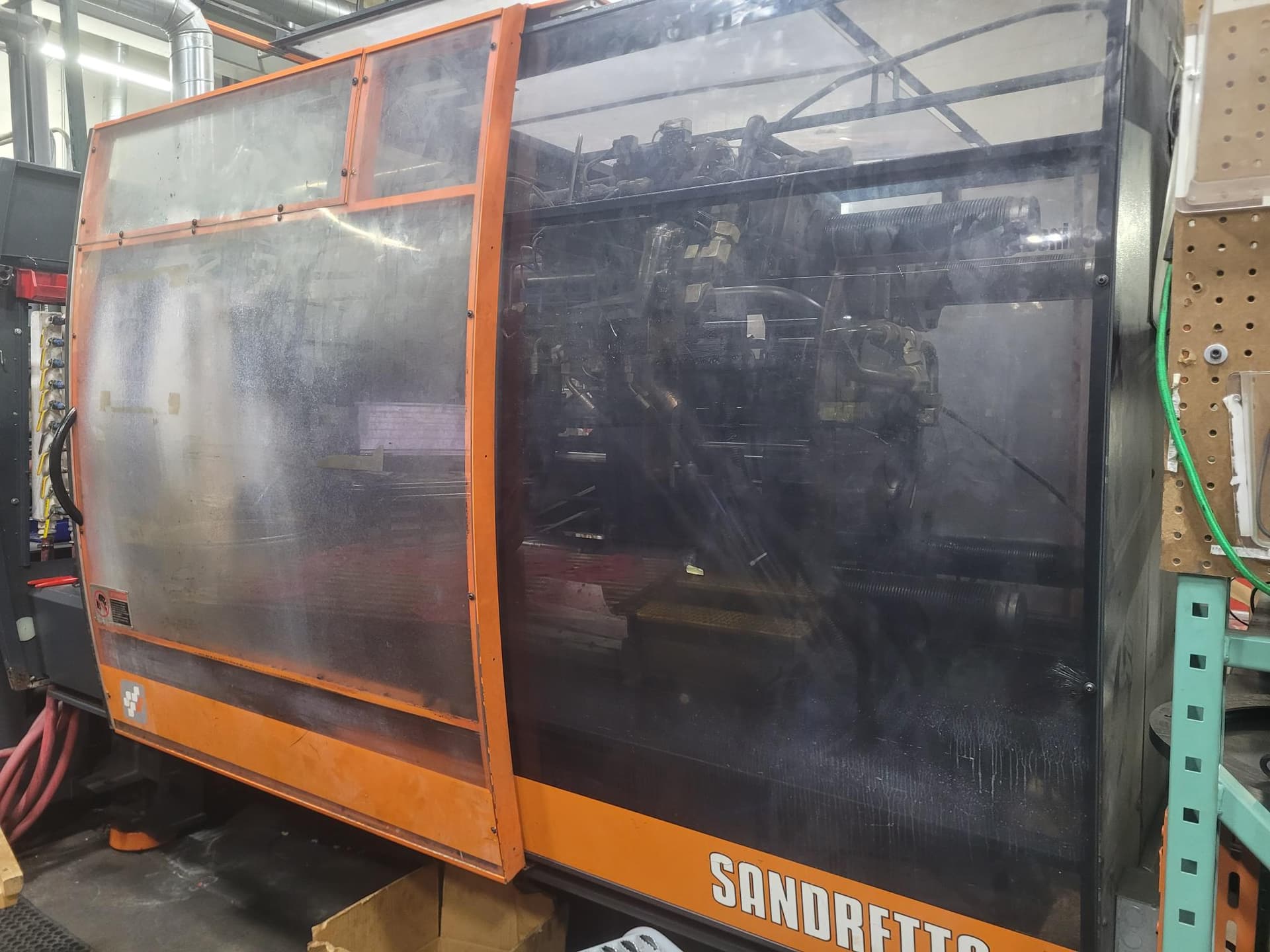
2000 Sandretto 1300/220 Molder
USA
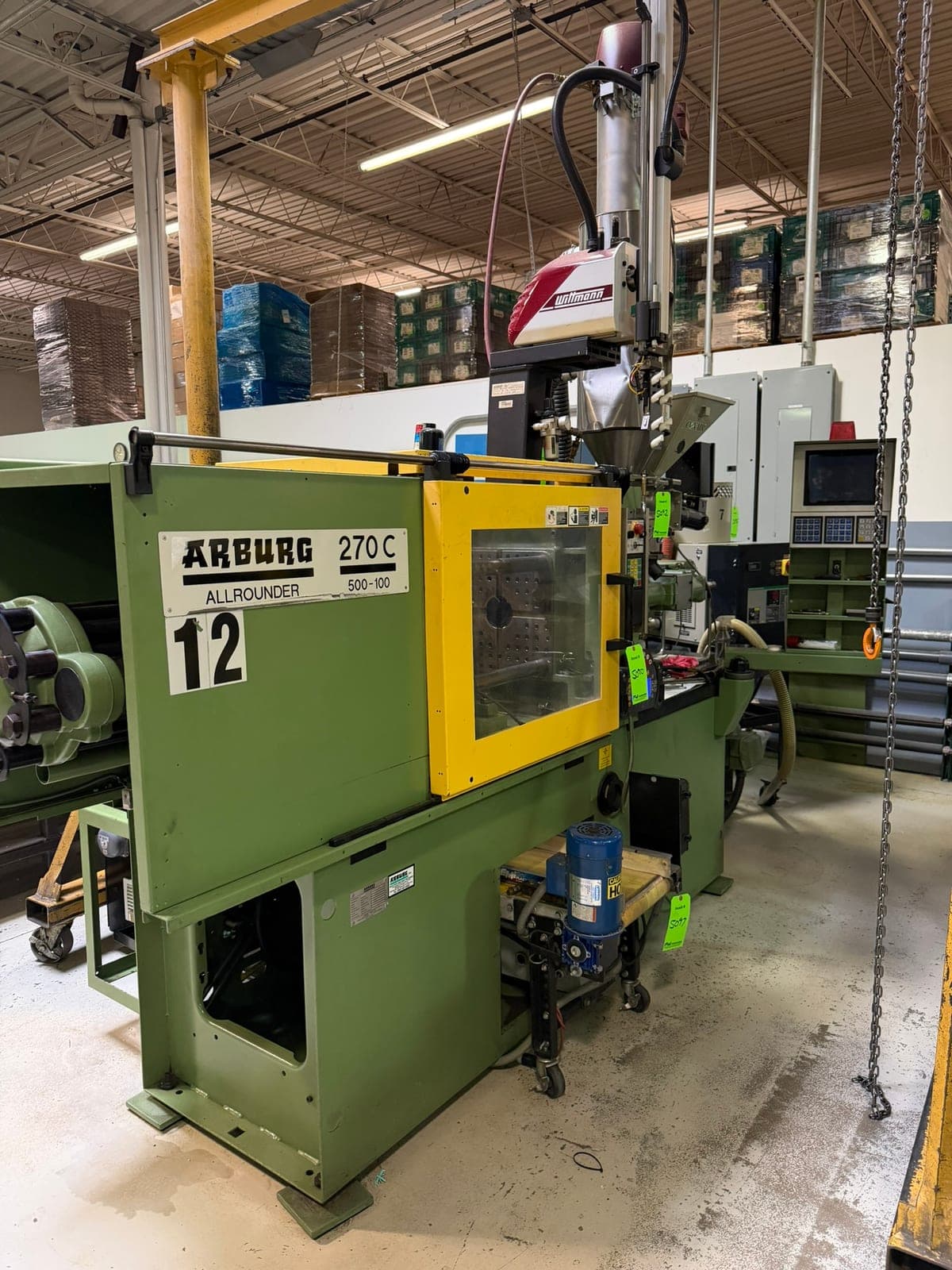
Lot 87
Arburg 56 Ton Injection Molding Machine
Naperville, IL
Live auction · Tue, Oct 27, 10:00 AM CT
Understanding the Three Technologies
Hydraulic Injection Molding Machines
Hydraulic injection molding machines use hydraulic pumps and cylinders to power all machine movements — injection, clamping, ejection, and plasticizing. They have been the backbone of the injection molding industry for over 60 years and remain the most widely installed type worldwide.
- Drive system: Electric motor drives a fixed-displacement or variable-displacement hydraulic pump. Pressurized oil flows through valves and cylinders to move the machine axes.
- Pump types: Fixed-displacement pumps (older/economy machines) run continuously at full speed; variable-displacement (vane or piston) pumps adjust output to demand; servo-hydraulic pumps (modern machines) use servo motors that only spin when needed.
- Tonnage range: Available from small bench-top units up to 10,000+ tons — hydraulic machines dominate the large-tonnage segment
- Market share: Still accounts for approximately 60–65% of the global injection molding machine installed base
All-Electric Injection Molding Machines
All-electric injection molding machines use servo motors and ball screws (or belt-driven mechanisms) for every machine axis. There is no hydraulic oil in the system — the machine runs entirely on electric servo drives.
- Drive system: Independent servo motors for injection, clamping, plasticizing, and ejection. Each axis has its own dedicated motor and drive.
- Energy recovery: Servo motors can regenerate energy during deceleration, feeding power back to other axes or the mains
- Tonnage range: Typically available from 5 tons up to approximately 650 tons. Very large all-electric machines (over 1,000 tons) are emerging but remain uncommon.
- Market trend: Growing rapidly, now accounting for approximately 25–30% of new machine sales in developed markets
Hybrid Injection Molding Machines
Hybrid injection molding machines combine elements of both hydraulic and electric technology to balance performance, cost, and capability.
- Common configurations: Electric injection with hydraulic clamp; servo-hydraulic pump systems with electric plasticizing; or electric clamp with hydraulic injection for high-pressure applications
- Servo-hydraulic systems: Replace the constant-speed pump motor with a servo motor that spins the hydraulic pump on demand — achieving 30–60% energy savings over conventional hydraulic while maintaining hydraulic force capability
- Tonnage range: Available across the full tonnage spectrum, from small machines to 4,000+ tons
- Market position: Increasingly popular as the pragmatic middle ground, accounting for approximately 10–15% of new sales
Head-to-Head Comparison
| Factor | Hydraulic | All-Electric | Hybrid |
|---|---|---|---|
| Energy Consumption | Highest (baseline) | 40–70% less than hydraulic | 30–50% less than hydraulic |
| Precision / Repeatability | Good (±0.1–0.2%) | Excellent (±0.01–0.05%) | Very Good (±0.05–0.1%) |
| Injection Speed | Good | Excellent (fastest acceleration) | Very Good |
| Clamp Force Range | Up to 10,000+ tons | Up to ~650 tons (most brands) | Up to 4,000+ tons |
| Cycle Time | Moderate | Fastest (simultaneous axis movement) | Fast |
| Noise Level | 75–85 dB | 60–68 dB | 65–75 dB |
| Clean-Room Suitability | Limited (oil contamination risk) | Excellent (no oil) | Good (reduced oil exposure) |
| Maintenance Cost | Highest (oil, filters, seals, hoses) | Lowest (no hydraulic system) | Moderate |
| Upfront Cost (New) | Lowest | 20–40% premium | 10–25% premium |
| Used Market Availability | Very abundant | Growing | Moderate |
Energy Efficiency: A Deeper Look
Energy consumption is often the most compelling reason to choose an all-electric or hybrid machine over a conventional hydraulic. Understanding where the energy goes helps explain the differences:
Hydraulic Energy Losses
A conventional hydraulic machine with a fixed-displacement pump runs the motor continuously, even during cooling and idle time. Energy is wasted as heat in the hydraulic oil, through valve pressure drops, and through inefficiencies in converting rotary pump motion to linear actuator motion. On a typical cycle, a fixed-pump hydraulic machine uses energy as follows:
- Plasticizing: 20–30% of cycle energy
- Injection and hold: 15–25%
- Clamping: 10–15%
- Idle and cooling: 25–40% (wasted — the pump runs but no useful work is performed)
This idle-time waste is why servo-hydraulic and all-electric machines achieve such dramatic energy reductions. They simply stop consuming power when no motion is required.
All-Electric Efficiency
All-electric machines eliminate idle energy waste entirely. Each servo motor draws power only during its active phase. Additionally, servo motors can run multiple axes simultaneously without the hydraulic system's limitation of shared pump flow. Energy regeneration during braking phases further reduces net consumption. Measured under Euromap 60.1, all-electric machines consistently achieve Class 10 (the highest efficiency class), while conventional hydraulic machines typically fall in Class 5–7.
Real-World Savings Example
A 200-ton machine running 24/7 with a 30-second cycle time on a conventional hydraulic drive may consume 25–35 kW average. The same application on an all-electric machine typically consumes 10–15 kW average. At $0.10/kWh, that is approximately $13,000–$17,500 per year in energy savings — per machine. For a plant running 20 machines, the savings can exceed $250,000 annually.
Precision and Repeatability
All-electric machines deliver significantly better shot-to-shot consistency than hydraulic machines. The reasons are fundamental to the drive technology:
- Closed-loop servo control: Electric servo motors provide direct position and velocity feedback with resolution measured in microns. Hydraulic systems rely on proportional valves and flow control, which introduce variability from oil temperature changes, valve hysteresis, and seal friction.
- Thermal stability: All-electric machines generate less heat because there is no hydraulic oil being continuously pressurized. The absence of thermal variation in the drive system means more consistent machine behavior throughout a shift.
- Independent axis control: Each servo motor operates independently, allowing precise overlapping of movements (e.g., plasticizing during cooling) without the flow-sharing compromises inherent in hydraulic systems.
- Injection control: Electric injection units can achieve position resolution under 0.01 mm and injection speed control within 0.1%, enabling consistent filling of thin-wall parts and micro-molded components.
For applications requiring tight tolerances — medical devices, precision optics, electronic connectors, micro-molding — all-electric machines provide a measurable quality advantage. For general-purpose molding of larger, less critical parts, hydraulic precision is perfectly adequate.
Speed and Cycle Time
All-electric machines generally achieve the fastest dry cycle times because they can overlap axis movements freely and their servo motors deliver rapid acceleration without the hydraulic response delays. Key speed advantages include:
- Simultaneous movements: Electric machines can plasticize, open the mold, and eject the part simultaneously. Hydraulic machines with a single pump must sequence these movements, extending cycle time.
- Clamp speed: Electric toggle clamps can open and close very quickly with precise deceleration at mold contact, minimizing open time.
- Injection acceleration: Servo motors achieve full injection speed almost instantly. Hydraulic accumulators can match peak speed but with less precise control of the acceleration profile.
For thin-wall packaging, caps and closures, and other high-speed applications, the cycle time advantage of all-electric machines typically ranges from 10–30% versus conventional hydraulic — a significant productivity gain over millions of cycles.
Maintenance and Operating Costs
Hydraulic Machines
- Hydraulic oil: Must be changed every 3,000–5,000 hours or annually. A 300-ton machine may hold 80–120 gallons of oil costing $8–$15/gallon.
- Filters: Oil filters, suction strainers, and breather filters require periodic replacement
- Seals and hoses: Cylinder seals, valve seals, and hoses deteriorate over time and are common failure points
- Oil cooling: Heat exchangers or chillers for hydraulic oil add complexity and energy cost
- Oil leaks: A persistent maintenance challenge that creates housekeeping issues and environmental liability
- Estimated annual maintenance cost: $3,000–$8,000 for hydraulic system alone on a mid-size machine
All-Electric Machines
- No hydraulic system: No oil, filters, seals, hoses, heat exchangers, or leak concerns
- Grease lubrication: Ball screws and linear guides require periodic greasing — typically at long intervals (1,000–2,000 hours)
- Belt replacement: Timing belts on belt-driven machines require periodic inspection and replacement
- Servo motors and drives: Rarely fail but are expensive to replace when they do ($2,000–$10,000+ per axis)
- Ball screws: Wear items with a finite life — replacement cost can be significant ($3,000–$15,000 per axis)
- Estimated annual maintenance cost: $1,000–$3,000 on a mid-size machine under normal operating conditions
All-electric machines have significantly lower routine maintenance costs, but their failure mode is different. When a servo motor or ball screw fails, the repair cost is higher per incident than a hydraulic seal replacement. Overall, the total cost of ownership over a machine's life is typically 15–25% lower for all-electric.
Pricing: New and Used Market
New Machine Pricing
| Tonnage | Hydraulic (New) | All-Electric (New) | Hybrid (New) |
|---|---|---|---|
| 50 – 100 tons | $30,000 – $65,000 | $55,000 – $100,000 | $45,000 – $80,000 |
| 100 – 200 tons | $50,000 – $100,000 | $90,000 – $175,000 | $75,000 – $140,000 |
| 200 – 400 tons | $80,000 – $175,000 | $150,000 – $325,000 | $120,000 – $250,000 |
| 400 – 1,000 tons | $150,000 – $500,000 | $300,000 – $600,000+ | $200,000 – $450,000 |
Used Machine Pricing
| Machine Type | Tonnage | Typical Used Price Range |
|---|---|---|
| Hydraulic (fixed pump, pre-2010) | 50 – 200 tons | $8,000 – $25,000 |
| Hydraulic (fixed pump, pre-2010) | 200 – 500 tons | $15,000 – $50,000 |
| Servo-hydraulic (2010+) | 100 – 300 tons | $25,000 – $80,000 |
| All-electric (2010–2015) | 50 – 200 tons | $30,000 – $80,000 |
| All-electric (2015–2020) | 50 – 200 tons | $50,000 – $130,000 |
| All-electric (2015+) | 200 – 400 tons | $80,000 – $200,000+ |
| Hybrid | 100 – 400 tons | $40,000 – $150,000 |
| Large hydraulic | 500 – 2,000+ tons | $30,000 – $250,000+ |
Used hydraulic machines offer the lowest entry price and the widest selection. Used all-electric machines are increasingly available as more enter the secondary market. Hybrid machines are the newest category on the used market and offer an attractive combination of price and efficiency for value-conscious buyers.
Best Applications by Technology
Hydraulic Is Best For:
- Large-tonnage applications (over 650 tons) where all-electric options are limited
- High-pressure molding — thick-wall parts, structural foam, gas-assist, and compression molding
- Budget-constrained operations — lowest upfront cost, especially on the used market
- Applications requiring sustained clamp pressure — hydraulic systems maintain pressure without continuous motor load
- Overmolding and insert molding with vertical clamp configurations (widely available in hydraulic)
All-Electric Is Best For:
- Medical and clean-room molding — no oil contamination risk, low particle generation
- Precision components — connectors, optics, micro-molding where shot-to-shot consistency is critical
- High-speed packaging — thin-wall containers, caps, closures where cycle time drives profitability
- Energy-sensitive operations — plants with high electricity costs or sustainability mandates
- Noise-sensitive environments — significantly quieter than hydraulic machines
Hybrid Is Best For:
- Mid-to-large tonnage applications needing better efficiency than hydraulic but at lower cost than all-electric
- Automotive and consumer goods — balanced performance for medium-to-high volume production
- Plants transitioning from hydraulic to electric — hybrid machines bridge the technology gap with lower capital investment
- Multi-material and multi-component molding where hydraulic force is needed for secondary injection units
Making the Decision
There is no universally correct answer to the hydraulic vs. electric question. The best choice depends on your specific application, production volume, budget, and facility constraints. Consider these key decision factors:
- Part requirements: Tight tolerances and clean-room needs favor all-electric. Large parts and high clamp forces favor hydraulic.
- Production volume: High-volume, multi-shift operations benefit most from all-electric energy savings and uptime. Low-volume or variable work may not justify the premium.
- Total cost of ownership: Calculate energy, maintenance, floor space, and environmental costs alongside the purchase price. A machine that costs 30% more upfront but saves 50% on energy and maintenance can be the smarter investment.
- Used market strategy: If buying used, hydraulic machines offer the widest selection and lowest entry cost. Used all-electric machines are growing in availability and can deliver new-machine precision at 40–60% of the new price.
Frequently Asked Questions
Are all-electric injection molding machines worth the extra cost?
For many applications, yes. All-electric machines typically cost 20–40% more than equivalent hydraulic models, but the energy savings (40–70% lower consumption), reduced maintenance (no hydraulic oil, filters, or seals to replace), and improved part consistency can deliver a return on investment within 2–4 years in high-volume production environments. They are especially cost-effective for clean-room, precision, and medical molding where their advantages in cleanliness and repeatability add direct value. For lower-volume or heavy-tonnage applications, hydraulic or hybrid machines may offer better economics.
What is a hybrid injection molding machine?
A hybrid injection molding machine combines hydraulic and electric drive technologies. Typically, the injection unit uses electric servo motors for precise screw control while the clamping unit uses hydraulic cylinders for high clamping force. Some hybrids use servo-driven hydraulic pumps instead of fixed-displacement pumps, achieving energy savings close to all-electric machines while maintaining the high-tonnage capability of hydraulic systems. Hybrids offer a middle ground — better energy efficiency and precision than pure hydraulic, with higher clamping force capability and lower cost than pure all-electric machines.
Can I convert a hydraulic injection molding machine to electric?
Full conversion from hydraulic to all-electric is not practical or cost-effective, as it would require replacing the entire drive system, clamping mechanism, and control architecture. However, you can upgrade a hydraulic machine with a servo-hydraulic pump retrofit that replaces the fixed-displacement pump motor with a servo-driven variable-speed pump. This retrofit can reduce energy consumption by 30–50% and is significantly less expensive than purchasing a new all-electric machine. Several retrofit kits are available from manufacturers and third-party suppliers.
How much does a used all-electric injection molding machine cost?
Used all-electric injection molding machines typically cost $40,000–$200,000+ depending on tonnage, brand, year, and condition. Small-tonnage electrics (under 100 tons) from brands like Fanuc Roboshot or Nissei start around $30,000–$60,000 for older models. Mid-range electrics (100–300 tons) from Engel, Arburg, or JSW range from $60,000–$150,000. Large-tonnage electrics (300+ tons) are less common on the used market and command premium prices. Call Meadoworks at 800-323-0307 for current availability and pricing.
Browse Used Injection Molding Machines
Meadoworks stocks hydraulic, all-electric, and hybrid injection molding machines from all major manufacturers. With over 50 years in the industrial equipment market, our team can help you evaluate the technology trade-offs and find the right machine for your application and budget.
Contact us or call 800-323-0307 to discuss your injection molding equipment needs.
