VMC vs HMC: Which CNC Machining Center Do You Need?
Choosing between a vertical machining center (VMC) and a horizontal machining center (HMC) is one of the most consequential decisions a shop can make. Both are CNC milling machines, but the difference in spindle orientation affects everything from the parts you can efficiently produce to your overall shop throughput and profitability.
Used CNC machines in stock now
Browse all 94 used CNC machines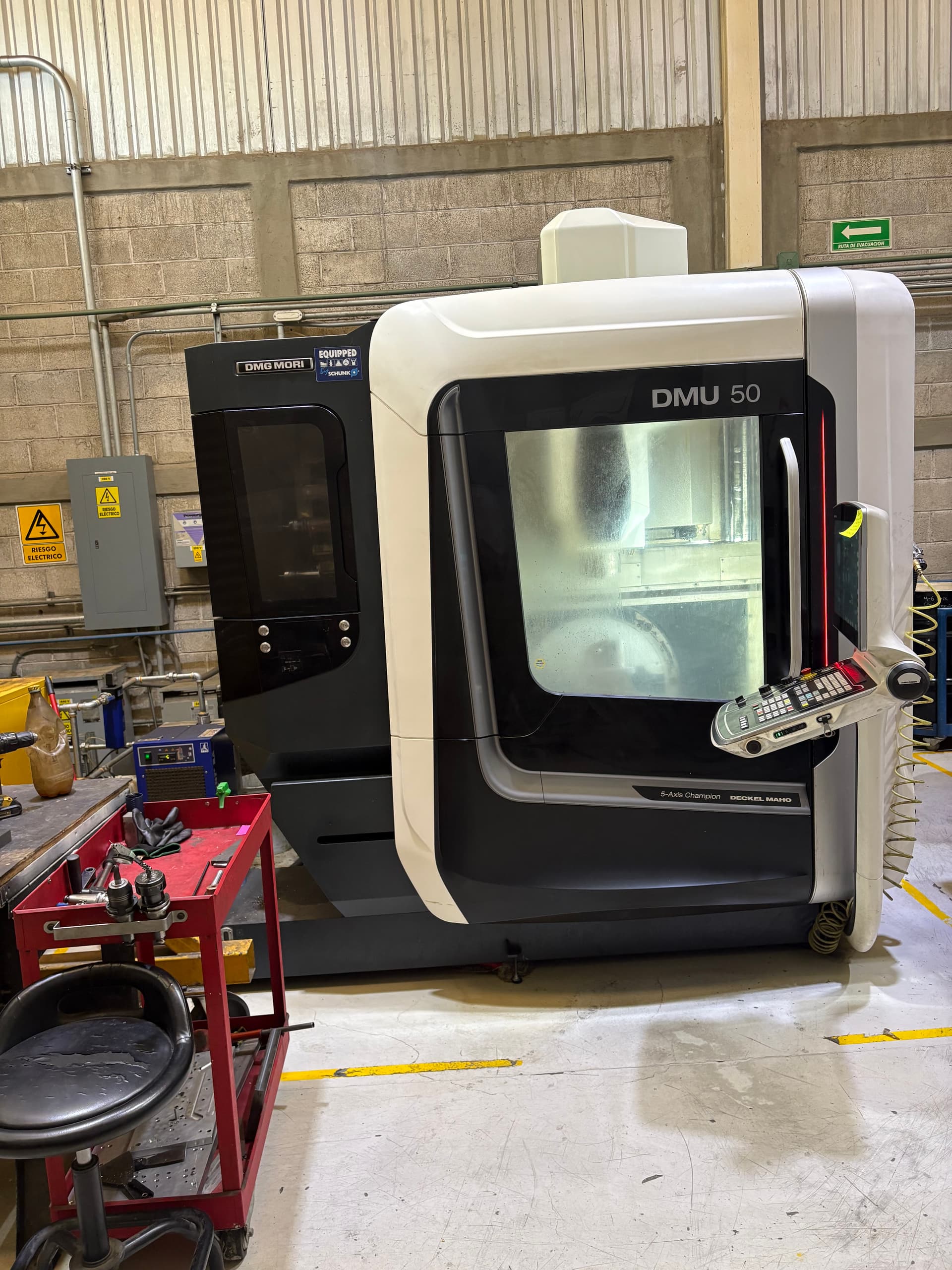
2018 DMG Mori DMU 50 5-Axis
Mexico
Lot 14
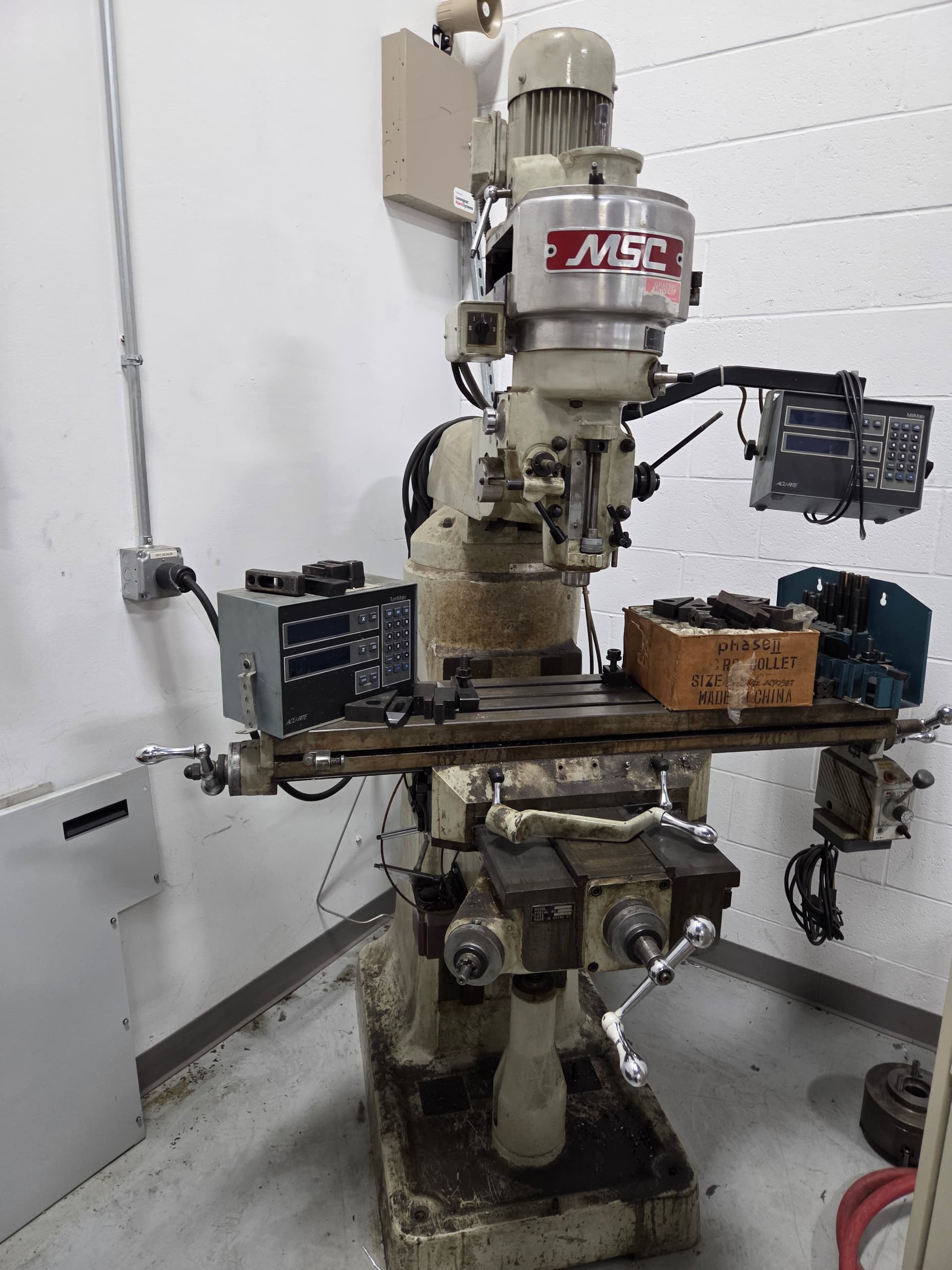
MSC Vertical Knee Mill
Wilmington, MA
Ends Tue, Oct 13, 10:00 AM CT
Lot 43A
Milwaukee Lot of Portable Bandsaw, Right Angle Drill and Fish Tape
Naperville, IL
Live auction · Tue, Oct 27, 10:00 AM CT
Lot 38
OTC Lot of (2) Stinger Bearing Separator / Push-Puller Sets
Naperville, IL
Live auction · Tue, Oct 27, 10:00 AM CT
Key Takeaways
- Spindle orientation is the fundamental difference — VMC plunges down, HMC cuts from the side
- VMCs cost less ($20k–$100k used) and are ideal for job shops, prototypes, and one-off work
- HMCs cost more ($60k–$300k+ used) but deliver 3–5x throughput in production work
- HMC pallet changers push spindle utilization to 80–90% vs. 25–40% on a typical VMC
- 4-sided access via HMC's rotary B-axis eliminates re-fixturing for multi-face parts
The Fundamental Difference: Spindle Orientation
VMC (Vertical)
Spindle points straight down, perpendicular to the table. Cutting tool plunges into the top face of the workpiece.
Best for: Job shops, prototypes, large flat parts, single/two-sided work
HMC (Horizontal)
Spindle points horizontally — cutting tool approaches the workpiece from the side. Rotary B-axis enables 4-sided access.
Best for: Production runs, multi-side parts, automation, lights-out manufacturing
Head-to-Head Comparison
| Factor | VMC | HMC |
|---|---|---|
| Purchase cost (used) | $20,000 – $100,000 | $60,000 – $300,000+ |
| Floor space | Smaller footprint (~8x7 ft) | Larger (~12x12 ft min) |
| Chip evacuation | Fair — chips accumulate | Excellent — gravity assists |
| Multi-side machining | Requires re-fixturing | 4 sides in one setup (B-axis) |
| Pallet changer | Optional on some models | Standard on nearly all |
| Spindle utilization | 25–40% typical | 80–90% with pallets |
| Setup time | Quick and simple | More complex but less frequent |
| Fixturing cost | Low — vises, clamps | Higher — tombstones, $5k–$30k+/pallet |
| Operator skill required | Lower | Higher |
| Best for | Job shops, prototypes, large flat parts | Production, multi-side parts, automation |
Vertical Machining Centers (VMCs): The Job Shop Workhorse
VMCs are the most widely used CNC milling machines in the world. They are relatively affordable, easy to set up, and versatile enough to handle a wide range of work — from one-off prototypes to moderate production runs.
VMC Advantages
- Lower cost — Used Haas VF-2 starts $25k–$50k vs $60k+ for comparable HMC
- Smaller footprint — A typical 40x20 VMC takes ~8x7 feet
- Easier setup — Clamping a part on a flat table is intuitive
- Operator visibility — Looking down onto the work is natural
- Versatility — Plates, blocks, brackets, housings, mold components
- Large flat parts — Table provides direct support; very large 60"x30"+ models common in mold/die
VMC Limitations
- Chip evacuation — Gravity works against you; chips accumulate in pockets and bores
- Multi-side machining — Re-fixturing required for each face
- Spindle utilization — 25–40% typical without pallet changer
- Production ceiling — Becomes a bottleneck for high-volume multi-sided parts
Best VMC Brands (Used Market)
Haas
Best value. The VF-2 is the most popular VMC in North America. Reliable, easy to operate, excellent parts and service network.
$20k–$60kMazak
Premium quality. VTC and VCN series offer superior rigidity, precision, features. Mazatrol control for shop-floor programming.
$35k–$100k+Okuma
Excellent thermal stability and precision. Genos M and MB-V series are reliable production VMCs with proprietary OSP control.
$40k–$100k+Doosan
Strong value from Korean builder. DN Solutions machines offer good quality at competitive prices. Growing service network.
$25k–$70kMakino
Premium precision VMCs favored in mold and die work. Exceptional surface finishes and accuracy.
$50k–$150k+Horizontal Machining Centers (HMCs): The Production Powerhouse
HMCs are designed for throughput. They combine a horizontal spindle, rotary B-axis table, pallet changers, and tombstone fixturing to maximize spindle utilization and minimize non-cutting time. In production environments, an HMC can produce 3–5 times the output of a comparably sized VMC.
HMC Advantages
- Superior chip evacuation — Chips fall away from the cutting zone by gravity
- Multi-side machining — Rotary B-axis presents 4 sides without re-fixturing
- Pallet changers — Spindle utilization jumps to 80–90%
- Tombstone fixturing — 4, 8, 16+ parts per pallet on multiple faces
- Rigidity — Inherently better support for heavy roughing
- Automation-ready — Multi-pallet systems (6, 12, 24+), robotic loading, FMS
HMC Limitations
- Cost — New 500mm HMC starts ~$300k; used $60k–$400k+
- Floor space — Plan 12x12 ft minimum
- Fixturing investment — $5k–$30k+ per pallet setup
- Setup complexity — More planning, more operator training
- Less ideal for large flat parts — Favors prismatic, box-shaped work
Best HMC Brands (Used Market)
Mazak
HCN and Nexus HCN series — extremely popular production HMCs in 400/500/630/800mm pallet sizes. Excellent multi-pallet management.
$60k–$250k+Makino
a51nx and a61nx are legendary production HMCs used extensively in automotive and aerospace. Exceptional reliability.
$80k–$300k+Okuma
MA-H series offers excellent thermal stability and rigidity. Vertically integrated control/motor/spindle simplifies service.
$70k–$250k+Toyoda
FH series is a strong production HMC favored in automotive. Well-built with good precision and reliability.
$50k–$200k+Haas
EC series brings Haas value to horizontal machining. More affordable entry point for shops adding their first HMC.
$40k–$100kWhich Should You Choose?
Choose a VMC if…
- You run a job shop with diverse, low-volume work
- Budget is the primary constraint
- Most parts only need machining on one or two sides
- You’re machining large, flat components (plates, mold halves)
- Operators are less experienced and need visibility/accessibility
- Floor space is limited
- You need a versatile machine that can handle anything
Choose an HMC if…
- You’re running production quantities of the same parts
- Parts require machining on 3–4 sides
- You want to maximize spindle utilization and reduce labor cost per part
- You’re machining aluminum or materials that produce problematic chips
- You plan to run lights-out or with minimal operator intervention
- You want to add automation in the future (FMS, robotic loading)
- Your cost-per-part calculation justifies the higher capital investment
The Hybrid Approach: VMC with 4th Axis or Pallet Changer
Many shops bridge the gap by adding a 4th-axis rotary table or pallet changer to a VMC. A 4th axis provides rotary indexing for multi-side machining — not as efficient as an HMC's integrated B-axis, but far more capable than a standard 3-axis VMC.
Some VMC models (Haas VF-2SS with pallet changer, Mazak VCN with APC) include built-in pallet changers that boost spindle utilization significantly — much of the HMC's productivity advantage at a fraction of the cost.
Used Pricing Comparison
| Used VMC | Price | Used HMC | Price |
|---|---|---|---|
| Haas VF-2 / VF-3 | $20k – $60k | Haas EC-400 / EC-500 | $40k – $100k |
| Mazak VTC / VCN | $35k – $100k | Mazak HCN / Nexus | $60k – $250k |
| Okuma Genos / MB-V | $40k – $100k | Okuma MA-H series | $70k – $250k |
| Makino PS / V-series | $50k – $150k | Makino a51nx / a61nx | $80k – $300k |
| DMG Mori DMV / CMX | $45k – $120k | Toyoda FH series | $50k – $200k |
Frequently Asked Questions
What is the main difference between a VMC and HMC?
The primary difference is spindle orientation. A VMC (vertical machining center) has a vertically oriented spindle that plunges down into the workpiece. An HMC (horizontal machining center) has a horizontally oriented spindle that cuts into the side of the workpiece. This single difference affects chip evacuation, fixture design, multi-side access, automation potential, and the types of work each machine does best.
Is an HMC worth the extra cost over a VMC?
For production work — especially parts that require machining on multiple sides — an HMC is often worth the premium. The combination of pallet changers (minimizing setup time), superior chip evacuation, tombstone fixturing (multiple parts per cycle), and better spindle utilization means an HMC can produce 3-5x the output of a VMC in the right application. For job shops running one-off or low-volume work, a VMC is usually the more practical and economical choice.
Why do HMCs have better chip evacuation than VMCs?
Gravity. On an HMC, chips fall away from the cutting zone and out of the workpiece naturally because the spindle is horizontal. On a VMC, chips tend to accumulate in pockets, bores, and on the workpiece surface because the spindle points downward into the part. Poor chip evacuation reduces tool life, degrades surface finish, and can cause re-cutting of chips — especially problematic in deep pockets and blind holes.
Can I use a VMC for production work?
Yes. Many shops run VMCs in production successfully, especially with pallet changers (available on some VMC models), quick-change fixturing, and robotic loading. However, VMCs are inherently less efficient for multi-side machining and have lower spindle utilization than HMCs in production because you must stop the machine to load/unload parts unless the VMC has a pallet changer. For single-side work at moderate volumes, VMCs are a solid production choice.
Browse Used CNC Machining Centers at Meadoworks
Meadoworks stocks used VMCs, HMCs, and multi-axis machining centers from Haas, Mazak, Okuma, Makino, DMG Mori, and other leading brands.Browse CNC machining equipment →
Not sure which type of machine is right for your application? Call 800-323-0307 or contact us online to discuss your requirements with our equipment specialists.
