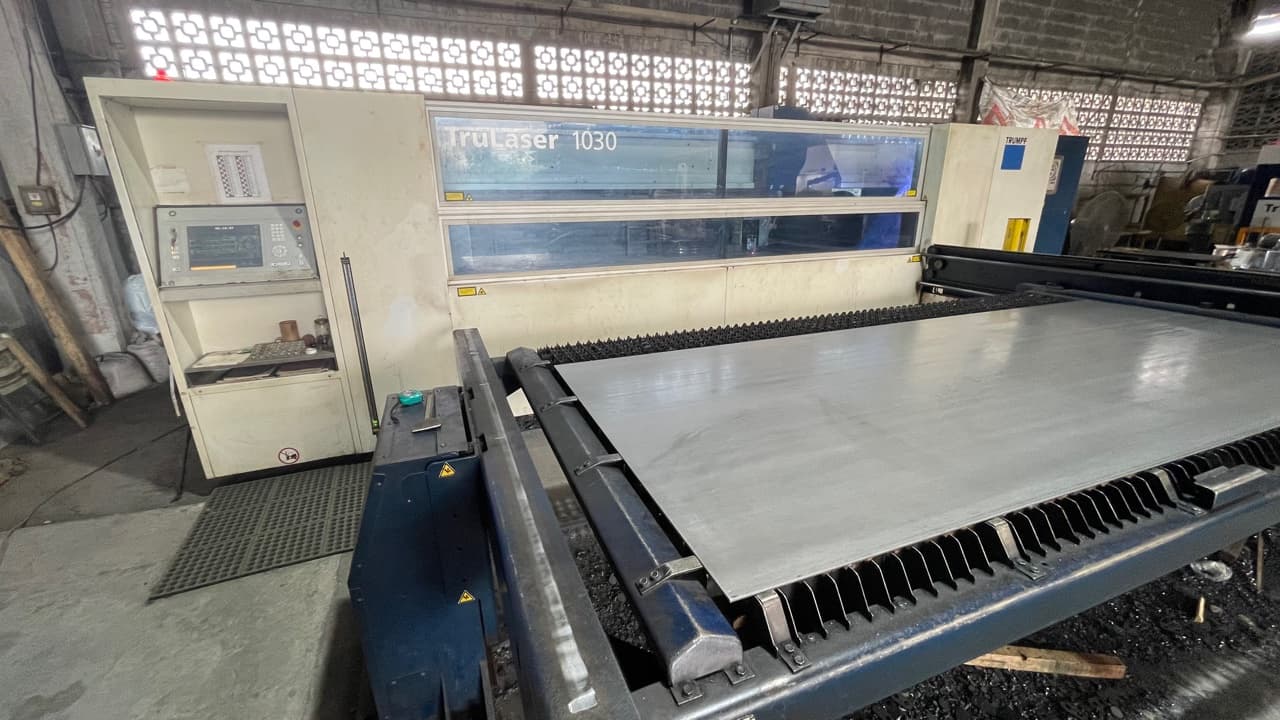
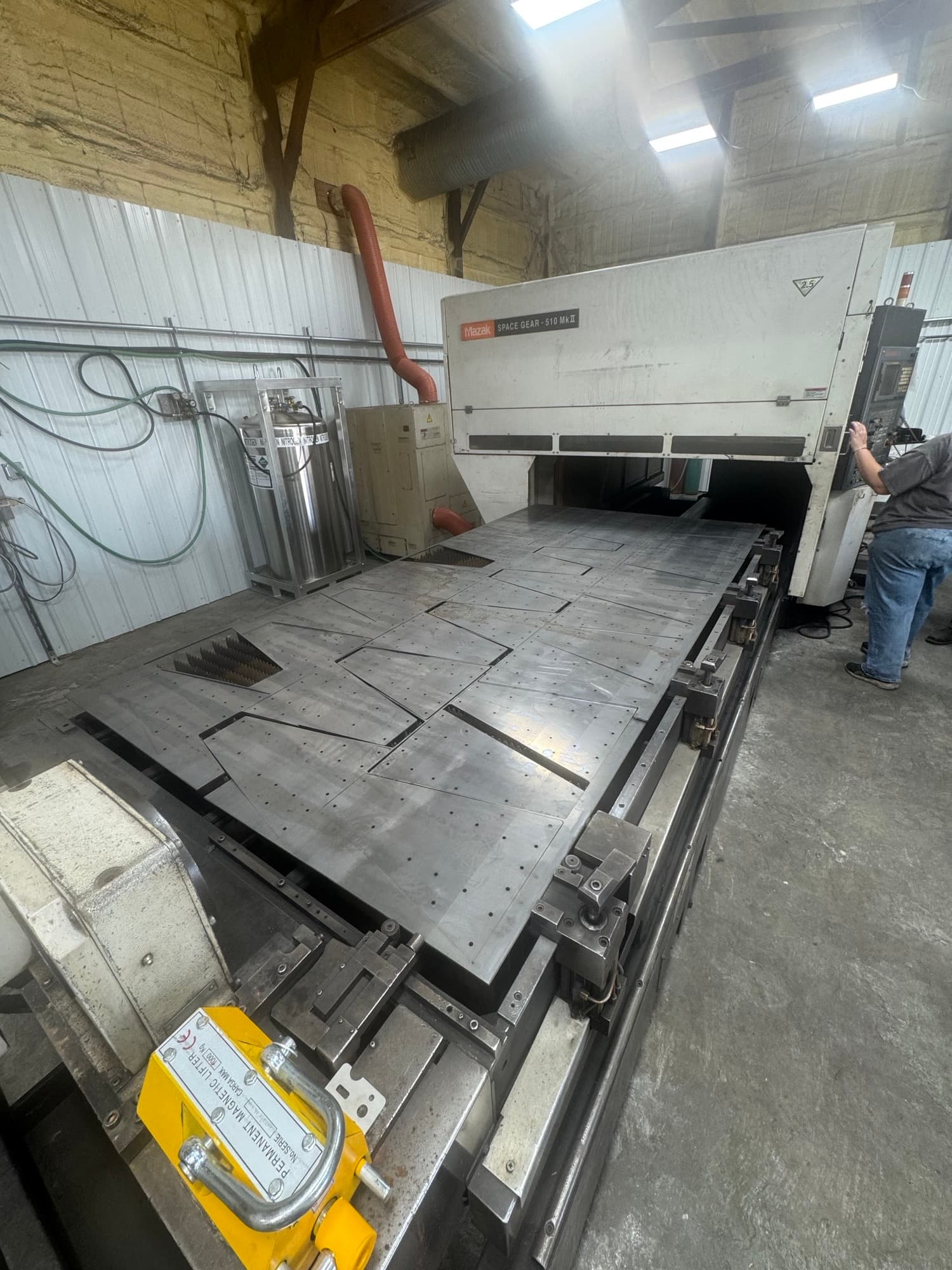
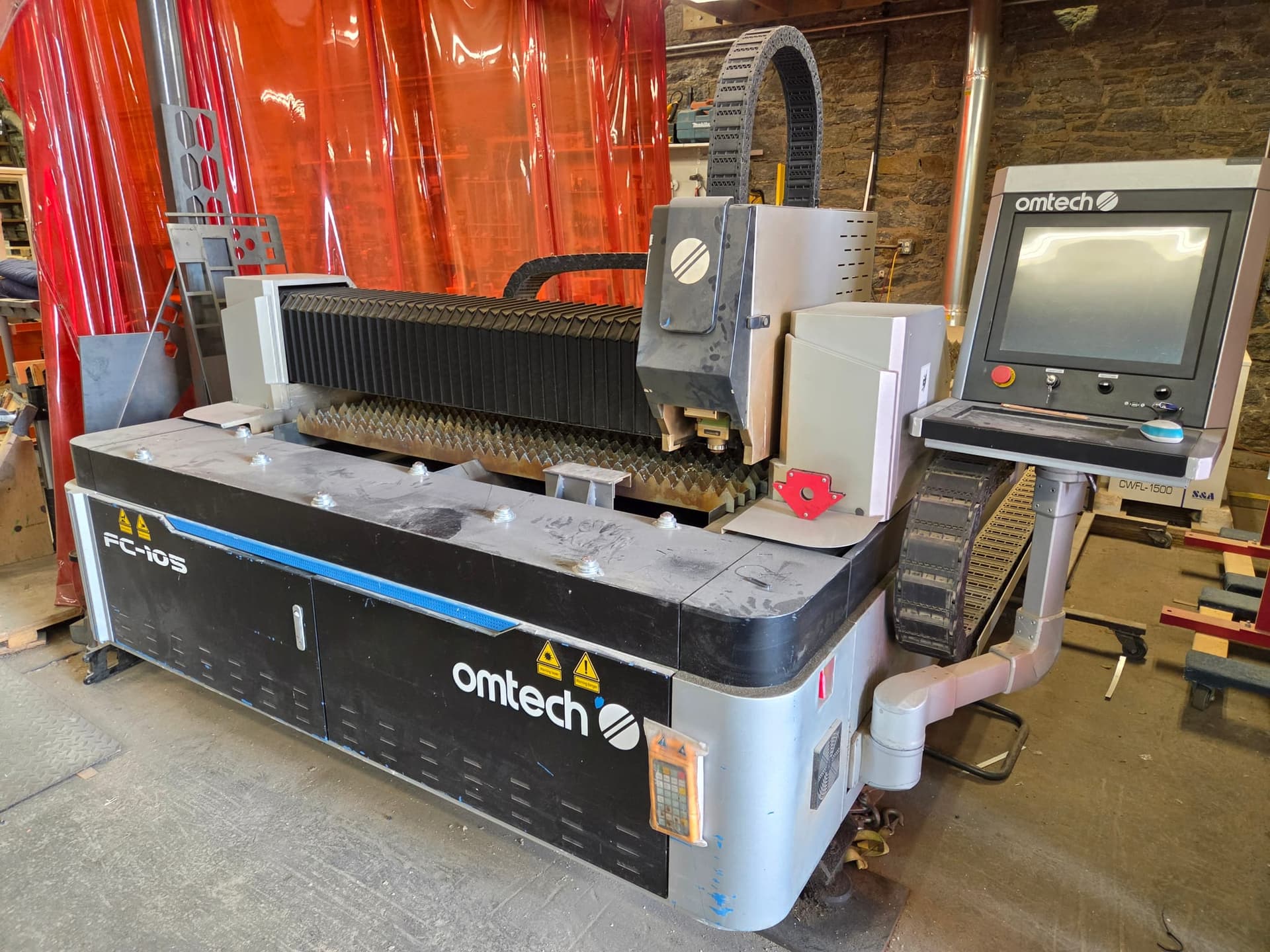
Trumpf vs Amada Laser Cutters: Head-to-Head Comparison
Trumpf and Amada are the two most dominant names in laser cutting — together they account for the majority of laser cutting machines installed in North American fabrication shops. Choosing between them is one of the most debated decisions in the sheet metal industry. After 50+ years of selling, servicing, and supporting both brands, Meadoworks offers this objective comparison to help you make the right choice for your shop.
Used fabrication equipment in stock now
Browse all 27 used fabrication equipment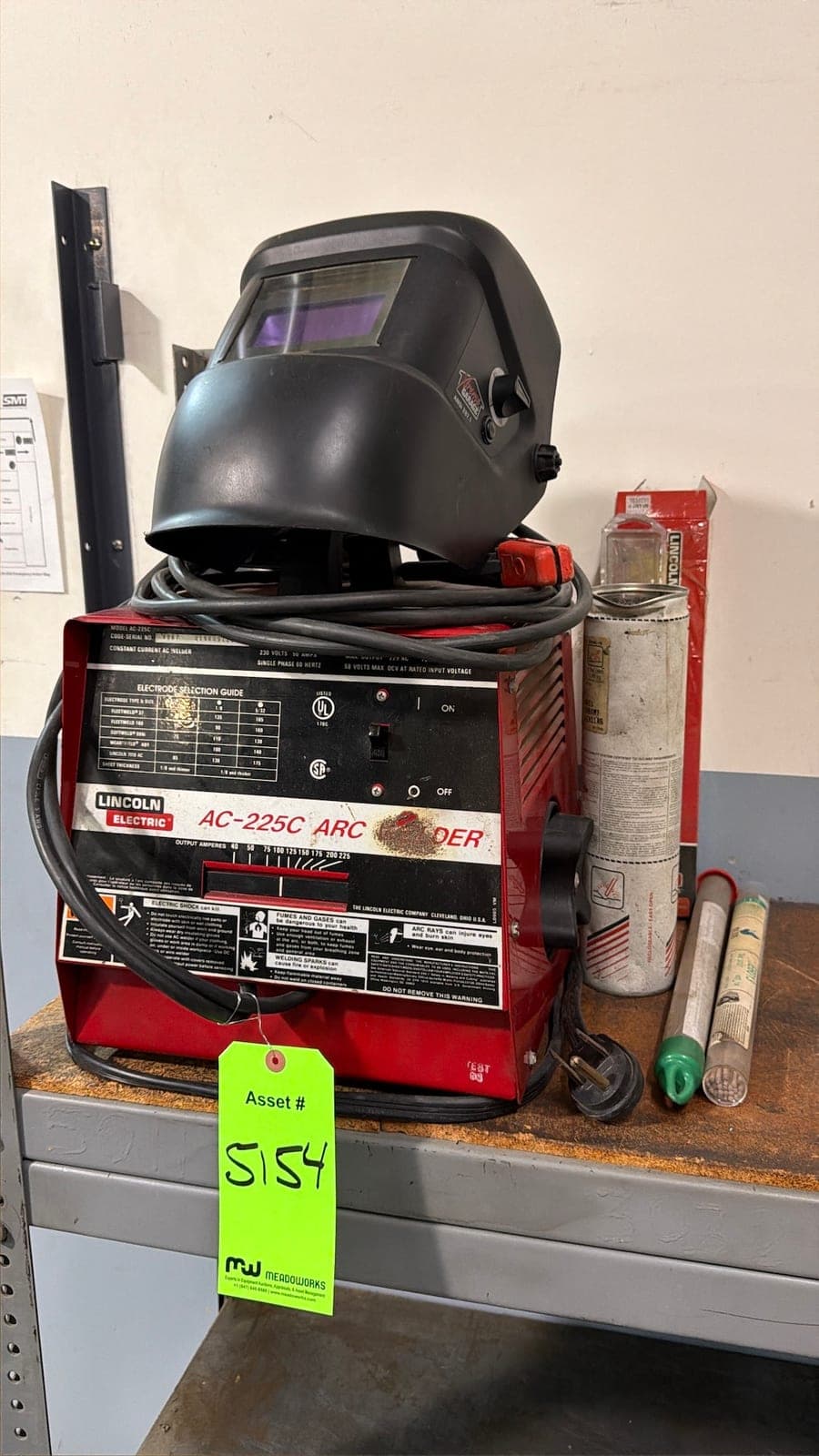
Lot 33A
Lincoln Electric 225 Amp AC Arc Welder
Naperville, IL
Live auction · Tue, Oct 27, 10:00 AM CT
Lot 17
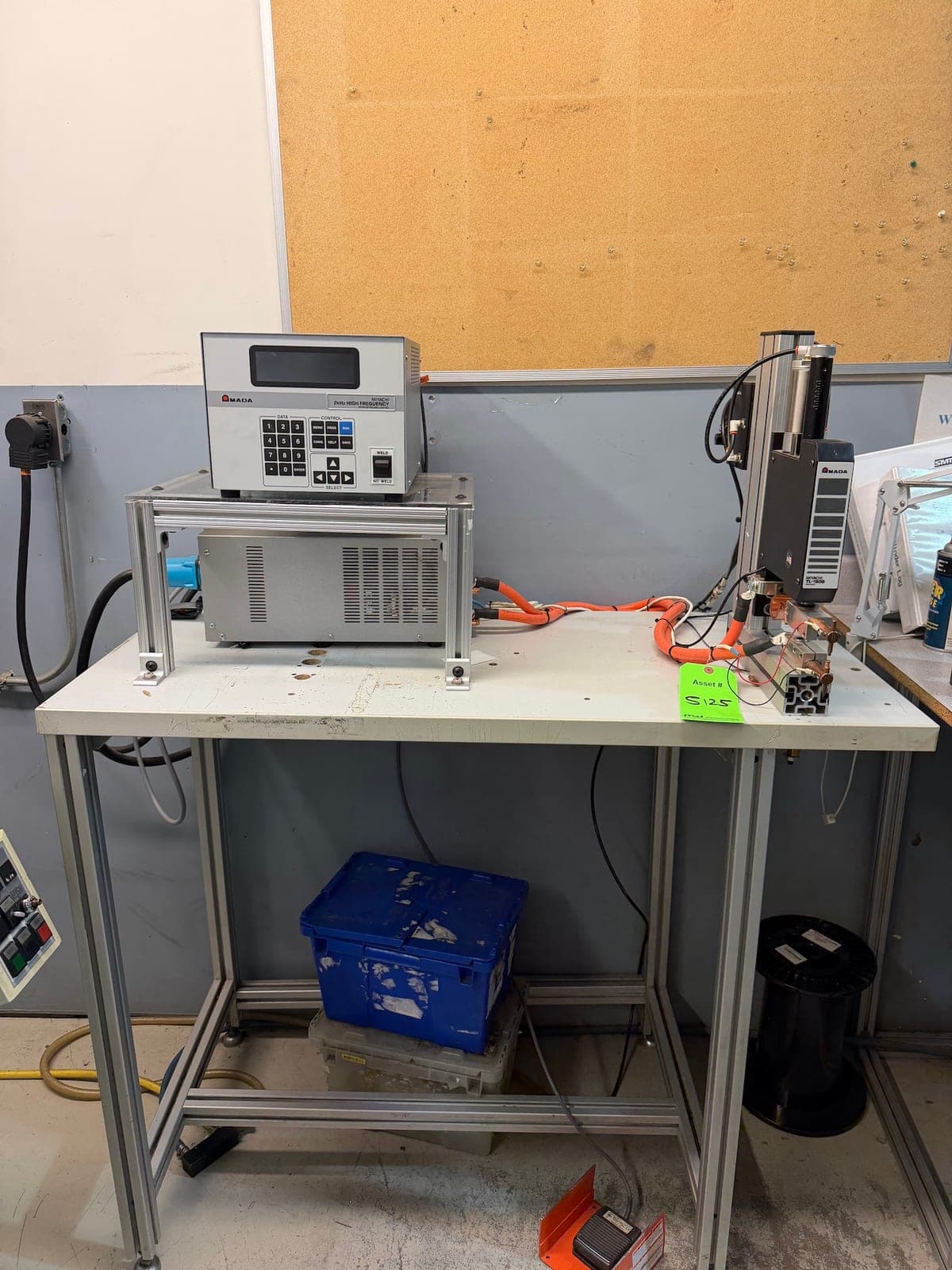
Amada Miyachi 2kHz High Frequency Inverter Resistance Welding Station
Naperville, IL
Live auction · Tue, Oct 27, 10:00 AM CT
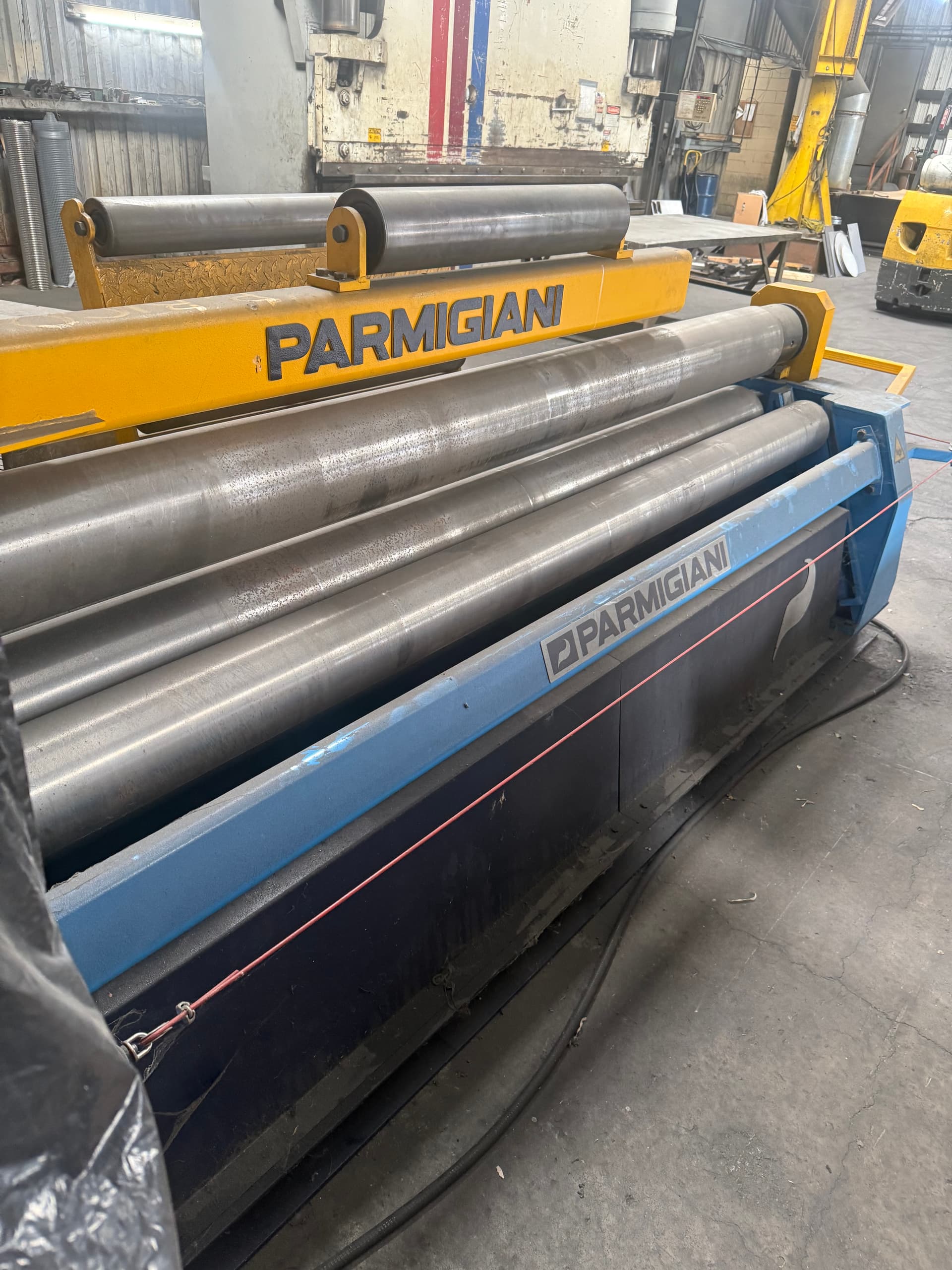
Parmigiani VBH 8-210 Plate Roll
USA
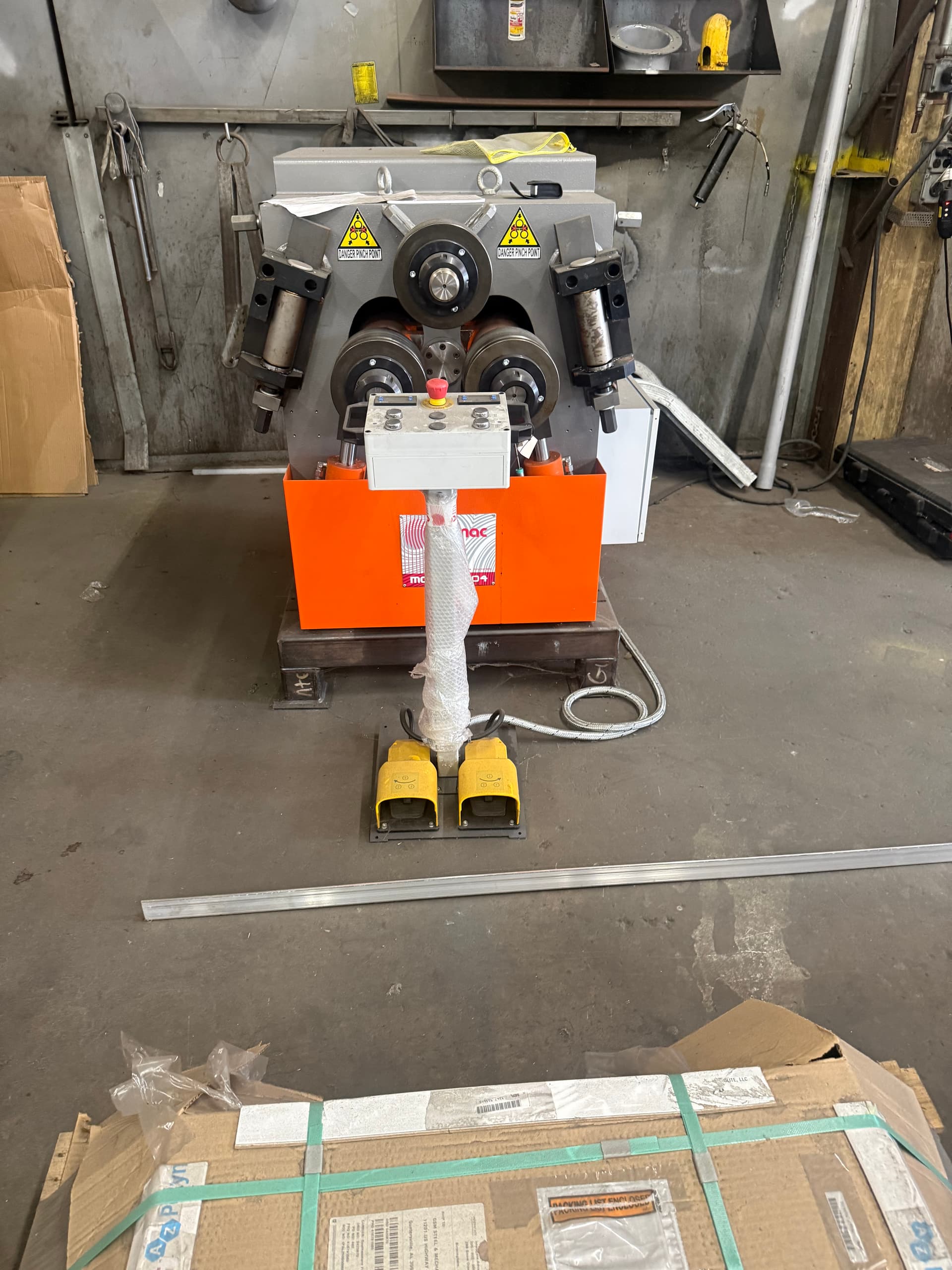
Comac 304HV Angle Roll
USA
Company Overview
Trumpf
Trumpf is a German, family-owned company founded in 1923. It is the world's largest manufacturer of industrial laser systems and a technology leader in sheet metal fabrication equipment. Trumpf builds its own laser sources (TruDisk and TruFiber), cutting heads, CNC controls, and software — a level of vertical integration unmatched in the industry. Annual revenue exceeds $5 billion, with approximately 18,000 employees worldwide.
Amada
Amada is a Japanese company founded in 1946 and one of the world's largest manufacturers of metalworking machinery. Amada produces laser cutters, press brakes, punch presses, shears, and bandsaws — a broader product line than Trumpf. Amada developed its proprietary fiber laser oscillator technology and is known for engineering reliability and value into its machines. Annual revenue exceeds $3 billion with over 12,000 employees globally.
Laser Source Technology
The laser source is the heart of any laser cutting system, and Trumpf and Amada take distinctly different engineering approaches.
Trumpf: TruDisk (Disk Laser)
Trumpf's proprietary TruDisk laser source uses a thin disk of ytterbium-doped crystal (Yb:YAG) as the gain medium — a technology Trumpf pioneered and continues to refine. The disk design produces an exceptionally high beam quality (low BPP — beam parameter product), which translates to a tighter focus spot and superior edge quality, particularly on thicker materials.
- Beam quality: Best-in-class BPP across the power range — maintains quality even at 12,000W+
- Scalability: Power levels from 1,000W to 24,000W+ by adding disk modules
- Efficiency: ~30% wall-plug efficiency
- Source life: 80,000+ hours — effectively maintenance-free
- Differentiator: Higher beam quality enables faster cutting speeds, especially on medium-thickness material
Amada: ENSIS (Variable Beam Technology)
Amada's ENSIS technology is a fiber laser oscillator that Amada developed in-house. Its defining feature is variable beam control — the ability to automatically change the beam diameter, shape, and mode to optimize cutting for different material types and thicknesses without manually changing lenses or nozzles.
- Variable beam: Automatically adjusts beam characteristics for thin vs thick material — eliminates lens changes and reduces setup time
- Power range: 2,000W to 12,000W in current models
- Efficiency: ~30% wall-plug efficiency
- Source life: 80,000+ hours
- Differentiator: One machine efficiently handles a wider mix of material thicknesses — ideal for job shops with diverse work
Cutting Performance Comparison
| Factor | Trumpf | Amada |
|---|---|---|
| Thin steel speed (<1/4") | Excellent — slight edge | Excellent |
| Mid-thickness (1/4"–3/4") | Excellent — beam quality advantage | Very good — ENSIS adapts well |
| Thick steel (>3/4") | Excellent | Very good |
| Edge quality (N2 cutting) | Excellent — top of class | Very good to excellent |
| Material versatility | Good — manual optimization | Excellent — ENSIS auto-adjusts |
| Small hole quality | Excellent | Very good |
| Pierce speed | Very fast | Fast |
| Acceleration | Up to 2.5G+ | Up to 2G |
In head-to-head cutting tests, Trumpf typically wins on raw speed and edge quality — particularly on medium-thickness stainless and aluminum with nitrogen assist. The advantage is measurable (5–15% faster) but not dramatic. Amada's ENSIS technology closes the gap by optimizing the beam for each thickness automatically, which can save significant setup time in high-mix environments.
Automation and Material Handling
Both manufacturers offer comprehensive automation solutions, but their approaches differ.
Trumpf Automation
- LiftMaster: Automated loading/unloading with suction cup and fork systems
- STOPA storage: Integrated tower storage systems for fully automatic sheet management
- SortMaster: Automated part sorting and stacking — reduces post-cut labor
- TruConnect: IoT platform connecting machines, automation, and software for real-time production monitoring
- Integration depth: Trumpf designs its automation to work seamlessly with its machines — tight integration but limited third-party flexibility
Amada Automation
- ASFH: Automatic sheet feeder for continuous operation
- ASF/MPF Tower: Material storage and retrieval systems
- TK system: Parts sorting and stacking automation
- V-factory: IoT monitoring for production tracking and machine health
- Integration approach: Amada offers strong automation across its entire product line (laser, press brake, punch) — ideal for shops running multiple Amada machines
Software and Controls
Trumpf: TruTops Suite
Trumpf's TruTops software suite covers programming, nesting, and production management.
- TruTops Boost: All-in-one CAD/CAM with automatic nesting, technology parameters, and machine code generation
- Interface: Modern and polished — widely considered the most user-friendly laser programming software
- Control: Proprietary Trumpf CNC with touchscreen interface on the machine
- Learning curve: Moderate — intuitive interface but extensive feature set takes time to master
Amada: AMNC Controls
Amada's AMNC control system powers its laser machines.
- Dr. ABE_Blank: Amada's offline CAM software for nesting and programming
- AMNC 3i: Latest-generation touchscreen control with simplified operation
- ID system: Database of cutting parameters organized by material/thickness — simplifies setup
- Learning curve: Moderate — straightforward for basic operation, deeper features require training
Service Networks and Support
| Factor | Trumpf | Amada |
|---|---|---|
| North American presence | Strong — HQ in Farmington, CT | Strong — HQ in Buena Park, CA |
| Service technicians | 300+ in North America | 250+ in North America |
| Average response time | 24–48 hours | 24–48 hours |
| Parts availability | Very good — regional parts depots | Very good — centralized + regional |
| Remote diagnostics | Yes — TruConnect teleservice | Yes — V-factory remote support |
| Technical training centers | Multiple US locations | Multiple US locations |
| Used machine support | Full support for older models | Full support for older models |
Both manufacturers maintain excellent North American service networks. Neither has a significant advantage in support coverage or response time. For shops in the northeast, Trumpf's Connecticut headquarters offers proximity advantages. For west coast shops, Amada's California headquarters is the closer option.
Used Market Pricing
The used market tells an important story about how each brand holds value and what buyers can expect to pay.
Used Trumpf Laser Pricing
| Model / Type | Wattage | Typical Used Price |
|---|---|---|
| TruLaser 3030 CO2 | 3,200–5,000W | $60,000 – $130,000 |
| TruLaser 3030 Fiber | 4,000–6,000W | $175,000 – $325,000 |
| TruLaser 5030 Fiber | 6,000–8,000W | $250,000 – $450,000 |
| TruLaser 3040 Fiber | 6,000–12,000W | $275,000 – $500,000+ |
Used Amada Laser Pricing
| Model / Type | Wattage | Typical Used Price |
|---|---|---|
| FO / FOM CO2 series | 2,000–4,000W | $30,000 – $80,000 |
| ENSIS 3015 Fiber | 2,000–4,000W | $90,000 – $200,000 |
| ENSIS 3015 AJ Fiber | 6,000–9,000W | $175,000 – $325,000 |
| LCG 3015 AJ Fiber | 4,000–6,000W | $125,000 – $275,000 |
Trumpf machines command a 15–25% premium over comparable Amada machines on the used market — reflecting higher original cost and strong brand demand. However, Amada machines offer arguably better value per dollar spent. Both brands hold their value well relative to other laser manufacturers.
Which Should You Choose?
Choose Trumpf If:
- Maximum cutting speed and edge quality are your top priorities
- You run high volumes of medium-to-thick material where beam quality directly impacts throughput
- You value deep vertical integration — one company builds the laser source, cutting head, control, and software
- You want the strongest resale value when it's time to upgrade
- You plan to invest in comprehensive automation (LiftMaster, SortMaster, STOPA)
Choose Amada If:
- You run a high-mix job shop where material types and thicknesses change frequently — ENSIS beam variability excels here
- You want excellent cutting performance at a lower acquisition cost — both new and used
- You run other Amada equipment (press brakes, punches) and want a unified ecosystem
- Reliability and low maintenance costs are higher priorities than the last 5% of cutting speed
- You prefer a lower total cost of ownership over a slightly higher throughput ceiling
The Meadoworks Perspective
After decades of selling both Trumpf and Amada laser cutters, our recommendation is consistent: either brand will serve most fabrication shops exceptionally well. The performance gap between them is far smaller than the gap between either one and lesser brands.
For shops where laser cutting is the core revenue driver and throughput directly translates to dollars, Trumpf's speed advantage may justify the price premium. For the majority of job shops and general fabricators, Amada delivers outstanding performance at a more accessible price point — especially on the used market.
Meadoworks stocks both brands in a range of models and power levels. We can help you compare specific machines side by side and find the right fit for your production requirements and budget.
Frequently Asked Questions
Is Trumpf or Amada better for laser cutting?
Both are excellent manufacturers, and the 'better' choice depends on your specific needs. Trumpf generally leads in raw cutting speed, beam quality, and deep vertical integration (they build their own laser sources, cutting heads, and controls). Amada excels in variable beam technology (ENSIS), reliability, and value — particularly on the used market where Amada machines offer exceptional performance per dollar. Shops focused on maximum throughput and cutting-edge technology often choose Trumpf. Shops prioritizing reliability, versatility, and total cost of ownership frequently choose Amada. Meadoworks stocks both brands — call 800-323-0307 for current availability.
How much does a used Trumpf laser cutter cost?
Used Trumpf laser cutter prices range widely based on model, wattage, year, and technology. Older CO2 TruLaser models (2000–4000W) start around $60,000–$120,000. Mid-generation fiber TruLaser 3030/3040 machines (4,000–6,000W) run $150,000–$300,000. Late-model high-power fiber systems (8,000W+) range from $250,000–$500,000+. Trumpf machines hold their value better than almost any other brand due to build quality and market demand.
How much does a used Amada laser cutter cost?
Used Amada laser cutters offer strong value across the price spectrum. Older CO2 models (FO series, 2,000–4,000W) start around $30,000–$75,000. Fiber ENSIS machines (2,000–6,000W) range from $80,000–$250,000 depending on year and features. Late-model ENSIS or LCG fiber machines with automation can reach $300,000+. Amada machines are known for reliability and low maintenance costs, which helps preserve resale value.
Can I switch from Trumpf to Amada or vice versa?
Yes, but plan for a transition period. Both brands use proprietary control systems and programming software — Trumpf uses TruTops and Amada uses AMNC/Dr. ABE_Blank. Operators familiar with one system typically need 2–4 weeks to become proficient on the other. Nesting software (like SigmaNEST or similar third-party solutions) can ease the transition by providing a common programming interface. The cutting process itself is similar between brands, so experienced operators adapt quickly to the machine operation even if the software takes longer to learn.
Browse Used Trumpf & Amada Laser Cutters
Meadoworks stocks used laser cutters from Trumpf, Amada, and all major fabrication equipment brands. Let our team help you find the right machine for your shop.Contact us →
Or call 800-323-0307 to discuss your laser cutting requirements with an industry expert.