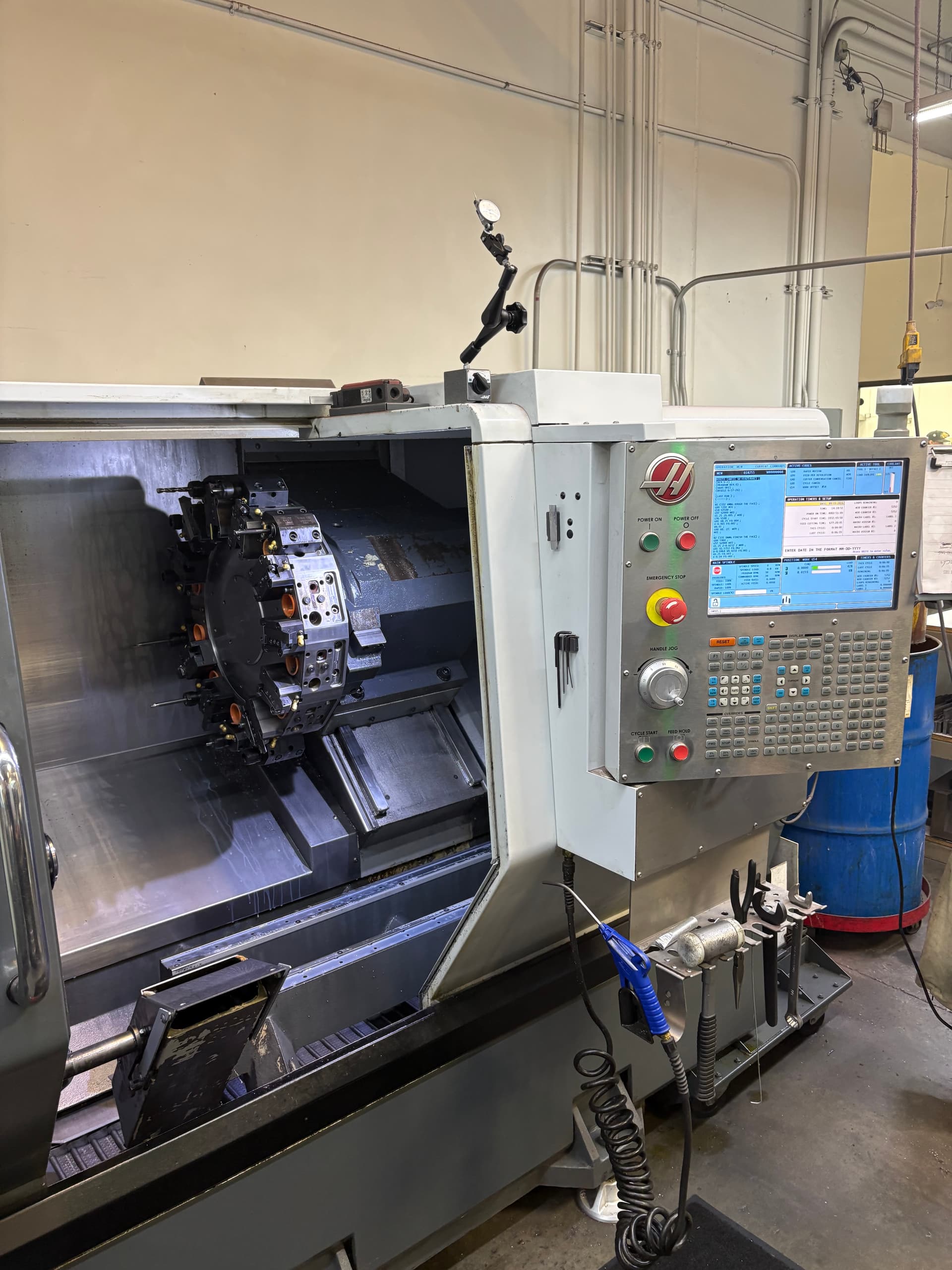
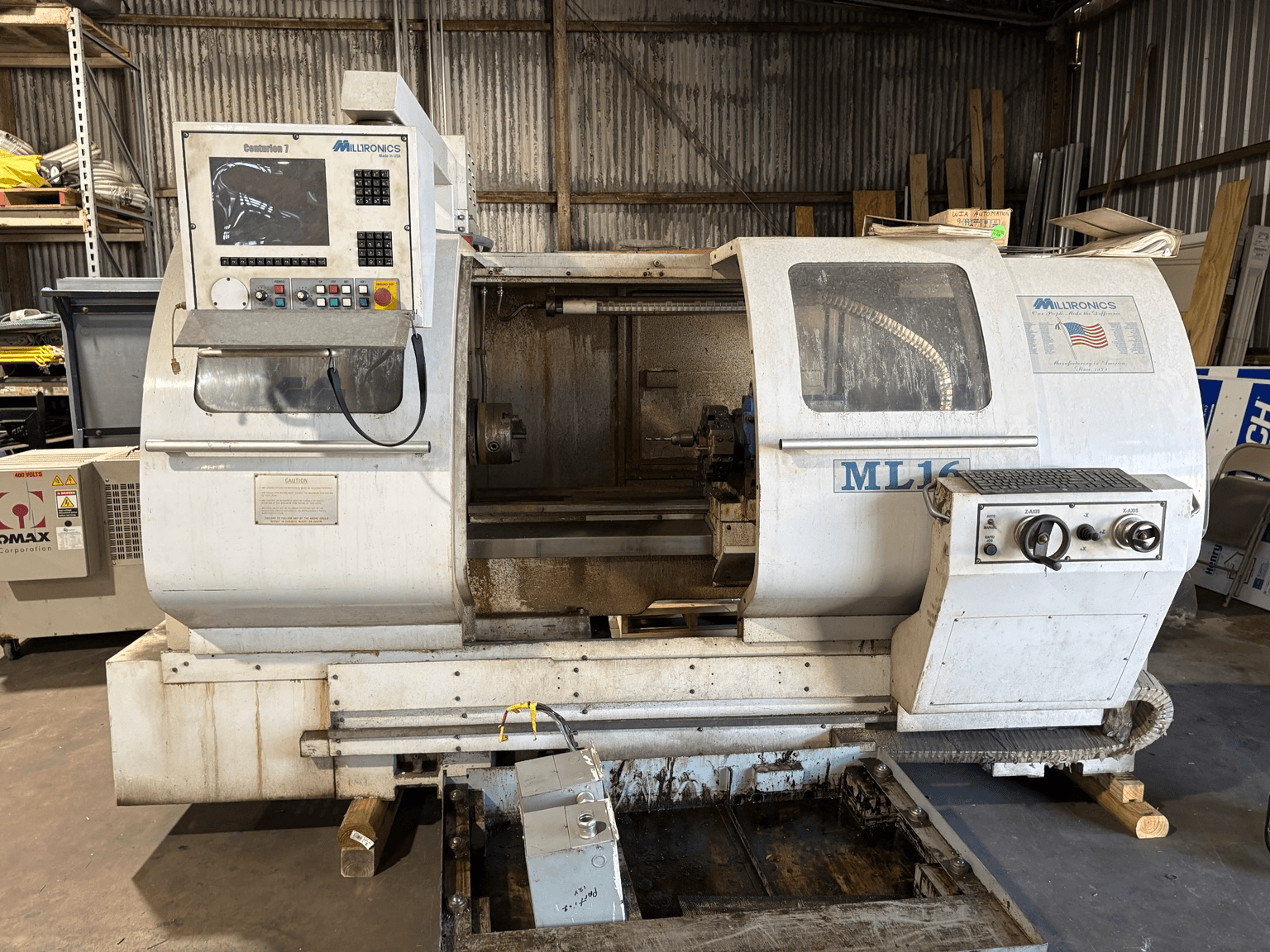
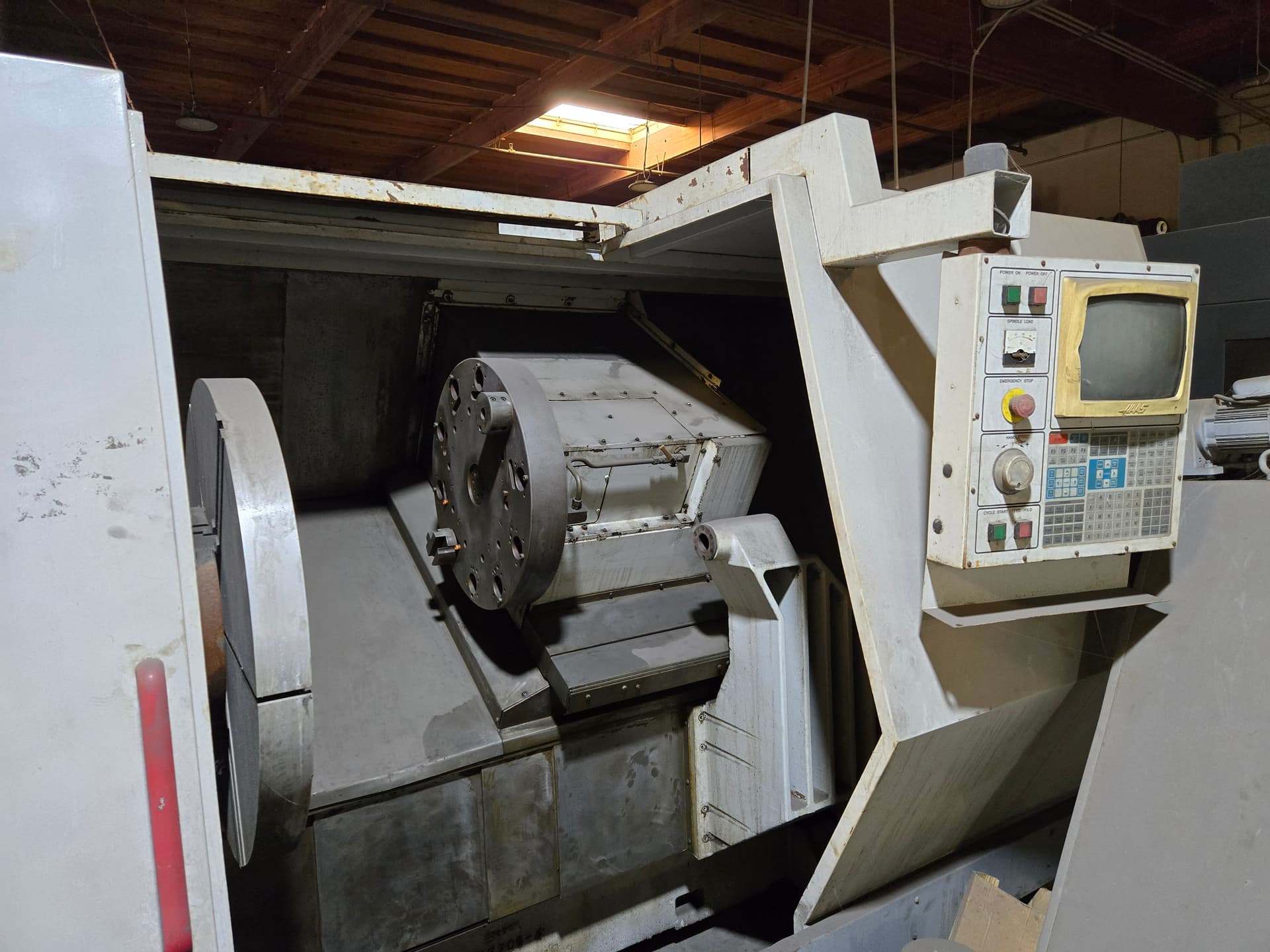
Used CNC Lathe & Turning Center Buying Guide
CNC lathes and turning centers are the backbone of precision manufacturing. From simple shafts and bushings to complex multi-featured components produced in a single setup, the right turning center can transform your shop's capability and profitability.
Key Takeaways
- 6 lathe types — 2-axis, live tooling, sub-spindle, Y-axis, Swiss-type, and multi-tasking mill-turn
- Used pricing spans $15k to $300k+ depending on type, brand, age, and live tooling/sub-spindle features
- Top brands: Mazak, Okuma, DMG Mori (premium); Haas, Doosan (value)
- Bar capacity (through-spindle bore) is critical for bar work — common sizes are 2", 3", and 4"+
- Always inspect spindle, turret, ball screws, tailstock, and coolant system before buying
Types of CNC Lathes
2-Axis CNC Lathe
Controls X (cross slide) and Z (carriage along workpiece). Best value per dollar for round parts.
- OD turning, facing, boring, threading
- 8–12 station turret
- Hydraulic chuck and tailstock
Live Tooling Lathe
Driven (rotating) tool stations on the turret enable milling, drilling, tapping while chucked.
- Requires C-axis spindle positioning
- Cross-drilling, flats, keyways
- Eliminates secondary mill ops
Sub-Spindle Lathe
Secondary spindle picks off the part for back-side machining in a single cycle.
- Complete part in one setup
- Programmed pick-off
- Ideal for high production
Y-Axis Turning Center
Adds a third linear axis perpendicular to X and Z for true off-center milling.
- Face milling, off-center drilling
- Slot milling and contouring
- Standard on mid/upper-tier
Swiss-Type CNC Lathe
Sliding headstock with guide bushing for small, long, slender precision parts.
- Medical, watch, aerospace fasteners
- 5–13 axes; back-working capable
- Citizen, Star, Tsugami, Tornos
Multi-Tasking Mill-Turn
Combines turning, milling, drilling — sometimes grinding — in one platform.
- Mazak Integrex, Okuma Multus
- DMG Mori NTX/NZX series
- Replaces 3–4 separate operations
Key Specifications to Evaluate
| Specification | What to Look For | Typical Range |
|---|---|---|
| Maximum Swing | Largest diameter that clears the bed | 10" – 36" |
| Max Turning Diameter | Practical max with turret in position | 6" – 24" |
| Max Turning Length | Chuck face to tailstock (Z travel) | 10" – 60"+ |
| Bar Capacity (Bore) | Through-spindle bore for bar feeding | 2", 2.5", 3", 4"+ |
| Spindle Speed | Standard CNC: 3,500–4,500 RPM; Swiss: 6k–12k RPM | 3,500 – 12,000 RPM |
| Spindle Horsepower | Determines aggressiveness on larger diameters | 15 – 40 HP |
| Turret Capacity | VDI 30/40/50 standardized; 12 stations most common | 8 – 16 stations |
| Control System | Fanuc (most common), Mazatrol, OSP, Siemens | See controls guide |
Top CNC Lathe Brands on the Used Market
Mazak
Key models: QT-200, QT-250, QT-300
Quick Turn (QT) series — among the most popular turning centers ever. Mazatrol conversational control, rigid construction.
$20k–$100k+Okuma
Key models: LB3000, LB4000, Multus
Vertical integration — controls, spindles, drives in-house. 20-year-old machines commonly still in production.
$25k–$120k+Haas
Key models: ST-10, ST-20, ST-30, ST-35
Best value in the CNC lathe market. Strong North American support; Fanuc-compatible interface.
$15k–$70kDMG Mori
Key models: NLX, CLX, NTX series
Premium turning across the spectrum. Mori Seiki heritage offers exceptional used-market value.
$25k–$150k+Doosan
Key models: Lynx, Puma series
Korean builder with capable, reliable lathes at competitive prices. Now rivals Japanese competitors.
$15k–$80kMori Seiki
Key models: SL, NL, NLX series
Pre-2013 Mori Seiki lathes carry Japanese build quality at older-branding prices — exceptional used value.
$25k–$100kUsed CNC Lathe Pricing
| Type / Configuration | Size Range | Typical Price Range |
|---|---|---|
| 2-axis CNC lathe (basic) | 8–10" chuck | $15,000 – $35,000 |
| 2-axis CNC lathe (mid-range) | 10–15" chuck | $25,000 – $60,000 |
| Live tooling turning center | 8–12" chuck | $35,000 – $90,000 |
| Sub-spindle turning center | 6–10" chuck | $60,000 – $175,000 |
| Y-axis multi-tasking | 8–12" chuck | $50,000 – $150,000 |
| Big-bore / oil country lathe | 10–15" bore | $40,000 – $120,000 |
| Swiss-type CNC lathe | 12–32mm bar | $25,000 – $150,000+ |
Prices vary based on brand, age, hours, control type, and included tooling/accessories. Machines with bar feeders, chip conveyors, and high-pressure coolant command premium pricing.
What to Inspect When Buying a Used CNC Lathe
A careful pre-purchase inspection can save you thousands. See our full CNC machine inspection checklist and maintenance guide for additional detail.
Spindle & Bearings
- Spindle hours (rated 10k–20k)
- Bearing noise at low/mid/high RPM
- Runout: under 0.0002" good; over 0.0005" suggests wear
- Vibration and heat after 15–20 min run
Chuck & Hydraulic Cylinder
- Consistent gripping force
- Jaw condition (worn jaws cause runout)
- Rotary cylinder for hydraulic leaks
- Safety interlock prevents spindle start with chuck open
Turret Indexing
- Cycle through all stations multiple times
- Live tooling stations run smoothly
- No unusual noise during indexing
- Turret rebuilds cost $5k–$15k — expensive
Ball Screws & Ways
- X and Z backlash via diagnostics or indicator
- Box ways: consistent scraping, no scoring
- Linear guides: smooth motion, no sticking
- Under 0.0005" backlash is good
Tailstock
- Alignment via test bar between centers
- Quill extends/retracts smoothly
- Live center runout and rotation
- No taper on ground test bar
Coolant & Chip Management
- All nozzle positions function
- Chip conveyor moves chips effectively
- Coolant tank free of heavy sludge
- High-pressure coolant tested at full pressure
Why Buy a Used CNC Lathe from Meadoworks
Meadoworks has extensive experience in CNC lathes and turning centers across all major brands and configurations. We inspect every machine in our inventory and provide honest, detailed descriptions of condition and capability.
We can help you identify the right machine for your production requirements — whether that's a simple 2-axis lathe for general job shop work or a multi-axis turning center for complete part machining. We also assist with rigging, shipping, and installation coordination. Contact us or call 800-323-0307.
Frequently Asked Questions
How much does a used CNC lathe cost?
Used CNC lathe prices vary based on size, capability, and condition. Basic 2-axis CNC lathes (8–10 inch chuck) start around $15,000–$30,000. Mid-range turning centers with live tooling run $35,000–$80,000. Multi-axis machines with sub-spindle and Y-axis range from $60,000–$175,000. Large-bore, long-bed, or late-model machines can exceed $200,000. Swiss-type CNC lathes range from $25,000–$150,000+ depending on brand and capability.
What is the difference between a CNC lathe and a turning center?
The terms are often used interchangeably, but a turning center generally refers to a more capable machine with features like a fully enclosed work area, automatic tool changer (turret), chip conveyor, and CNC control with canned cycles. A basic CNC lathe may have a simpler setup. Machines with live tooling, C-axis, Y-axis, or sub-spindles are almost always called turning centers because they can perform milling and drilling operations in addition to turning.
What size CNC lathe do I need?
CNC lathe size is determined by maximum swing (largest diameter the machine can turn), maximum turning length, bar capacity (if bar feeding), and chuck size. Consider your typical part envelope: a 10-inch chuck with 20-inch turning length covers most general job shop work. If you run bar stock, the bar capacity (through-spindle bore) is critical — common sizes are 2 inches, 3 inches, and 4+ inches. Contact Meadoworks at 800-323-0307 for help matching a machine to your parts.
What brands of CNC lathes does Meadoworks carry?
Meadoworks stocks used CNC lathes and turning centers from Mazak, Okuma, Haas, DMG Mori (Mori Seiki), Doosan, Hwacheon, Samsung, Hyundai-Wia, Nakamura-Tome, and other leading manufacturers in a range of sizes and configurations.
Browse Used CNC Lathes & Turning Centers
Meadoworks stocks used CNC lathes, turning centers, and tool room equipment from all major brands.Browse CNC & machining equipment →
Or call 800-323-0307 to discuss your specific turning requirements.