Used Multi-Shot Injection Molding Machines for Sale
See all 77 Injection Molding Machines →
12 results

Lot 6 · Item #5996
2018 Arburg All Rounder 920S 500-2100/400 - 2-Shot
Rochester, NY
Ends Thu, Oct 29, 10:10 AM CT

Lot 9 · Item #6271
2017 Krauss Maffei KM 450-750/380 GXZ - 2-Shot
Laval, QC
Ends Thu, Oct 29, 10:16 AM CT

Lot 5 · Item #6207
2016 Engel e-Motion 440H/170V/310 T Combi
Lebanon, NJ
Ends Thu, Oct 29, 10:08 AM CT
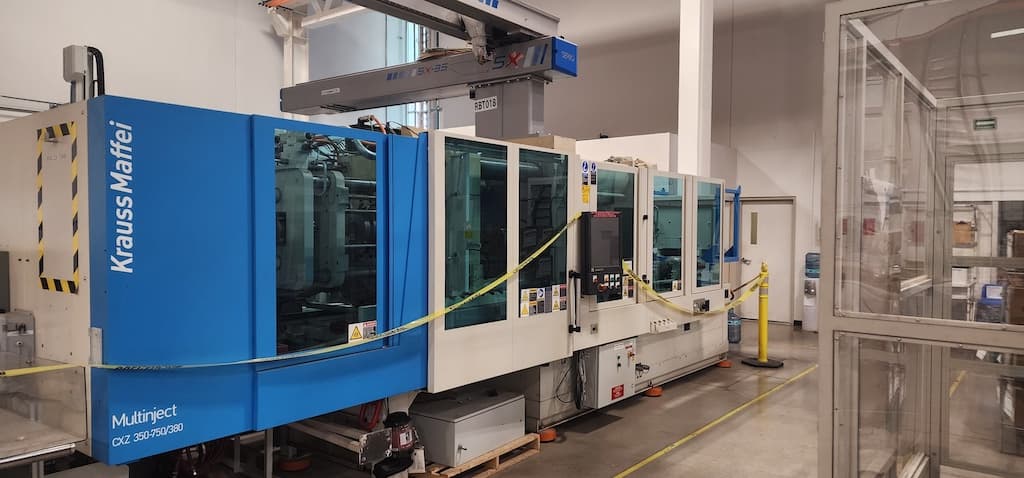
Lot 12 · Item #6285
2015 Krauss Maffei KM 350-750-380 - 3-Shot
San Luis Potosi, S.L.P.
Ends Thu, Oct 29, 10:22 AM CT

Lot 7 · Item #6274
2015 Engel Duo 650H/330W/200L 500 combi US - 3-Shot
Laval, QC
Ends Thu, Oct 29, 10:12 AM CT

Item #4908
2015 Krauss Maffei Multinject CXZ 350-1000/380 - 2-Shot
USA

Item #4907
2014 Krauss Maffei Multinject CXZ 350-1000/380 - 2-Shot
USA
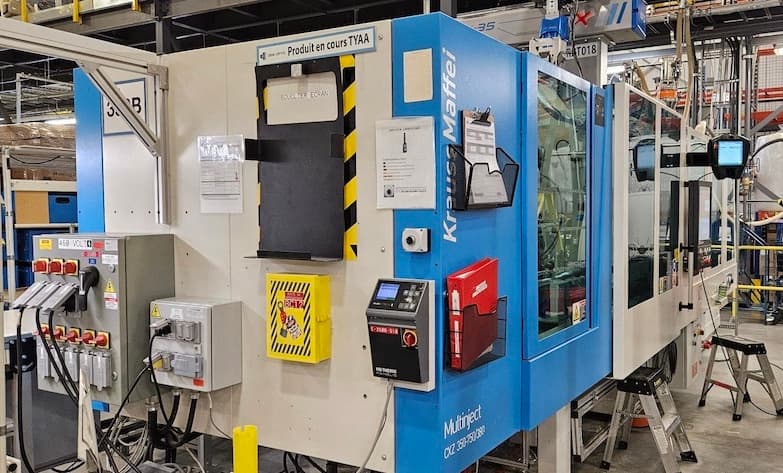
Lot 11 · Item #6273
2013 Krauss Maffei KM 350-750-380 - 2-Shot
Laval, QC
Ends Thu, Oct 29, 10:20 AM CT

Lot 10 · Item #6272
2013 Krauss Maffei KM 420-1400-750 CXZ - 2-Shot
Laval, QC
Ends Thu, Oct 29, 10:18 AM CT

Item #4929
Sumitomo - SE130D-CI - 2-Shot, All Electric
USA

Item #5199
Engel - VC 750H/200V/330 Combi US - 2-Shot
USA
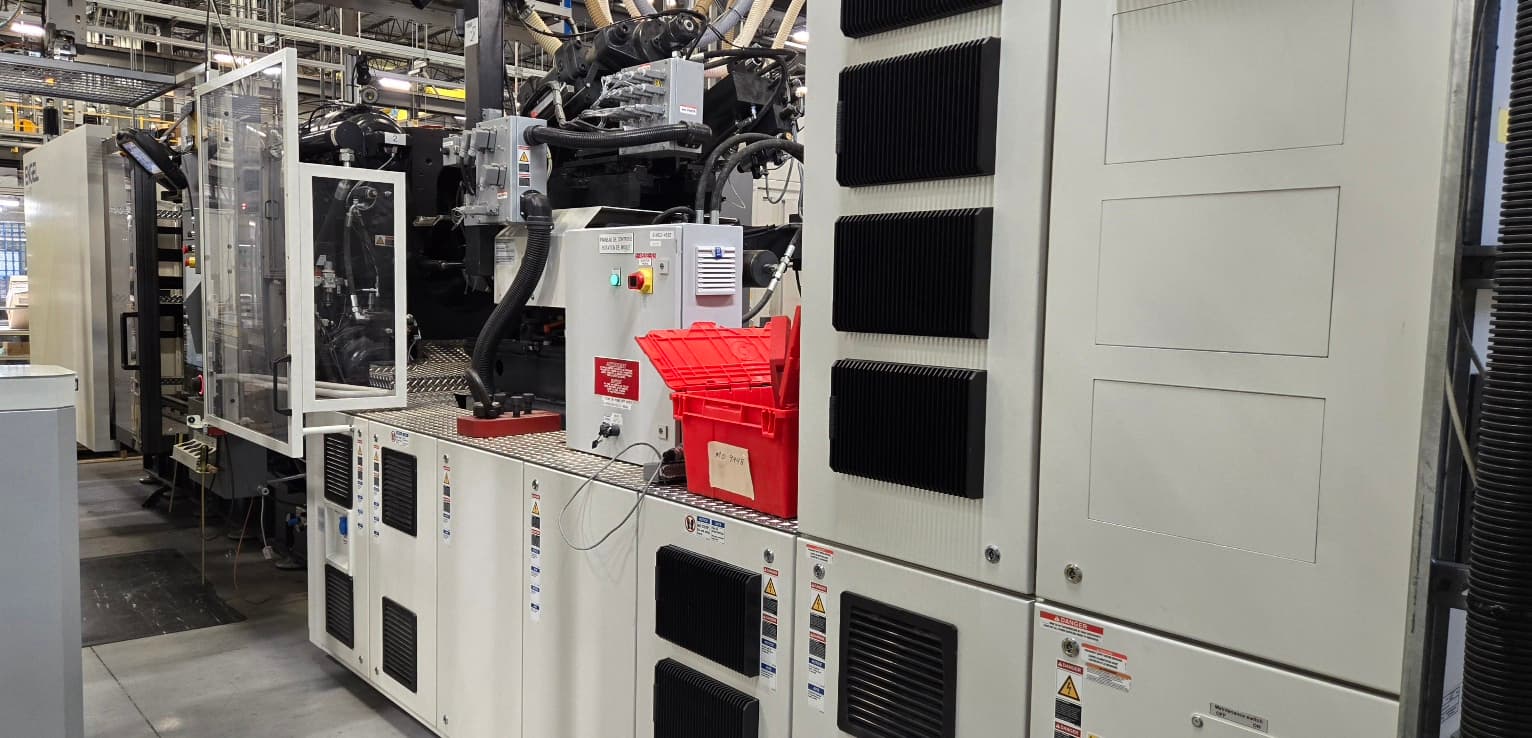
Lot 8 · Item #6585
Engel Duo 650H/330W/200L 500 combi US - 3-Shot
Laval, QC
Ends Thu, Oct 29, 10:14 AM CT
Looking for Something Specific?
Most of our inventory sells before we can list it online. If you need a specific brand, model, or specification, tell us what you need—we have access to unlisted equipment and machines coming in from plant closures.
Browse Used Multi-Shot Injection Molding Machines by Country
Looking to Sell Your Multi-Shot Injection Molding Machines?
Meadoworks is an active cash buyer of used industrial equipment. Get a free valuation from our AMEA-certified appraisers.
What Is a Multi-Shot Injection Molding Machine?
Meadoworks regularly handles used multi-shot injection molding machines — 2K (two-shot), 3K (three-shot), and multi-component injection presses for over-molding, soft-touch handles, multi-color caps, hard/soft assemblies, and seamless multi-material parts. Whether you need an Arburg Allrounder S, an Engel Combimelt or victory two-shot, a Krauss Maffei MX with a side or piggyback injection unit, or a Milacron multi-shot press, our team can help you source the right used multi-shot injection molding machine for your application.
A multi-shot injection molding machine (also called multi-component, multishot, 2K, two-shot, or multi-color injection molding) injects two or more different materials into a single mold to produce a finished part with multiple colors, durometers, or material properties — in one cycle, with no secondary assembly. Common applications include soft-touch handle grips, multi-color toothbrush bodies, sealed connector housings, integrated weatherstrip on automotive trim, and rigid/flexible medical components. Multi-shot molding eliminates assembly labor, improves bond integrity, and enables part designs that would be impossible with single-shot molding.
Multi-shot machines are configured in several ways. Rotary platen designs use a turntable mounted on the moving platen that rotates first-shot parts to the second injection station. Sliding platen designs use a horizontally moving stack mold to align preforms with the second-shot cavity. Index plate machines use a rotating cube or shuttle to move parts between stations. Core-back / dual-cavity tools open and close internal cores to expose new cavity space for the second material in the same parting line.
Most multi-shot injection molding machines have a primary horizontal injection unit plus one or more secondary injection units mounted on the side, top (piggyback), vertical, or rear of the machine. The secondary units inject into the second cavity at the appropriate point in the cycle. Brands offering robust multi-shot platforms include Arburg (Allrounder S series), Engel (Combimelt and victory two-shot), Krauss Maffei (MX with side/L injection units), Milacron (Magna T 2K), Sumitomo Demag (IntElect Multi), Wittmann Battenfeld (PowerSeries Combimould), and Negri Bossi (Canbio).
Multi-Shot Injection Molding Configurations
Rotary Platen (Turntable)
A rotating platen carries first-shot parts to the second injection station. Most common for hard/soft over-molding (e.g., toothbrush handles, soft-touch grips).
Index Plate / Cube Mold
A cube-shaped tool indexes parts through multiple injection stations on a single machine cycle. Used for high-volume packaging caps, closures, and dual-color parts.
Core-Back / Insert
Internal cavity cores retract during the cycle to expose new space for the second shot. Used for sealed assemblies and integrated gaskets.
Stack-Mold Multi-Shot
Stack molds with multiple parting lines and synchronized injection units. Used for high-cavitation packaging and consumer products.
Two-Color / Multi-Color
Multi-shot machines specifically configured for two-color or multi-color parts — lens covers, indicators, multi-color caps, and decorative trim.
Hard/Soft Over-Molding
Multi-shot configurations with rigid thermoplastic first shot and TPE/TPU/silicone second shot — soft handles, sealed enclosures, ergonomic grips.
More Injection Molding Machines types
Related Equipment Categories
All Injection Molding Machines
Browse the full catalog of used injection molding machines.
Used Molds & Product Lines
Multi-shot tooling and complete turnkey product lines.
Plastic Auxiliary Equipment
Loaders, dryers, blenders, chillers and robotics for multi-shot cells.
Blow Molding Machinery
Companion equipment for sealed multi-shot containers.
Automation Equipment
Robots and end-of-arm tooling for multi-shot integration.
Top Multi-Shot Injection Molding Machine Brands
Arburg
Allrounder S series multi-component machines — rotary platen and index designs widely used in medical, electronics, and consumer goods.
Engel
Engel Combimelt, victory two-shot, and duo Combi systems — among the most flexible multi-shot platforms in the industry.
Krauss Maffei
Krauss Maffei MX series with side, L-position, and piggyback injection units — standard for automotive multi-shot work.
Milacron
Milacron Magna T multi-shot presses — widely used in U.S. automotive, packaging, and consumer goods multi-component molding.
Sumitomo Demag
IntElect Multi all-electric multi-component machines — precision multi-shot for medical, electronics, and packaging.
Wittmann Battenfeld
PowerSeries Combimould multi-component machines — integrated robotic automation for multi-shot cells.
Frequently Asked Questions
What is multi-shot injection molding?
Multi-shot injection molding (also called multi-component, multishot, 2K, two-shot, or multi-color molding) injects two or more different materials — or two colors of the same material — into a single mold to produce a finished part in one cycle. Common applications include soft-touch handles, multi-color caps, sealed connectors, integrated weatherstrip, and rigid/flexible medical components.
What is the difference between 2K, 3K, and multi-shot injection molding?
2K (German “Zwei-Komponenten”) means two-component or two-shot molding. 3K means three-component. “Multi-shot” and “multishot” are the broader English terms for any process injecting two or more shots into one cycle. The terms are largely interchangeable in practice.
How much does a used multi-shot injection molding machine cost?
Used multi-shot injection molding machine prices typically run 30-60% above comparable single-shot tonnages. Small multi-shot machines (50-150 ton) range $50,000-$200,000. Mid-range (200-400 ton) machines run $120,000-$400,000. Large (500-800 ton) machines cost $250,000-$800,000. Very large (1000+ ton) machines exceed $500,000-$2,000,000+. All-electric multi-shot machines command additional premiums.
Which brands of multi-shot injection molding machines does Meadoworks carry?
We regularly handle used multi-shot machines from Arburg (Allrounder S), Engel (Combimelt, victory two-shot, duo Combi), Krauss Maffei (MX with side/L/piggyback), Milacron (Magna T 2K), Sumitomo Demag (IntElect Multi), Wittmann Battenfeld (PowerSeries Combimould), Negri Bossi (Canbio), and others. Many machines come from molders consolidating equipment.
What are the most common multi-shot injection molding configurations?
The four main configurations are: (1) rotary platen / turntable — most common for hard/soft over-molding; (2) index plate / cube mold — high-volume cap and closure packaging; (3) core-back / insert — sealed assemblies; and (4) stack-mold multi-shot — high-cavitation production. The right configuration depends on part design, materials, and production volume.
Can I retrofit a single-shot press for multi-shot molding?
Limited retrofits are possible — some manufacturers (Arburg, Engel) offer add-on side or vertical injection units for select platforms. However, true multi-shot work typically requires a purpose-built machine with rotary platen / index mechanism, synchronized controls, and proper hydraulic sizing. For production multi-shot work, buying a purpose-built used multi-shot machine is almost always more economical than retrofitting.
What materials work for multi-shot molding?
Most thermoplastic combinations work in multi-shot molding when the materials are compatible. Common pairings include: ABS + TPE (handles), PC + TPU (overmolded soft features), PA + TPU (sealed connectors), PP + TPE (closures), PC + LSR (medical seals). Material compatibility — especially adhesion between layers — should be verified with a small molding trial before committing to large tooling investment.
Buying Guides & Resources
Used Injection Molding Machine Guide
Complete guide to buying used injection molding machines.
Read GuideElectric vs Hydraulic Injection Molding
Compare all-electric and hydraulic press technologies for multi-shot.
Read GuideInjection Molding Machine Pricing Guide
Market pricing for used injection molding machines by tonnage.
Read GuideRecently Sold Multi-Shot Injection Molding Machines
View all sold injection molding machines →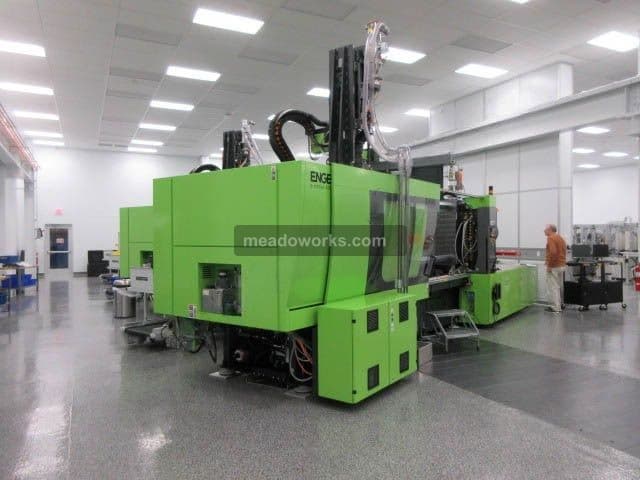 SOLD
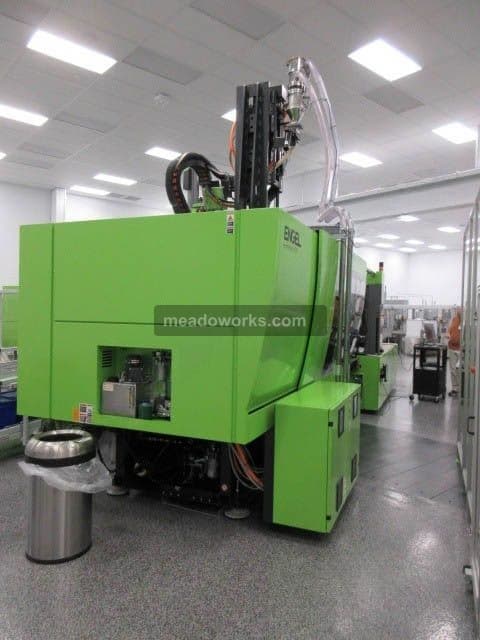
SOLDItem #5497
2021 Engel e-motion 740H/50MV/420 T combi US - 2-Shot
USA
 SOLD
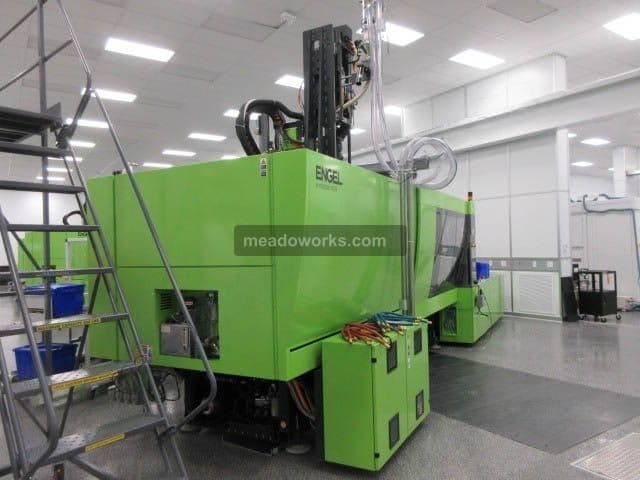
SOLDItem #5498
2021 Engel e-motion 740H/50MV/420 T combi US - 2-Shot
USA
 SOLD
SOLDItem #5499
2021 Engel e-motion 740H/50MV/420 T combi US - 2-Shot
USA
 SOLD
SOLDItem #5893
Sumitomo 130 Ton 2-Shot All Electric Injection Molding Press, New in 2017
USA
Key Takeaways
- 4 main multi-shot configurations: rotary platen, sliding platen, index plate, and core-back/turntable
- Most multi-shot machines have a primary horizontal injection unit plus a secondary side, vertical, or piggyback unit
- Top brands: Arburg, Engel, Krauss Maffei, Milacron, Sumitomo Demag, Wittmann Battenfeld, Negri Bossi
- Used multi-shot pricing typically runs 30-60% above comparable single-shot tonnages
- Critical inspection items: secondary unit alignment, rotary platen indexing accuracy, control synchronization
What to Look For When Buying a Used Multi-Shot Injection Molding Machine
Verify secondary unit alignment and condition
The secondary injection unit (side, vertical, or piggyback) must align precisely with the mold's second-shot sprue/runner. Misalignment causes flash, short shots, and damaged tools. Verify alignment, mounting integrity, and unit condition.
Inspect rotary platen / index mechanism
Rotary platen indexing must be accurate to a fraction of a millimeter. Worn indexing gears, hydraulic actuators, or position sensors cause part defects and damage molds. Test indexing repeatability under power.
Confirm control system supports multi-shot recipes
Multi-shot machines need synchronized control of two injection units, rotary platen, and ejection. Older machines may have limited recipe storage. Modern Arburg Selogica, Engel CC300, KraussMaffei MC6, and Sumitomo NC5 controls handle multi-shot recipes natively.
Test with your specific application if possible
Multi-shot performance depends heavily on material compatibility, cooling, and cycle synchronization. If you can run a sample on the machine before purchase, you'll uncover issues that data sheets won't reveal.
Check both injection units' screw and barrel wear
Each injection unit has its own screw, barrel, and check ring. Both must be inspected. Replacing a single screw set can cost $5,000-$30,000 depending on machine size.
Verify auxiliary equipment compatibility
Multi-shot cells often require dedicated robotics, two material loaders/dryers, two color masterbatch feeders, and synchronization with downstream automation. Confirm what's included and what auxiliary equipment will be needed.
Used Multi-Shot Injection Molding Machine Pricing Guide
Used multi-shot injection molding machine prices typically run 30-60% above comparable single-shot tonnages, reflecting the additional injection unit, rotary platen / index mechanism, and more complex controls.
| Configuration | Typical Used Price | Notes |
|---|---|---|
| Small multi-shot (50-150 ton) | $50,000 - $200,000 | Medical, electronics, small consumer parts |
| Mid-range multi-shot (200-400 ton) | $120,000 - $400,000 | Caps, closures, soft-touch handles, sealed parts |
| Large multi-shot (500-800 ton) | $250,000 - $800,000 | Automotive interior trim, larger sealed assemblies |
| Very large multi-shot (1000+ ton) | $500,000 - $2,000,000+ | Automotive bumpers, large multi-component parts |
| Two-color / 2K cap molding | $80,000 - $400,000 | Index cube tooling, high-cavitation packaging |
| All-electric multi-shot premium | +20-30% over hydraulic | IntElect Multi, e-mac multi, etc. |
Premium brand premiums (Arburg, Engel, Krauss Maffei, Sumitomo Demag) typically run 25-40% above generic equivalents. All-electric multi-shot machines command additional 20-30% over hydraulic. Call 800-323-0307 for current pricing.
Looking for a specific multi-shot press?
Tell us your tonnage requirement, configuration (rotary, index, core-back), material combinations, and brand preference. Many of the multi-shot machines we handle never make our public catalog — they sell from molder consolidations and capacity adjustments before listing.
