Looking for Something Specific?
Most of our inventory sells before we can list it online. If you need a specific brand, model, or specification, tell us what you need—we have access to unlisted equipment and machines coming in from plant closures.
Browse Used Optical Sorters by Country
Looking to Sell Your Optical Sorters?
Meadoworks is an active cash buyer of used industrial equipment. Get a free valuation from our AMEA-certified appraisers.
What Is an Optical Sorter?
Meadoworks sources used optical sorters and optical sorting machines for plastics recycling, glass recycling, food processing, and material recovery facilities (MRFs). Whether you need a NIR (near-infrared) sorter to separate PET from HDPE in a bottle wash line, a color sorter for premium recycled flake, or a multi-sensor optical sorting system for a MRF, our team can help you find the right used optical sorting equipment from TOMRA, Sesotec, Pellenc ST, Bühler Sortex, Steinert, and other leading manufacturers.
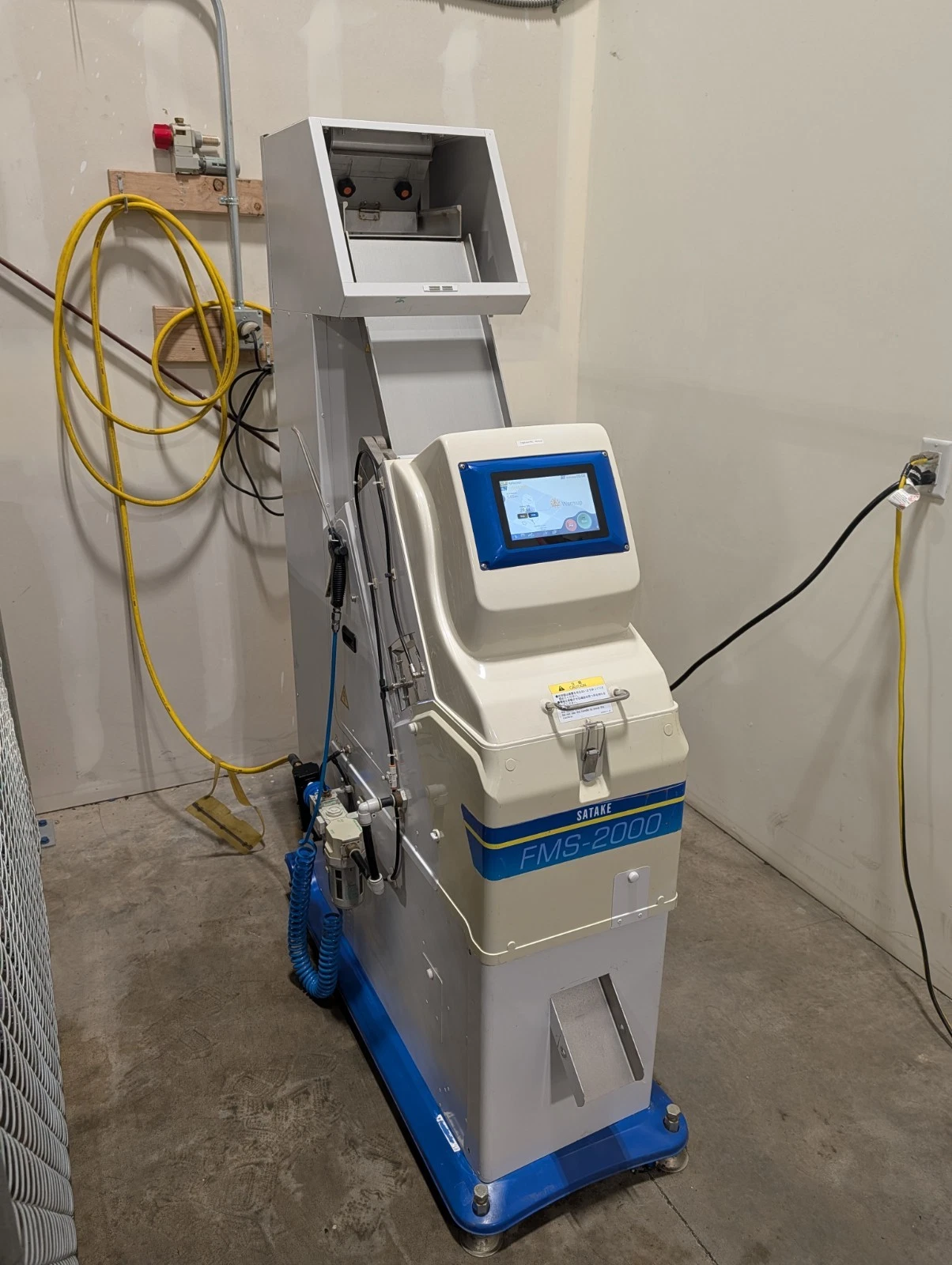
An optical sorter is an automated material-recovery machine that uses cameras, sensors, and high-pressure air valves to identify and separate items on a moving belt or chute by color, polymer type, or shape. As material flows past a sensor array, the system identifies each particle in milliseconds, and ejection nozzles fire compressed-air pulses that knock targeted items off the belt into a separate stream. The result is a high-purity sorted output, often above 95% accuracy, at speeds and consistency no manual picking line can match.
In the plastics recycling industry, the most common optical sorting equipment is the NIR (near-infrared) sorter, which identifies polymers by their unique infrared spectral fingerprint. NIR sorters can separate PET from HDPE from PP from PVC from PS at high accuracy in a fraction of a second — making them the backbone of modern bottle, flake, and film recycling lines. Color sorters use RGB cameras to remove off-color flakes (yellowed PET, blue HDPE in a clear stream) to produce premium recycled feedstock. X-ray transmission (XRT) sorters identify materials by atomic density — useful for separating PVC from other resins or removing inorganic contamination.
When buyers search for an “optical sorter,” “optical sorting machine,” or “optical sorter for recycling,” they typically evaluate sorter type (NIR, color, multi-sensor), throughput (tons/hr), belt width, sensor resolution, ejection valve count and pitch, and brand. TOMRA, Sesotec, Pellenc ST, Bühler Sortex, Steinert, and National Recovery Technologies (NRT) dominate the market. Meadoworks regularly handles used optical sorters from MRF closures, recycler consolidations, and capacity adjustments — many of which never reach our public catalog.
Types of Optical Sorters
NIR (Near-Infrared) Sorters
Identify materials by their NIR spectral fingerprint. Standard for separating plastic resins (PET, HDPE, PP, PVC, PS) in bottle and flake streams. The workhorse of modern plastics recycling.
Color (RGB) Sorters
Use high-resolution RGB cameras to identify and reject off-color material. Produce premium recycled flake by removing discolored, yellowed, or contaminating particles.
X-Ray Transmission (XRT) Sorters
Identify materials by atomic density — useful for separating PVC from other resins, removing metal contamination, or sorting metallics.
Multi-Sensor / Combi Sorters
Combine NIR + RGB + induction sensors in a single unit for complex MRF and recycling applications requiring multiple separation criteria.
Flake Sorters
Smaller, high-resolution optical sorters designed for sorting plastic flake (3-20mm) in wash lines — for PET, PE, PP, and engineering resins.
Belt vs. Free-Fall Sorters
Belt sorters scan material on a wide conveyor — better for irregular shapes and large-volume MRF work. Free-fall (chute) sorters scan material in mid-air — better for granular, free-flowing flake.
Related Equipment Categories
Used Plastic Shredders
Pre-processing for optical sorting and recycling lines.
Used Plastic Granulators
Beside-the-press and central granulators for clean regrind.
Used Balers
Compact sorted material streams for transport.
Used Plastic Pelletizers
Pelletize sorted recycled flake into uniform pellets.
All Recycling Equipment
Browse the full Meadoworks recycling equipment catalog.
Top Optical Sorter Brands
Bühler
Bühler Sortex SX series — precision optical sorting for plastics flake, food, and industrial recycling.
TOMRA
Norwegian leader in NIR and multi-sensor optical sorting — AUTOSORT and INNOSORT FLAKE used in MRFs and recyclers worldwide.
Sesotec
German manufacturer of compact and high-throughput NIR/color sorters — FLAKE PURIFIER and VARISORT lines.
Pellenc ST
French specialist in NIR optical sorting for plastics, paper, and metals — widely used in MRFs and bottle plants.
Steinert
Steinert Unisort sensor-based sorting systems — popular for mixed waste, e-scrap, and complex recycling streams.
NRT
National Recovery Technologies (now Bulk Handling Systems) — SpydIR-T and SpydIR-R NIR sorters trusted across U.S. MRFs.
Frequently Asked Questions
What is an optical sorter used for in plastic recycling?
Optical sorters separate plastic streams by polymer type (PET vs HDPE vs PP), color, or contamination level. They're the standard solution for upgrading mixed plastic feedstock into single-resin, high-purity streams suitable for re-pelletizing or premium-grade recycled compounds. Most modern bottle wash lines and MRFs run multiple optical sorters in series.
What is the difference between NIR and color optical sorters?
NIR (near-infrared) sorters identify polymers by their infrared spectral fingerprint — they can tell PET from HDPE from PP from PVC. Color sorters use RGB cameras to identify visible color — they remove off-color, yellowed, or contaminating particles. Many recyclers use both: NIR first to sort by resin, then color to upgrade purity within each resin stream.
How much does a used optical sorter cost?
Used optical sorter prices range from $40,000-$120,000 for small color sorters, $100,000-$250,000 for NIR flake sorters, $150,000-$500,000 for belt NIR sorters, and $300,000-$700,000+ for multi-sensor combi systems. Brand, sensor configuration, vintage, and condition heavily influence pricing.
Which optical sorter brands does Meadoworks carry?
We regularly handle used optical sorters from TOMRA, Sesotec, Pellenc ST, Bühler Sortex, Steinert, NRT (National Recovery Technologies), Redoma, Sicon, and other manufacturers. Many machines come from MRF closures and recycler consolidations — call 800-323-0307 for current availability.
How accurate are optical sorters?
Modern NIR optical sorters typically achieve 95-99% sorting accuracy on cleanly prepared feedstock. Performance depends on material flow consistency, particle size distribution, sensor calibration, and how well sorting recipes are matched to the feedstock. A trial run with your specific material is the best way to predict real-world performance.
What size optical sorter do I need?
Sizing depends on throughput (tons/hr), feedstock particle size, and required sort purity. As a starting point: a 1m belt NIR sorter handles 1-3 tons/hr of bottles or large flake; a 2m belt sorter handles 3-6+ tons/hr. Free-fall flake sorters typically handle 0.5-2 tons/hr per chute. Send Meadoworks your application and we'll recommend a suitable used optical sorter.
Do you ship optical sorters internationally?
Yes. Meadoworks ships used optical sorters worldwide. We coordinate with experienced rigging and freight forwarding partners to handle disassembly, ocean freight, and customs documentation for these complex sensitive systems.
Buying Guides & Resources
Optical Sorter Recycling Guide
How NIR, color, and X-ray sorting works in modern plastics recycling.
Read GuideUsed Plastics Equipment Guide
Buying used plastics processing equipment for recycling and compounding.
Read GuideHow Industrial Auctions Work
Buying recycling equipment at industrial auctions and plant closing sales.
Read GuideKey Takeaways
- 3 main optical sorter types: NIR (near-infrared) for resin ID, color (RGB) sorting, and X-ray (XRT) for inorganic / metal
- NIR sorters separate plastics by polymer type (PET vs HDPE vs PP) at 1-12+ tons/hr
- Color sorters remove off-color flake to produce premium recycled feedstock
- Top brands: TOMRA, Sesotec, Pellenc ST, Bühler Sortex, Steinert, NRT, Redoma
- Used optical sorter pricing ranges from $40K small color sorters to $400K+ multi-sensor MRF units
What to Look For When Buying a Used Optical Sorter
Verify sensor and lighting condition
NIR and RGB sensors degrade with use. Ask for recent calibration reports and verify that lamps/LEDs are at full output. Sensor replacement on optical sorters is expensive ($10,000-$50,000+).
Inspect ejection valve bank
Ejection valves fire millions of pulses per shift — they wear out and lose response speed. Check valve count, pitch (spacing), and recent replacement history. Worn valves cause sorting errors.
Confirm software version and licensing
Modern optical sorters run sophisticated classification software that's often subscription- or license-locked. Verify that the software, sorting recipes, and any required updates transfer with the sale.
Test sort accuracy on your feedstock
Optical sorter performance depends on material flow consistency, particle size distribution, and how well the recipes match your feedstock. Always run a trial with material representative of what you'll process in production.
Check belt and chute condition
Worn belts, scratched chutes, and damaged accelerators all affect sort accuracy. Inspect the material handling components carefully — some are inexpensive to replace, others (like calibrated stainless chutes) are not.
Confirm compressed air requirements
Optical sorters consume large volumes of compressed air for ejection (often 1,000+ scfm at 90 psi). Verify your facility can supply enough clean, dry air, or budget for compressor and dryer additions.
Used Optical Sorter Pricing Guide
Used optical sorter prices depend on sensor configuration, belt width, throughput, age, and brand. The ranges below cover typical machines from the U.S. and European used market.
| Configuration | Typical Used Price | Notes |
|---|---|---|
| Small color sorter (free-fall, single feed) | $40,000 - $120,000 | Premium flake color cleanup, food processing |
| Mid-range NIR flake sorter | $100,000 - $250,000 | Plastic flake purification, single-resin sorting |
| Belt NIR sorter (1m wide) | $150,000 - $350,000 | MRF, bottle sorting, mixed plastics |
| Belt NIR sorter (2m wide) | $250,000 - $500,000 | High-throughput MRF, dual-eject systems |
| Multi-sensor / combi sorter | $300,000 - $700,000+ | NIR + RGB + induction, complex separations |
| Used XRT (X-ray) sorter | $200,000 - $600,000+ | PVC removal, metal recovery, e-scrap |
Premium brand premiums (TOMRA, Bühler Sortex, Pellenc ST) typically run 25-40% above generic equivalents. Recent-vintage machines with current software and active service contracts command top dollar. Call 800-323-0307 for current pricing.
Looking for a specific optical sorter?
Tell us your feedstock, throughput target, and sorting goals. Many of the optical sorters we handle never make our public catalog — they sell from MRF and recycler closures before listing.
