Used Plastic Granulators & Grinders for Sale
7 results

Item #5836
Wittmann Generation 3 4.4 HP Granulator, New in 2021
USA

Item #5835
Wittmann SJM2A 1.7 HP Granulator, New in 2018
USA
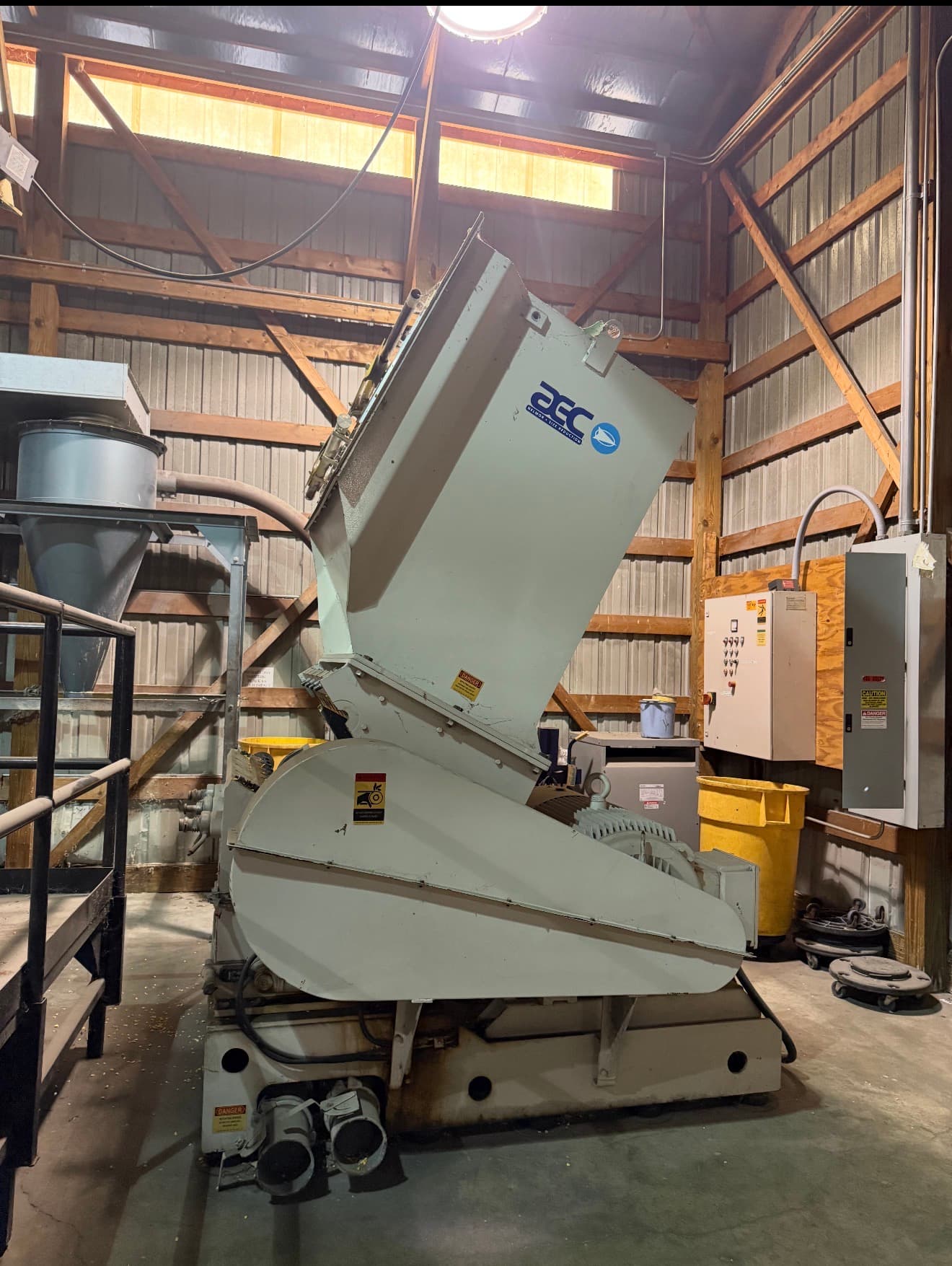
Item #6782
2011 Econogrind ESH 5010 Granulator
USA
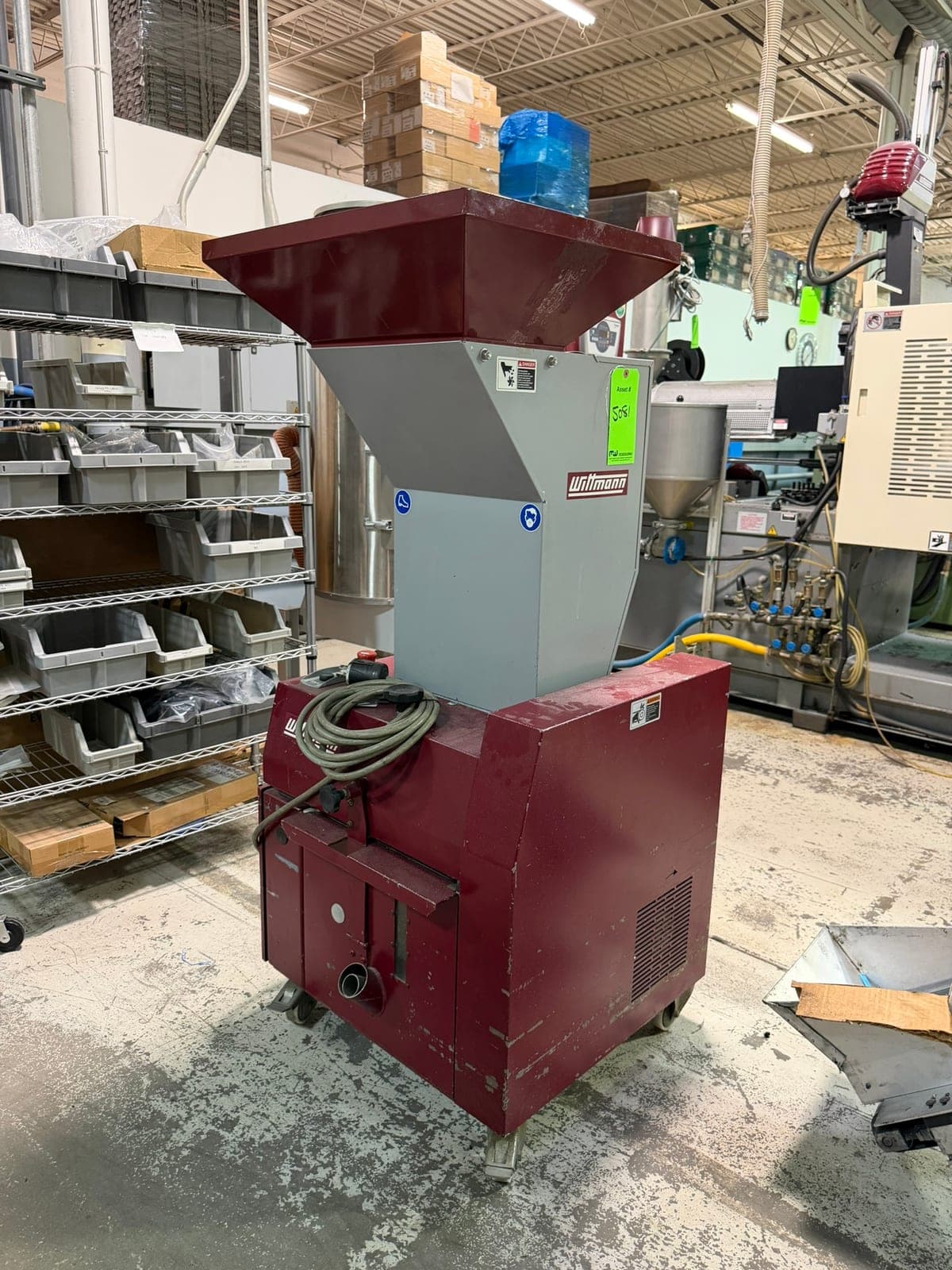
Lot 115 · Item #6726
2008 Wittmann Granulator
Naperville, IL
Live webcast · Tue, Oct 27, 10:00 AM CT · 1 absentee bid

Item #6085
100 HP Granulator w/ Blower & Cyclone
USA
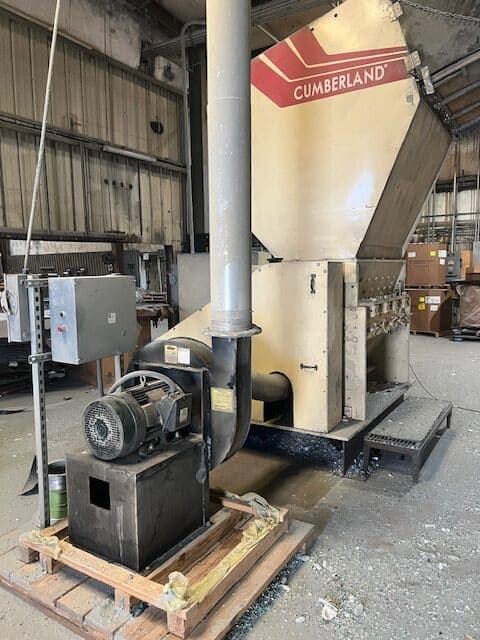 Video
VideoItem #5711
Cumberland - X1400
USA

Item #3754
Rapid - B-18
USA
Looking for Something Specific?
Most of our inventory sells before we can list it online. If you need a specific brand, model, or specification, tell us what you need—we have access to unlisted equipment and machines coming in from plant closures.
Browse Used Plastic Granulators & Grinders by Brand
Browse Used Plastic Granulators & Grinders by Country
Looking to Sell Your Plastic Granulators & Grinders?
Meadoworks is an active cash buyer of used industrial equipment. Get a free valuation from our AMEA-certified appraisers.
About Used Plastic Granulators & Grinders
Plastic granulators (also called plastic grinder machines, plastic crushers, or plastic grinding machines) reduce plastic parts, sprues, runners, and scrap into regrind for reprocessing. Granulators for plastics are essential equipment in any injection molding, blow molding, or thermoforming operation — they allow you to reclaim production scrap and reduce material waste.
Used plastic granulators are available as beside-the-press granulators (compact units that sit next to the molding machine for immediate regrind), central granulators (large machines that process scrap from multiple molding machines), and thermoforming granulators (designed for sheet trim). Industrial plastic grinder machines feature robust rotors, hardened cutting chambers, and screen systems for controlled particle size.
Meadoworks stocks used plastic granulator machines, used granulators for sale, used plastic grinders, and plastic crusher machines from Cumberland, Nelmor, Foremost, Rapid, Conair, Shini, Rotogran, and Ball & Jewell. Whether you need a plastic granulator for sale, a plastic grinding machine for sale, or a used plastic granulator for your production floor, contact us at 800-323-0307.
How to Choose a Used Recycling Granulator
Beside the press or central
A granulator cuts scrap into regrind with a rotor, knives, and a screen. Beside-the-press machines take sprues and small rejects. Central machines take purgings, bulky parts, and scrap from several lines. This set includes machines heavier than a press-side unit. A screenless bi-cutter under a press is a narrower machine and lives with auxiliary granulators.
Throat size has to swallow the part. Horsepower has to keep the rotor from stalling on that part.
Screen and knives
The screen hole is the regrind size. A 5/16-inch screen and a 3/16-inch screen are different products into the blender. Dull knives and a wide gap make fines that plug a loader. Infeed, whether hand, conveyor, or blower, has to match how the scrap arrives.
Sound and dust are part of installing a central machine. A blower and a cyclone are often a separate lot.
Recycling Granulator Specs to Compare
| Spec | Typical range | Why it matters |
|---|---|---|
| Throat (in) | The part has to go in. A purging that does not fit will not be cut by more horsepower. | |
| Rotor (hp) | Often about 5–100 hp | Beside-the-press is the low end. Central and heavy scrap are the high end. |
| Screen (in) | Regrind size. Match it to what the press or the extruder will take. | |
| Knives | Count and whether they reverse. Dull or chipped knives are fines and heat. |
Throat (in)
The part has to go in. A purging that does not fit will not be cut by more horsepower.
Rotor (hp)
Typical range: Often about 5–100 hp
Beside-the-press is the low end. Central and heavy scrap are the high end.
Screen (in)
Regrind size. Match it to what the press or the extruder will take.
Knives
Count and whether they reverse. Dull or chipped knives are fines and heat.
What to Inspect on a Used Recycling Granulator
Open the chamber
Knives, the gap, and the screen. This is the cut. The paint is not.
Turn the rotor
By hand if it is safe. A bearing growl will not survive a full hopper.
Match the throat
To the largest piece you will feed, not to the nameplate slogan.
Find the blower
If regrind is conveyed away, the blower and the cyclone have to be in the sale or you will add them.
Meadoworks Track Record
311
Sold through Meadoworks
7
Listed now
Makes we have handled most
Conair, Rapid, Granutec, Nelmor, Polymer Systems, Cumberland
Common models
Conair NC-614S, Rapid 69-SR, Conair CGW-1418, Granutec 1212LPZ-10, Nelmor 716
Related Equipment
- Press-Side and Central Granulators
The auxiliary granulator set, sized to a molding cell
More in Recycling & Size Reduction
Types of Size Reduction & Recycling
Common Applications
Frequently Asked Questions
How much does a used plastic granulator cost?
Used plastic granulator prices range from $2,000-$8,000 for small beside-the-press units to $15,000-$60,000+ for large central granulators. Plastic grinding machine prices depend on rotor width, motor HP, cutting chamber size, brand, and condition. Cumberland and Rapid granulators hold value well in the used market.
What is the difference between a granulator and a shredder?
Granulators produce a smaller, more uniform output (typically 3/8" regrind) through a cutting action against a screen. Shredders produce a coarser output through a tearing/shearing action. In recycling operations, shredders are typically used first for primary size reduction, followed by granulators for producing uniform regrind suitable for processing.
Related Resources
Need Help Finding the Right Equipment?
Contact our team with your specifications and we'll help you find the right machine.
