Used Laser Cutter & Laser Cutting Machine Buying Guide
Laser cutting has revolutionized metal fabrication by delivering speed, precision, and edge quality that plasma and mechanical cutting cannot match. Whether you're expanding an existing fab shop or adding laser cutting capability for the first time, the used market offers exceptional value — a two- to three-year-old fiber laser can save 40–60% compared to buying new.
Key Takeaways
- Fiber lasers dominate the new and used market — 2–3× faster on thin-to-mid metals with 50–70% lower electricity use
- CO2 lasers still win on 3/4" to 1"+ mild steel and are the only option for cutting non-metals like wood and acrylic
- Used pricing spans $25k to $500k+ based on technology, wattage, brand, and automation
- Top brands: Trumpf, Amada, Bystronic, Mazak, and Cincinnati all hold strong used-market values
- Always inspect laser source/resonator hours, optics, cutting head, motion system, and run a cut-quality test
Fiber Laser vs CO2 Laser
Fiber Laser
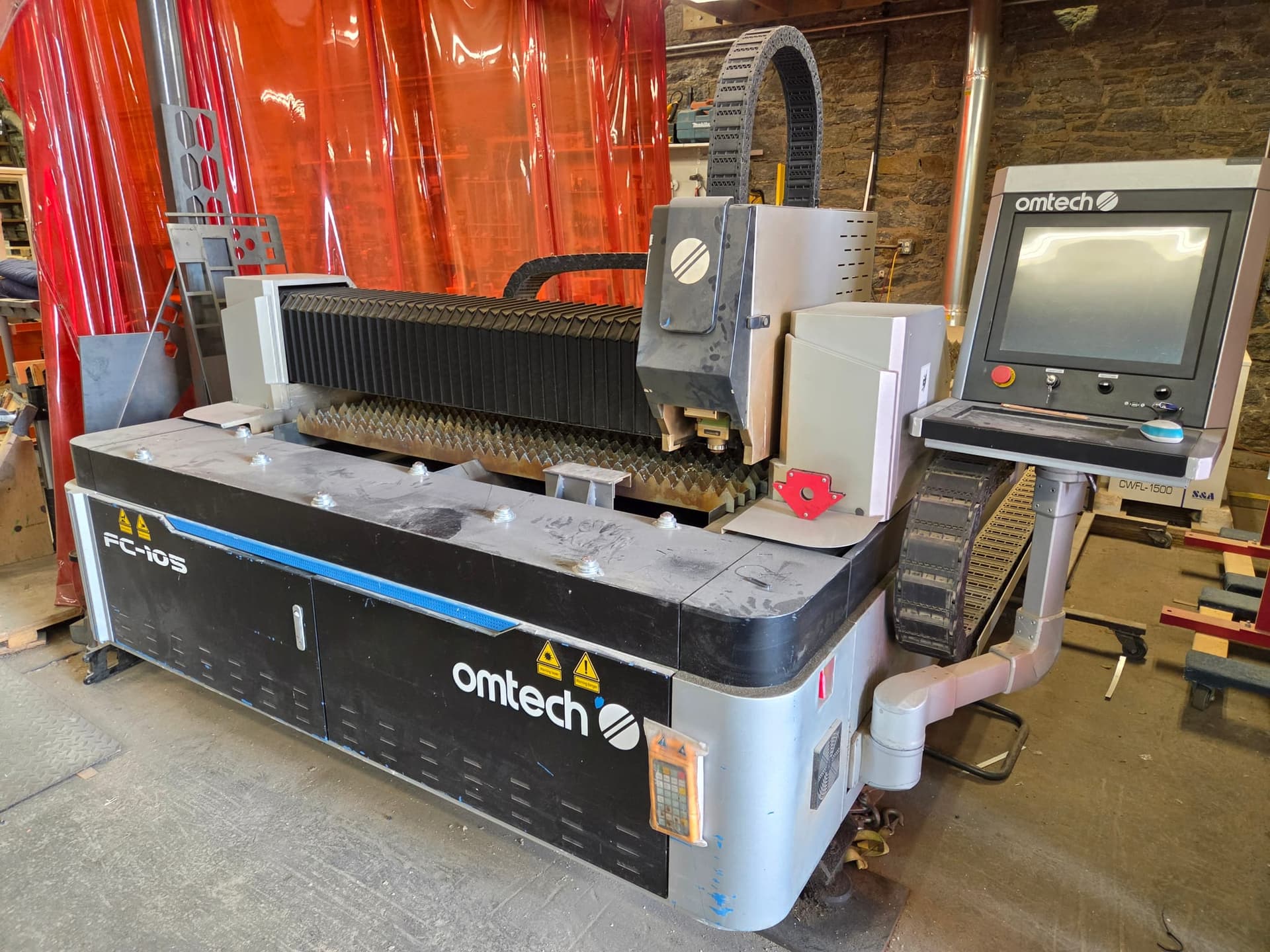
Generates the beam in optical fibers doped with ytterbium and delivers it through a fiber optic cable — no mirrors, no beam-path alignment, no laser gas.
- 2–3× faster than CO2 on thin-to-mid metals
- 50–70% less electricity (30–35% wall-plug efficiency)
- Source life 80,000–100,000 hrs (maintenance-free)
- 1,070nm wavelength absorbed efficiently by metals
CO2 Laser
Excites a CO2 / N2 / He gas mixture with electrical discharge to produce a 10,600nm beam delivered through a series of mirrors.
- Superior edge on 3/4 to 1 inch+ mild steel
- Cuts non-metals (acrylic, wood, fabric)
- Excellent used-market value
- Higher op cost: gas, electricity, mirror service
Fiber vs CO2 at a Glance
| Factor | Fiber Laser | CO2 Laser |
|---|---|---|
| Cutting speed (thin metal) | 2–3× faster | Baseline |
| Electricity consumption | 50–70% less | Higher |
| Laser gas required | No | Yes (He, N2, CO2) |
| Laser source life | 80,000–100,000 hrs | 10,000–20,000 hrs |
| Thick steel edge quality | Good | Excellent |
| Non-metal cutting | No | Yes |
| Maintenance | Minimal | Moderate |
| Used market price | Higher | Lower (better value) |
Key Specifications to Evaluate
Laser Power (Wattage)
Determines cutting speed and maximum thickness. Fiber: 2k–12k+ W; CO2: 2.5k–6k W.
- 2,000W fiber: up to 5/8 inch mild steel
- 4,000W fiber: up to 7/8 inch
- 6,000W fiber: up to 1 inch
- 10,000W+ fiber: up to 1-1/4 inch
Table / Bed Size
Determines maximum sheet size. Most common: 5×10 ft and 6×12 ft. Larger formats available for plate work.
- 5×10 ft (60×120 in) — most common
- 6×12 ft (72×144 in) — common
- 6×20 / 8×20 ft for structural plate
- Shuttle tables raise productive time 20–30%
Cutting Speed & Acceleration
Beyond raw wattage, the motion system determines real-world performance, especially on parts with many small features.
- Rapid traverse speed (head between cuts)
- Max cutting speed during active cut
- Acceleration: 1–2G+ on modern fiber
- 5,000–8,000 IPM simultaneous axis speed
Cutting Head & Focus
Auto-focus, collision protection, and process monitoring define usability and uptime.
- Auto-focus across material types and thicknesses
- Breakaway / capacitive collision protection
- Premium heads: Precitec, Trumpf, Amada
- Real-time process monitoring on premium
Assist Gas System
Oxygen or nitrogen blows molten metal from the kerf — choice impacts edge quality, speed, and operating cost.
- Oxygen-assist: faster on thick mild steel
- Nitrogen: oxide-free edges (stainless, aluminum)
- Higher pressure required for clean cutting
- Nitrogen generators reduce operating cost
Source Life & Maintenance
Operating cost differs dramatically between technologies — fiber sources are essentially maintenance-free.
- Fiber: 80,000–100,000 hrs (life of machine)
- CO2 resonator: 10,000–20,000 hrs
- CO2 refurb: $15,000–$50,000+
- CO2: regular optics cleaning and alignment
Top Laser Cutter Brands on the Used Market
Trumpf
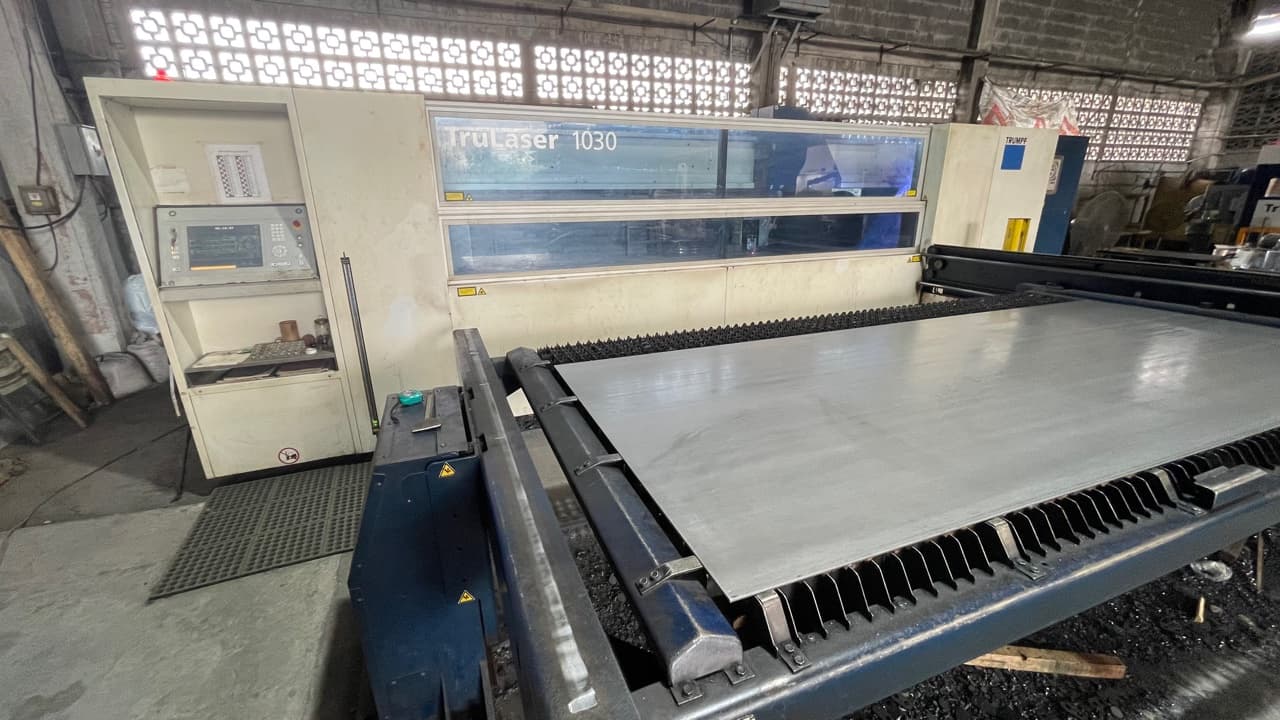
World leader in laser cutting and the technology benchmark for the industry. Builds its own laser sources, cutting heads, and CNC controls for tightly integrated performance.
Amada
Major force in laser cutting with both fiber and CO2 platforms. ENSIS variable-beam-control technology optimizes profile across thicknesses without lens changes.
Bystronic
Swiss manufacturer with strong North American presence. Integrates with their press brake and automation lines for complete sheet-metal processing.
Mazak (Optonics)
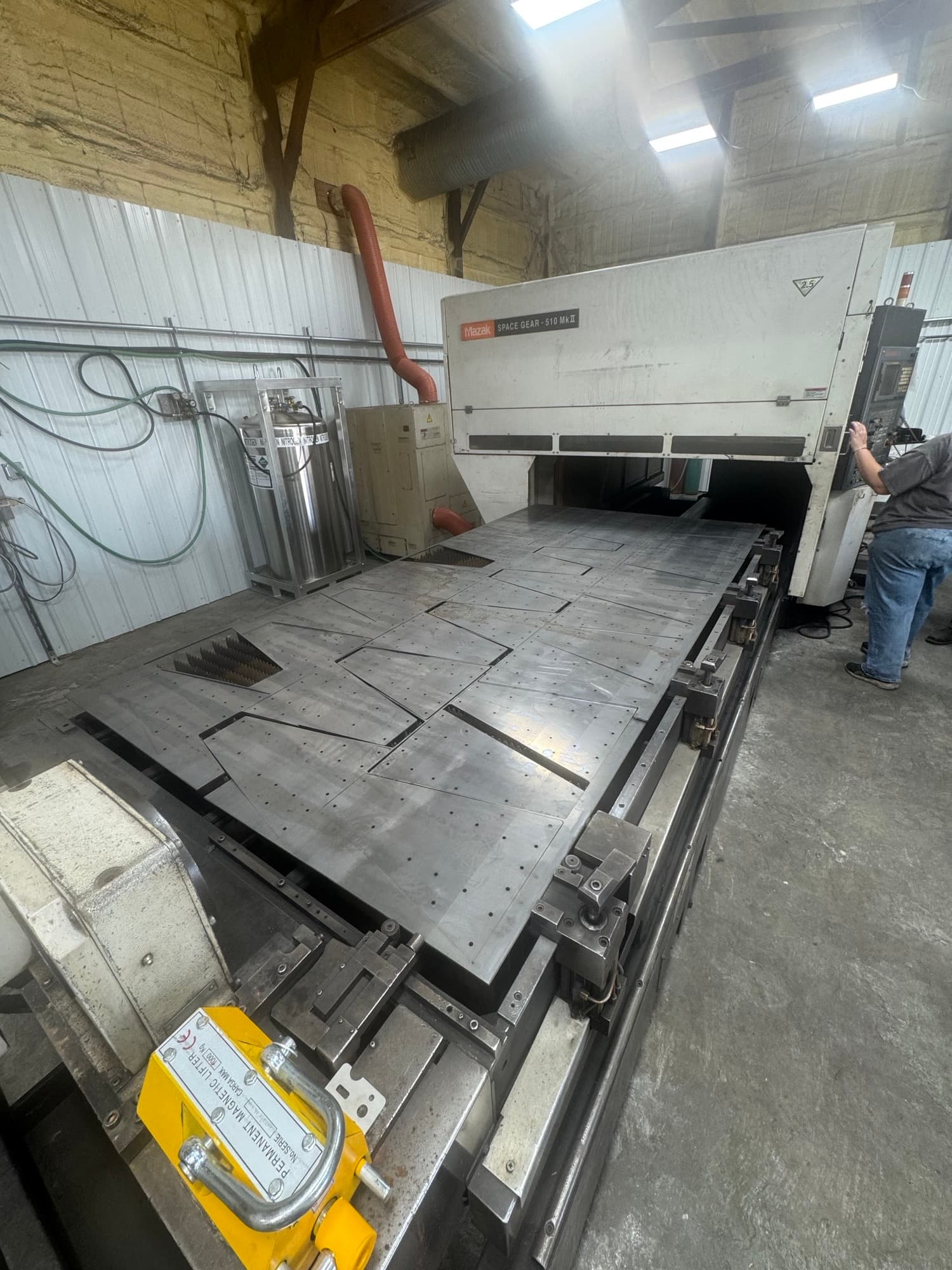
Mazak Optonics produces both CO2 and fiber laser cutting systems. Hyper Gear drive system delivers high-speed and high-accuracy motion.
Cincinnati
American manufacturer building lasers in Harrison, Ohio. Heavy-duty construction popular in the midwestern U.S. structural and plate-fab base.
Used Laser Cutter Pricing
| Type / Category | Wattage | Typical Price Range |
|---|---|---|
| CO2 laser (older / entry-level) | 2,000–3,000W | $25,000 – $60,000 |
| CO2 laser (mid-range) | 3,000–5,000W | $40,000 – $100,000 |
| CO2 laser (premium brand) | 4,000–6,000W | $60,000 – $175,000 |
| Fiber laser (entry / early models) | 2,000–3,000W | $60,000 – $150,000 |
| Fiber laser (mid-range) | 4,000–6,000W | $125,000 – $275,000 |
| Fiber laser (high-power) | 8,000–12,000W | $200,000 – $500,000+ |
| Fiber laser with automation | 4,000W+ | $175,000 – $600,000+ |
Prices vary based on brand, year, hours, resonator condition (CO2), automation, and assist gas system. Machines with shuttle tables or tower storage command significant premiums.
What to Inspect When Buying a Used Laser Cutter
Laser cutting machines are a significant investment. A thorough pre-purchase inspection is essential to avoid costly surprises.
Laser Source Condition
- CO2 resonator hours vs rated life
- Beam quality (mode burn) and power output
- Below 80% of rated power → refurb needed ($15k–$50k+)
- Fiber: verify all diode modules and output power
Optics & Beam Delivery
- CO2 mirrors and lenses — coating, contamination, alignment
- Fiber delivery cable inspected for damage
- Cutting head: protective lens, focus lens, collimator
- Replace consumable cover slides before cutting
Cutting Head
- Auto-focus across full material range
- Collision protection functional
- Nozzle centering — beam centered in nozzle
- Gas delivery: leaks, regulation, pressure
Motion System & Positioning
- Rapid traverse at full speed — listen for noise
- Positioning accuracy via calibrated scale or interferometer
- Linear drives: ball screws / rack & pinion / linear motors
- Way covers and bellows intact (no debris ingress)
Sheet Handling & Automation
- Shuttle tables / pallet changers exchange smoothly
- Tower storage cycles automatic load and unload
- Slat bed / pin table condition (worn slats cause issues)
- Verify all positioning and clamp functions
Cut Quality Test
- Request samples in your materials and thicknesses
- Edge quality: roughness, dross, oxide layer
- Dimensional accuracy and small-feature capability
- Cutting speeds vs manufacturer spec
Why Buy a Used Laser Cutter from Meadoworks
Laser cutting machines represent a significant capital investment, and Meadoworks helps fabrication shops make informed purchasing decisions. We stock used laser cutters from all major manufacturers and provide detailed information about each machine's condition, hours, and capability.
Our team understands the differences between fiber and CO2 technology and can help match the right machine to your production needs and budget. Contact us or call 800-323-0307.
Frequently Asked Questions
How much does a used laser cutter cost?
Used laser cutter prices vary dramatically based on technology, wattage, and brand. Older CO2 lasers (2,000–4,000W) start around $30,000–$75,000. Mid-range CO2 or early fiber lasers (2,000–4,000W) run $50,000–$150,000. Late-model fiber lasers (4,000–6,000W) from premium brands like Trumpf, Amada, or Bystronic range from $150,000–$400,000+. High-power fiber lasers (8,000W+) can exceed $500,000. Contact Meadoworks at 800-323-0307 for current pricing on specific models.
Should I buy a fiber laser or CO2 laser?
Fiber lasers are the clear choice for cutting metals — they cut thin-to-mid-thickness steel and aluminum 2–3× faster than CO2, have lower operating costs (no laser gas, less electricity), and require less maintenance. CO2 lasers still have advantages for cutting thick mild steel (1 inch+), and they are the only option for cutting non-metals like wood, acrylic, and fabric. For most metal fabrication shops, a fiber laser is the better investment. CO2 lasers offer excellent value on the used market for shops with compatible applications.
How long does a laser source last?
CO2 laser tubes (resonators) typically last 10,000–20,000 hours before refurbishment or replacement, costing $15,000–$50,000+. Fiber laser sources (diode modules) last 80,000–100,000 hours — essentially the life of the machine. This is a major operating cost advantage for fiber technology. When buying a used CO2 laser, always check resonator hours and condition.
What brands of laser cutters does Meadoworks carry?
Meadoworks stocks used laser cutters from Trumpf, Amada, Bystronic, Mazak, Cincinnati, Mitsubishi, BLM, and other leading manufacturers. Our inventory includes both fiber and CO2 laser cutting systems in a range of wattages and bed sizes.
Browse Used Laser Cutters & Fabricating Equipment
Meadoworks stocks used laser cutters, press brakes, shears, punch presses, and other fabrication equipment from all major brands.Browse fabricating equipment →
Or call 800-323-0307 to discuss your specific laser cutting requirements.