Used Press Brake Buying Guide
By Meadoworks | April 2026 | 12 min read
Key Takeaways
- Four types: mechanical (fast/cheap), hydraulic (most versatile), electric (fastest/cleanest), hybrid (best of both)
- Tonnage rule: 1.2 × thickness (1/16\") × bend length (ft) for mild steel. Always add 20-30% safety margin
- Used pricing: $5,000 (small mechanical) to $250,000+ (large CNC with 6-axis back gauge)
- Top brands: Amada, Trumpf, Accurpress, Cincinnati, LVD — each with distinct value propositions
- Critical inspection: ram parallelism, hydraulic pressure holding, back gauge accuracy, and a full-length test bend
A press brake is one of the most essential machines in any metal fabrication shop. Whether you are bending brackets, enclosures, chassis, or structural components, the right press brake determines your capacity, accuracy, and throughput. This guide covers everything you need to know about buying a used press brake — from machine types and critical specifications to brand comparisons, pricing, and inspection tips.
What Is a Press Brake?
A press brake bends sheet metal and plate by clamping the workpiece between a matching punch and die. The ram (upper beam) pushes the punch into the material, forcing it into the V-shaped die below.
- Rated by tonnage (force) and bed length (max material length)
- Modern CNC press brakes produce complex multi-bend parts with tight tolerances and high repeatability
- Used across industries for brackets, enclosures, panels, structural components, and precision sheet metal assemblies
Types of Press Brakes
Mechanical
Motor-driven flywheel and clutch power the ram. The flywheel stores kinetic energy released through a crankshaft.
Pros: Fast cycle times under 2 seconds, ideal for high-volume repetitive bends.
Cons: Full stroke required once engaged. Fixed tonnage at bottom of stroke. Limited safety features.
Hydraulic
One or two hydraulic cylinders drive the ram. Dominates the used market due to versatility and safety.
Pros: Variable speed, adjustable tonnage, ram reversibility, BDC hold for coining, CNC compatible.
Cons: Slower than electric, hydraulic oil maintenance required.
Electric (Servo)
Servo motors and ball screws or belt drives power the ram — no hydraulic oil. Trumpf TruBend, Amada HG, SafanDarley.
Pros: Fastest cycle times, up to 50% less power consumption, lowest noise, no oil leaks.
Cons: Significant price premium. Typically limited to under 300 tons.
Hybrid
Servo-driven hydraulic pumps instead of constantly running motors. Amada HG-ATC, LVD PPED.
Pros: Energy efficiency and speed approaching electric brakes, with high tonnage capability of hydraulic.
Cons: Premium pricing relative to standard hydraulic.
Tonnage Quick Example
A 10-foot brake bending 1/4-inch mild steel needs approximately 150 tons. Stainless requires ~1.5× more; aluminum ~0.6×. Always consult tonnage charts for your specific material and tooling — and oversize by 20-30% so future work won't exceed capacity.
Key Specifications to Evaluate
Tonnage
Maximum bending force. Mild steel rule: 1.2 × thickness (in 1/16") × bend length (ft) = required tons. Add 20-30% safety margin.
Bed Length
Maximum material length per setup. Common 4'-14'+. Longer beds need more tonnage. A 10' brake offers far more flexibility than 8'.
Back Gauge
Manual, 2-axis (X,R), 4-axis (X,R,Z1,Z2), or 6-axis (+ X1/X2 independence, finger tilt). Major value differentiator.
Stroke / Daylight / Throat
Stroke = ram travel; daylight = max open height (box depth); throat depth = front clearance for U-channels and deep boxes.
Material Factors
Stainless requires ~1.5× the tonnage of mild steel; aluminum ~0.6×. Always consult tonnage charts for your specific material/tooling.
CNC Control
Delem (DA-53T/58T/66T/69T), Cybelec ModEva, Automec, or proprietary (Amada, Trumpf, LVD). Higher-end controls add 3D simulation and offline programming.
Top Press Brake Brands on the Used Market
Amada
Models: RG, HFE, HG series
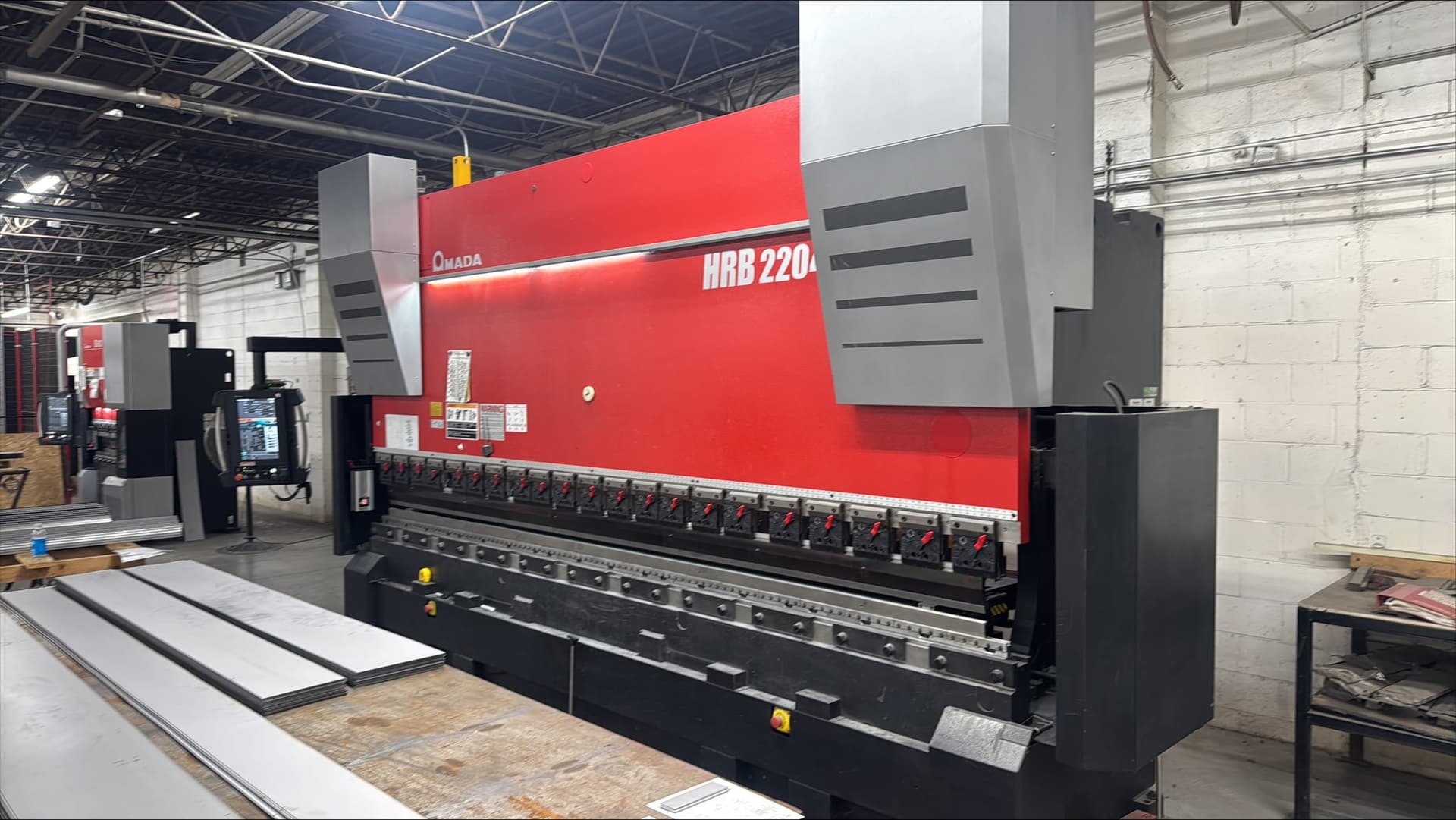
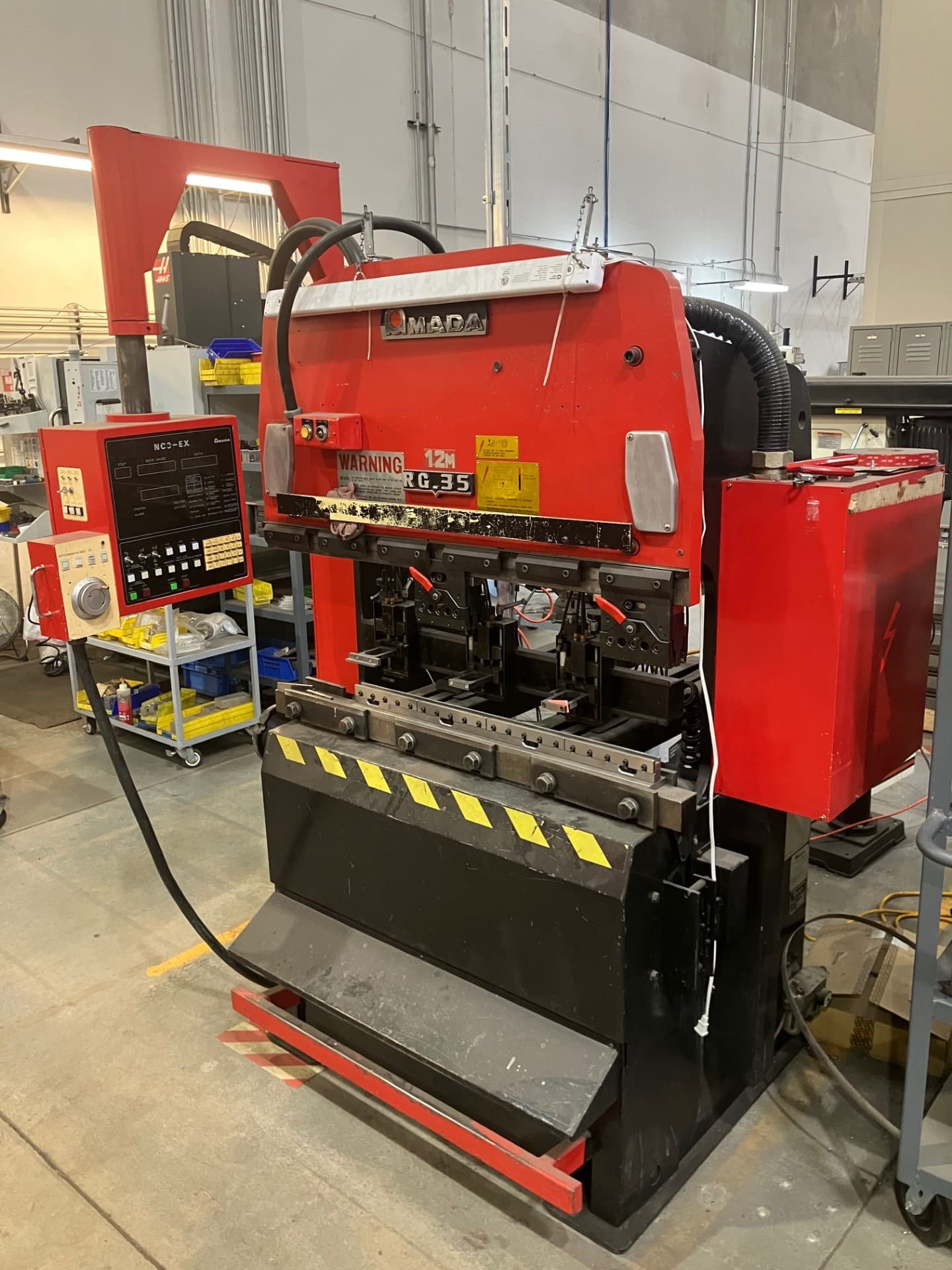
Arguably the most recognized name in press brakes worldwide. Exceptional build quality, reliable hydraulics, and advanced CNC controls. HFE M2 hits a sweet spot for precision at mid-range price; HG series is top-tier hybrid.
Trumpf
Models: TruBend 5000 (electric)
German-engineered premium quality. Popular in aerospace, medical, and precision fabrication. Electric TruBend models deliver exceptional speed and accuracy.
Accurpress
Models: Edge series
Canadian manufacturer known for reliable, well-built hydraulic press brakes at competitive prices. Straightforward, durable, and easy to maintain. Excellent value on the used market.
Cincinnati
Models: Autoform, Maxform
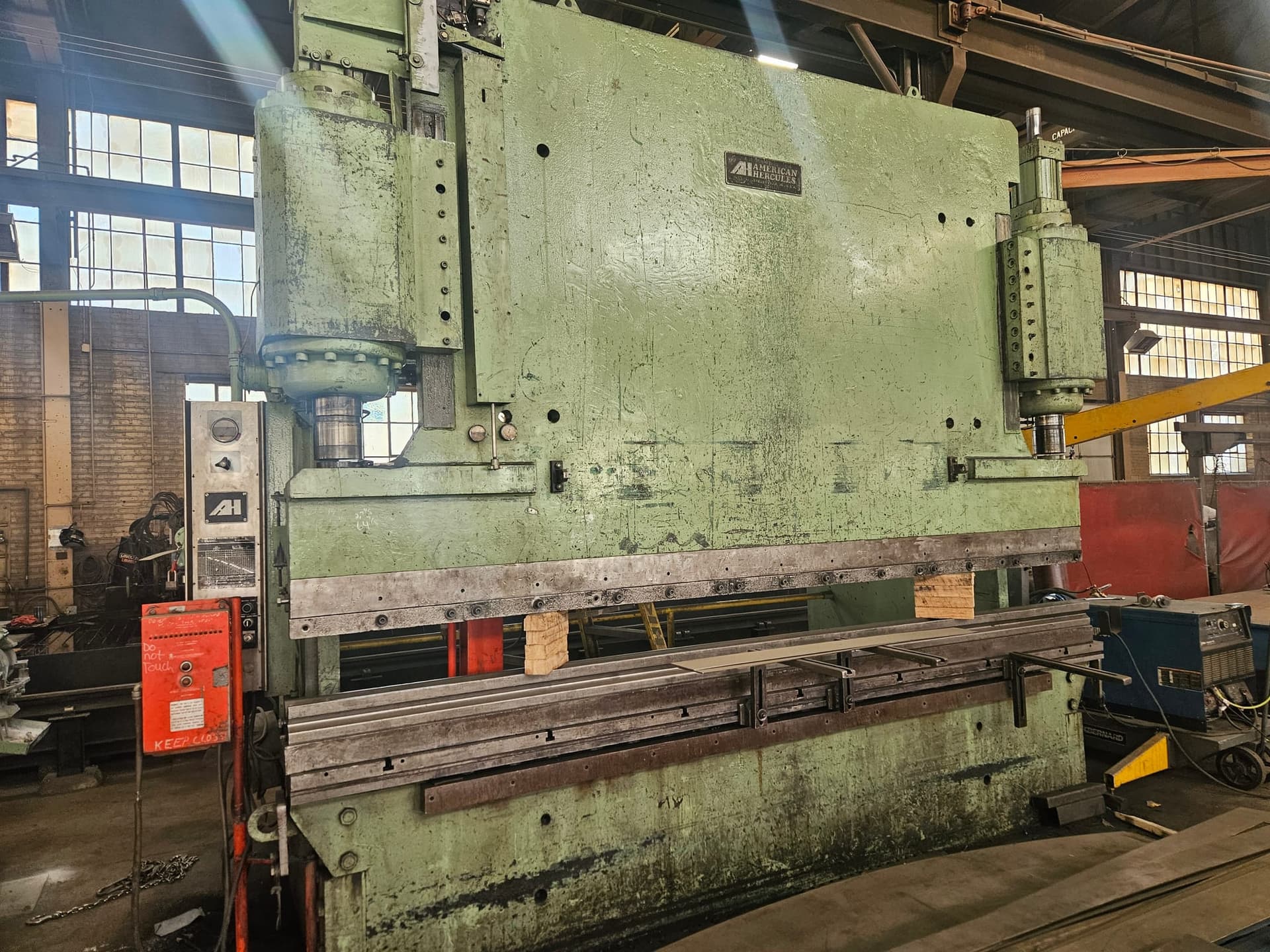
American manufacturer (now FIMI Group) with decades of building robust press brakes. Handles thick plate well. Widely available on the used market in mechanical and CNC hydraulic configurations.
LVD
Models: PPEB, PPED
Belgian manufacturer offering everything from basic hydraulic to advanced CNC. Known for accuracy, reliability, and CADMAN software integration with laser and punch workflows.
Used Press Brake Pricing
| Type / Category | Tonnage Range | Typical Price Range |
|---|---|---|
| Mechanical press brake | 50–200 tons | $5,000 – $15,000 |
| Manual hydraulic (no CNC) | 50–150 tons | $10,000 – $25,000 |
| NC hydraulic (basic control) | 100–250 tons | $15,000 – $45,000 |
| CNC hydraulic (mid-range) | 100–300 tons | $30,000 – $90,000 |
| CNC hydraulic (premium) | 100–300 tons | $50,000 – $175,000 |
| Large CNC hydraulic | 400–1,000+ tons | $75,000 – $250,000+ |
| Electric / hybrid CNC | 50–300 tons | $60,000 – $200,000+ |
Prices reflect general market conditions and vary by age, condition, control type, and included tooling. Machines with extensive punch/die packages carry a premium.
What to Inspect When Buying a Used Press Brake
A thorough inspection is essential before purchasing any used press brake. Use this checklist to evaluate critical areas.
Frame & Ram
Inspect frame for cracks, welds, or signs of overloading. Verify ram parallelism across full bed length. Check for hydraulic oil leaks around cylinders. Worn ram gibs cause inconsistent bends.
Hydraulic System
Milky oil indicates water contamination. Listen for pump cavitation. Inspect hoses for cracking. Verify pressure holding — if ram creeps down, seals or valves need attention. Ask about oil change history.
Back Gauge
Test accuracy at multiple positions with gauge blocks. Listen for unusual noise in ball screws, belts, or rack-and-pinion. Check finger condition — bent fingers cause positioning errors. Verify all axes reach full travel.
CNC Control & Electrical
Power-up test all functions. Check alarm history for recurring faults. Verify program save/recall. Compare encoder feedback against actual position. Inspect electrical cabinet for overheating, rodent damage, or jury-rigged wiring.
Tooling & Clamping
Inspect punches and dies for wear, chips, damage. European-style quick-clamp systems (Wila, Wilson) add significant value. Verify tooling alignment. Ask what tooling is included — a complete set can be worth $5,000-$20,000+.
Test Bends
The single most revealing test. Bend full-length material; measure angle at both ends and center. Variation indicates crowning issues or cylinder problems. Repeat several times to verify consistency.
Why Buy a Used Press Brake from Meadoworks
Meadoworks is a trusted source for used fabrication equipment with decades of experience in the metalworking industry. Every press brake in our inventory is inspected and accurately described so you know exactly what you are buying.
We stock press brakes from all major manufacturers in a wide range of tonnages and configurations. Whether you need a basic 50-ton manual brake or a 500-ton CNC machine with a 6-axis back gauge, our team can help match the right machine to your shop's requirements and budget.
Frequently Asked Questions
How much does a used press brake cost?
Used press brake prices vary widely based on type, tonnage, and condition. Small mechanical press brakes (under 100 tons) start around $5,000–$15,000. Hydraulic press brakes in the 100–200 ton range typically run $15,000–$60,000. CNC hydraulic press brakes from premium brands like Amada or Trumpf range from $40,000–$150,000+. Large-tonnage or late-model CNC press brakes with multi-axis back gauges can exceed $250,000. Contact Meadoworks at 800-323-0307 for current pricing on specific models.
What is the difference between a hydraulic and mechanical press brake?
Mechanical press brakes use a flywheel and clutch to drive the ram — they are fast and well-suited for high-volume, repetitive bending. Hydraulic press brakes use hydraulic cylinders, offering variable speed control, adjustable tonnage, and the ability to hold pressure at bottom dead center. Hydraulic brakes dominate the market today because of their versatility, safety features, and compatibility with CNC back gauge systems.
What tonnage press brake do I need?
Tonnage depends on the material type, thickness, and bend length. As a rough guide, bending mild steel requires about 1.2 tons per foot of bend length per 1/16 inch of material thickness with a V-die opening of 8× material thickness. A 10-foot brake bending 1/4-inch mild steel needs approximately 150 tons. Always consult a tonnage chart for your specific material and tooling. Oversizing by 20–30% gives room for future work.
What brands of press brakes does Meadoworks carry?
Meadoworks stocks used press brakes from Amada, Trumpf, Accurpress, Cincinnati, LVD, Baykal, Pacific, Chicago, Niagara, and other leading manufacturers. Our inventory includes mechanical, hydraulic, and CNC press brakes in a wide range of tonnages and bed lengths.
Browse Used Press Brakes
Meadoworks stocks used press brakes, shears, laser cutters, punch presses, and other fabrication equipment from all major brands. Call to discuss your specific bending requirements.