Used 5-Axis Machining Centers for Sale
All used machining centers (34) →
See all 34 Machining Centers →
7 results
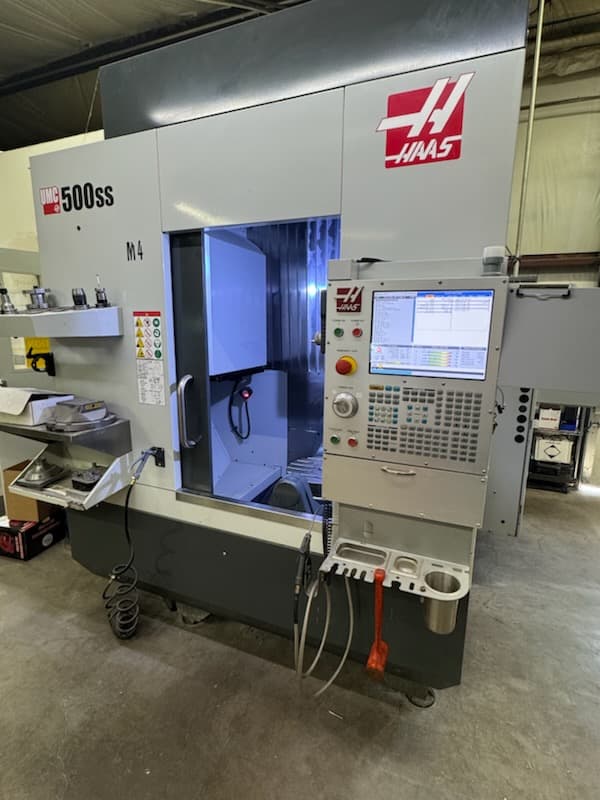
Item #6603
Haas UMC-500SS 5-Axis Machining Center
USA
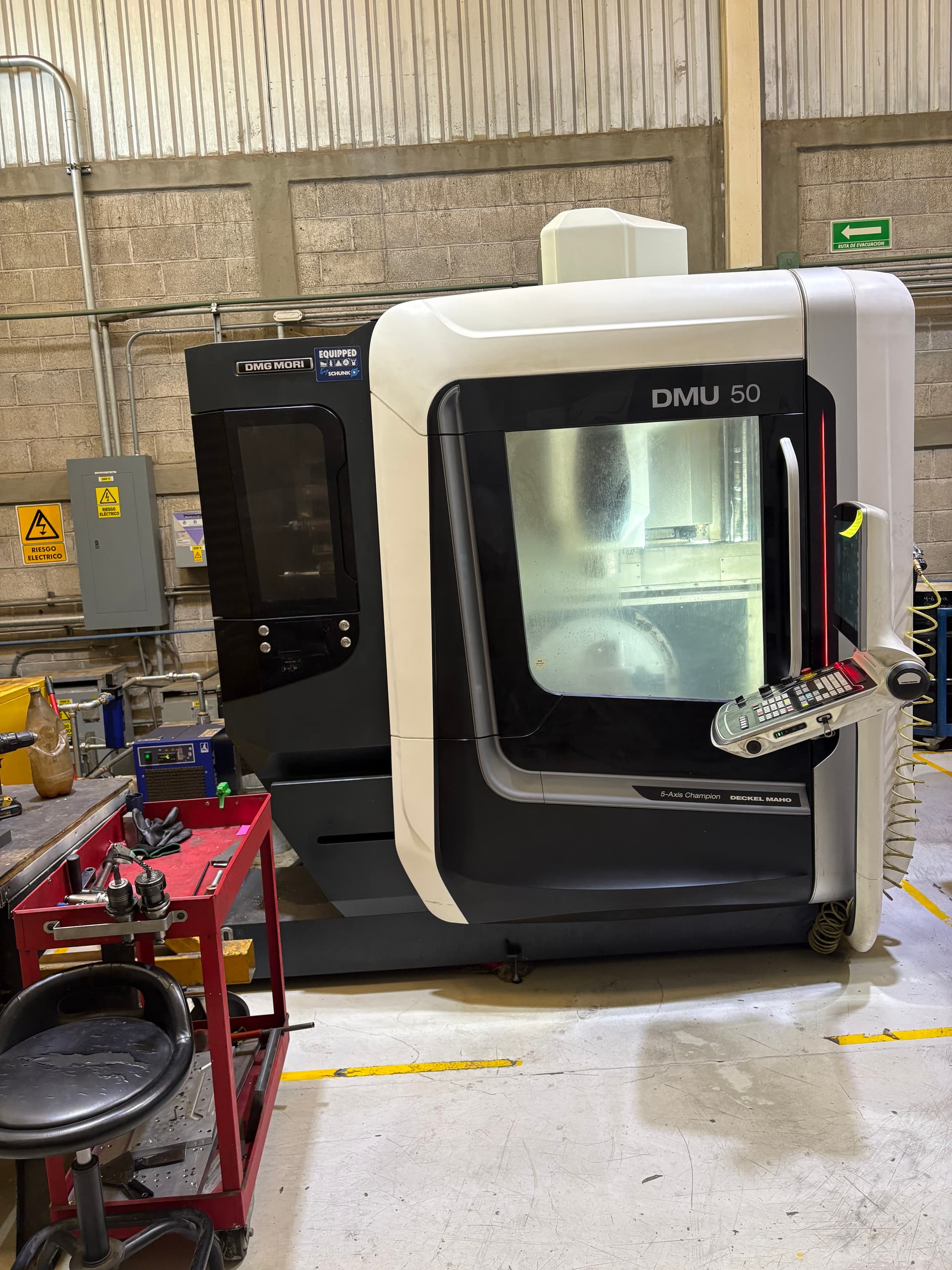
Item #6874
2018 DMG Mori DMU 50 5-Axis
Mexico
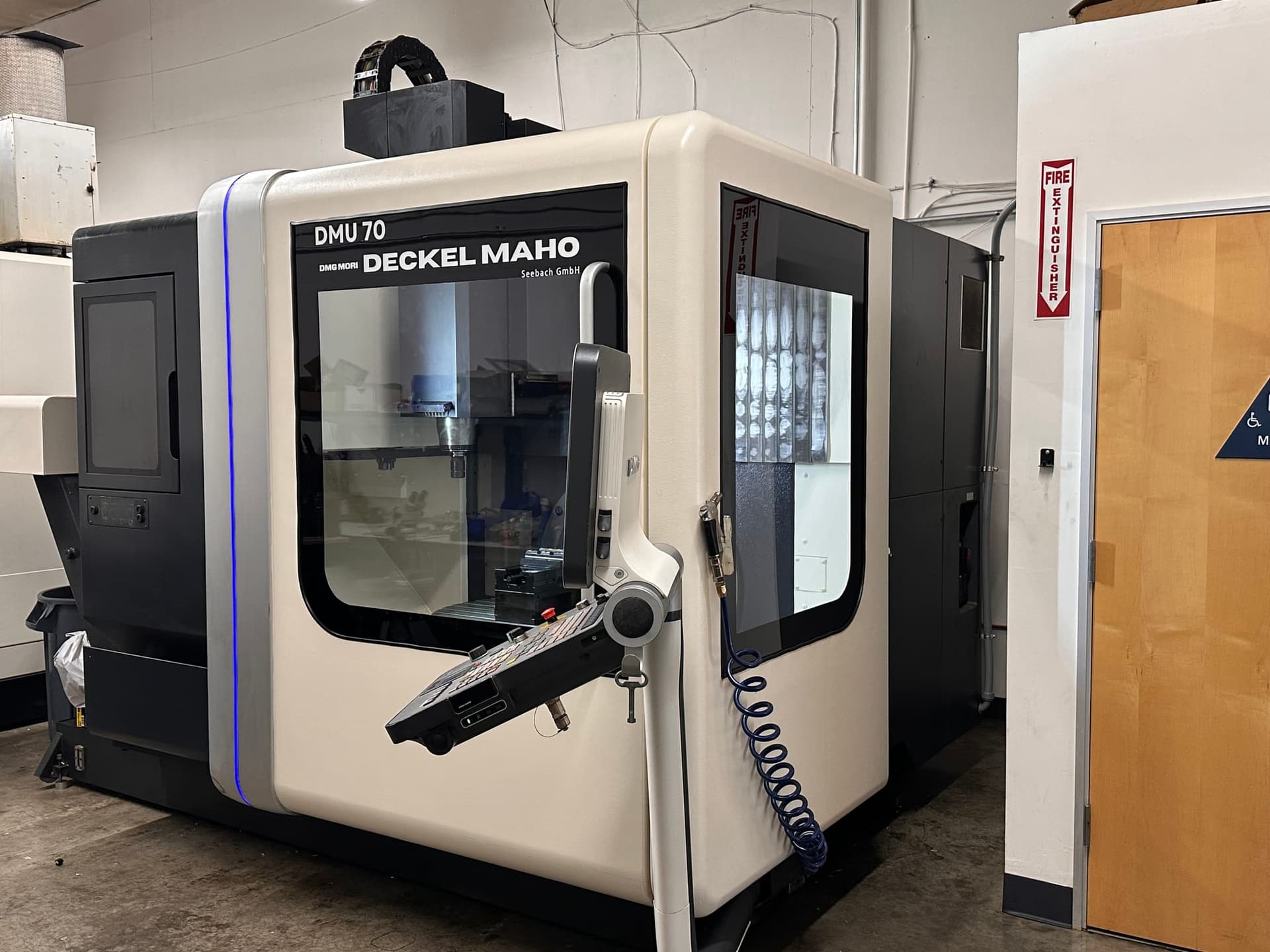
Item #6433
DMG Mori Deckel Maho DMU 70 5-Axis Machining Center
USA

Item #6328
2000 Monarch PMC V-750 5-Axis CNC Vertical Machining Center
Canada
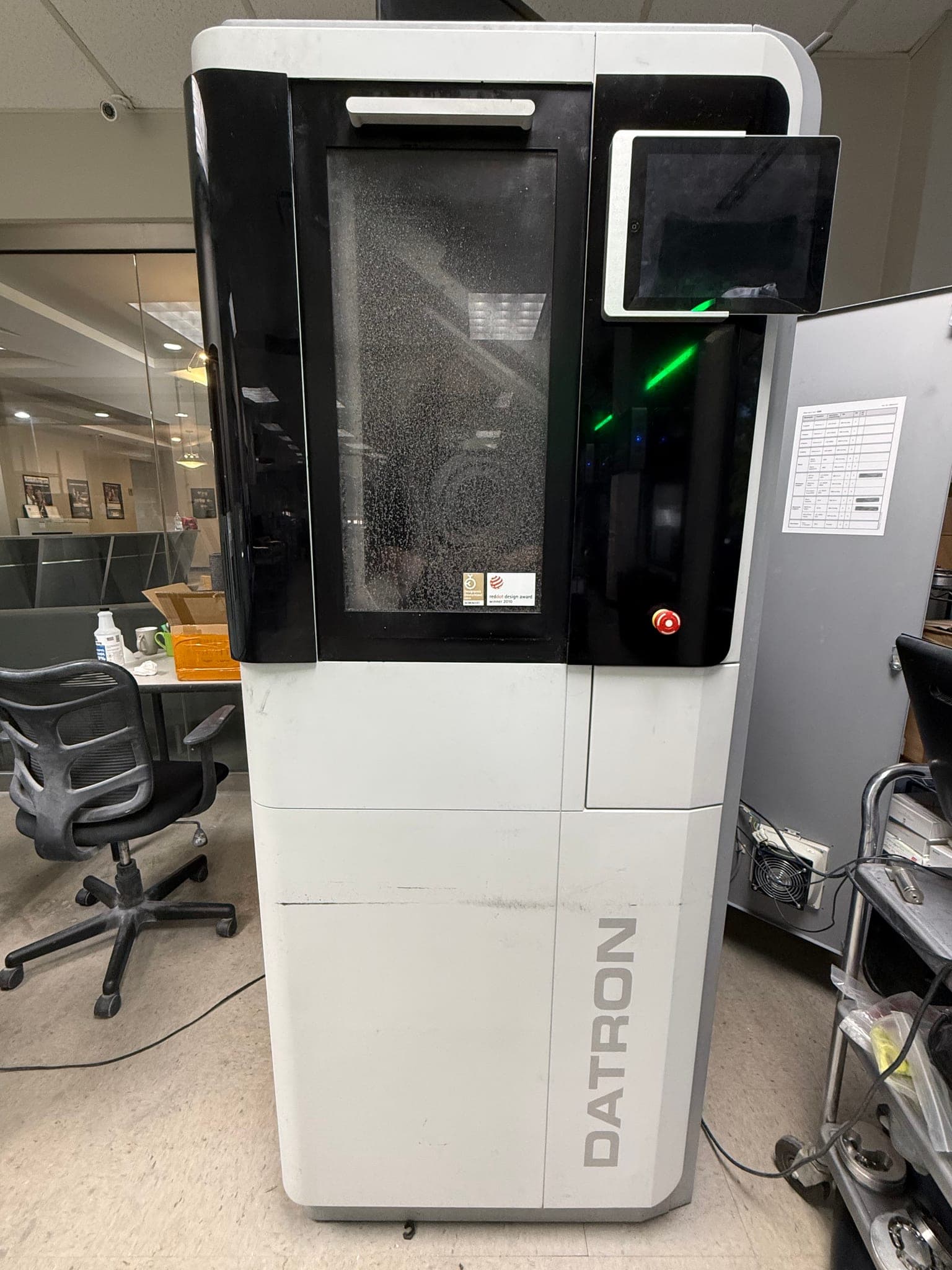
Item #6595
Datron D5 5-Axis Dental Milling Machine
USA
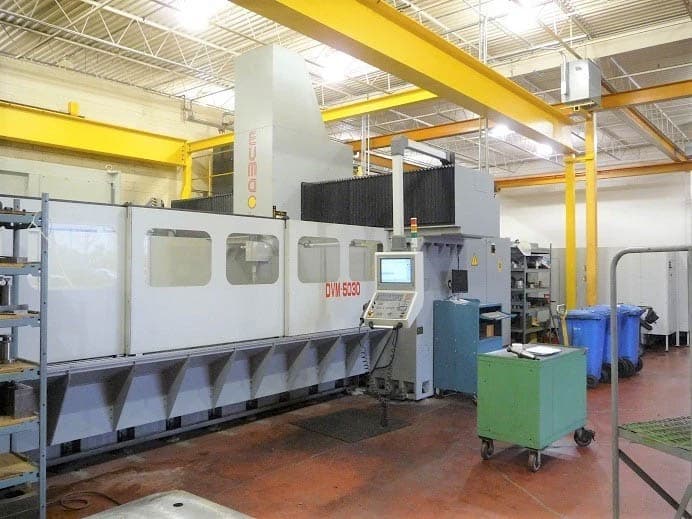
Item #6411
Eumach DVM 5030 5-Axis CNC Gantry Machining Center
Canada
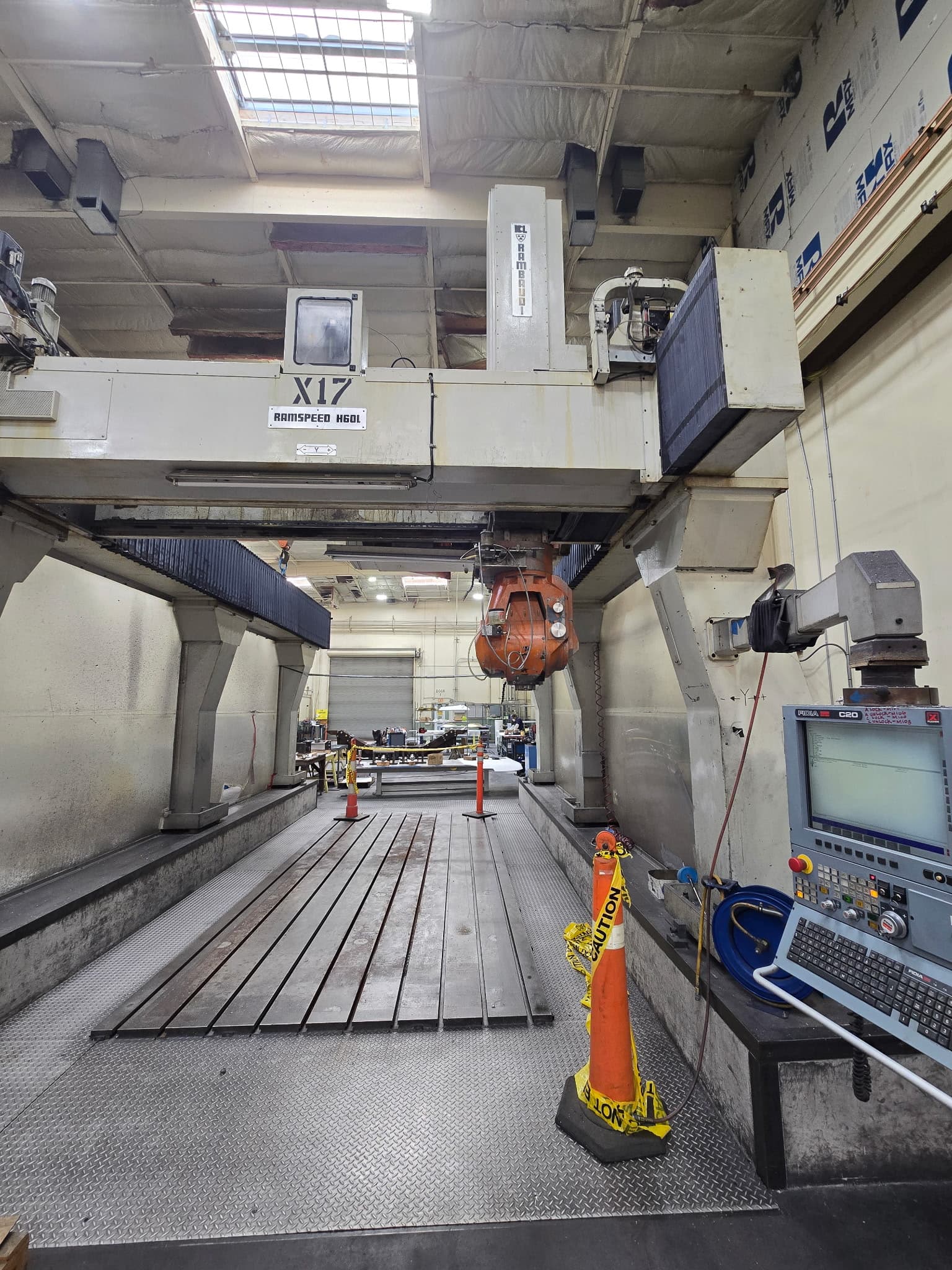
Item #6400
Rambaudi Ramspeed H60L 5-Axis CNC Gantry Mill
USA
5-Axis Machining Centers by the numbers
From our own catalog: machines listed now and machines we have sold. Updated every few minutes.
Looking for Something Specific?
Most of our inventory sells before we can list it online. If you need a specific brand, model, or specification, tell us what you need—we have access to unlisted equipment and machines coming in from plant closures.
Browse Used 5-Axis by Brand
Browse Used 5-Axis by Country
Looking to Sell Your 5-Axis?
Meadoworks is an active cash buyer of used industrial equipment. Get a free valuation from our AMEA-certified appraisers.
About Used 5-Axis Machining Centers
5-axis machining centers add two rotary axes to standard 3-axis milling, enabling machining of complex contoured surfaces and undercuts in single setups. These machines are essential for aerospace, medical implants, turbine components, and complex mold work. Configurations include trunnion-style (table tilts), swivel-head (spindle tilts), and combinations. Buyers pay more for the two rotary axes because a blade or an undercut will not finish in three axes.
A 5-axis machine adds two rotary axes to the three linear ones, so the tool can reach a face that is not square to the spindle. There are three layouts, and they are not the same purchase. A trunnion, or table-table machine, tilts and rotates the part under a spindle that stays put. A swivel head, or head-head machine, tilts the spindle over a table that may only rotate, which suits a heavier part you do not want to swing. A 3+2 machine, also called positional, locks the rotary axes at an angle and then cuts in three axes. Full simultaneous 5-axis moves all five while the tool is in the cut. You need simultaneous motion for a blade, an impeller or a surface that changes angle under the cutter. You need only 3+2 when the goal is fewer setups on faces that are flat once the part is tilted.
Travels still rule. The rotary range does not add X, Y or Z, and a part that will not fit the trunnion will not be saved by a tilting head on paper. Spindle taper is often HSK or a steep CAT, and the holders have to match. Tool capacity, coolant through the spindle and a probed rotary are what turn a positioning machine into a cell. The control has to have the simultaneous option actually enabled. A machine that can only index is a 3+2 machine, whatever the badge says.
DMG Mori is the make that appears here as a line. A Haas UMC or a gantry mill can appear in the same offering as a single machine. They are not a brand line on this machine, and a gantry with a tilting head is compared on the gantry mill machine, where the travels are the point. A rotary table bolted to a vertical machining center is the smaller step, and it is often enough for a bracket. Open that machine if the tool does not have to move while the part tilts.
On a used 5-axis machine, indicate the rotary axes, not only the linear ones. Backlash or a lost home on A or C appears as a mismatch between faces. Ask when the pivot geometry was last checked. Run the spindle, cycle the changer, and confirm the control will run a simultaneous program rather than only an index. Way covers, alarm history and a scar on the trunnion are the crash record. A tired rotary will not be programmed back into a true contour.
How to Choose a Used 5-Axis Machining Center
How to Size a 5-Axis Machine
Size the linear travels to the part, the fixture and the tool approach, then size the rotary axes to the tilt and the spin you actually need. A trunnion that cannot swing the part is the wrong table, even when X, Y and Z look generous.
Weight matters as much as envelope. A heavy mold base wants a swivel head over a fixed table, not a trunnion that must accelerate the work. Spindle taper and rpm follow the material. Tool capacity has to hold the whole part. If every face is flat once the part is tilted, 3+2 is the size you need. Simultaneous motion is a larger control and a larger programming job, and you should only buy it when the surface requires it.
Trunnion, Swivel Head, or 3+2
A trunnion tilts the part. It is the usual layout for smaller work, and the fixture has to clear the tilting table. A swivel head tilts the spindle, which leaves a heavy part sitting still. Both can be simultaneous or only positional.
3+2 locks the rotaries and cuts with three axes. That deletes setups on brackets, housings and mold work with angled faces. Full 5-axis keeps the rotaries moving during the cut, which is what a blade or an undercut contour needs. A rotary on a vertical mill is the step before either of these. If that rotary would remove the extra clampings, you do not need this machine yet.
By Size: Used 5-Axis Machine Price Ranges
Trunnion tables up to about 500 mm: about $80,000–$200,000.
Mid-size trunnion and swivel-head machines: about $150,000–$350,000.
Large-table and gantry 5-axis machines: about $250,000–$700,000.
What moves the price: simultaneous versus 3+2 capability, rotary axis condition, spindle hours, the control and its options, probing and pallet automation. These are typical used-market ranges, not a quote on any one machine. Call 800-323-0307 for a current price.
5-Axis Machining Center Specs to Compare
| Spec | Typical range | Why it matters |
|---|---|---|
| Rotary layout | A trunnion swings the part. A swivel head tilts the tool over a heavier part that should stay put. | |
| X/Y/Z travels (in) | Rotary range does not add linear travel. The part and the fixture still have to fit the cube. | |
| Rotary travel | Often a full rotation plus a tilt near 90 degrees or more | The tilt has to present the face. A short tilt leaves a setup you thought you had deleted. |
| Simultaneous or 3+2 | 3+2 locks, then mills. Simultaneous motion is required only when the surface changes angle during the cut. | |
| Spindle taper | HSK or CAT40 on many machines | Holders have to match. A high-speed HSK spindle is a different drawer from a 40-taper shop. |
| Control option | The simultaneous software has to be enabled. A machine that only indexes is 3+2, whatever the model name says. |
Rotary layout
A trunnion swings the part. A swivel head tilts the tool over a heavier part that should stay put.
X/Y/Z travels (in)
Rotary range does not add linear travel. The part and the fixture still have to fit the cube.
Rotary travel
Typical range: Often a full rotation plus a tilt near 90 degrees or more
The tilt has to present the face. A short tilt leaves a setup you thought you had deleted.
Simultaneous or 3+2
3+2 locks, then mills. Simultaneous motion is required only when the surface changes angle during the cut.
Spindle taper
Typical range: HSK or CAT40 on many machines
Holders have to match. A high-speed HSK spindle is a different drawer from a 40-taper shop.
Control option
The simultaneous software has to be enabled. A machine that only indexes is 3+2, whatever the model name says.
What to Inspect on a Used 5-Axis Machining Center
Indicate both rotary axes
Backlash or a lost home on the tilt or the spin appears as a step between faces that should meet.
Ask when geometry was checked
Pivot length and centerline error are a calibration, not a wear item you can see from the aisle.
Run a simultaneous move
Confirm the control will move all five axes in a cut, not only index and lock. The option is either on or it is not.
Run the spindle
Listen across the speed range and separate spindle hours from power-on hours. A roar is bearings.
Cycle the tool changer
A pocket that alarms will stop a program that already took hours to prove. Run more than the first five tools.
Read alarms and trunnion scars
Crash history stays in the control. A repaired trunnion face is the same history in metal.
Match taper, travels and weight
Confirm the part fits the cube, the holders match the taper, and the table can swing the fixture you will use.
Related Equipment
- Used CNC Mills & Machining Centers
Compare vertical, horizontal and 5-axis layouts first
- Used Vertical Machining Centers (VMC)
A rotary on a 3-axis mill is often enough
- Gantry Mills
Large plates when a trunnion table is too small
Related CNC Mills & Machining Centers
Vertical Machining Centers (VMC)
Vertical machining centers (VMCs) are the most popular CNC milling machines, featuring a vertically oriented spindle.
Horizontal Machining Centers (HMC)
Horizontal machining centers (HMCs) feature a horizontally oriented spindle and are designed for high-volume production and 4-axis machining.
Drilling & Tapping Centers
Drilling and tapping centers are high-speed CNC machines optimized for hole-making operations.
CNC Routers
CNC routers are gantry-style machining centers built for cutting, drilling, and shaping sheet materials — wood, plastics, composites, foam, and non-ferrous metals like aluminum.
All CNC Machines
Browse the full used CNC machine inventory — machining centers, lathes, EDM, and more.
Top Brands for Used 5-Axis Machining Centers
Common Applications
Frequently Asked Questions
How does a trunnion differ from a swivel head on a 5-axis machine?
A trunnion tilts and rotates the part under a spindle that does not tilt. The fixture and the part have to clear that moving table, and the table has to be able to accelerate the weight. A swivel head tilts the spindle instead, so a heavy mold or weldment can sit still. Both layouts can be positional or simultaneous. Pick from the weight and the shape, not from the badge. Travels are still the linear cube. A tilting axis does not make a small machine hold a large plate.
What is the difference between 3+2 axis and full 5-axis?
3+2, also called positional, locks the two rotary axes at an angle and then cuts with the three linear axes. That removes setups on brackets, housings and mold faces that are flat once the part is tilted. Full simultaneous 5-axis moves the rotaries while the tool is in the cut. You need that motion for a blade, an impeller or a surface that changes angle under the cutter. A control that can only index is a 3+2 machine, whatever the badge says. Confirm the simultaneous option is actually enabled before you pay for a contour the machine cannot run.
Which travels matter on a used trunnion besides the rotary range?
X, Y and Z, measured with the fixture and the longest tool, not from the part print alone. The trunnion eats envelope when it tilts, and a tool that clears at zero degrees can hit the table at forty. Part weight has to be inside what the table will swing. Spindle taper has to match the holders you will hang, often HSK on a high-speed machine. Tool capacity has to hold the program. A rotary range that looks complete does not add a single inch of linear travel.
How do I check rotary backlash before I trust a contour?
Indicate the tilt and the spin, and compare a move out and back. Lost motion appears as a witness line where two toolpaths should meet. Ask when the pivot geometry was last measured. A control that homes the axis is not the same as a geometry file that still matches the iron. Run the spindle and cycle the changer while you are there. Alarm history and a scar on the trunnion tell you whether the machine was crashed.
When do I need a 5-axis machine?
You need a 5-axis machine when a part has faces that are not square to one spindle direction, or a surface that must be finished in one clamping. A trunnion tilts a smaller part under a spindle that stays put. A swivel head tilts the tool over a heavy part that should not swing. If a rotary table on a vertical mill would remove the extra clampings, you do not need five axes yet. If the part is a plate that will not fit a trunnion, a gantry with a tilting head is a different machine, sized by bridge travel rather than by a rotary table.
What has to be enabled before a 5-axis control will contour?
The simultaneous option, and a geometry file the control believes. Many machines will index and lock, which is 3+2, without being able to move the rotary axes during the cut. Ask for a program that moves all five, and watch it run, not only boot. Probing the rotary and knowing the pivot length are part of that, because a wrong centerline cuts a surface that looks smooth and is the wrong shape. Tool length and holder gauge length have to be in the control too.
Related Resources
Looking for Specific 5-Axis?
Can't find what you need? Contact our team with your requirements. We source equipment from facilities across North America.
