Used EDM Machines (Wire & Sinker) for Sale
3 results
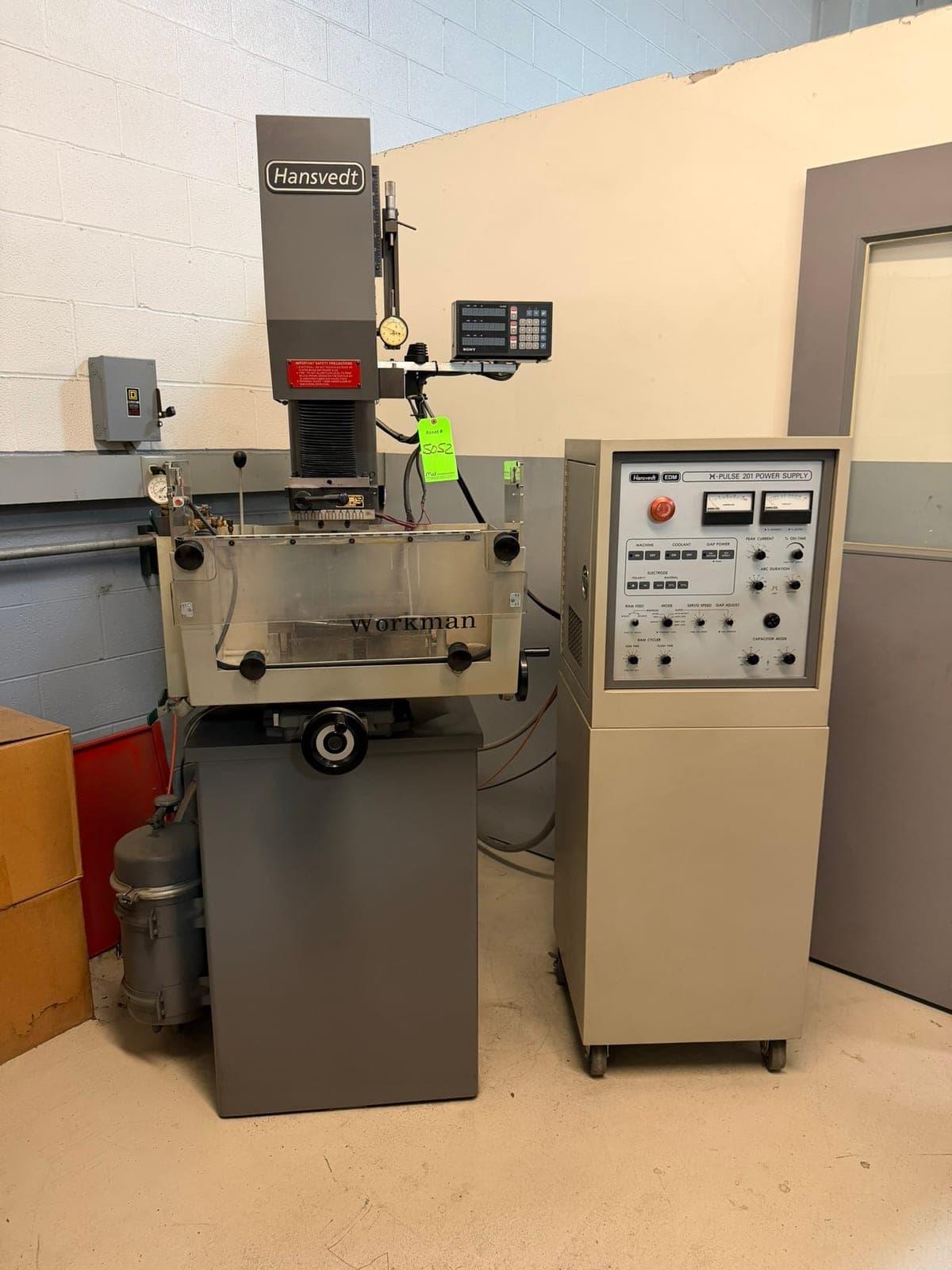
Lot 45
Hansvedt Workman Sinker EDM w/X-Pulse 201 Power Supply
Naperville, IL
Live auction · Tue, Oct 27, 10:00 AM CT · 1 absentee bid
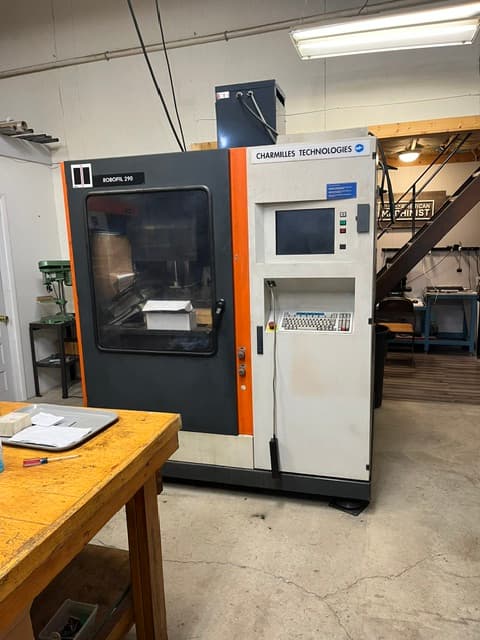
Charmilles Robofil 290 Wire EDM
USA

Mitsubishi FA10M Wire EDM
USA
Looking for Something Specific?
Most of our inventory sells before we can list it online. If you need a specific brand, model, or specification, tell us what you need—we have access to unlisted equipment and machines coming in from plant closures.
Browse Used EDM by Brand
Browse Used EDM by Country
Looking to Sell Your EDM?
Meadoworks is an active cash buyer of used industrial equipment. Get a free valuation from our AMEA-certified appraisers.
About Used EDM Machines (Wire & Sinker)
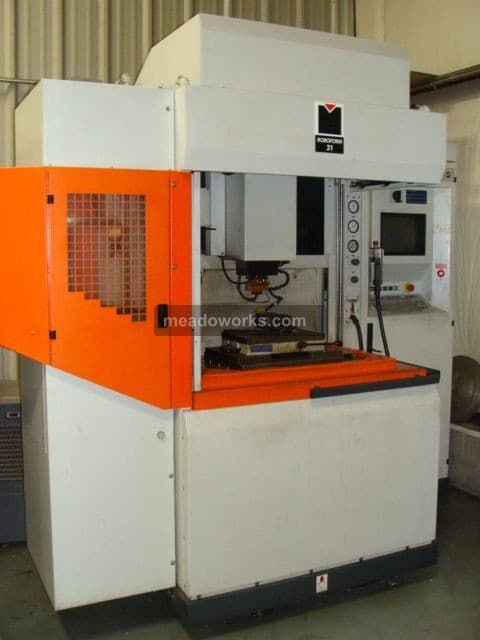
Electrical Discharge Machining (EDM) uses controlled electrical sparks to erode conductive materials with extreme precision. Wire EDM cuts complex shapes using a thin wire electrode, while sinker (ram) EDM uses shaped electrodes to create cavities. EDM is essential for die and mold manufacturing, aerospace components, and any application requiring tight tolerances in hardened materials. EDM machines achieve tolerances of +/-0.0001" or better and can cut any conductive material regardless of hardness.
EDM (electrical discharge machining) removes metal with controlled sparks, so it cuts hardened steel, carbide and exotic alloys as easily as soft metal — and produces sharp inside corners that cutting tools can't. Wire EDM cuts profiles through the part with a thin traveling wire; it's the standard for punches, dies, extrusion dies and precision profiles. Sinker (ram) EDM burns a shaped electrode into the part to create blind cavities, ribs and mold details. Hole-drilling EDM makes small, deep holes quickly — often start holes for wire EDM.
When buying a used EDM, check the generator and control generation, the filtration and dielectric system (deionizing resin on wire machines, oil on sinkers), the wire feed and threading system, and the machine's accuracy — ask for a recent test cut. Travels, maximum workpiece weight and taper angle (wire) set the size of work the machine can take.
This machine is the comparison. An EDM machine here is either a wire machine or a sinker, and confirm whether it is which. Wire cuts a path through the part. The feature has to be open from top to bottom, like a punch, a die opening or an extrusion profile. Sinker burns a shape into the part with an electrode, so the feature can be a blind cavity. Hole-drilling EDM is the small third case, a fast way to put a start hole where the wire can thread. If you already know you need a through profile, open the wire machine for wire size, submerged cutting and auto thread. If you already know you need a cavity, open the sinker machine for electrode, orbit and dielectric oil.
Dielectric is the fluid the spark happens in. Wire machines usually run deionized water. Sinkers usually run oil. The filter, the resin and the chiller are part of the machine, not a cart you can forget. A generator from an older control will still burn, and it will not hold the same finish settings as a current one. Travels and workpiece weight decide whether the die fits. Taper on a wire machine is the angle it can lean the wire. An electrode changer on a sinker is what lets a cavity run through roughing and finish electrodes without a person standing there.
A cutter on a machining center is still the right tool when the metal is soft enough and the corner does not have to be sharp. EDM is the process after the cutter gives up, in hardened steel or carbide, or where the inside corner is smaller than any end mill. A test cut on a used EDM machine tells you more than the hour meter.
How to Choose a Used EDM Machine
How to Size an EDM Machine
Name the feature first. A through profile sizes a wire machine: travels, thickness, taper and the weight of the die block. A blind cavity sizes a sinker: tank travels, how many electrodes the job needs, and whether a changer is required. A start hole sizes a hole driller, often as a partner to the wire machine.
Then match the generator to the finish you have to hold. An older power supply may burn the shape and still miss a fine finish. Dielectric and filtration have to be intact, because a dirty fluid is a bad cut even on a sound generator. If you are unsure which process, stay on this machine until the feature is obvious. The wire and sinker machines go further into the wear items, and they assume you already chose.
Wire, Sinker, or a Cutter
Wire is a bandsaw made of sparks. It needs a path that exits the part. Sinker is a cavity burned by a shaped electrode, graphite or copper, and the feature can be blind. A machining center is still faster when an end mill can reach and the material is not already hard.
Use wire for punches, die openings and profiles in hardened tool steel. Use sinker for mold cavities, ribs and sharp inside corners a cutter would leave round. Use a mill when the corner radius is acceptable and the steel is still machinable. Hole-drilling EDM is how many wire jobs get their thread start. It is not a substitute for either of the other two.
EDM Machine Specs to Compare
| Spec | Why it matters |
|---|---|
| Process | Wire needs a through path. Sinker burns a blind shape. The nameplate has to say which. |
| Travels (in) | The die or the mold block has to fit the travels. A small tank will not grow because the generator is newer. |
| Workpiece weight (lb) | A heavy die can be inside the travels and still overload the table. Read the weight, not only the inches. |
| Dielectric | The fluid is part of the cut. The filter, resin or oil system has to be on the machine you buy. |
| Generator and control | An older power supply may still burn and still miss the finish settings a current job needs. |
| Taper or electrode changer | Taper is a wire-machine angle. An electrode changer is a sinker option. Neither spec belongs to both processes. |
Process
Wire needs a through path. Sinker burns a blind shape. The nameplate has to say which.
Travels (in)
The die or the mold block has to fit the travels. A small tank will not grow because the generator is newer.
Workpiece weight (lb)
A heavy die can be inside the travels and still overload the table. Read the weight, not only the inches.
Dielectric
The fluid is part of the cut. The filter, resin or oil system has to be on the machine you buy.
Generator and control
An older power supply may still burn and still miss the finish settings a current job needs.
Taper or electrode changer
Taper is a wire-machine angle. An electrode changer is a sinker option. Neither spec belongs to both processes.
What to Inspect on a Used EDM Machine
Name wire or sinker
Confirm the process before you compare travels. A wire machine and a sinker are not two versions of the same spec sheet.
Ask for a test cut
A recent cut in a known material shows finish and accuracy. Hours on the control do not.
Check dielectric and filters
Water resin on a wire machine, oil and filters on a sinker. A dirty system cuts poorly on a sound generator.
Read the generator generation
Match the power supply to the finish you need. An older box can be honest about what it will not hold.
Cycle thread or changer
Auto thread on a wire machine, or the electrode changer on a sinker, should complete a cycle, not only look present.
Compare travels and weight
The block has to fit the tank and stay under the table rating. Measure your largest die, not a sample.
Note taper or orbit only if it applies
Taper matters on wire. Orbit and electrode count matter on sinker. Skip the spec that belongs to the other process.
Related Equipment
- Wire EDM
Through profiles, wire size and auto thread
- Sinker EDM
Blind cavities, electrodes and dielectric oil
- Machining Centers
A cutter when the corner does not have to be sharp
Related EDM Machines
Wire EDM Machines
Wire EDM machines (wire electrical discharge machines) cut conductive materials using a thin, continuously traveling wire electrode — typically 0.
Sinker EDM Machines
Sinker EDM machines (also called ram EDM or die-sinker EDM) erode cavities into conductive workpieces using a shaped graphite or copper electrode plunged into the material under CNC control.
All CNC Machines
Browse the full used CNC machine inventory — machining centers, lathes, EDM, and more.
Top Brands for Used EDM Machines (Wire & Sinker)
Charmilles
Swiss EDM name, now part of GF Machining Solutions.
Sodick
Japanese EDM builder known for linear-motor drives.
Mitsubishi
Japanese builder of wire EDM with automatic threading.
Makino
Japanese builder of wire and sinker EDM for mold work.
Common Applications
Frequently Asked Questions
What is the difference between wire EDM and sinker EDM?
Wire EDM uses a thin wire (typically brass, 0.004-0.012" diameter) as an electrode to cut through the workpiece like a bandsaw, producing 2D profiles through any thickness. Sinker EDM (also called ram or die-sinking EDM) uses a shaped electrode (usually graphite or copper) that is plunged into the workpiece to create a cavity matching the electrode shape. Wire EDM excels at cutting punches, dies, and complex profiles. Sinker EDM creates mold cavities, blind features, and complex 3D shapes.
What should I compare first on a used EDM machine listing?
Whether it is a wire machine or a sinker. The rest of the spec sheet only makes sense after that. A wire machine needs travels, thickness, taper and a threading system. A sinker needs a tank that fits the mold, an electrode plan and usually oil dielectric. Hole-drilling EDM is a third, smaller machine for start holes. Generator generation and a test cut come next, on either process. Travels that look large do not turn a wire machine into a cavity burner.
How do water and oil dielectric split between the two processes?
Wire machines usually cut in deionized water, and the resin bottles are part of keeping that water ready to spark. Sinkers usually cut in oil, and the filters and the oil condition are part of the finish. The fluids are not interchangeable, and a machine sold without its dielectric system is an incomplete cutter. Ask when the filters were serviced and whether the chiller works. A test cut in dirty fluid tells you about the fluid, not about the generator.
When does a start-hole machine belong with a wire cutter?
When the wire has to begin a cut in the middle of a solid block, or when a small deep hole is the feature itself. Hole-drilling EDM burns that hole quickly so the wire can thread. It does not cut a profile, and it does not burn a cavity. Many wire jobs can start from an edge and never need it. If your dies are plates with an edge start, do not add a hole driller out of habit.
What should I check when buying a used EDM?
Ask for a recent test cut in a material close to yours, and read the generator and control generation against the finish you need. Check the dielectric system, resin on a wire machine and oil filters on a sinker, and run the automatic threader or the electrode changer through one cycle. Compare travels and table weight with your largest block. Taper angle matters only on wire. A machine that sparks and will not thread, or will not change electrodes, will not run the unattended cycle the brochure describes.
When should I leave EDM and buy a machining center instead?
When an end mill can reach the feature, the inside corner can have a radius, and the steel is not already hard. A machining center is faster and it does not need electrodes or wire. EDM is the process for hardened tool steel, carbide, and corners a cutter cannot make sharp. Many molds are both: the mill roughs the block, the sinker burns the cavity the mill cannot finish, and the wire cuts the inserts.
Related Resources
Recently Sold EDM
View all sold CNC machines →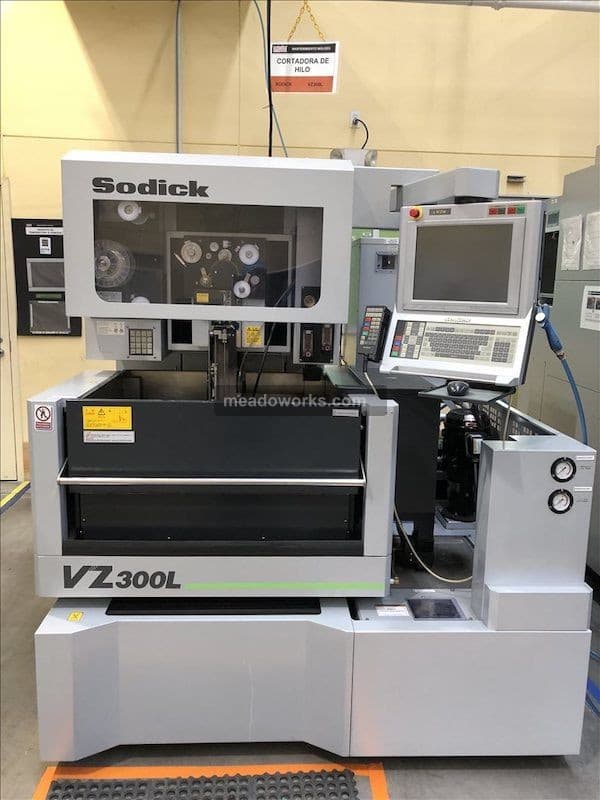
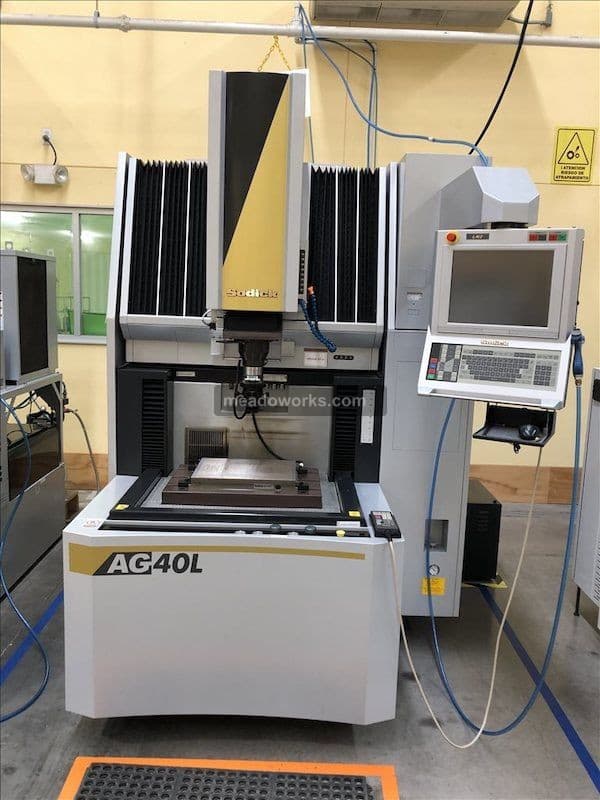

Looking for Specific EDM?
Can't find what you need? Contact our team with your requirements. We source equipment from facilities across North America.
