Used Tube & Pipe Benders for Sale
3 results

Tube & Pipe Benders by the numbers
From our own catalog: machines listed now and machines we have sold. Updated every few minutes.
By brand
| Brand | In stock now | Sold by Meadoworks | Model years |
|---|---|---|---|
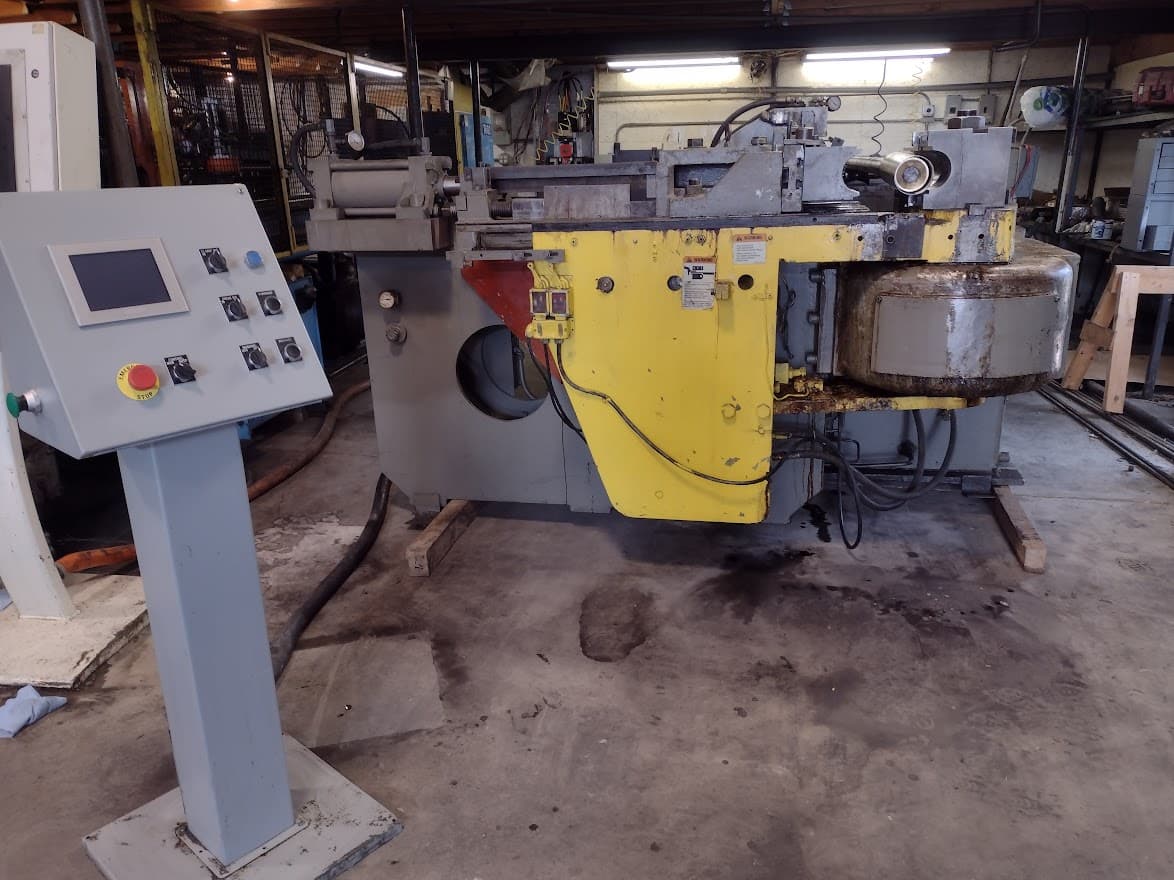
| Pines | 2 | 0 | 2007 |
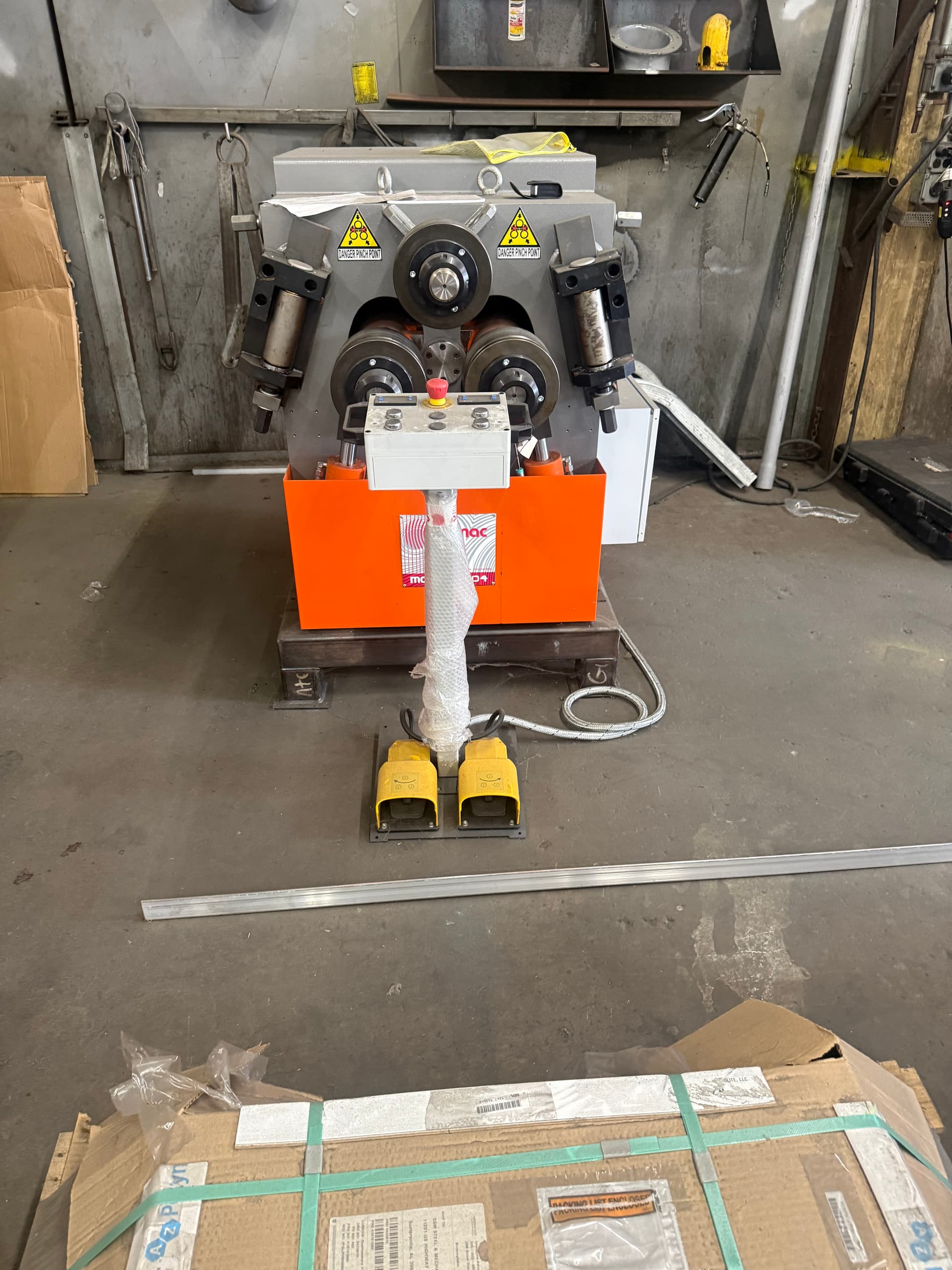
| Comac | 1 | 0 | — |
| Eaton Leonard | 0 | 4 | 1988 |
Shop Used Tube & Pipe Benders by Type
- Used CNC Tube Benders (1)
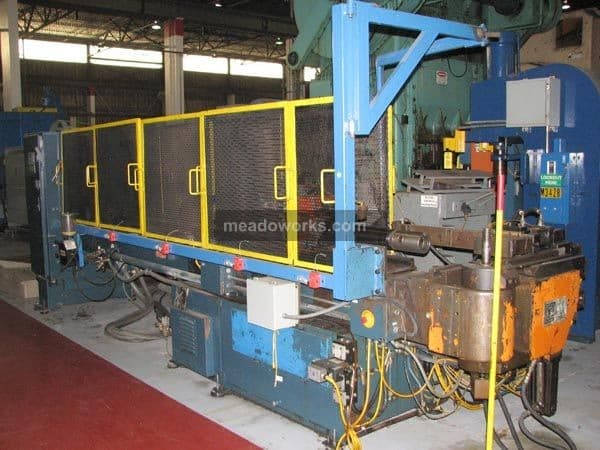
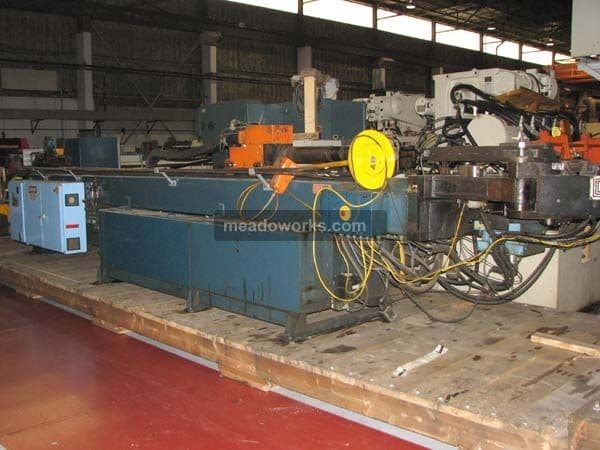
1 in stock now from Pines.
Looking for Something Specific?
Most of our inventory sells before we can list it online. If you need a specific brand, model, or specification, tell us what you need—we have access to unlisted equipment and machines coming in from plant closures.
Browse Used Tube & Pipe Benders by Brand
Browse Used Tube & Pipe Benders by Country
Looking to Sell Your Tube & Pipe Benders?
Meadoworks is an active cash buyer of used industrial equipment. Get a free valuation from our AMEA-certified appraisers.
About Used Tube & Pipe Benders
Tube and pipe benders form round and square tube, pipe, and bar to precise angles and radii for automotive, aerospace, furniture, handrail, and structural work. CNC mandrel benders support the tube wall internally to produce tight-radius, wrinkle-free bends in thin-wall material, while rotary-draw and roll benders handle heavier sections and larger radii. Machines range from single-stack hydraulic benders to multi-stack CNC benders with automatic feed, rotation, and bend sequencing.
Key specifications include maximum tube diameter and wall thickness, minimum centerline radius, number of bend stacks, mandrel capability, and CNC axis count. Mandrel tooling (mandrel, wiper die, pressure die, bend die) is sized to each tube diameter and radius, so tooling availability is an important part of any used purchase.
Tube and pipe benders from Eaton Leonard, Addison, Pines and Comac have moved through Meadoworks. Contact us at 800-323-0307 for current availability.
How to Choose Used Tube & Pipe Benders
Diameter, Wall and Radius First
Size a tube bender to the largest outside diameter and wall you bend and to your tightest centerline radius. Thin wall at a tight radius needs a mandrel and wiper die; heavier wall at a larger radius can bend without one. Then decide on the control: manual and hydraulic benders suit short runs, while CNC rotary-draw benders repeat multi-bend parts with set plane-of-bend and length.
Tooling is part of the price: bend dies, clamp and pressure dies, mandrels and wipers for each tube size. A multi-stack bender holds several radii for parts that need more than one.
By Capacity: Typical Used Tube & Pipe Benders Price Ranges
Manual and single-stack hydraulic benders: about $3,000–$20,000.
CNC mandrel benders, up to about 2 in OD: about $20,000–$80,000.
CNC benders, 3–4.5 in OD and multi-stack: about $50,000–$200,000.
What moves the price — the diameter and wall capacity, CNC axes, multi-stack heads, the mandrel and die sets included for your tube sizes, and the age and support of the control.
These are typical used-market ranges, not a quote on any one machine. For a current figure on a specific machine, request a quote or call 800-323-0307.
By brand
Tube benders from Eaton Leonard, Addison, Pines and Comac have moved through Meadoworks, including Eaton Leonard VB 150, 200 and 300 CNC rotary benders and Addison DB120 CNC hydraulic benders.
Meadoworks track record
We have sold Eaton Leonard and Addison CNC benders with capacities from 1.5 to 4.5 in OD, and our catalog has carried Pines CNC and manual benders and a Comac angle roll.
Tube & Pipe Benders Specs to Compare
| Spec | Typical range | Why it matters |
|---|---|---|
| Tube OD capacity | Often 1.5–4.5 in | Sets the largest tube the bender can form. |
| Wall thickness | Often 0.120–0.365 in at full diameter | Heavier wall needs more torque. |
| Centerline radius | Often 1.5–3 times the tube diameter | Tighter radii need a mandrel and wiper die. |
| Bend angle | Often up to 180–190 degrees | Sets how far one bend can go. |
| CNC axes | Often 2 to 3 axes | Plane-of-bend and length axes repeat multi-bend parts. |
Tube OD capacity
Typical range: Often 1.5–4.5 in
Sets the largest tube the bender can form.
Wall thickness
Typical range: Often 0.120–0.365 in at full diameter
Heavier wall needs more torque.
Centerline radius
Typical range: Often 1.5–3 times the tube diameter
Tighter radii need a mandrel and wiper die.
Bend angle
Typical range: Often up to 180–190 degrees
Sets how far one bend can go.
CNC axes
Typical range: Often 2 to 3 axes
Plane-of-bend and length axes repeat multi-bend parts.
What to Inspect on Used Tube & Pipe Benders
Bend a test part
Bend your tube at your radius and check ovality, wrinkles and wall thinning.
Count the tooling
List the bend, clamp and pressure dies, mandrels and wipers by size.
Check the hydraulics
Look for leaks and listen to the pump under load.
Run the axes
Check the carriage, plane-of-bend and boost for repeatability.
Read the control
Ask for programs, backups and whether the control is still supported.
Inspect the swing arm
Look for play in the bend head and swing arm.
Related Equipment
- Used CNC Press Brakes
Brakes with a programmed backgauge
- Used Hydraulic Press Brakes
Hydraulic brakes by tonnage and length
- Used Plate Rolls
Roll plate into cylinders and cones
- Used Hydraulic Presses
Forming, punching and assembly presses
Types of Metal Forming & Presses
Common Applications
Frequently Asked Questions
What is the difference between a mandrel bender and a rotary draw bender?
A mandrel bender inserts a mandrel inside the tube to support the wall during bending, preventing collapse and wrinkling on tight-radius, thin-wall bends. Rotary draw bending clamps the tube and draws it around a fixed radius die and can be done with or without a mandrel. Mandrel benders are preferred for cosmetic, tight-radius, thin-wall work; non-mandrel draw and roll benders suit heavier sections and larger radii.
How much does a used tube bender cost?
Used tube and pipe bender prices range from a few thousand dollars for manual and single-stack hydraulic benders to $200,000 for large and multi-stack CNC mandrel benders with full tooling. Pricing depends heavily on capacity, CNC axes, and — critically — the mandrel tooling included for your tube sizes. Request a quote on any listing or call 800-323-0307 for a current price.
What should I check on a used CNC tube bender?
Bend your tube at your radius and check ovality, wrinkling and wall thinning. List the bend, clamp and pressure dies, mandrels and wipers by size, look for hydraulic leaks, and run the carriage and plane-of-bend axes for repeatability. Ask for the programs and whether the control is still supported.
What tube size can a used bender handle?
Benders are rated by the largest outside diameter and wall they can bend at a stated radius in mild steel. A bender rated 2 in OD x 0.145 in wall cannot bend 2 in tube with a heavier wall, and stainless needs extra capacity. Check the rating for your material and radius, not just the diameter.
Is tooling included with a used tube bender?
Sometimes, and it matters. Each tube size and radius needs its own bend die, clamp and pressure dies, and a mandrel and wiper for tight work. A used bender with a full tooling set for your sizes is worth far more than a bare machine, so get the tooling list before comparing prices.
Related Resources
Recently Sold Tube & Pipe Benders
View all sold metal cutting and fabrication equipment →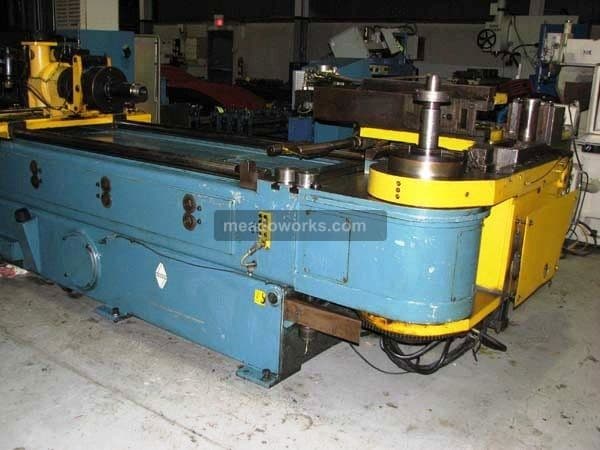
Need Help Finding the Right Equipment?
Contact our team with your specifications and we'll help you find the right machine.
