Used Drilling & Tapping Centers for Sale
See all 39 Machining Centers →
2 results

Looking for Something Specific?
Most of our inventory sells before we can list it online. If you need a specific brand, model, or specification, tell us what you need—we have access to unlisted equipment and machines coming in from plant closures.
Browse Used Drill/Tap by Brand
Browse Used Drill/Tap by Country
Looking to Sell Your Drill/Tap?
Meadoworks is an active cash buyer of used industrial equipment. Get a free valuation from our AMEA-certified appraisers.
About Used Drilling & Tapping Centers
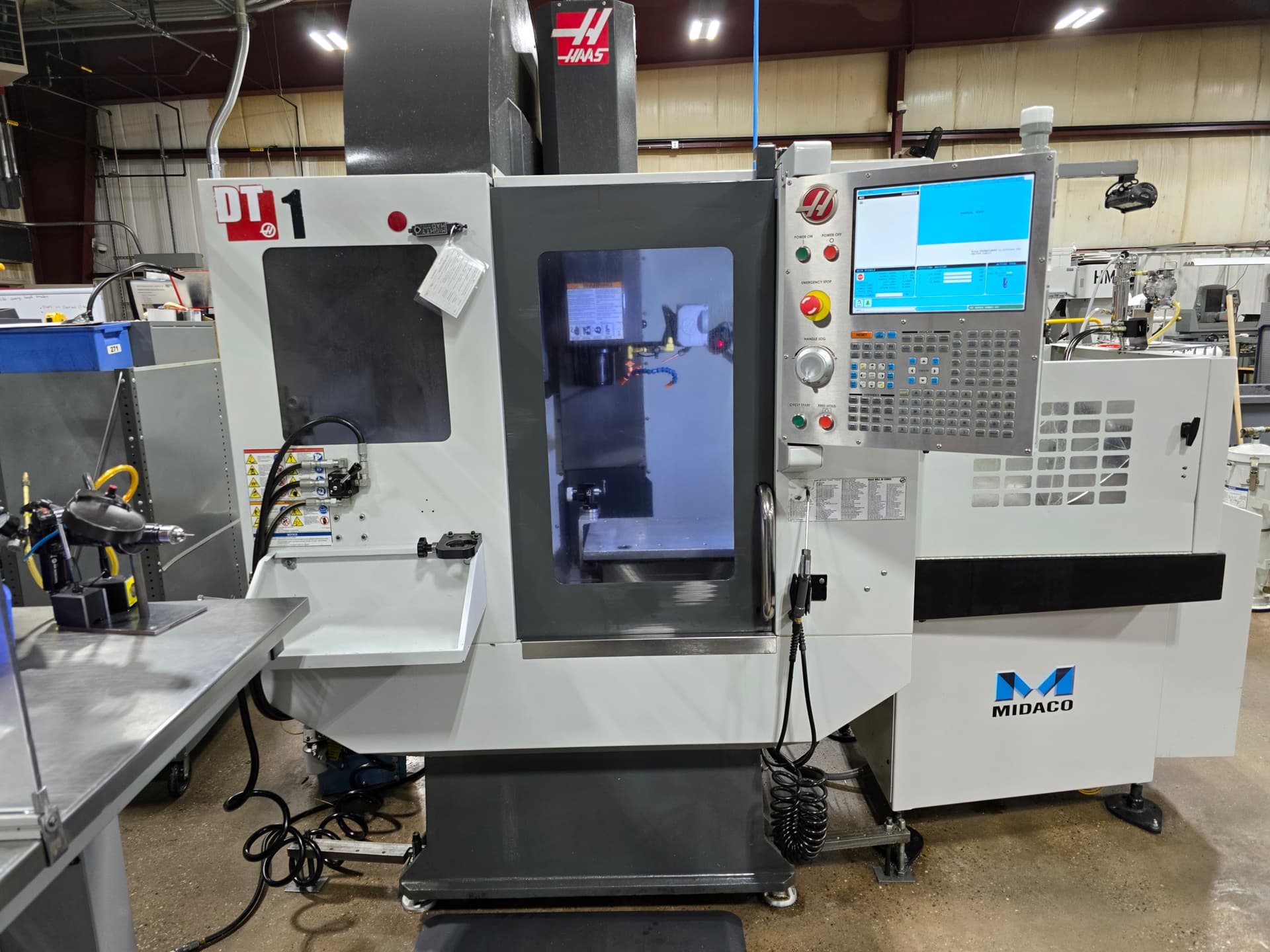
Drilling and tapping centers are high-speed CNC machines optimized for hole-making operations. These machines feature rapid traverse rates, fast tool change times, and high-speed spindles designed for drilling, tapping, chamfering, and light milling. They're significantly faster than standard VMCs for hole-intensive parts like manifolds, valve bodies, and electronic housings. Brother, Fanuc, and Kitamura are leading brands in this group.
A drill tap center is a small machining center built around holes. The spindle is quick, the rapids are high, and the tool change is often about a second, sometimes less. That combination is why a plate full of drilled and tapped holes finishes faster here than on a general vertical machining center. The cutter is still a drill, a tap or a light end mill. It is not a 50-taper roughing machine, and it is not the place to hog a deep steel pocket.
Tool change time and rapids are the specs that separate this machine from a VMC. A vertical mill spends more of a hole pattern traveling and swapping tools. A drill tap center shortens both, on a smaller table, usually with a 30-taper spindle. BT30 holders are the common fit. They are not the CAT40 holders in a typical job-shop VMC, so the tooling drawer does not come with you. Travels are modest. A manifold or a housing that fits the table is the part. A large plate is not.
Brother and Fanuc are the makes that repeat here. The work is aluminum housings, valve bodies, brackets and any part whose cycle is mostly holes with a little milling on the same faces. Through-spindle coolant matters when the holes are deep or the taps pack chips. A rigid tap cycle needs a spindle and a control that can do it. If the part is really a milled pocket with a few holes, buy the vertical machine. If the same hole pattern runs all day on a pallet, a horizontal machining center is the other comparison, and it is a larger cell than this.
On a used drill tap center, time a tool change and watch the rapids, then run the spindle to its top speed and listen. A high-rpm spindle with a roar is bearings, and this machine lives at those speeds. Cycle every pocket. Confirm the taper and that rigid tapping is enabled. Alarm history and a bent tool-change arm are the crash record. Travels and table load still have to fit the fixture, not only the part.
How to Choose Used Drilling & Tapping Centers
How to Size a Drill Tap Center
Size the travels to the part and the fixture, then stop. These machines are small on purpose. A table that looks tight is the right table if the hole pattern fits with room for the tool to enter. A larger vertical mill is the answer when it does not.
Spindle taper is next, usually BT30, and it has to match holders you will actually own. Tool capacity has to hold the drills, taps and the few mills in the pattern. Rapids and tool-change time are why you are here, so read them, but they do not fix a part that does not fit. Rigid tapping and through-spindle coolant are the options that decide deep holes and small taps. If the cycle is mostly heavy milling, this size of machine is the wrong one.
Tool Change and Rapids vs a Vertical Mill
A vertical machining center will drill and tap the same holes. It will take longer, because the rapids are lower and the tool change is slower, and it will do it with more iron than the hole needed. That extra iron is what you want when the pocket is deep or the steel is heavy.
Buy the drill tap center when the part is a pattern of holes and light milling, and the batch will keep the spindle in the cut. Buy the VMC when the travels, the taper you already own, or the depth of cut rules this machine out. A horizontal pallet cell is a third choice, for the same holes repeated on many faces. It is more machine than a tapping center.
Drilling & Tapping Centers Specs to Compare
| Spec | Typical range | Why it matters |
|---|---|---|
| Tool change (sec) | About 1 second, sometimes less | On a hole pattern the swap is a large share of the cycle. A slow changer wastes the rapids. |
| Rapids (ipm) | High rapids are how the spindle gets to the next hole. They matter more here than on a machine that is milling the whole time. | |
| Spindle taper | BT30 on most of these machines | 30-taper holders do not match a 40-taper VMC drawer. The taper is a tooling purchase if you guessed. |
| Spindle speed (rpm) | Often 10,000 rpm and up | Small drills and aluminum want rpm. A roar at the top of the range is bearings, not a setting. |
| X/Y/Z travels (in) | The part and the fixture have to fit a small table. These machines do not grow into a large VMC. | |
| Tool capacity | Often 14–21 tools | The magazine has to hold the drills, taps and light mills in the pattern, or the cycle stops for a manual swap. |
Tool change (sec)
Typical range: About 1 second, sometimes less
On a hole pattern the swap is a large share of the cycle. A slow changer wastes the rapids.
Rapids (ipm)
High rapids are how the spindle gets to the next hole. They matter more here than on a machine that is milling the whole time.
Spindle taper
Typical range: BT30 on most of these machines
30-taper holders do not match a 40-taper VMC drawer. The taper is a tooling purchase if you guessed.
Spindle speed (rpm)
Typical range: Often 10,000 rpm and up
Small drills and aluminum want rpm. A roar at the top of the range is bearings, not a setting.
X/Y/Z travels (in)
The part and the fixture have to fit a small table. These machines do not grow into a large VMC.
Tool capacity
Typical range: Often 14–21 tools
The magazine has to hold the drills, taps and light mills in the pattern, or the cycle stops for a manual swap.
What to Inspect on Used Drilling & Tapping Centers
Time one tool change
Watch a swap from pocket to spindle. A changer that pauses or alarms will erase the reason you bought the machine.
Run rapids in each axis
The axis should reach rapid and stop cleanly. A hitch at high speed is a drive or a way problem.
Listen at top spindle speed
These spindles live at high rpm. A roar at the top of the range is bearings, not a belt you can ignore.
Cycle every pocket
A short magazine still has a bad pocket. Run it through, including the tool you will actually tap with.
Confirm rigid tapping
The option has to be enabled and a tap cycle has to run. A spindle that only spins will not rigid-tap.
Match the 30-taper holders
BT30 is the usual taper. A drawer of CAT40 tools does not follow this machine home.
Read travels and alarms
The fixture has to fit. Alarm history and a bent change arm are the crash record the paint will not show.
Related Equipment
- Vertical Machining Centers
Heavier milling when holes are not the whole job
- Machining Centers
Vertical, horizontal and tapping machines in one family
- Horizontal Machining Centers
A pallet when the same holes repeat all day
Related CNC Mills & Machining Centers
Vertical Machining Centers (VMC)
Vertical machining centers (VMCs) are the most popular CNC milling machines, featuring a vertically oriented spindle.
Horizontal Machining Centers (HMC)
Horizontal machining centers (HMCs) feature a horizontally oriented spindle and are designed for high-volume production and 4-axis machining.
5-Axis Machining Centers
5-axis machining centers add two rotary axes to standard 3-axis milling, enabling machining of complex contoured surfaces and undercuts in single setups.
CNC Routers
CNC routers are gantry-style machining centers built for cutting, drilling, and shaping sheet materials — wood, plastics, composites, foam, and non-ferrous metals like aluminum.
All CNC Machines
Browse the full used CNC machine inventory — machining centers, lathes, EDM, and more.
Top Brands for Used Drilling & Tapping Centers
Brother
Japanese builder of Speedio machines with fast tool changes.
Fanuc
Builder of Robodrill tapping centers and the Fanuc control.
Common Applications
Frequently Asked Questions
How fast should a tool change be on a drill tap center?
Fast enough that the swap is not the cycle. On these machines that is often about a second, and on some it is less. Time it. A listing that says high speed and then pauses on every tool is a vertical mill with a small table. The rapids have to match, or you save the swap and lose it traveling to the next hole. Neither number helps if the part does not fit the travels. Tool capacity still has to hold the drills and taps in the pattern.
What do rapids change compared with a general vertical mill?
On a hole pattern the spindle spends much of the cycle in the air, moving to the next hole and waiting on the changer. Higher rapids and a quicker swap are the whole point of this machine. A vertical machining center drills the same hole with more rigidity and usually with a slower move between holes. Buy the vertical when the pocket is the work and the holes are incidental. Buy the tapping center when the pattern is the work and the milling is a chamfer or a light face.
Which parts belong on a Brother or Fanuc tapping machine?
Smaller aluminum and steel parts whose cycle is drilled and tapped holes: manifolds, valve bodies, housings, flanges and brackets. A little milling on the same face is normal. A deep steel pocket, a heavy face mill or a large plate is not. Brother Speedio and Fanuc Robodrill machines are the ones that appear as a line. Both live at high spindle speed and a short tool change. Match the travels to the fixture before you compare the two controls.
What should I listen for at the top of the spindle range?
A smooth spindle, not a roar. These machines cut with small tools at high rpm, so a bearing that is loud at the top of the range is the bearing you will live with. Ask for spindle hours separately from power-on hours. Run a tool change and a rapid move in the same visit. A spindle that only sounds fine at a low drill speed has not been tested where it works. Rigid tapping should be part of that run.
When should I use a drill/tap center vs a VMC?
Use a drill/tap center when the cycle is mostly drilled and tapped holes on a smaller part, and the tool change and the rapids are a large share of the time. A 30-taper spindle and a changer near one second will beat a general vertical machining center on a manifold or a valve body. Use a VMC when the part needs a heavier face mill, a deep steel pocket, a 40-taper holder you already own, or a table the tapping machine cannot cover. Light milling on the same face is normal on a tapping machine. Hogging is not.
How do I match the work envelope to a manifold or a housing?
Lay the part on the fixture you will use and add room for the longest drill to enter and leave. Travels on these machines are short, and a manifold that fits the table as a bare casting may not fit once it is clamped. Z has to clear the tap and the drill, not only the finished hole. Table load has to carry the fixture. If the part only fits by hanging off the table, it is a vertical mill part.
Related Resources
Recently Sold Drill/Tap
View all sold CNC machines →


Looking for Specific Drill/Tap?
Can't find what you need? Contact our team with your requirements. We source equipment from facilities across North America.
