Used Electrical Transformers for Sale
All used industrial generators & transformers (2) →
See all 2 Generators & Transformers →
1 result

Transformers by the numbers
From our own catalog: machines listed now and machines we have sold. Updated every few minutes.
Our track record
17 machines sold · 8 makes
Looking for Something Specific?
Most of our inventory sells before we can list it online. If you need a specific brand, model, or specification, tell us what you need—we have access to unlisted equipment and machines coming in from plant closures.
Browse Used Transformers by Brand
Browse Used Transformers by Country
Looking to Sell Your Transformers?
Meadoworks is an active cash buyer of used industrial equipment. Get a free valuation from our AMEA-certified appraisers.
About Used Transformers
Electrical transformers step utility voltage down to plant distribution levels — typically 480V three-phase for machinery and 120/208V for controls and lighting. Used transformers come as dry-type units (indoor electrical rooms, the most common in manufacturing), pad-mount units (outdoor, oil-filled) and isolation or control transformers for sensitive equipment. The specifications that matter are kVA rating, primary and secondary voltages, phase, and temperature rise class.
Dry-type transformers have no moving parts and long service lives, and units from plant closures are often lightly loaded for their rating. Ask for insulation test results, check for signs of overheating, and confirm the taps and terminations suit your installation.
Transformers we have sold include Siemens, Sorgel, ACME Electric, Eaton Cutler-Hammer and Federal Pioneer units, and current listings include a Square D 45 kVA transformer — most come with the plant infrastructure we sell. Request a quote on any listing or call us at 800-323-0307 for current availability.
How to Choose a Used Electrical Transformer
kVA and voltages first
Size the transformer in kVA on the load it feeds, with room for growth. Then match the primary voltage to your supply and the secondary to your equipment — typically 480V three-phase for machinery and 208Y/120V for controls and lighting.
A molding machine bought from another country may need a transformer to match its voltage to your plant; check both nameplates before you buy.
Dry-type or pad-mount
Dry-type transformers sit indoors in an electrical room and are the common plant choice. Pad-mount and other oil-filled transformers sit outdoors and handle larger loads at higher primary voltages.
Copper or aluminum windings, temperature rise and K-factor (for loads with drives and electronics) are the next checks.
Electrical Transformer Specs to Compare
| Spec | Typical range | Why it matters |
|---|---|---|
| kVA | About 15–1,500 kVA in plant use | Sets what the transformer can carry. |
| Primary / secondary voltage | Must match your supply and your equipment. | |
| Phase | Three-phase for machinery, single-phase for some controls and lighting. | |
| Type | Dry-type indoors, pad-mount or oil-filled outdoors. | |
| Temperature rise / K-factor | Rated heat and suitability for drive and electronic loads. |
kVA
Typical range: About 15–1,500 kVA in plant use
Sets what the transformer can carry.
Primary / secondary voltage
Must match your supply and your equipment.
Phase
Three-phase for machinery, single-phase for some controls and lighting.
Type
Dry-type indoors, pad-mount or oil-filled outdoors.
Temperature rise / K-factor
Rated heat and suitability for drive and electronic loads.
What to Inspect on a Used Electrical Transformer
Ask for insulation test results
A megger test shows the windings' insulation is sound.
Look for heat damage
Discolored terminals, burnt smell or cracked insulation are warnings.
Check the taps
Confirm the taps cover your supply voltage.
On oil-filled units, check the oil
Ask for an oil test and look for leaks; check the labels for PCB status on older units.
Confirm the enclosure
Indoor or outdoor rating, and whether it fits your electrical room.
Related Equipment
- Used Industrial Generators
Standby and prime power for the plant
- Used Air Compressors
Plant air for the presses and automation
More in Plant & Material Handling
Types of Plant Support Equipment
Common Applications
Frequently Asked Questions
How much does a used transformer cost?
Typical used-market ranges for dry-type transformers: about $1,000–$5,000 for 45–150 kVA units, $4,000–$15,000 for 300–750 kVA, and $10,000–$40,000+ for 1,000+ kVA and pad-mount units. kVA, voltages, condition and copper vs aluminum windings move the price. These are typical ranges, not a quote on any listing — contact Meadoworks at 800-323-0307.
What should I check on a used transformer?
Confirm the kVA rating, primary and secondary voltages and phase on the nameplate, ask for insulation-resistance test results, and look for discoloration or burnt smell that points to overheating. Check that the taps and terminations suit your installation, and on oil-filled units ask for an oil test.
Dry-type vs pad-mount transformer — what's the difference?
Dry-type transformers are air-cooled and installed indoors, which makes them the usual choice inside a plant's electrical room. Pad-mount transformers are oil-filled, sealed units installed outdoors, typically where utility power enters the site.
What size transformer do I need?
Add the kVA of the loads it feeds — a machine's nameplate gives amps and voltage, and kVA = volts × amps × 1.732 / 1,000 for three-phase — then add room for growth. An electrician should confirm the size and protection.
Are used or reconditioned transformers reliable?
Dry-type transformers have no moving parts and often last decades. A unit with good insulation test results and no heat damage is a sound buy; reconditioned units have usually been cleaned and tested.
Can I run a machine built for a different voltage?
Yes, with a transformer that converts your plant voltage to the machine's. Match kVA, phase and both voltages, and check the frequency (50 vs 60 Hz) separately — a transformer doesn't change it.
Related Resources
Recently Sold Transformers
View all sold plant support equipment →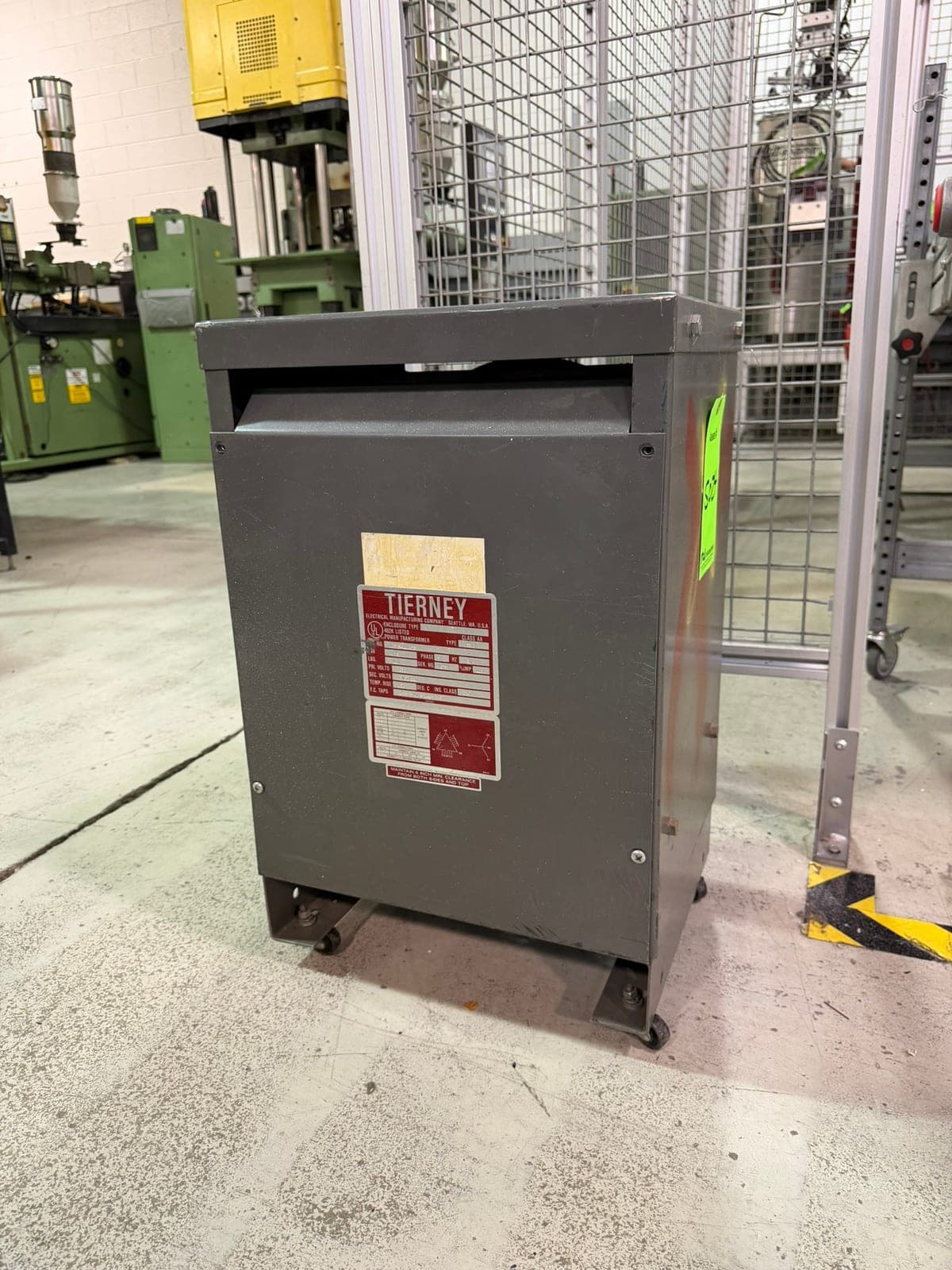


Need Help Finding the Right Equipment?
Contact our team with your specifications and we'll help you find the right machine.
