Used Welders & Welding Equipment for Sale
1 result
Welders & Welding Equipment by the numbers
From our own catalog: machines listed now and machines we have sold. Updated every few minutes.
Our track record
20 machines sold · 9 makes · 3 sold at our own auctions
By brand
| Brand | In stock now | Sold by Meadoworks | Model years |
|---|---|---|---|
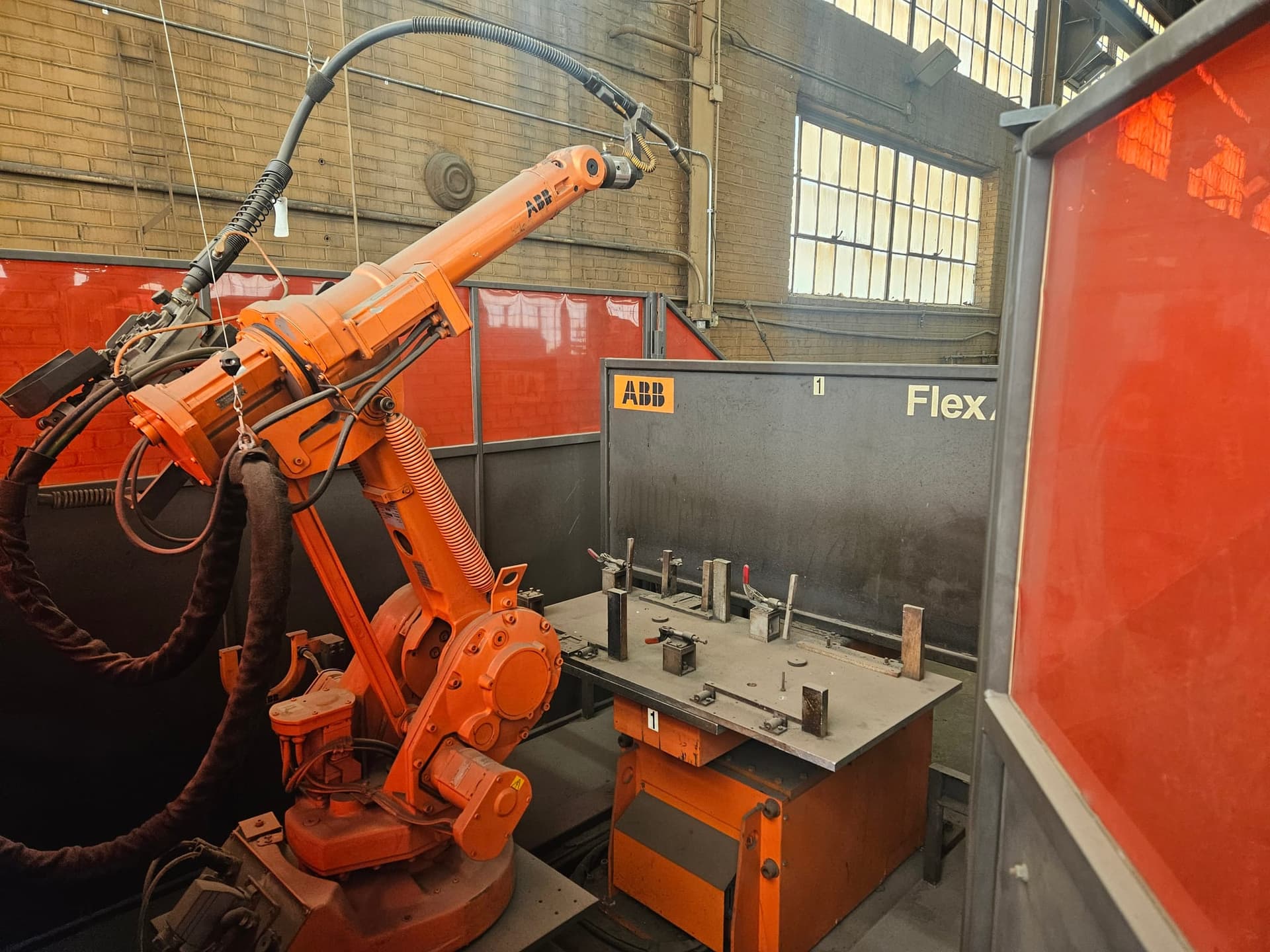
| ABB | 1 | 0 | — |
| Miller | 0 | 6 | — |
| Kent Corporation | 0 | 4 | — |
Looking for Something Specific?
Most of our inventory sells before we can list it online. If you need a specific brand, model, or specification, tell us what you need—we have access to unlisted equipment and machines coming in from plant closures.
Browse Used Welders & Welding Equipment by Brand
Browse Used Welders & Welding Equipment by Country
Looking to Sell Your Welders & Welding Equipment?
Meadoworks is an active cash buyer of used industrial equipment. Get a free valuation from our AMEA-certified appraisers.
About Used Welders & Welding Equipment
Industrial welding equipment encompasses MIG (GMAW), TIG (GTAW), stick (SMAW), submerged arc (SAW), and specialty welding processes. Used industrial welders range from portable shop units to large automated welding systems for production environments. Multi-process welders offering MIG, TIG, and stick capability are popular for fabrication shops requiring versatility.
Key specifications include amperage output, duty cycle, wire feed capability, input power requirements, and process compatibility. Automated welding cells and robotic welding systems offer high productivity for repetitive production welding.
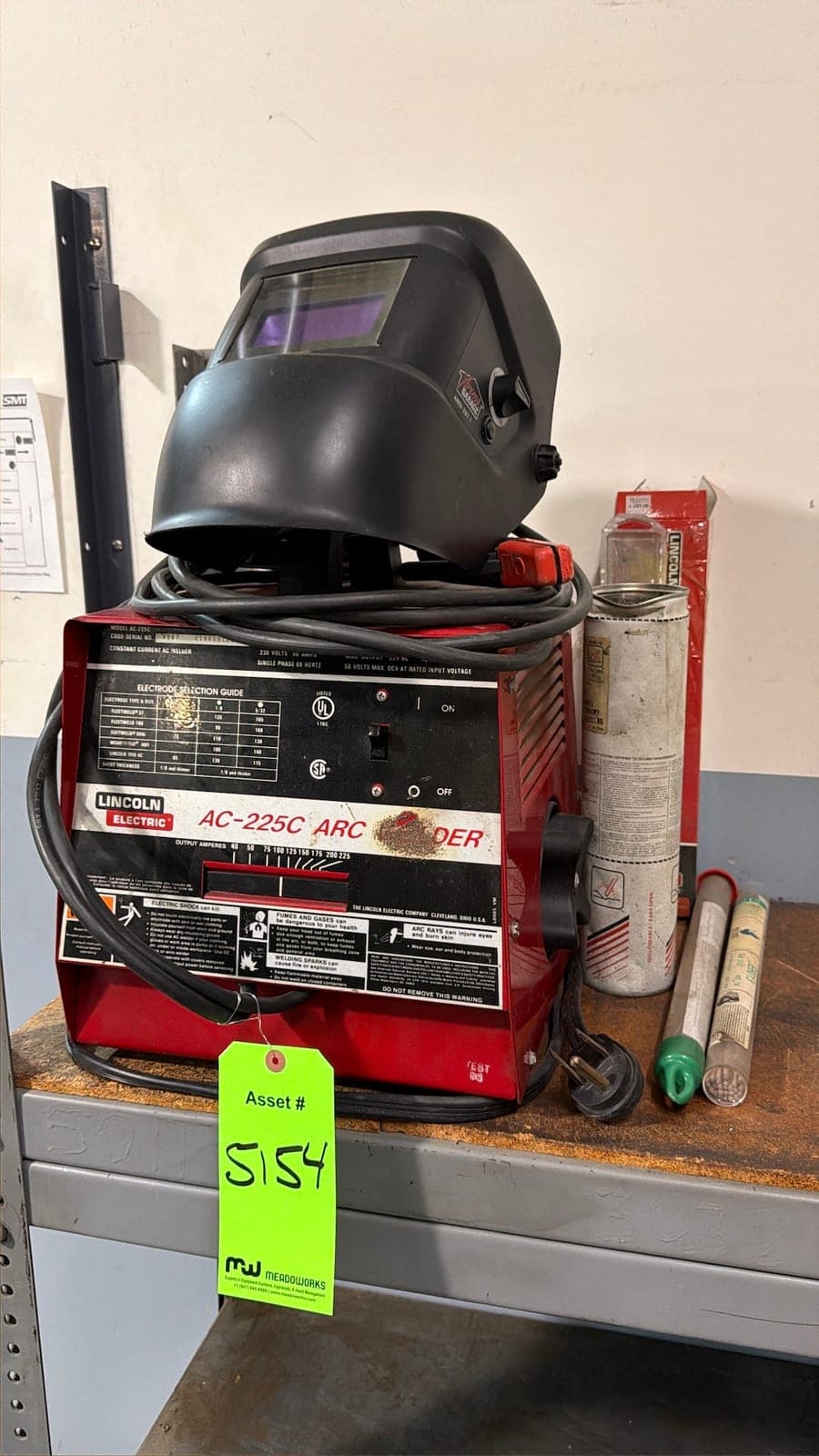
Welding equipment from Miller, Lincoln Electric, ESAB, Kent Corporation, Taylor Winfield and Amada Miyachi has moved through Meadoworks. Contact us at 800-323-0307 for welding equipment pricing.
How to Choose a Used Welder
Process, Duty Cycle and Automation
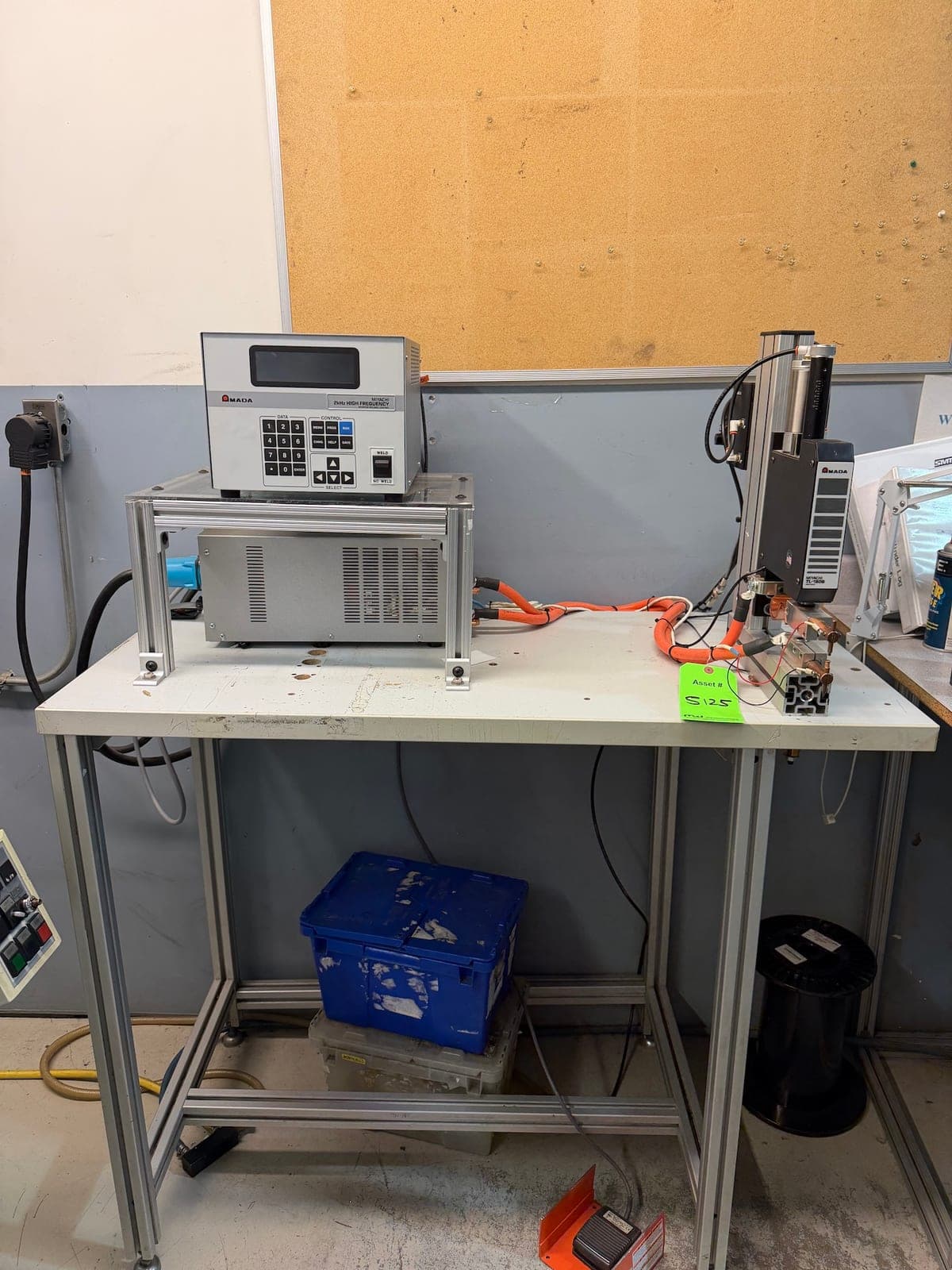
Choose by process first. MIG suits production steel welding, TIG suits thin stainless and aluminum and precise work, stick and multiprocess sources suit field and repair work, and resistance spot or projection welders join sheet in production without filler. Ultrasonic welders join plastic parts, not metal.
Then check amperage and duty cycle — an industrial source runs its rated output for a longer share of every ten minutes — and the input power your shop has. Robotic cells add a positioner, a fixture and guarding; buy the whole cell, with its programs, rather than a robot alone.
By Class: Typical Used Welders Price Ranges
MIG, TIG and stick power sources: about $1,000–$8,000.
Industrial multiprocess, submerged arc and resistance welders: about $5,000–$30,000.
Robotic welding cells with positioner: about $30,000–$150,000.
What moves the price — the process and amperage, duty cycle, input voltage, wire feeder and torch, the control, and for robotic cells the robot, positioner, fixtures, guarding and programs.
These are typical used-market ranges, not a quote on any one machine. For a current figure on a specific machine, request a quote or call 800-323-0307.
By brand
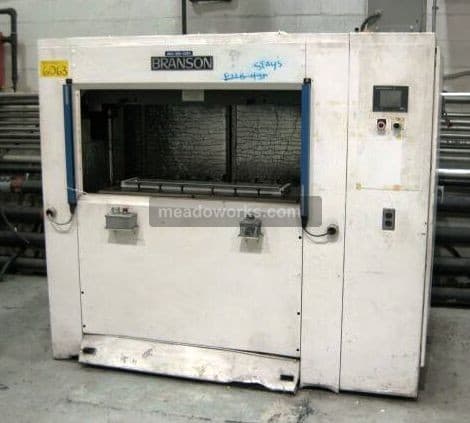
Welding equipment from Miller, Lincoln Electric, ESAB, Taylor Winfield, Western Arctronics, Amada Miyachi and ABB has moved through Meadoworks, as have Kent Corporation coil end joiners, along with Branson and Forward Technology ultrasonic welders for plastic parts.
We have sold Miller, ESAB and Lincoln Electric power sources, Taylor Winfield and Western Arctronics spot welders, Kent Corporation coil end joiners, and Branson and Forward Technology ultrasonic welders. Tell us the process and output you need and we will look for one.
Welder Specs to Compare
| Spec | Typical range | Why it matters |
|---|---|---|
| Output amperage | Often 200–600 A | Sets the thickness and wire size you can weld. |
| Duty cycle | Often 60–100% at rated output | Higher duty cycle runs longer without cooling down. |
| Input power | Often 208–575 V, single or three phase | Must match your shop's supply. |
| Process | MIG, TIG, stick, multiprocess, resistance or ultrasonic | Each process joins different materials and thicknesses. |
| Robot reach and payload | Often 1.4–2 m reach on welding robots | Sets the largest part the cell can reach. |
Output amperage
Typical range: Often 200–600 A
Sets the thickness and wire size you can weld.
Duty cycle
Typical range: Often 60–100% at rated output
Higher duty cycle runs longer without cooling down.
Input power
Typical range: Often 208–575 V, single or three phase
Must match your shop's supply.
Process
Typical range: MIG, TIG, stick, multiprocess, resistance or ultrasonic
Each process joins different materials and thicknesses.
Robot reach and payload
Typical range: Often 1.4–2 m reach on welding robots
Sets the largest part the cell can reach.
What to Inspect on a Used Welder
Strike an arc
Weld a test bead at your settings and check arc stability.
Check the feeder and torch
Look at drive rolls, liner and torch condition on MIG sets.
Confirm input power
Make sure the voltage and phase match your shop.
Inspect cables and leads
Look for cracked insulation and worn connectors.
Run the cell
On robotic cells, run a program with the positioner and check the guarding and interlocks.
Ask for the programs
Get robot programs, backups and teach pendant condition.
Related Equipment
- Used CNC Press Brakes
Brakes with a programmed backgauge
- Used Hydraulic Press Brakes
Hydraulic brakes by tonnage and length
- Used Plate Rolls
Roll plate into cylinders and cones
- Used Hydraulic Presses
Forming, punching and assembly presses
More in Metal Cutting & Fabrication
Types of Metal Cutting & Fabrication
Common Applications
Frequently Asked Questions
What types of welding equipment does Meadoworks sell?
Meadoworks handles used industrial welding equipment including MIG welders, TIG welders, submerged arc systems, welding positioners, welding rotators, and automated welding cells. Equipment from Miller, Lincoln Electric, ESAB, Taylor Winfield and Amada Miyachi has moved through Meadoworks. Contact us at 800-323-0307 for current inventory.
How much does a used industrial welder cost?
Typical used ranges run about $1,000–$8,000 for MIG, TIG and stick power sources and about $5,000–$30,000 for industrial multiprocess, submerged arc and resistance welders. Complete robotic welding cells with a positioner run about $30,000–$150,000. Output, duty cycle and what comes with the machine move the price; call 800-323-0307 for a current figure.
What should I check on a used welding machine?
Weld a test bead at your usual settings and watch for a stable arc. Inspect the wire feeder drive rolls, liner and torch, look for cracked cables and worn connectors, and confirm the input voltage and phase match your shop. On a robotic cell, run a program with the positioner and check the guarding and interlocks.
What is duty cycle on a welder?
Duty cycle is the share of a ten-minute period a welder can run at a given output without overheating. A 300 A source with a 60 percent duty cycle can weld for six minutes in ten at 300 A. Industrial sources have higher duty cycles than hobby machines, which matters on long production welds.
Should I buy a used robotic welding cell?
A used cell can pay back quickly on repeat parts if it comes complete: the robot, power source, positioner, fixtures, guarding and the programs. Check that the robot and controller are still supported, run a program before buying, and plan to adapt the fixtures to your parts. A robot alone, without the cell around it, is a much bigger project.
Related Resources
Recently Sold Welders & Welding Equipment
View all sold metal cutting and fabrication equipment →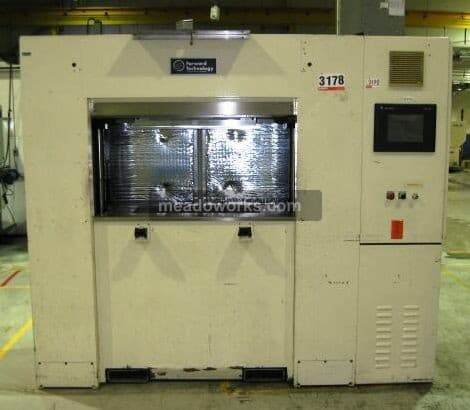
Need Help Finding the Right Equipment?
Contact our team with your specifications and we'll help you find the right machine.
