Used Mill-Turn & Multitasking Machines for Sale
See all 23 Lathes & Turning Centers →
5 results

2008 Okuma MULTUS B200-W CNC Multitasking Mill-Turn Center w/ LNS Bar Feeder
USA
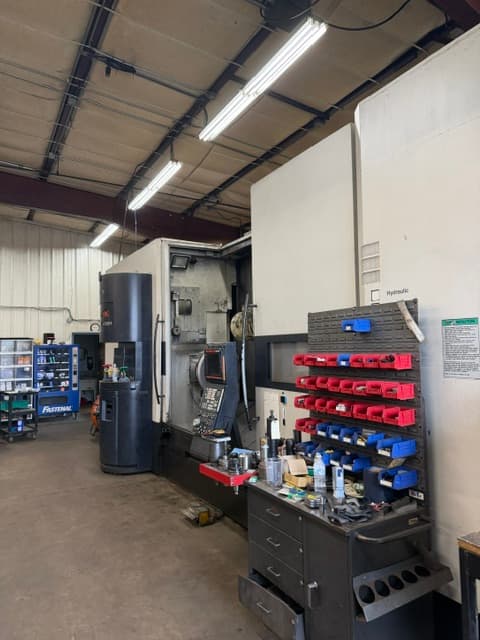
2004 Mazak Integrex e-650H Mill-Turn Center
USA
 Video
VideoMazak Integrex 200SY CNC Multi-Tasking Turn-Mill Center
USA

Mazak Super Quick Turn 28MS CNC Turning Center
USA

Doosan Puma MX2600ST Mill-Turn CNC
USA
Looking for Something Specific?
Most of our inventory sells before we can list it online. If you need a specific brand, model, or specification, tell us what you need—we have access to unlisted equipment and machines coming in from plant closures.
Browse Used Mill-Turn by Brand
Browse Used Mill-Turn by Country
Looking to Sell Your Mill-Turn?
Meadoworks is an active cash buyer of used industrial equipment. Get a free valuation from our AMEA-certified appraisers.
About Used Mill-Turn & Multitasking Machines
Mill-turn machines (multitasking machining centers) combine full turning and milling capability in a single platform — a turning center with a B-axis milling spindle, or configurations like the Mazak Integrex and DMG Mori NTX series. Done-in-one processing eliminates multiple setups, improves accuracy by removing part transfers, and enables complete machining of complex parts like aerospace shafts, medical implants, and oilfield components from bar or billet.
A mill turn machine puts a milling spindle on a turning machine, usually on a B axis so the spindle can tilt and reach more than one face of a shaft. The part still spins for turning. Then the milling spindle, with its own tool changer, drills, mills and contours without a trip to a machining center. That is a different tool from live tooling. Live tooling is a driven holder in a lathe turret. It is the right answer for a cross hole, a flat or a keyway. It is the wrong answer when the feature needs the power, the reach or the tool library of a real mill spindle.
A lower turret, a sub-spindle and a second milling head appear on the heavier machines. The sub-spindle finishes the back end. The lower turret keeps turning tools in the cut while the mill spindle works. You do not need all of that for a shaft with two milled flats. You do need the B axis when the milled face is not square to the turning axis. Simultaneous motion, when the control has it, blends a surface the way a 5-axis mill does, on a part that is still a turned shaft. If the part is a prismatic block that never needed a chuck, it belongs on a machining center, not here.
Swing, chuck size and turning length still apply, because the machine is a lathe first. Then read milling-spindle taper, rpm and tool capacity. A bar feeder can serve it when the blank is bar. A chucked forging does not need one. Mazak and Okuma are the makes that repeat on this machine. Other names can appear as a single machine and are not a line we treat as stocked.
On a used mill turn machine, run both spindles. The turning spindle and the milling spindle wear on different work, and one can be tired while the other sounds fine. Indicate the B axis. A lost pivot cuts a face that looks smooth and is the wrong angle. Cycle the mill tool changer and the turret if there is one. Alarm history and a scarred tool arm are the crash record. Confirm the control will run the milling spindle as a mill, not only as a positioning head.
How to Choose Used Mill-Turn & Multitasking Machines
How to Size a Mill-Turn Machine
Size it as a lathe first. Swing, chuck and turning length have to fit the shaft. Then size the milling spindle: taper, rpm, reach and how many tools the milled features need. A B axis has to tilt far enough to present the face you cannot reach with a straight spindle.
A sub-spindle is for the back end. A lower turret is for turning tools that should stay in the cut. Neither replaces a milling spindle that is too small for the cutter. If the milled work is a cross hole and a flat, a turning center with live tooling is the smaller machine and the right one. Buy the mill spindle when the part would otherwise leave the chuck and go to a mill, and the datum between those features is the reason.
B-Axis Mill Spindle vs Live Tooling
Live tooling lives in the turret of a lathe. The tools are small, the power is limited, and the reach is whatever the turret can present. A mill turn spindle is a machining-center spindle on a B axis. It takes mill holders, it has a changer, and it can tilt.
Use live tooling for cross holes, hexes and light flats on a production turning job. Use the B-axis spindle when the milled feature is a real pocket, a bolt circle on a flange at an angle, or a contour that has to stay on the turned datum. The programming is heavier. The transfer error you delete is the reason to accept that. A 5-axis mill is the other direction, for a part that is not a shaft.
Mill-Turn & Multitasking Machines Specs to Compare
| Spec | Why it matters |
|---|---|
| Milling spindle | Power, taper and a tool changer are what separate this machine from a lathe with live tooling. |
| B-axis travel | The tilt has to present the milled face. A spindle that only points sideways leaves the angled face for another setup. |
| Swing and chuck (in) | The machine is still a lathe. The shaft and the jaws have to clear before the milling spindle matters. |
| Turning length (in) | The shaft, the tool and the sub-spindle or tailstock have to fit. Milling travel does not add turning length. |
| Sub-spindle | The second spindle finishes the cutoff end so a shaft with work on both ends does not leave the machine. |
| Mill tool capacity | The milling changer has to hold the milled features. A turret of turning tools does not count as that magazine. |
Milling spindle
Power, taper and a tool changer are what separate this machine from a lathe with live tooling.
B-axis travel
The tilt has to present the milled face. A spindle that only points sideways leaves the angled face for another setup.
Swing and chuck (in)
The machine is still a lathe. The shaft and the jaws have to clear before the milling spindle matters.
Turning length (in)
The shaft, the tool and the sub-spindle or tailstock have to fit. Milling travel does not add turning length.
Sub-spindle
The second spindle finishes the cutoff end so a shaft with work on both ends does not leave the machine.
Mill tool capacity
The milling changer has to hold the milled features. A turret of turning tools does not count as that magazine.
What to Inspect on Used Mill-Turn & Multitasking Machines
Run both spindles
Listen to the turning spindle and the milling spindle separately. They wear on different work and one can be finished while the other is not.
Indicate the B axis
A loose tilt or a wrong pivot cuts an angled face that will not match the turned diameter.
Cycle the mill changer
The milling tool changer should complete a swap under power. A turret index is not the same test.
Check the turning turret
If there is a lower turret, index it. A dead station removes the turning tools you counted on.
Test the sub-spindle
It should pick off a part and hold it. A spindle that only spins in the air has not finished a back end.
Read the alarm history
Crash and servo alarms stay in the control. A scarred tool arm is the same record on the iron.
Confirm the control path
The control has to run the milling spindle as a mill. Ask for a short program, not only a boot screen.
Related Equipment
- CNC Lathes
Turning centers whose live tools are not a mill spindle
- Machining Centers
Mills for prismatic work that does not need a chuck
- 5-Axis Machining Centers
Contour milling when the part is not a turned shaft
Related CNC Lathes & Turning Centers
CNC Lathes & Turning Centers
CNC lathes and turning centers produce rotational parts including shafts, bushings, fittings, and precision turned components.
Swiss-Type CNC Lathes
Swiss-type CNC lathes (also called sliding headstock or Swiss screw machines) are designed for high-precision, high-volume production of small turned parts.
All CNC Machines
Browse the full used CNC machine inventory — machining centers, lathes, EDM, and more.
Top Brands for Used Mill-Turn & Multitasking Machines
Common Applications
Frequently Asked Questions
How is a mill turn spindle different from live tooling on a lathe?
Live tooling is a driven holder in the turret. It will drill a cross hole, mill a flat and cut a keyway while the part stays chucked, and that is enough for a lot of turned parts. A mill turn spindle is a milling spindle on a B axis, with mill holders and its own changer. It has the power and the tilt to cut a real pocket or an angled face without sending the part to a machining center.
What does the B axis let the milling spindle reach?
Faces that are not square to the turning axis, and more than one side of a shaft in the same chucking. The spindle tilts instead of asking you to refixture the part at a new angle. A straight milling spindle, with no tilt, still mills, but only where it is pointed. The B axis is the reason a flange with an angled port can stay on the machine. It is not a substitute for swing and length. The shaft still has to fit the lathe.
When is a lower turret worth having beside the mill spindle?
When turning tools should stay in the cut while the milling spindle works, or when you simply have more turning tools than the mill changer should hold. The lower turret is a lathe turret. It does not replace the mill spindle, and the mill spindle does not replace a boring bar you want parked and ready. On a simpler shaft, the extra turret is iron you will not use.
What should I verify on both spindles of a used done-in-one machine?
Run them separately and listen. The turning spindle may have spent its life in heavy roughing while the milling spindle did light work, or the other way around. Indicate the B axis and ask whether the pivot geometry is current. Cycle the mill changer and any turret. If there is a sub-spindle, have it take a part, not only spin. Alarm history and damaged sheet metal around the tool arm are the crash record. Then confirm the control will post a milling path.
What is a mill-turn machine?
A mill-turn machine puts a milling spindle on a turning machine, usually on a B axis so the spindle can tilt. The part still spins for turning. The milling spindle, with its own tool changer, then drills, mills and contours without a second setup on a machining center. That is different from live tooling, which is a driven holder in a turret and is enough for a cross hole, a flat or a keyway. You want the mill spindle when the milled feature needs the power, the reach or the tool library of a real mill.
Which parts should stay on a separate mill after turning?
Parts whose milled work is large, heavy or already set up on a machining center that runs all day. A mill turn machine is for the shaft or the fitting that should not leave the chuck. It is a poor place to face a plate or to hog a mold cavity. If the turned feature is simple and the milled feature is the real work, turn it on a lathe and mill it on a mill.
Related Resources
Looking for Specific Mill-Turn?
Can't find what you need? Contact our team with your requirements. We source equipment from facilities across North America.
