Used Iron Workers & Notchers for Sale
Nothing is listed right now — these are machines we've recently sold. or tell us what you need.
Recently sold
 SOLD
Item #1780
Lockformer 120" Hydraulic Speed Notcher
USA
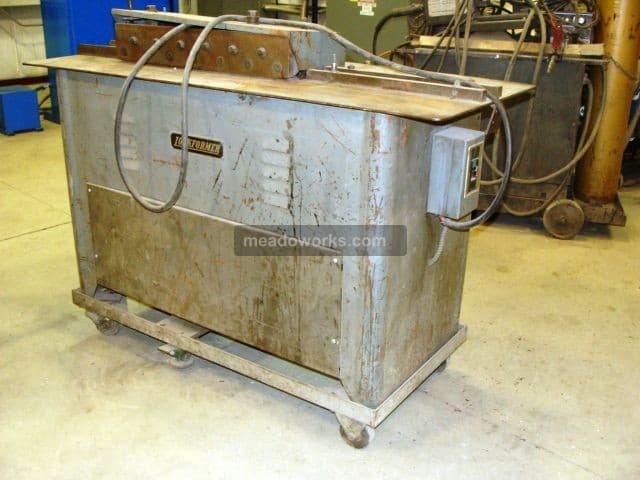 SOLD
Item #1755
1999 Lockformer Speednotch 16
USA
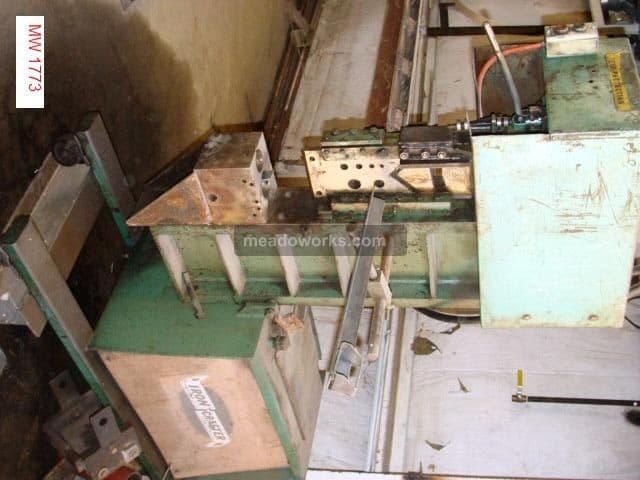 SOLD
Item #1773
Iron Crafter 40 Hydraulic Ironworker
USA
Looking for Something Specific?
Most of our inventory sells before we can list it online. If you need a specific brand, model, or specification, tell us what you need—we have access to unlisted equipment and machines coming in from plant closures.
Looking to Sell Your Iron Workers & Notchers?
Meadoworks is an active cash buyer of used industrial equipment. Get a free valuation from our AMEA-certified appraisers.
About Used Iron Workers & Notchers
Ironworkers are versatile fabricating machines that combine multiple functions in a single unit: punching, flat bar shearing, angle shearing, notching, and rod/bar bending. Hydraulic ironworkers have largely replaced mechanical models, offering independent stations that allow one operator to perform multiple operations without interference. Tonnage ratings range from 40 to 200+ tons.
Key specifications include punching capacity (diameter × thickness), shearing capacity for flat bar and angle, throat depth, and number of stations. Dual-operator ironworkers feature independent hydraulic circuits allowing two operators to work simultaneously at different stations.
An Iron Crafter ironworker and Lockformer notchers have moved through Meadoworks. Contact us at 800-323-0307 for ironworker pricing.
How to Choose a Used Iron Worker
Tonnage, Stations and One or Two Operators
An ironworker is rated by its punching tonnage: 40 to 60 tons punches holes in light plate and angle, while 100 to 150 tons and up handles heavier structural work. Check the throat depth of the punch station and the size of the shear blades for flat bar and angle.
A dual-operator machine lets two people work the punch and the shear at once. Look at what stations come with it — punch, flat bar shear, angle shear, notcher, bar cutter — and what tooling and dies are included, since a bare machine needs a set before it earns its keep. Stand-alone notchers suit sheet metal and HVAC shops.
By Tonnage: Typical Used Iron Workers Price Ranges
40–60 ton single-operator ironworkers: about $5,000–$15,000.
60–120 ton dual-operator ironworkers: about $12,000–$40,000.
150 tons and up, heavy structural ironworkers: about $30,000–$80,000.
Hydraulic sheet metal notchers: about $3,000–$20,000.
What moves the price — punching tonnage, one or two operators, the stations and the punch and die set included, the throat depth, the hydraulics and the condition of the shear blades.
These are typical used-market ranges, not a quote on any one machine. For a current figure on a specific machine, request a quote or call 800-323-0307.
By brand
An Iron Crafter 40 hydraulic ironworker and Lockformer hydraulic notchers, including a 120 in speed notcher, have moved through Meadoworks.
Meadoworks track record
We have sold an Iron Crafter ironworker and two Lockformer notchers. Tell us the tonnage and stations you need and we will look for a machine.
Iron Worker Specs to Compare
| Spec | Typical range | Why it matters |
|---|---|---|
| Punching tonnage | Often 40–150 tons | Sets the hole size and plate thickness you can punch. |
| Punch throat depth | Often 6–12 in | Sets how far from the edge a hole can go. |
| Flat bar shear | Often 12–24 in x 1/2–1 in | Sets the widest and thickest flat bar you can cut. |
| Angle shear | Often 4 x 4 x 3/8 to 6 x 6 x 1/2 in | Sets the largest angle you can cut square or on a miter. |
| Operators | One or two stations | Two operators double throughput on mixed work. |
Punching tonnage
Typical range: Often 40–150 tons
Sets the hole size and plate thickness you can punch.
Punch throat depth
Typical range: Often 6–12 in
Sets how far from the edge a hole can go.
Flat bar shear
Typical range: Often 12–24 in x 1/2–1 in
Sets the widest and thickest flat bar you can cut.
Angle shear
Typical range: Often 4 x 4 x 3/8 to 6 x 6 x 1/2 in
Sets the largest angle you can cut square or on a miter.
Operators
Typical range: One or two stations
Two operators double throughput on mixed work.
What to Inspect on a Used Iron Worker
Punch a hole
Punch at rated size and thickness and check alignment of punch and die.
Shear flat bar and angle
Check for clean cuts and blade chips.
Check the hydraulics
Listen to the pump and look for leaks at the cylinder.
Inspect the stripper
Confirm the stripper and hold-downs work at each station.
Count the tooling
List the punches, dies and blades included.
Test the guards and controls
Check the foot pedals, stroke control and guards.
Related Equipment
- Used CNC Press Brakes
Brakes with a programmed backgauge
- Used Hydraulic Press Brakes
Hydraulic brakes by tonnage and length
- Used Plate Rolls
Roll plate into cylinders and cones
- Used Hydraulic Presses
Forming, punching and assembly presses
Types of Metal Cutting & Fabrication
Common Applications
Frequently Asked Questions
What can an ironworker do?
An ironworker combines multiple metalworking functions in one machine: punching holes in plate, shearing flat bar and angle iron, notching, and bending. Hydraulic ironworkers allow an operator to switch between operations quickly without changing machines, making them essential in structural steel and general fabrication shops.
How much does a used ironworker cost?
Typical used ranges run about $5,000–$15,000 for 40 to 60 ton single-operator machines, about $12,000–$40,000 for 60 to 120 ton dual-operator machines and about $30,000–$80,000 for heavy structural ironworkers of 150 tons and up. The stations and tooling included move the price; call 800-323-0307 for a current figure.
What tonnage ironworker do I need?
Use the punching formula: hole diameter times material thickness times about 80 for mild steel gives the tons needed. A 3/4 in hole in 1/2 in plate needs about 30 tons, so a 50 to 60 ton machine handles most shop work with margin. Structural shops punching larger holes in thicker plate need 100 tons or more.
What should I check on a used ironworker?
Punch a hole at rated size and check that punch and die line up, then shear flat bar and angle and look for clean cuts. Listen to the pump, look for leaks at the cylinder, and confirm the strippers and hold-downs work at each station. Ask which punches, dies and blades are included.
What is the difference between an ironworker and a notcher?
An ironworker combines punching, shearing of flat bar and angle, notching and sometimes bending in one hydraulic machine for structural steel. A notcher only cuts notches and corners out of sheet or plate, usually with a fixed or adjustable 90 degree blade set, and is common in HVAC and sheet metal shops before bending.
Related Resources
Need Help Finding the Right Equipment?
Contact our team with your specifications and we'll help you find the right machine.
