Used Parts Washers for Sale
2 results

Looking for Something Specific?
Most of our inventory sells before we can list it online. If you need a specific brand, model, or specification, tell us what you need—we have access to unlisted equipment and machines coming in from plant closures.
Looking to Sell?
Meadoworks is an active cash buyer of used industrial equipment. Get a free valuation from our AMEA-certified appraisers.
About Used Parts Washers
A parts washer cleans oil, chips and compound off a part before the next step. Two machines get called by the same name. A spray cabinet blasts aqueous detergent at the part, often on a turntable, with a pump, nozzles and a heater. An ultrasonic tank holds a bath and shakes it with transducers so cavitation cleans inside a passage a spray cannot reach. A sink with a brush is neither. The choice follows the soil and the geometry. An open face wants spray. A small bore or a blind hole wants ultrasonics, or both in a line.
Tank or cabinet size has to fit the part and the basket, including room to turn it. Pump horsepower, or transducer wattage, is the cleaning energy. Heat, in kilowatts, is what makes an aqueous bath work. Many soils will not release in a cold tank. Chemistry is part of the process. An aqueous spray with a rust inhibitor is a different bath from a passivation or a solvent. Do not assume the last owner's soap is your soap. Filtration and a skimmer decide whether you are washing parts or spraying dirty water back onto them.
Nozzles plug. Transducers fail in spots, and a tank can look fine while a corner does not clean. Heaters scale. Doors and seals leak onto the floor. A turntable that stalls under a heavy casting is a drive, not a mystery. Run it with a dirty part you know, not with a clean sample. Listen to the pump. Feel whether the ultrasonic bath actually works. A foil test, a piece of aluminum foil in the bath for a short time, shows a transducer pattern if you know how to read it.
A used parts washer should be filled, heated and cycled. Read pump horsepower or transducer watts, tank or turntable size, and voltage. Confirm the chemistry you will run is compatible with the materials in the tank. A stainless tank and a mild-steel tank are not the same life in an aggressive bath. Match the opening to the part. A cabinet that will not accept the casting is not almost big enough.
How to Choose a Used Parts Washer
How to Size a Parts Washer
Start with the part and the soil. A spray cabinet is sized by turntable diameter or basket size and by the work height under the nozzles. An ultrasonic tank is sized by the liquid volume the part must sit in. Pump horsepower, or ultrasonic power, has to move the soil, and heat has to be enough for that chemistry. Voltage follows the pump and the heater, often three phase when both are large. A passivation bath is a specific chemistry for stainless, not a hotter version of a degreaser. Filtration and a rinse stage, if you need them, have to be on the machine rather than imagined later. Write those sizes down.
Spray Cabinets and Ultrasonic Tanks
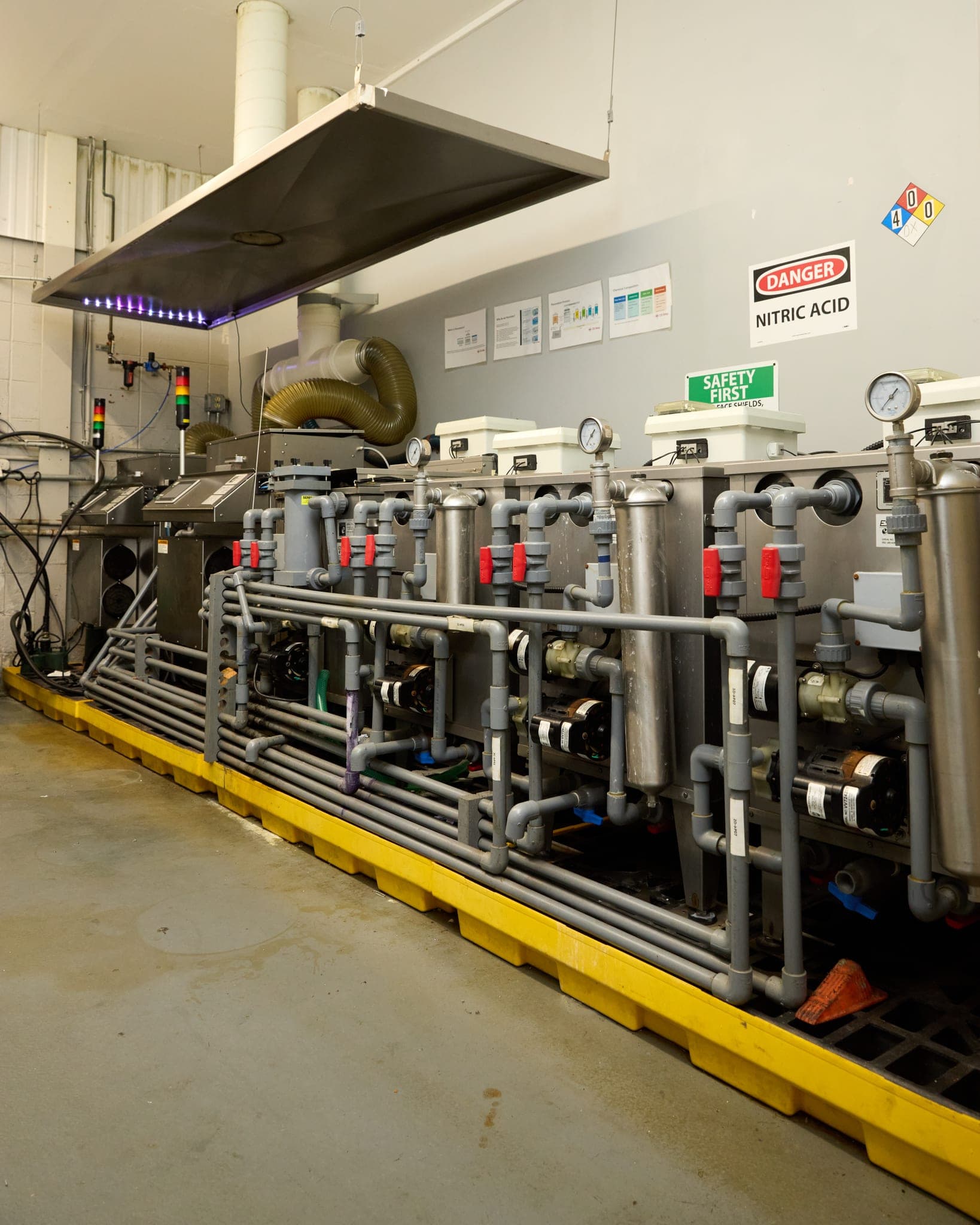
A spray washer blasts aqueous cleaner through nozzles, usually while a turntable or a basket moves the part. It is the right idea for chips, oil and a part that can stand the spray. An ultrasonic parts washer couples sound into a tank so the cleaning reaches a passage the spray might miss. One listing in this mix is an ultrasonic passivation system, which is a controlled bath for stainless, not a general oily-steel washer. Do not buy the passivation tank to degrease a gearbox, and do not buy a spray cabinet and expect it to passivate. The method is the first line of the title. Read it before the dimensions.
Parts Washer Specs to Compare
| Spec | Why it matters |
|---|---|
| Method | Spray and ultrasonic clean differently. Passivation is a third, specific bath. |
| Opening | The part has to fit under the nozzles or in the liquid. |
| Pump or ultrasonic power | A weak pump only wets the part. A dead transducer leaves a quiet tank. |
| Heat | Many soils need temperature. A cold washer is a different process. |
| Chemistry | The metal and the soil pick the bath. They are not interchangeable. |
| Voltage | The circuit has to exist before the cabinet can run. |
Method
Spray and ultrasonic clean differently. Passivation is a third, specific bath.
Opening
The part has to fit under the nozzles or in the liquid.
Pump or ultrasonic power
A weak pump only wets the part. A dead transducer leaves a quiet tank.
Heat
Many soils need temperature. A cold washer is a different process.
Chemistry
The metal and the soil pick the bath. They are not interchangeable.
Voltage
The circuit has to exist before the cabinet can run.
What to Inspect on a Used Parts Washer
Name spray or ultrasonic
Confirm the method. A passivation system is ultrasonic chemistry, not a spray degreaser.
Measure the opening
Turntable or work height for a spray cabinet. Tank size for an ultrasonic unit.
Check pump or transducers
A spray pump should build pressure. Ultrasonic transducers should actually run.
Test the heater
If the process needs heat, the heater has to come up. A cold bath is not the same washer.
Look at nozzles and filters
Plugged nozzles and a dirty filter mimic a weak pump.
Match the fixture
Basket, turntable or rack has to hold your part, not only the last one.
Read voltage
Pump and heat together are often three phase. Confirm the circuit.
Related Equipment
- Plant & Material Handling
Other floor machines around a cleaning cell
- Dust Collectors
Capture dry fines before a wet wash
- Conveyors
Move parts into and out of a wash
More in Plant & Material Handling
Common Applications
Frequently Asked Questions
Is every parts washer on this group a spray cabinet?
No. Spray cabinets with a pump and nozzles are one type. Ultrasonic tanks are the other, and one of those is a passivation system for stainless rather than a general degreaser. A spray washer moves cleaner over the part. An ultrasonic parts washer works in the liquid, which helps a passage the spray may not reach. Read the method before you compare opening size. The wrong chemistry will not become the right one because the cabinet is large.
How do I size a spray cabinet versus a tank?
A spray cabinet needs turntable diameter or basket size and work height so the part fits under the nozzles. A tank needs enough volume for the part to sit in the liquid. Pump horsepower and heat are the next numbers on a spray unit. Ultrasonic power is the next number on a tank. Voltage has to match, often three phase when heat and a pump are both present. A passivation bath is sized the same way as a tank, then held to the chemistry the metal requires.
What is different about an ultrasonic passivation system?
It is still a parts washer, and it is a controlled bath for stainless rather than a spray that knocks oil off steel. The ultrasonic action and the chemistry both matter. Buying it as a generic degreaser will disappoint you, and buying a spray cabinet to passivate parts will also disappoint you. Confirm the tank, the transducers and the heat. Ask what metal the last plant ran. The fixture has to hold your part in the bath.
What should I inspect on a washer?
The method, the opening, the pump or the transducers, the heater, the nozzles or the tank, and the voltage. A plugged nozzle looks like a bad pump. A quiet ultrasonic tank may have a dead transducer. Filters tell you how the bath was kept. The turntable or basket has to fit your part. Photos of the inside matter more than the paint. Meadoworks lists these from closures, and buyers can inspect the cabinet before they commit.
Do I need heat on a parts washer?
For many oils and soils, yes. A heated bath does work a cold rinse will not. Confirm the heater comes up to temperature and that the voltage can feed it along with the pump. Some ultrasonic processes are also heated. If your soil leaves in a cold spray, you can ignore the heater, and you should still know whether it works. Write the temperature the last process used if the listing mentions it.
Can one washer do chips, oil and passivation?
Not well. A spray cabinet is aimed at oil and chips on a part that can take the blast. An ultrasonic tank reaches tighter geometry. Passivation is a chemistry for stainless, not a soil-removal setting on the same spray. Pick the method that matches the part and the metal. Filtration and a rinse are extras to confirm, not a reason to ignore the method. The opening still has to fit the part after the method is right.
