Used Thermolators & Mold Temperature Controllers for Sale
29 results

Lot 21 · Item #6920
2024 HB-Therm Thermo-5 Water Temperature Control Unit
East Dundee, IL
Ends Mon, Nov 30, 10:40 AM CT · 5 bids

Lot 14 · Item #6913
2024 HB-Therm Thermo-5 Water Temperature Control Unit
East Dundee, IL
Ends Mon, Nov 30, 10:26 AM CT · 27 bids
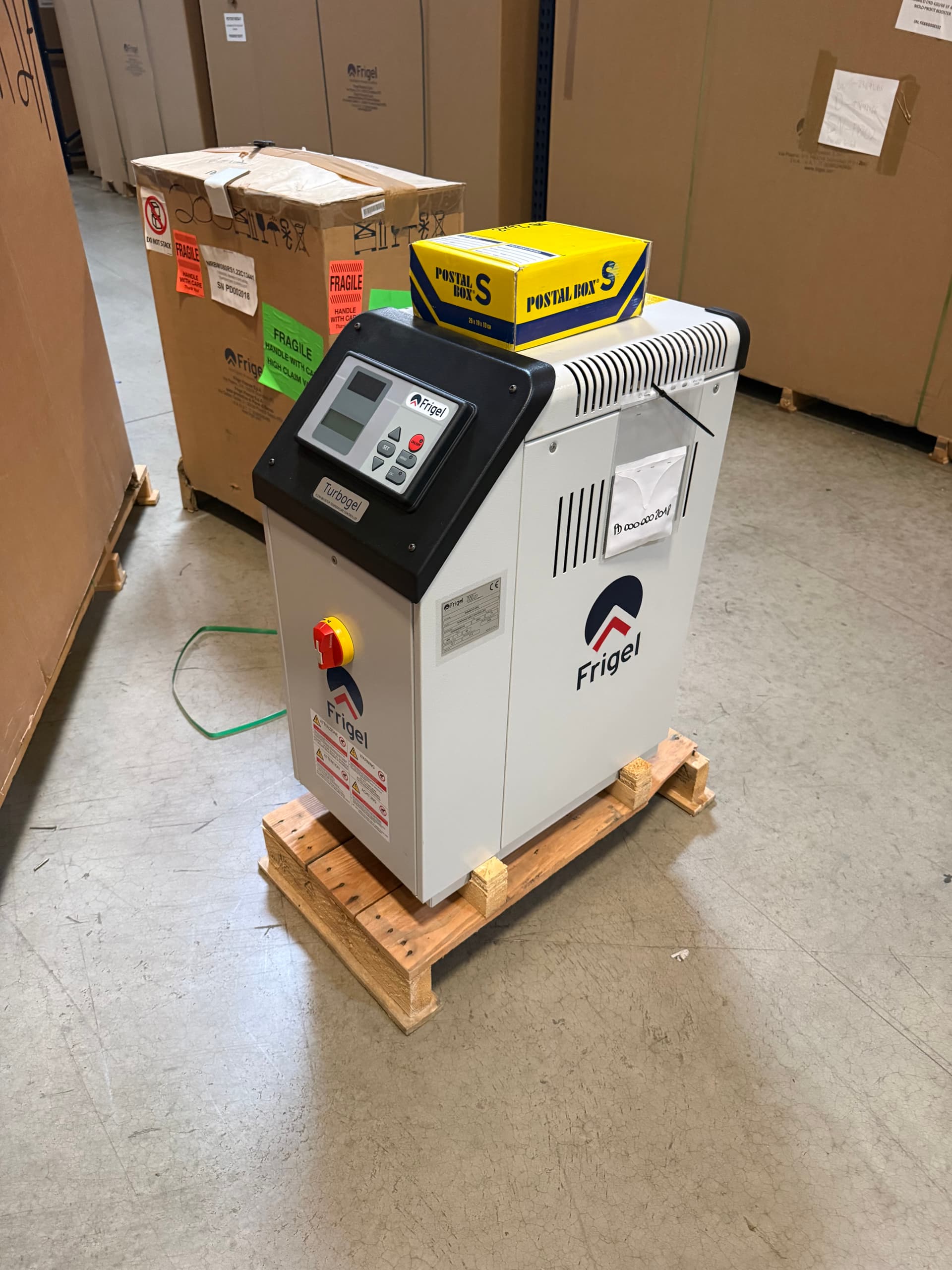
Lot 11 · Item #6910
2023 Frigel Turbogel Flow Booster Temperature Controller
East Dundee, IL
Ends Mon, Nov 30, 10:20 AM CT · 10 bids

Lot 16 · Item #6915
2022 HB-Therm Thermo-5 Water Temperature Control Unit
East Dundee, IL
Ends Mon, Nov 30, 10:30 AM CT · 19 bids

Lot 15 · Item #6914
2022 HB-Therm Thermo-5 Water Temperature Control Unit
East Dundee, IL
Ends Mon, Nov 30, 10:28 AM CT · 15 bids

Lot 17 · Item #6916
2021 HB-Therm Thermo-5 Water Temperature Control Unit
East Dundee, IL
Ends Mon, Nov 30, 10:32 AM CT · 19 bids
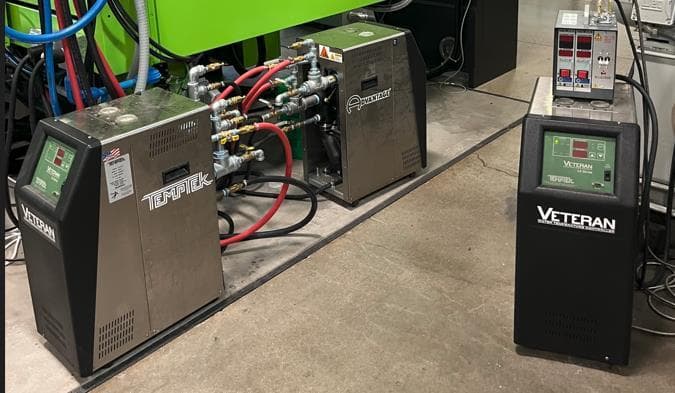
Lot 6 · Item #6956
2020 Advantage SK-1035G Temp Controller
USA · Register to see location
Ends Thu, Dec 10, 10:10 AM CT · 1 bid
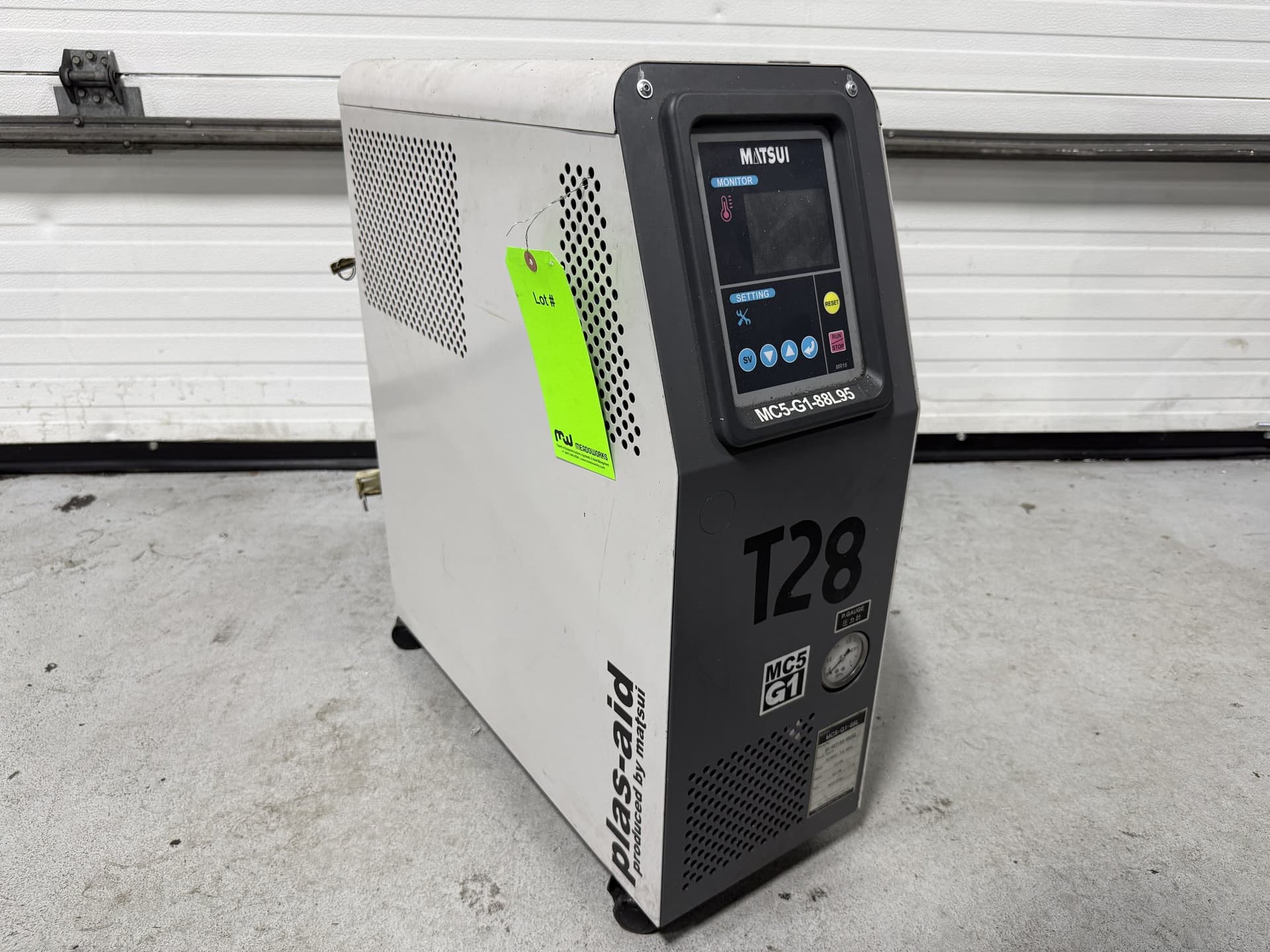
Lot 8 · Item #6946
2020 Matsui MC5-G1 Temperature Controller
Gilberts, IL
Ends Wed, Dec 2, 10:14 AM CT · 17 bids
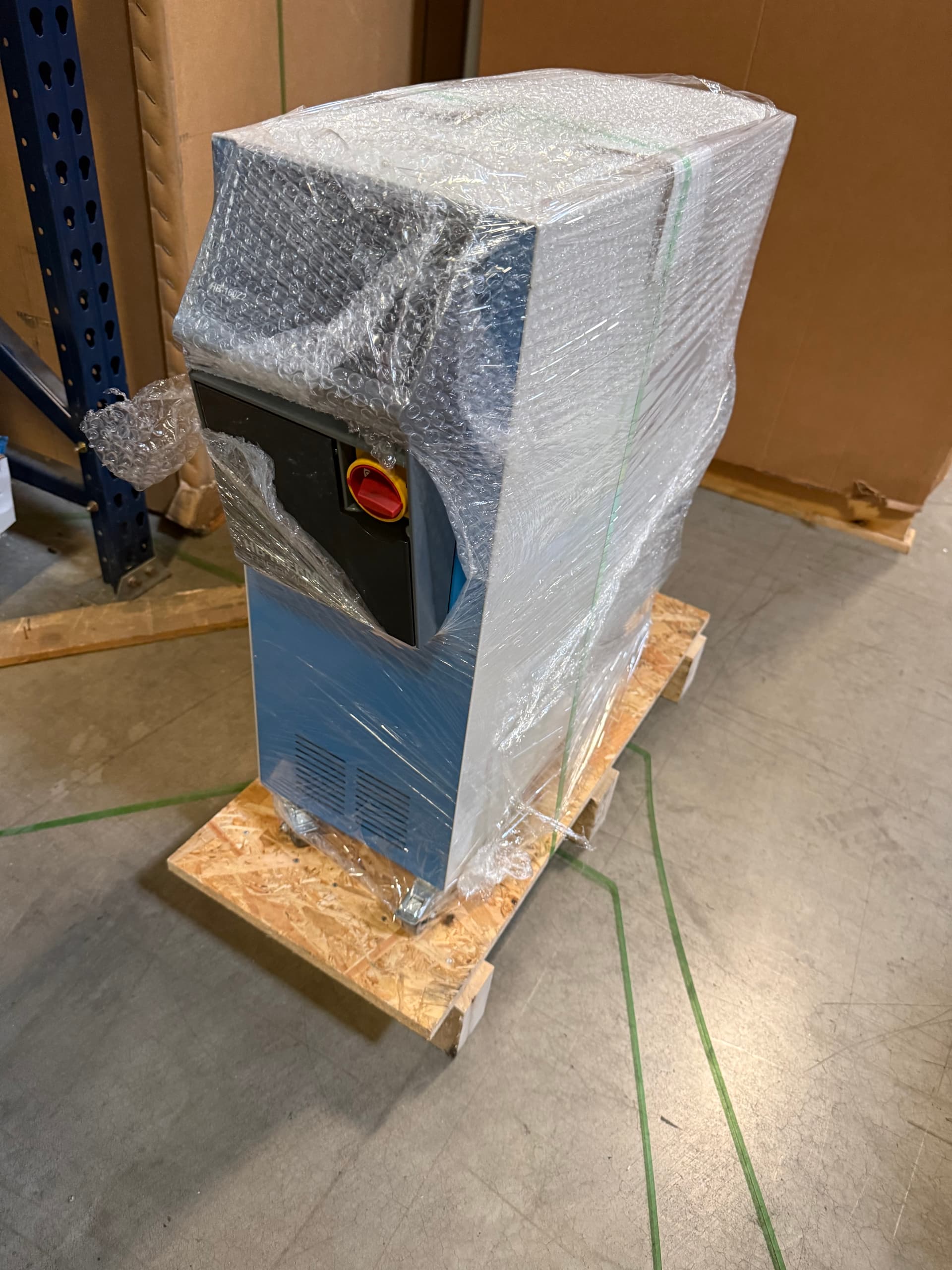
Lot 19 · Item #6918
2020 HB-Therm Thermo-5 Water Temperature Control Unit
East Dundee, IL
Ends Mon, Nov 30, 10:36 AM CT · 22 bids
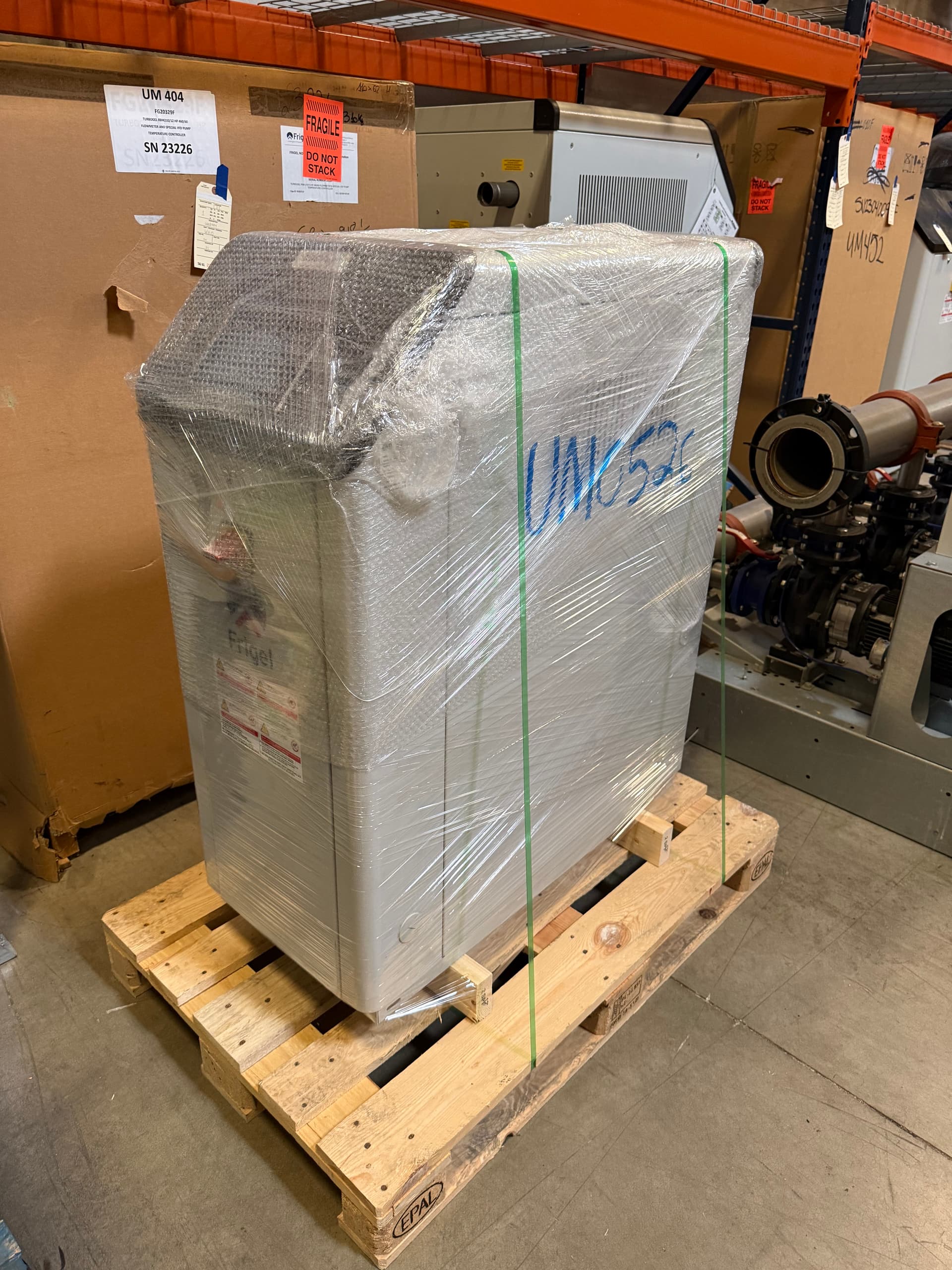
Lot 10 · Item #6909
2020 Frigel Turbogel Flow Booster Temperature Controller
East Dundee, IL
Ends Mon, Nov 30, 10:18 AM CT · 13 bids

Lot 9 · Item #6908
2020 Frigel Turbogel Flow Booster Temperature Controller
East Dundee, IL
Ends Mon, Nov 30, 10:16 AM CT · 3 bids

Lot 24 · Item #6923
2019 HB-Therm Thermo-5 Water Temperature Control Unit
East Dundee, IL
Ends Mon, Nov 30, 10:46 AM CT · 23 bids

Lot 23 · Item #6922
2019 HB-Therm Thermo-5 Water Temperature Control Unit
East Dundee, IL
Ends Mon, Nov 30, 10:44 AM CT · 1 bid
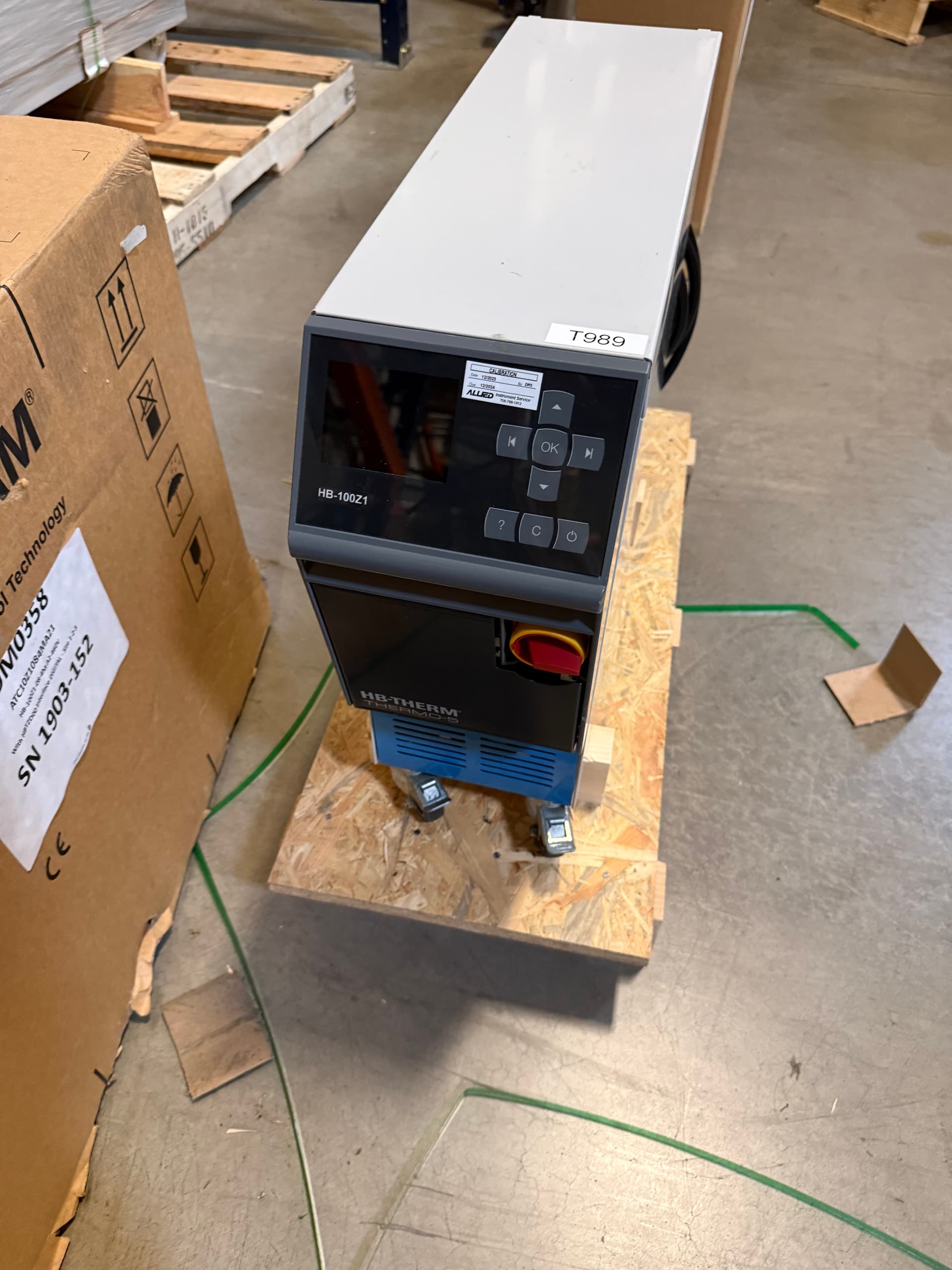
Lot 22 · Item #6921
2019 HB-Therm Thermo-5 Water Temperature Control Unit
East Dundee, IL
Ends Mon, Nov 30, 10:42 AM CT · 11 bids

Lot 13 · Item #6912
2019 HB-Therm Thermo-5 Vario Water Temperature Control Unit
East Dundee, IL
Ends Mon, Nov 30, 10:24 AM CT · 1 bid
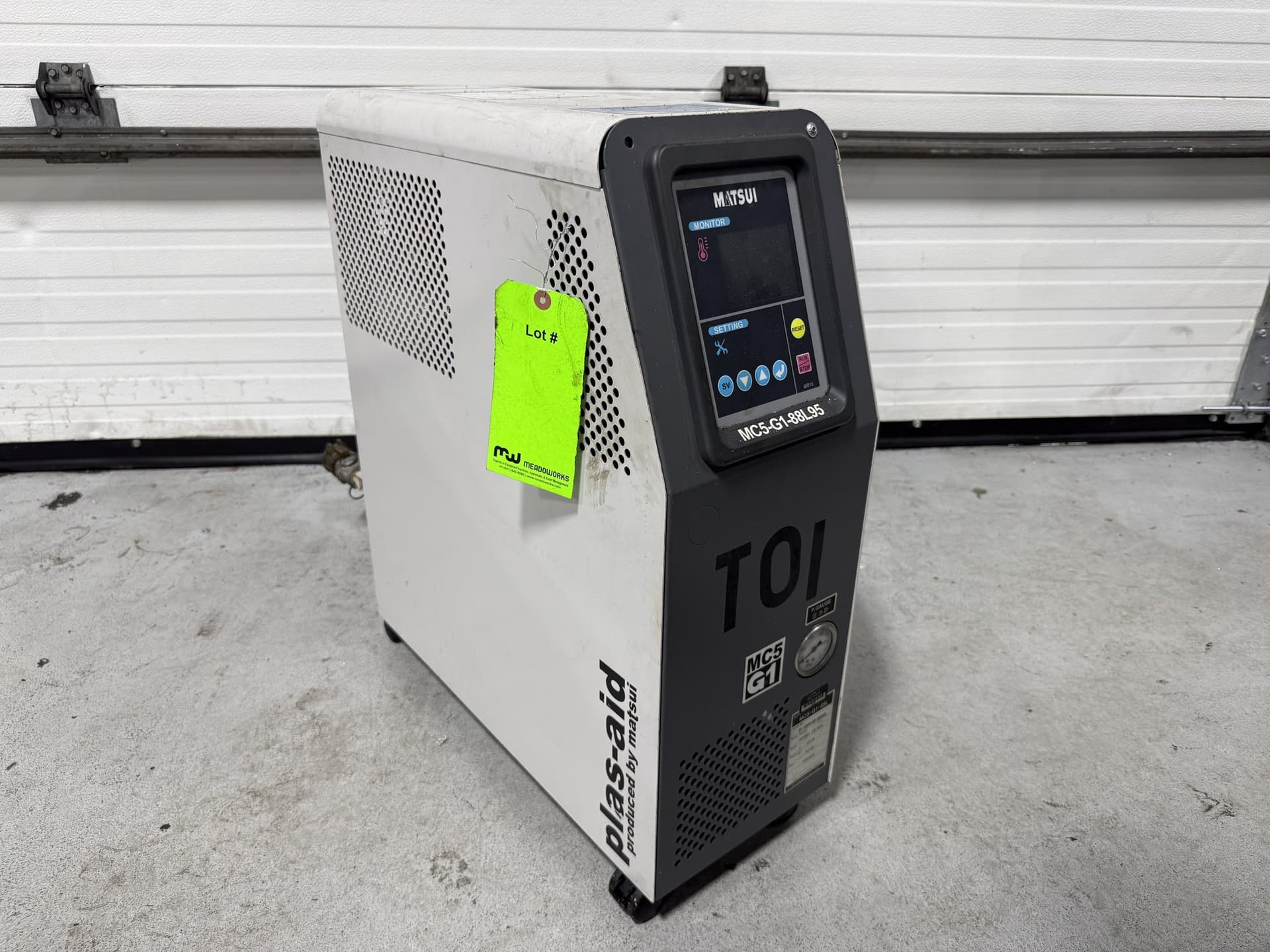
Lot 10 · Item #6948
2018 Matsui MC5-G1 Temperature Controller
Gilberts, IL
Ends Wed, Dec 2, 10:18 AM CT · 17 bids
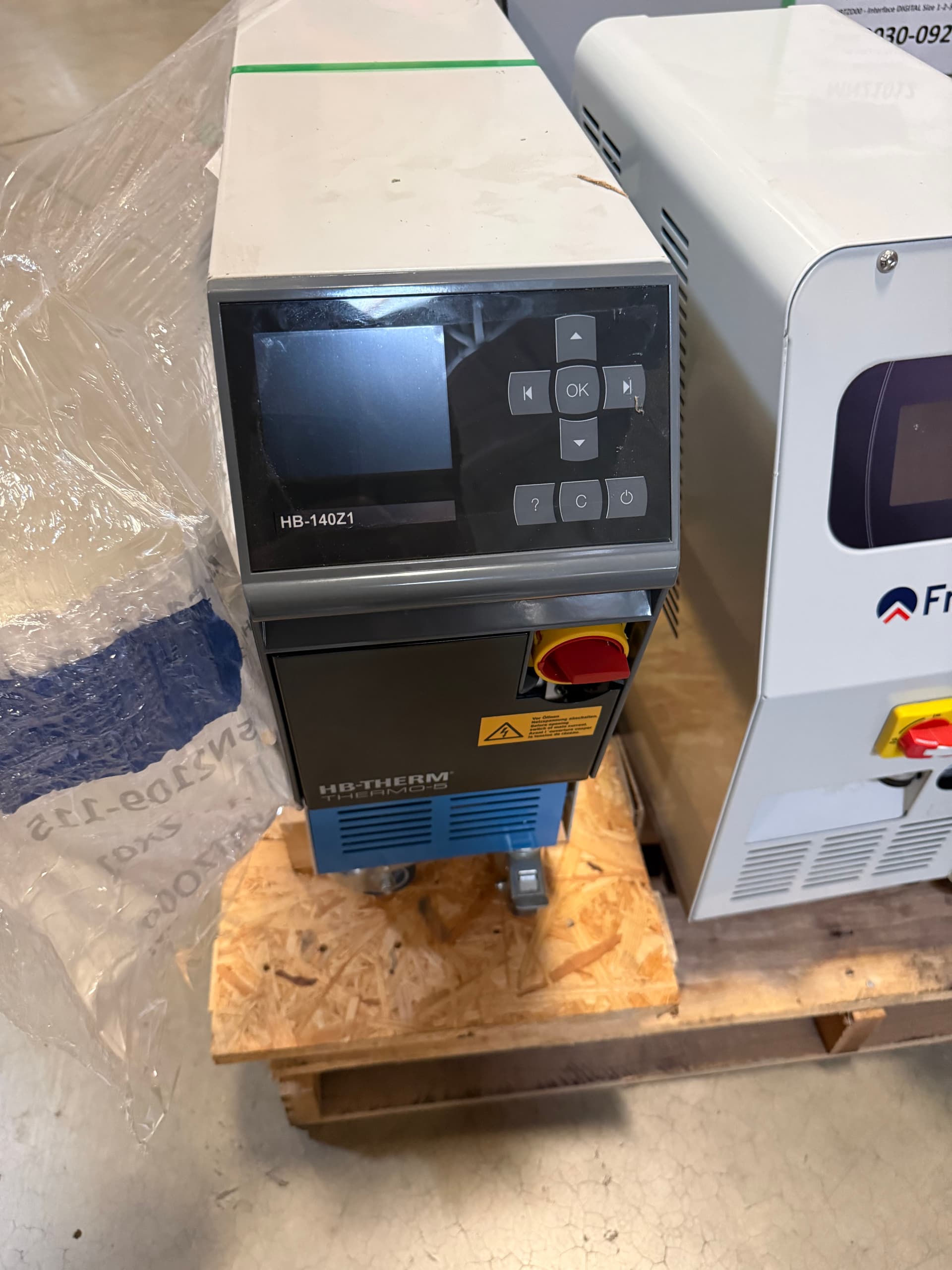
Lot 20 · Item #6919
2018 HB-Therm Thermo-5 Water Temperature Control Unit
East Dundee, IL
Ends Mon, Nov 30, 10:38 AM CT · 11 bids

Lot 8 · Item #6907
2017 Frigel Turbogel Flow Booster Temperature Controller
East Dundee, IL
Ends Mon, Nov 30, 10:14 AM CT · 3 bids
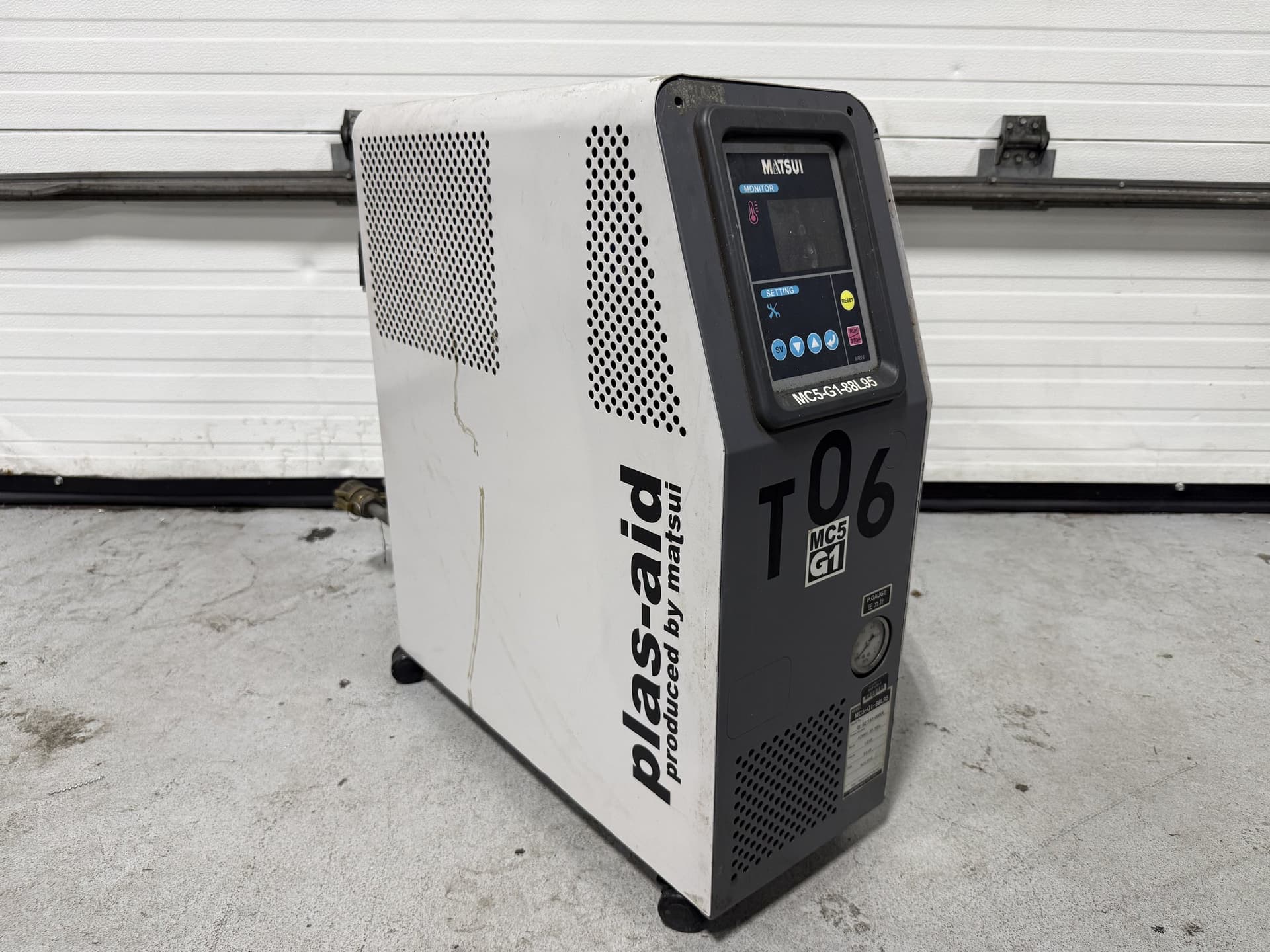
Lot 9 · Item #6947
2016 Matsui MC5-G1 Temperature Controller
Gilberts, IL
Ends Wed, Dec 2, 10:16 AM CT · 17 bids

Lot 12 · Item #6911
2016 Frigel Turbogel Flow Booster Temperature Controller
East Dundee, IL
Ends Mon, Nov 30, 10:22 AM CT · 1 bid
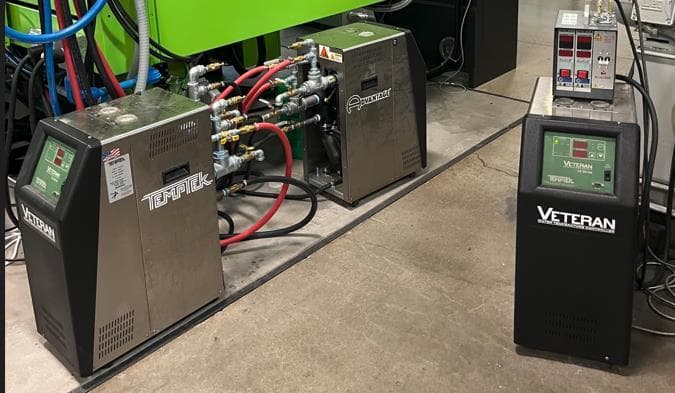
Lot 5 · Item #6955
2013 Temptek VT-275-LX Temp Controller
USA · Register to see location
Ends Thu, Dec 10, 10:08 AM CT · 1 bid
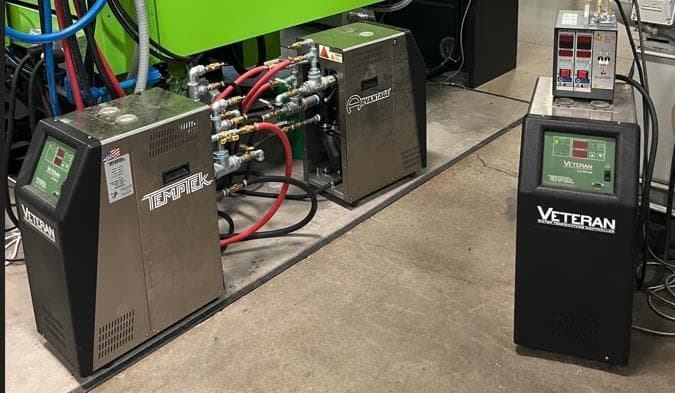
Lot 4 · Item #6954
2013 Temptek VT-275-LX Temp Controller
USA · Register to see location
Ends Thu, Dec 10, 10:06 AM CT · 1 bid
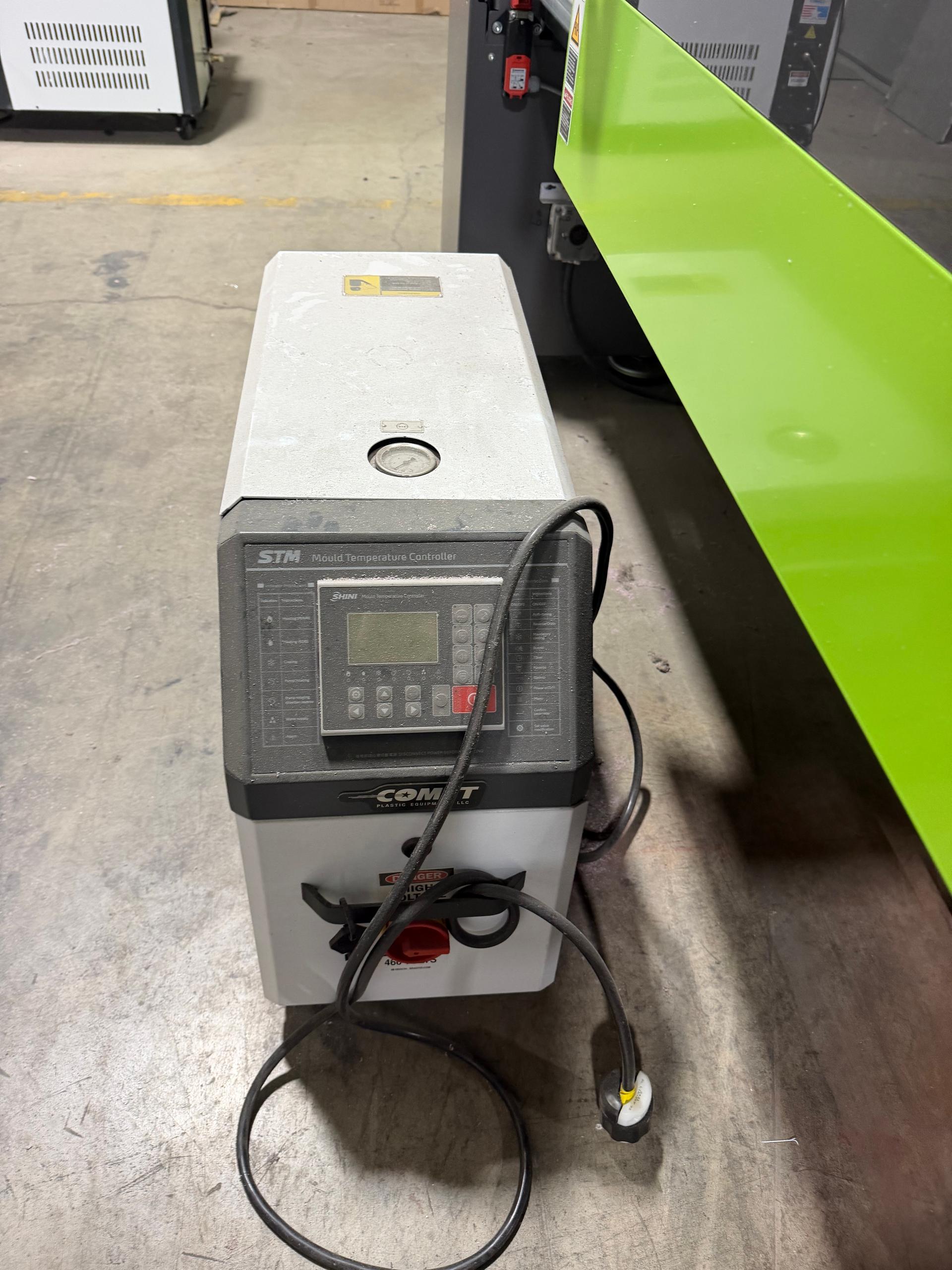
Lot 3 · Item #7113
Comet STM Mold Temperature Controller
USA · Register to see location
Ends Wed, Dec 16, 10:04 AM CT
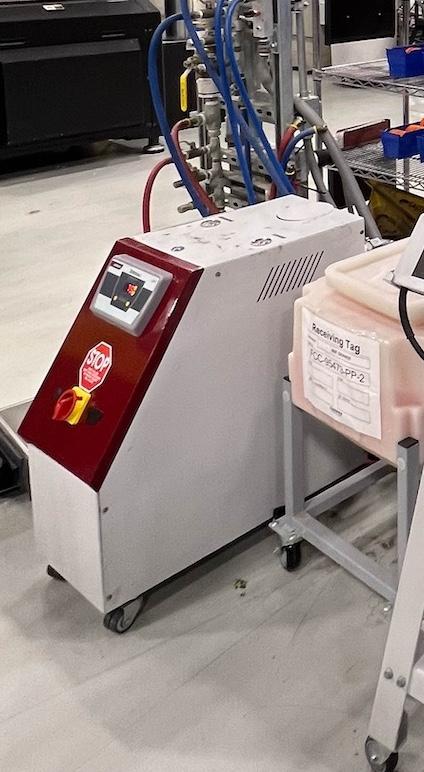
Item #6927
Wittmann Tempro Direct C250 Primus Temperature Control Unit
USA
Thermolators by the numbers
From our own catalog: machines listed now and machines we have sold. Updated every few minutes.
Our track record
351 machines sold · 25 makes · model years 1993–2024 · 83 sold at our own auctions
By brand
| Brand | In stock now | Sold by Meadoworks | Model years |
|---|---|---|---|
| HB-Therm | 12 | 11 | 2018–2024 |
| Frigel | 5 | 0 | 2016–2023 |
| Matsui | 3 | 24 | 1997–2020 |
| Wittmann | 2 | 12 | 2004–2024 |
| Temptek | 2 | 3 | 2001–2013 |
| Conair | 1 | 92 | 1995–2015 |
| Advantage Engineering | 1 | 36 | 1996–2022 |
| Delta T | 1 | 6 | 2008 |
| Budzar | 1 | 3 | 2008 |
| Comet Plastic Equipment | 1 | 0 | — |
Shop Used Thermolators & Mold Temperature Controllers by Type
- Used Water Temperature Controllers (29)
29 in stock now from HB-Therm, Frigel and Matsui. 324 sold through Meadoworks.
Looking for Something Specific?
Most of our inventory sells before we can list it online. If you need a specific brand, model, or specification, tell us what you need—we have access to unlisted equipment and machines coming in from plant closures.
Browse Used Mold Temperature Controllers by Brand
Browse Used Mold Temperature Controllers by Country
Looking to Sell Your Mold Temperature Controllers?
Meadoworks is an active cash buyer of used industrial equipment. Get a free valuation from our AMEA-certified appraisers.
About Used Mold Temperature Controllers
A thermolator is the plant name for a mold temperature controller, also called a TCU. It sits beside the press and circulates a fluid through the mold, die or roll so the steel stays at a setpoint. The cabinet has a pump, a heater, a cooling path and a probe. People searching for a thermolator, a mold temperature controller or a TCU are looking for this machine. The fluid is the decision that splits the catalog: water for most molds, oil when the tool has to run hotter than water can hold.
Water units are the everyday thermolator. They heat and cool quickly, the fluid is cheap, and a typical cabinet is rated to about 250 F. That covers polyethylene, polypropylene and a lot of ABS and nylon. Oil units use heat-transfer oil so the mold can sit well above that band, which is what some engineering resins need. Oil warms up slower, the fluid is messier, and the pump and seals are built for it. If the search does not name a fluid, start here. If it already says water, open Water Temperature Controllers. If it already says oil, open Hot Oil Units.
Sizing is the same shape either way. Heater kilowatts have to bring the tool to setpoint and hold it while hot resin keeps arriving. Pump flow has to get through the passages that were drilled in that tool, not just the horsepower on the motor. One zone serves one circuit. Two zones let the cavity and the core run at different setpoints. Voltage has to match the cell, usually 460 volts, three phase, in a US plant. A chiller or a tower still has to exist somewhere, because a thermolator moves heat around the mold and does not throw it out of the building.
On a used thermolator, the nameplate is the first document. It says the fluid, the maximum temperature, the heater size, the pump and the voltage. A water cabinet and an oil cabinet are not interchangeable by turning a knob. Direct-injection water units mix plant water into the mold loop and cool fast. Indirect units keep an exchanger between the tower and the tool. Those details live on the water page. Oil temperature, fluid type and seal condition live on the oil page. This page is the choice between them.
Meadoworks lists thermolators from plant closures, consignments and auctions, often next to the press they ran with. Most of the live water units are on the Water chip. Hot oil thermolators are on the Oil chip, including machines that show up in the sold archive of this page. Listings name heater size, pump and fluid. Buyers can inspect before they commit, and when a cell moves we coordinate the truck with the rest of the machines.
How to Choose a Used Thermolator
Water or Oil: Which Thermolator Fits the Mold
Read the resin and the mold temperature before you read the brand. If the tool can live at or below about 250 F, a water thermolator is the simpler machine. It heats faster, cools faster and uses a fluid every plant already understands. If the process sheet calls for a hotter mold, an oil unit is the one that can get there without boiling the loop.
Do not buy a larger water heater to fake an oil temperature. The nameplate maximum is a limit, not a suggestion. A pressurized water circuit can creep above the open-tank range, and that is still a water machine with water rules. Once the job is clearly oil, leave this page for Hot Oil Units. Once it is clearly water, the water page goes into direct injection, exchangers, hose size and the 9 kW cabinets we see most often.
How to Size a Thermolator
Match the heater to the tool and the cycle, not to the press tonnage. A small mold on a slow cycle can live on a modest heater. A large mold, a hot melt or a short cycle needs more kilowatts, and two setpoints need two zones or two cabinets. Then match the pump to the waterlines or oil passages. You need flow at the pressure those passages create.
Match the voltage to the cell before you book the truck. Confirm a colder supply exists, from a chiller or a tower, because the thermolator only borrows that cold fluid when the mold is above setpoint. Zone count, fluid and maximum temperature are the three lines to write down before comparing two brands.
By size: Typical Used Thermolators Price Ranges
Single-zone water thermolators (about 6–12 kW): $1,000–$4,000
Larger or dual-zone water units: $3,000–$8,000
Hot oil units (up to about 500 F): $3,000–$12,000
What moves the price — fluid (water or oil), heater kW, pump size, zones, controller generation and age. Units that heat and cool on a test stand bring more.
These are typical used-market ranges, not a quote on any machine. For a current figure on a specific machine, request a quote or call 800-323-0307.
Thermolator Specs to Compare
| Spec | Typical range | Why it matters |
|---|---|---|
| Fluid | Water or heat-transfer oil | Water covers most molds. Oil is for tools that must run hotter than water can hold. |
| Maximum temperature (F) | About 250 F on water units | The nameplate maximum decides whether this cabinet can hold the mold temperature on the process sheet. |
| Heater size (kW) | 6–12 kW on press-side water units | Sets how fast the tool reaches setpoint and whether the unit can hold it on a hot cycle. |
| Pump flow and pressure | Flow through the actual passages matters more than the horsepower printed on the motor. | |
| Zones | 1 or 2 | Two zones let the cavity and the core hold different setpoints from one frame. |
| Supply voltage | 230 or 460 V, 3 phase | A voltage mismatch needs a transformer or a different cabinet before the unit can run. |
Fluid
Typical range: Water or heat-transfer oil
Water covers most molds. Oil is for tools that must run hotter than water can hold.
Maximum temperature (F)
Typical range: About 250 F on water units
The nameplate maximum decides whether this cabinet can hold the mold temperature on the process sheet.
Heater size (kW)
Typical range: 6–12 kW on press-side water units
Sets how fast the tool reaches setpoint and whether the unit can hold it on a hot cycle.
Pump flow and pressure
Flow through the actual passages matters more than the horsepower printed on the motor.
Zones
Typical range: 1 or 2
Two zones let the cavity and the core hold different setpoints from one frame.
Supply voltage
Typical range: 230 or 460 V, 3 phase
A voltage mismatch needs a transformer or a different cabinet before the unit can run.
What to Inspect on a Used Thermolator
Read the fluid on the plate
Water and oil cabinets are not the same machine. The nameplate, not the paint, says which fluid the pump and seals were built for.
Run the heater to setpoint
The display should climb and the contactor should pull in. A heater that never leaves room temperature is an element or a contactor.
Listen to the pump
A growl or a leak at the shaft seal means a rebuild before the unit can hold flow through a mold.
Open the cooling path
With a cold supply connected, the temperature should fall. A stuck valve leaves the mold hot no matter what the setpoint says.
Match volts and phases
Confirm volts, phase and full-load amps against the cell. A 230 volt cabinet on a 460 volt bus is not a hose change.
Count the zones
One circuit needs one zone. A cavity and a core at two temperatures need two zones or two cabinets.
Check hoses and seals
Cracked hoses and leaking fittings dump fluid into the press. On an oil unit, a small seep is a bigger mess than the same seep on water.
Related Equipment
- Water Temperature Controllers
When the mold can run on water
- Hot Oil Units
When the mold has to run hotter than water
- Portable Chillers
The cold fluid a thermolator borrows to cool
Types of Plastic Auxiliary Equipment
Common Applications
Frequently Asked Questions
Is a thermolator the same as a mold temperature controller?
Yes. Thermolator started as a brand name and became the plant word for a mold temperature controller, also called a TCU. It pumps water or heat-transfer oil through the tool and holds a setpoint. It is not a chiller and it is not a hot-runner controller. A chiller makes cold water for the plant. A hot-runner controller heats the plastic in the mold's runner. A thermolator heats or cools the steel around the cavities. If a search says only thermolator, TCU or mold temperature controller, this page is the one that covers both fluids.
What is the difference between a water and an oil thermolator?
A water thermolator is the usual choice up to about 250 F. It heats and cools quickly and the fluid is ordinary treated water. An oil thermolator uses heat-transfer oil so the mold can run hotter than water can hold, which some engineering resins require. Oil is slower to change temperature and harder to keep off the floor. Choose water unless the process sheet is above the water unit's nameplate. The water page and the hot oil page each go further once that choice is made.
How do I choose a thermolator for a mold?
Start with the mold temperature on the resin sheet, then the number of circuits. One setpoint and a temperature water can reach means a single-zone water unit. Two setpoints mean two zones. A temperature above the water range means oil. After the fluid, match heater kilowatts and pump flow to the tool, and match the cabinet voltage to the press. Brand comes after those four facts. Advantage, Conair, Sterlco, Matsui, Mokon and Regloplas all publish them on the nameplate.
What should I inspect on a used thermolator?
Confirm the fluid first, then run it. The heater should reach a setpoint, the pump should be quiet, and the cooling path should pull the temperature back down when a cold supply is connected. Read voltage, heater kilowatts and zone count off the plate. Look at hoses, the shaft seal and, on an indirect water unit, the exchanger. An oil unit with a seep at a fitting is a cleanup problem, not a cosmetic one. A cabinet that will not leave room temperature is a repair before it is a bargain.
Does a thermolator replace a process chiller?
No. A thermolator holds the mold at a chosen temperature. When the mold is too hot it opens a valve and borrows colder fluid from a chiller or a cooling tower. It does not make that cold fluid. A cell with thermolators and no chiller will climb until every mold runs hot. Size the chiller for the presses and the other loads, then put a thermolator on each tool that needs its own setpoint.
Where are the water thermolators and the hot oil units listed?
Water units are on Water Temperature Controllers. Hot oil units are on Hot Oil Units. This page is the comparison and the shared specs, and its grid is the thermolators and mold temperature controllers that match those words, which is mostly water. Use the Oil chip when the search already says oil, and the Water chip when it already says water. A search that only says thermolator belongs here.
How much does a used mold temperature controller cost?
Single-zone water thermolators usually run about $1,000–$4,000 used, larger or dual-zone water units about $3,000–$8,000, and hot oil units about $3,000–$12,000. These are typical ranges, not a quote — call 800-323-0307 for a specific unit.
Related Resources
Recently Sold Mold Temperature Controllers
View all sold auxiliary equipment →


Need Help Finding the Right Equipment?
Contact our team with your specifications and we'll help you find the right machine.
