Used Turret Punch Presses for Sale
4 results
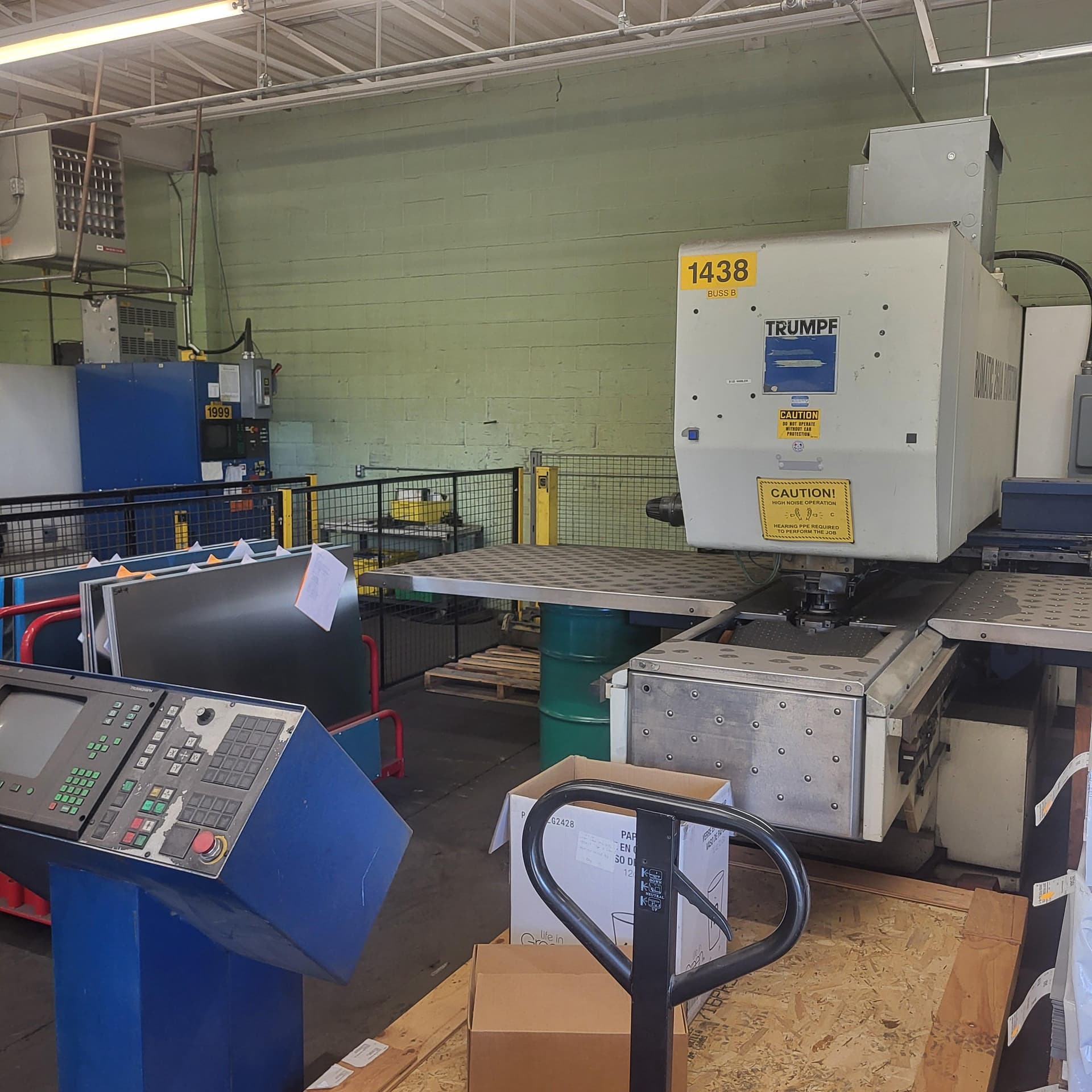
1999 Trumpf Trumatic 200 Punch
Canada
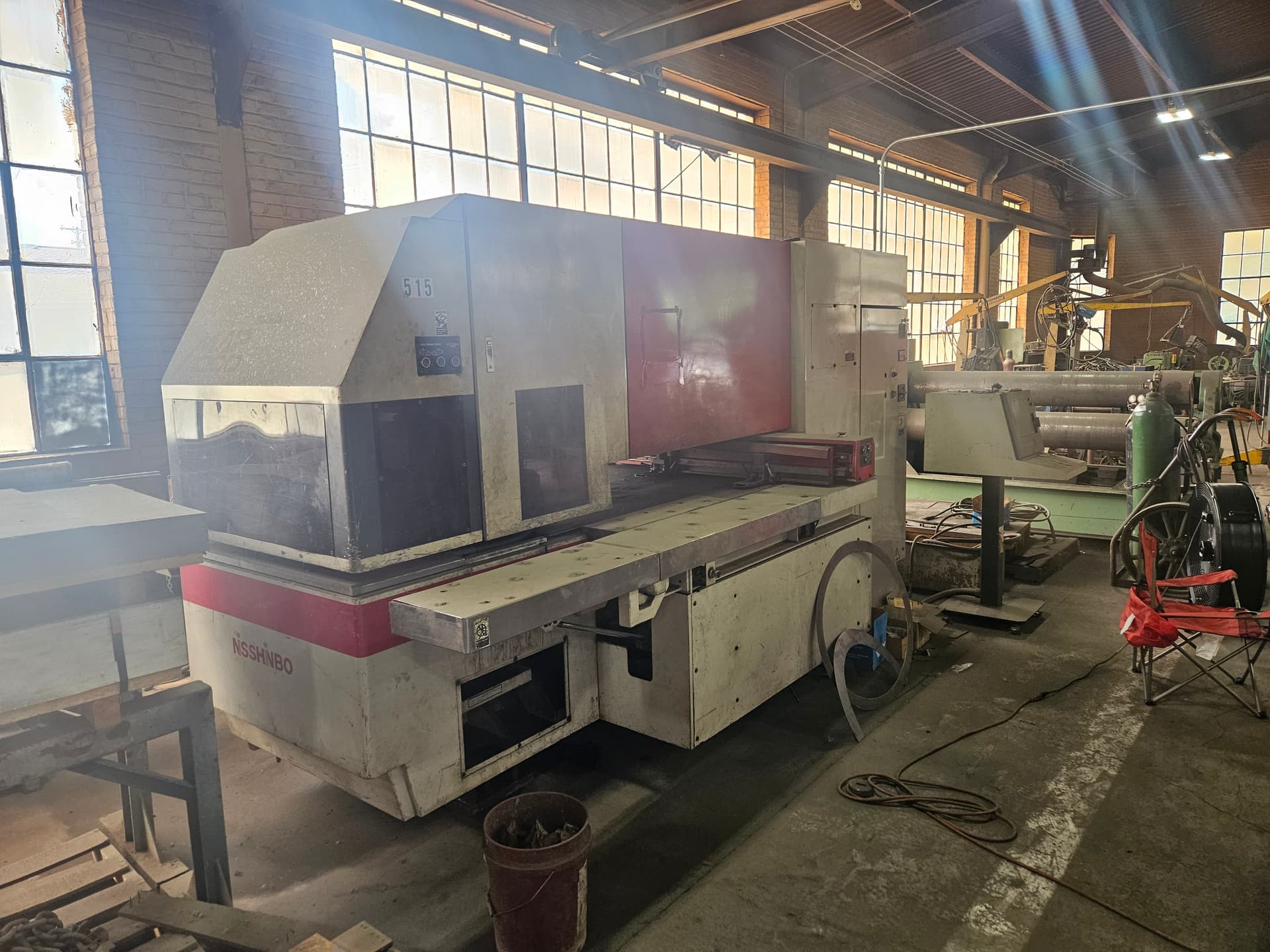
1998 Nisshinbo CNC Turret Punch Press
USA
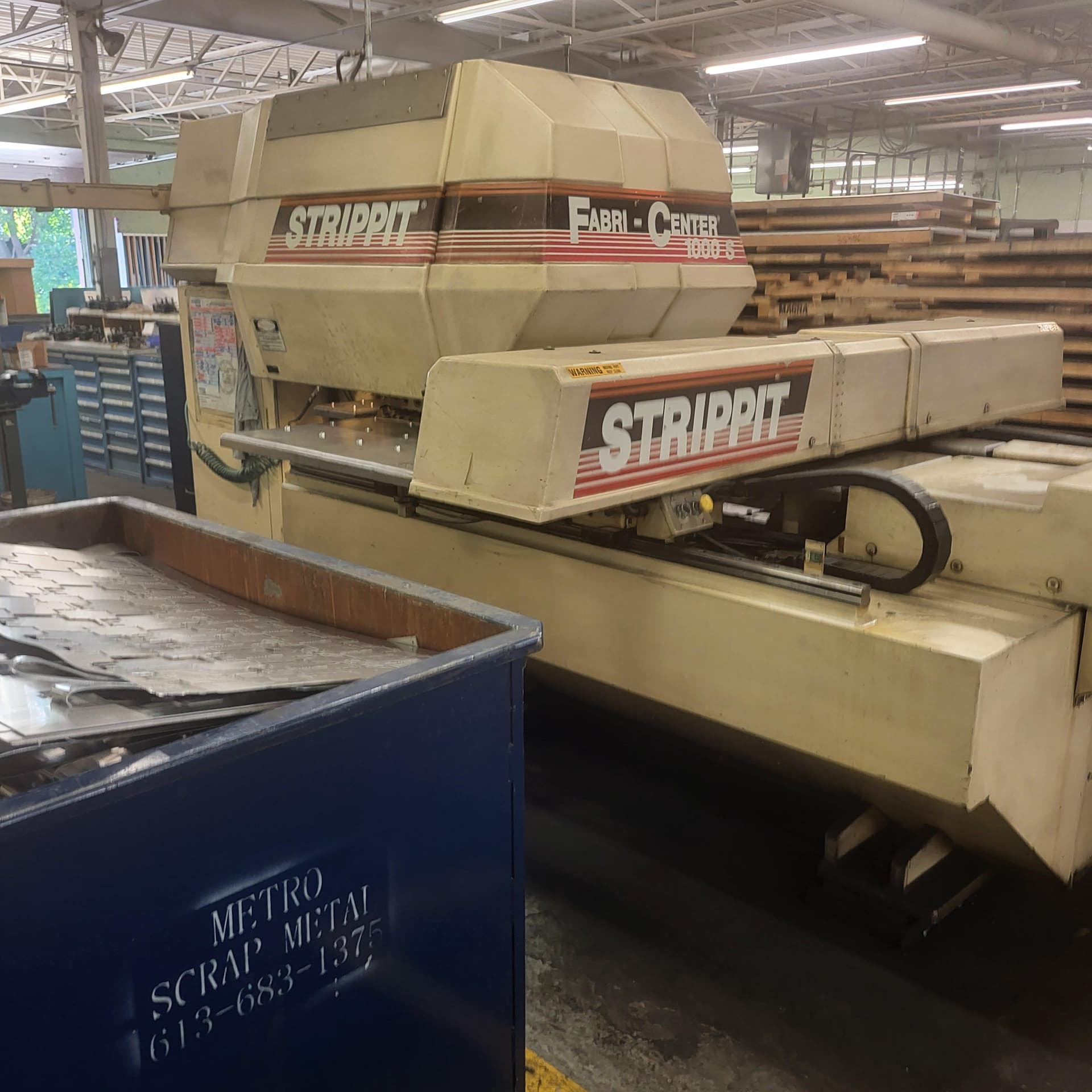
Strippit 1000 S Turret Punch
Canada
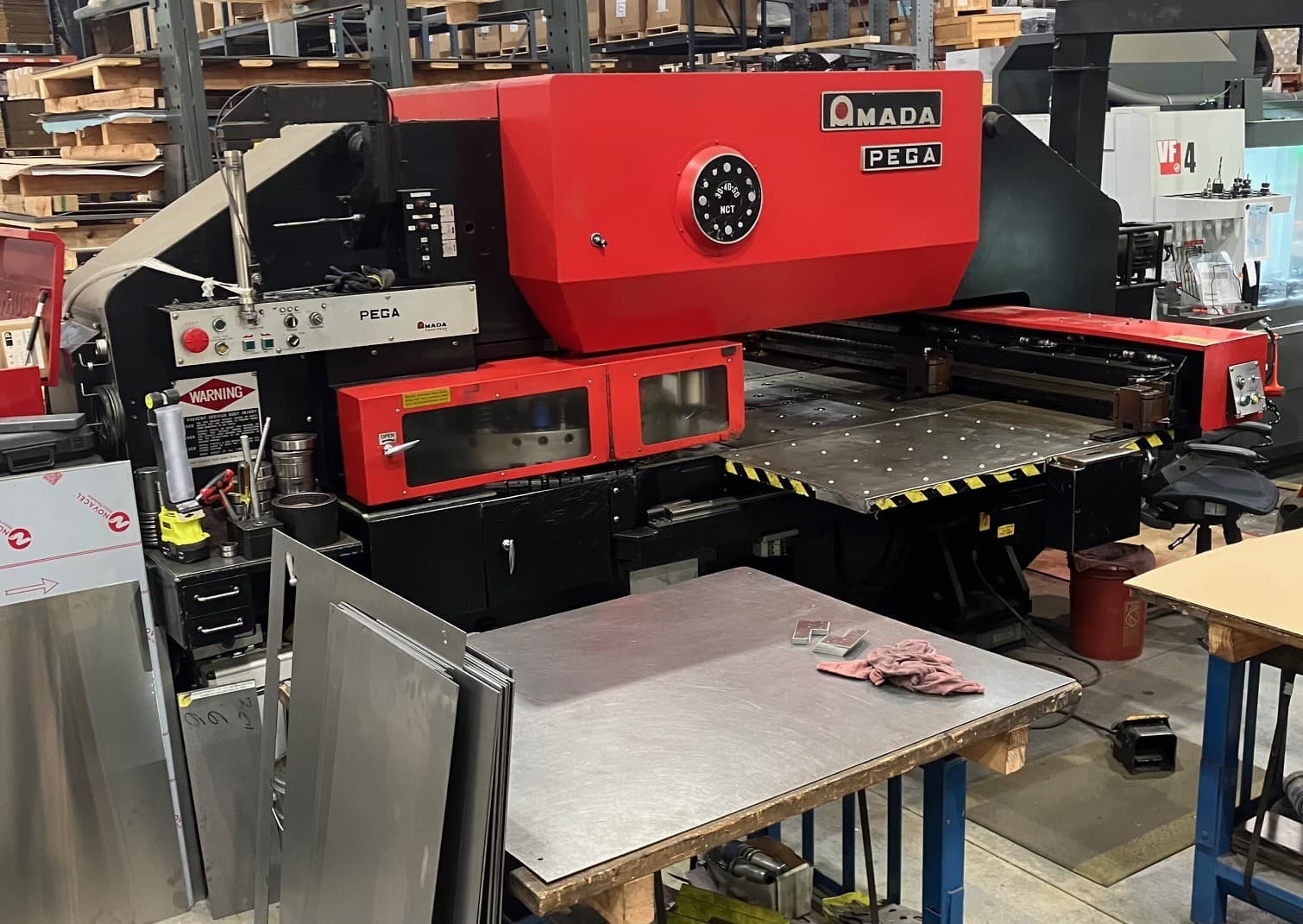
Amada Pega CNC Turret Punch Press
USA
Looking for Something Specific?
Most of our inventory sells before we can list it online. If you need a specific brand, model, or specification, tell us what you need—we have access to unlisted equipment and machines coming in from plant closures.
Looking to Sell?
Meadoworks is an active cash buyer of used industrial equipment. Get a free valuation from our AMEA-certified appraisers.
About Used Turret Punch Presses
A rotating turret of punches sits under a ram while the table carries the sheet from hit to hit. A turret punch is the fabricator's punch press: holes, louvers, embosses, and knockouts in one handling. A flatbed laser profiles an edge and does not form those features. Station count should match the tools the part actually uses, not the largest disc in a brochure. Auto-index stations rotate a tool to an angle, so a shaped punch or a louver can land without a second setup. Fixed stations still hold the rounds and the shapes you use in one orientation.
Many Amada machines in this class are 200 or 300 kilonewtons, about 20 or 30 tons. Read that against the thickest sheet and the largest hit, not against the square footage of the shop. A small hole in light gauge does not need the top of the range, and a thick slug will. Sheet travel, plus a reposition when the blank is longer than the table, decides whether a four-by-eight finishes in one clamp-up. Larger sheets, on the order of five by ten, need the travel or the reposition to match. The punches themselves are not a shared drawer. An Amada station will not take a Trumpf tool. The tools already in the turret can be a real part of the purchase.
Hit rate matters on a nest of small holes. A worn ram or a sloppy index shows itself as burrs and missed locations before the nameplate speed does. Brush or ball transfer has to support the sheet without marking it, and the clamps have to hold through a reposition. A servo ram and a hydraulic ram do not feel the same under a forming tool, so know which one you are buying. Nibbling a contour leaves a scalloped edge a beam would not. Some parts accept that. Some do not. The machine earns its floor space when the part needs holes and forms together.
A used turret punch should punch a sample pattern so you can measure location, watch the index lock, and listen to the ram. Homing belongs in that same run, because a dead axis ends the conversation. Amada and Trumpf are the names that dominate fab shops. Meadoworks takes them from those shops and from closures. Bring a nest in your thickness. A higher tonnage will not replace a tooling family you do not own, and the table plus the control cabinet should travel with the frame.
How to Choose a Used Turret Punch Press
Forms and Holes, or a Profile Only
If the part needs louvers, embosses, knockouts, or a tapped hole in the same handling as the punched pattern, a turret is doing work a flatbed laser does not. If the part is a clean profile with a few round holes, the laser may be the simpler machine and the turret is extra tooling to maintain.
Station count follows the tool list, not a wish for the biggest disc. Auto-index stations are the ones that rotate a shape. A turret full of round punches and no index will not suddenly cut angled louvers.
Tonnage, Sheet Size, and Tooling Family
Match tons to the thickest material and the largest hole or form, not to the square footage of the shop. Many jobs live well under twenty tons once a laser has taken the thick plate away. Sheet travel and repositioning have to cover the blank you actually buy.
Then match the tooling family. Amada-style stations and Trumpf-style tooling are not a shared drawer. The punches that come with the machine can be worth as much as a tired frame, and a frame without the tools you need is a second purchase.
Turret Punch Press Specs to Compare
| Spec | Typical range | Why it matters |
|---|---|---|
| Tonnage | About 20 to 30 tons | Size it from the thickest sheet and the largest hit, not from the shop's floor space. |
| Stations and auto-index | Station count and index decide setups. A larger turret you never fill is only extra mass. | |
| Sheet size | A blank that does not fit the travel becomes a reposition, two handlings, or a different machine. | |
| Tooling style | Amada and Trumpf tools do not cross. Confirm the punches you own will actually seat. | |
| Drive | A servo ram and a hydraulic ram change forming behavior and how a worn machine feels under a hit. | |
| Table and clamps | A table that marks the sheet, or a clamp that slips, prints into the part rather than into a brochure. |
Tonnage
Typical range: About 20 to 30 tons
Size it from the thickest sheet and the largest hit, not from the shop's floor space.
Stations and auto-index
Station count and index decide setups. A larger turret you never fill is only extra mass.
Sheet size
A blank that does not fit the travel becomes a reposition, two handlings, or a different machine.
Tooling style
Amada and Trumpf tools do not cross. Confirm the punches you own will actually seat.
Drive
A servo ram and a hydraulic ram change forming behavior and how a worn machine feels under a hit.
Table and clamps
A table that marks the sheet, or a clamp that slips, prints into the part rather than into a brochure.
What to Inspect on a Used Turret Punch Press
Punch a sample pattern
Measure hole location. An index that lags or a ram that hits off center will not hide in a single demo hole.
Watch the turret index
It should lock without a bang or a retry. Play in a station is a punch and die alignment problem.
Identify the tooling family
Confirm Amada-style or Trumpf-style, and whether the included tools match the parts you plan to run.
Check clamps and the table
Clamps should hold a sheet through a reposition. A galled brush table will mark every blank.
Home the axes
The control should boot and home without a standing alarm. Ask about a parameter backup.
Listen to the ram
A hydraulic ram that shudders, or a servo that faults under a form, is a repair before production.
Match tonnage to your thickest hit
Do not buy thirty tons for a nest of small holes, and do not expect twenty tons to slug a thick plate.
Related Equipment
- Laser Cutters
Profile cutting when the part does not need formed features
- Press Brakes
Bends the blank after the turret or the laser
- Hydraulic Shears
Square blanks before a punch or a brake
Turret Punch Presses Brands We've Sold
Common Applications
Frequently Asked Questions
How many stations does a turret punch need?
As many as the part's tool list, plus a little room to leave common punches in place. A simple bracket does not need a huge turret, and a panel full of shapes does. Auto-index stations count more than empty holes in the disc, because they rotate a tool instead of making you set the same shape at several angles. Buying the largest turret for a short tool list adds mass and setup you will not use.
What does an auto-index station add on a turret punch?
It rotates the tool under the control, so a shaped punch, a louver, or a knockout can land at the angle the part needs without a second setup. Fixed stations still matter for the rounds and the shapes you use in one orientation. If the turret has no index and your parts are full of angled features, you will nibble or you will change tools by hand. Confirm the index actually moves and locks.
Can a turret punch form louvers as well as holes?
Yes. Forming is the reason many shops keep a turret after they add a laser. Louvers, embosses, countersinks, and knockouts happen in the same handling as the holes, which a flatbed laser does not do. The tools and the ram have to be up to that form, and a tired ram will show it. If the work is only a clean outside profile, a laser is the simpler machine. If the part is holes plus forms, keep the turret and ask which forming tools come with it.
Will Amada and Trumpf tools fit the same turret punch?
No. The station geometry is proprietary enough that you match the tooling family to the machine. An Amada-style turret and a Trumpf-style turret both punch sheet, and the punches do not move between them as a shared drawer. The tools already in the machine can be a real part of the purchase. A bare turret in the wrong family means buying a new tool set before the first nest. Identify the family from the model, not from the fact that both machines index a disc of punches.
What should a sample hit show on a turret punch?
Location, a clean slug, and an index that repeats. Run more than one hole. A pattern of holes tells you whether the table and the turret agree. Burrs, a hole that walks, or a station that clunks into place are the faults to take seriously. Listen to the ram and watch the clamps through a reposition. A control that will not home is not a small inconvenience. Bring your own material thickness if you can, because a demo in light gauge hides a tonnage or a stripping problem.
When is a turret punch a better fit than a laser?
When the part needs formed features or a dense hole pattern that a punch hits faster than a beam can profile. A laser is the better fit for a clean contour, a thick plate, or a shape you do not want nibbled. Many shops end up with both, and the turret stays because of louvers and hardware holes. Do not buy a turret punch only to cut outside profiles. Do not buy a laser and then discover the louver was the whole point of the part.
