Used Ultrasonic Welders for Sale
See all 9 Plastics Assembly & Welding →
5 results

Hermann - PS Dialog
USA
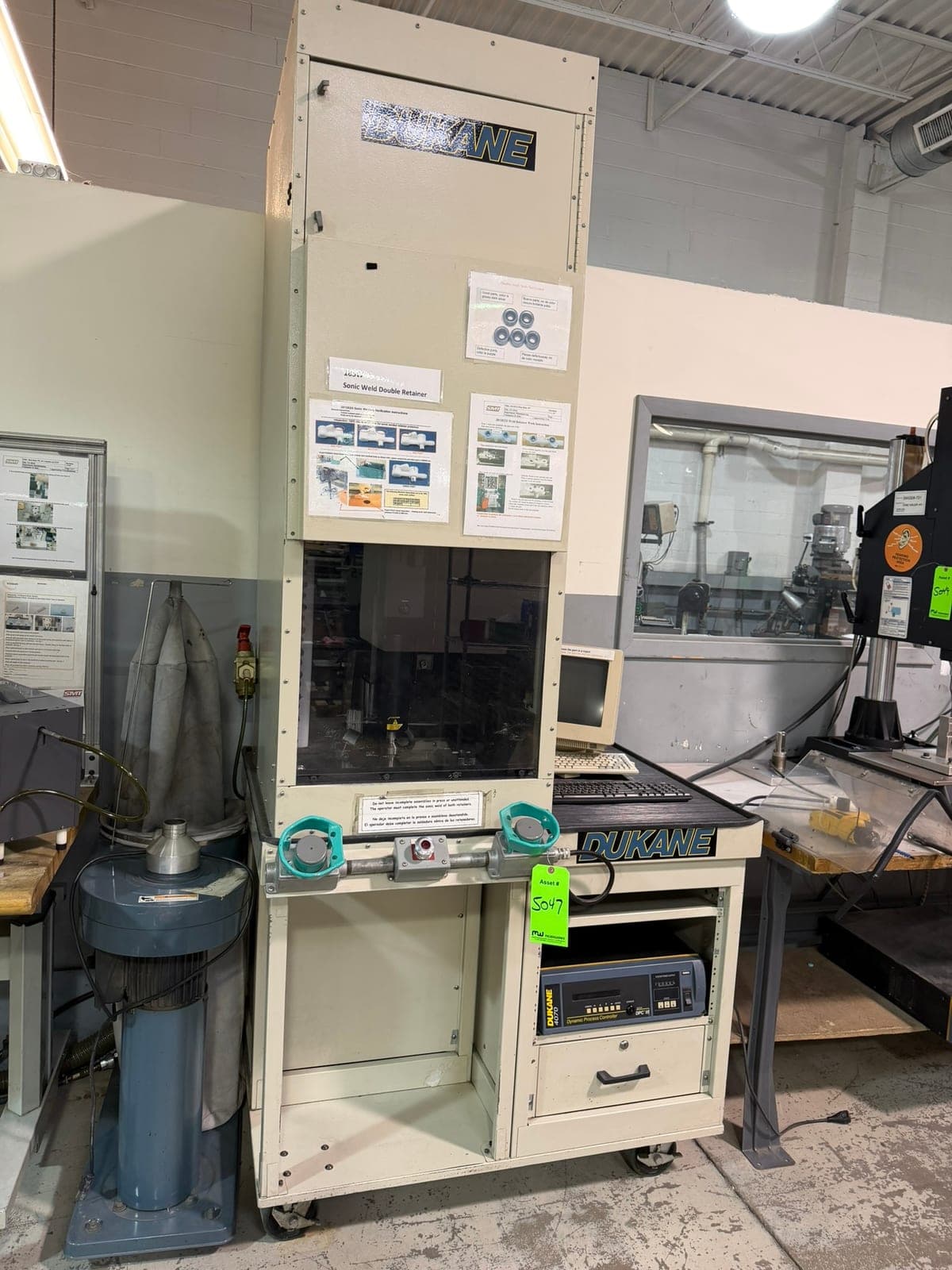
Lot 15
Dukane Enclosed Ultrasonic Welding Station
Naperville, IL
Live auction · Tue, Oct 27, 10:00 AM CT
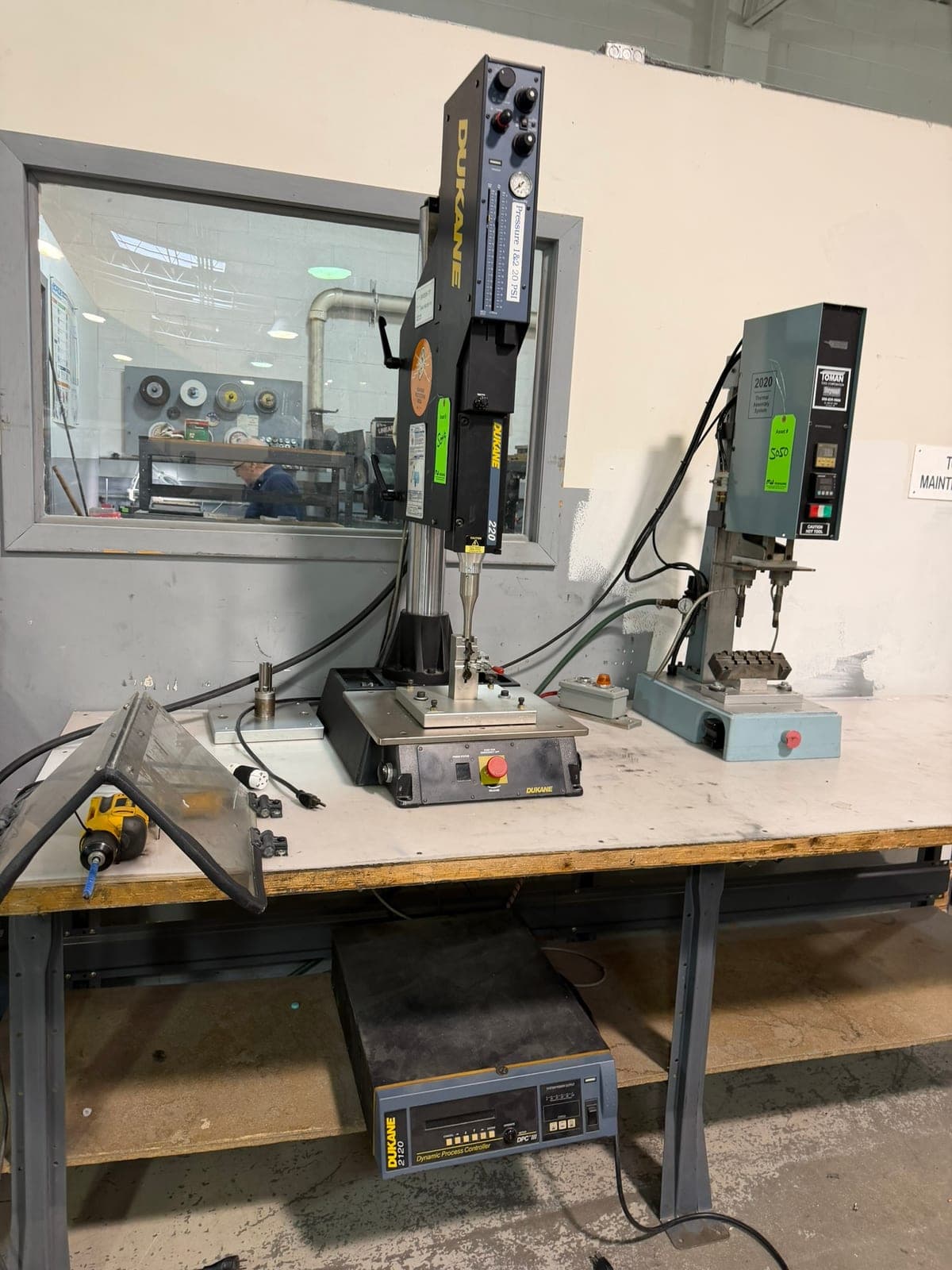
Lot 14
Dukane Ultrasonic Welding Press w/2120 DPC III Generator
Naperville, IL
Live auction · Tue, Oct 27, 10:00 AM CT
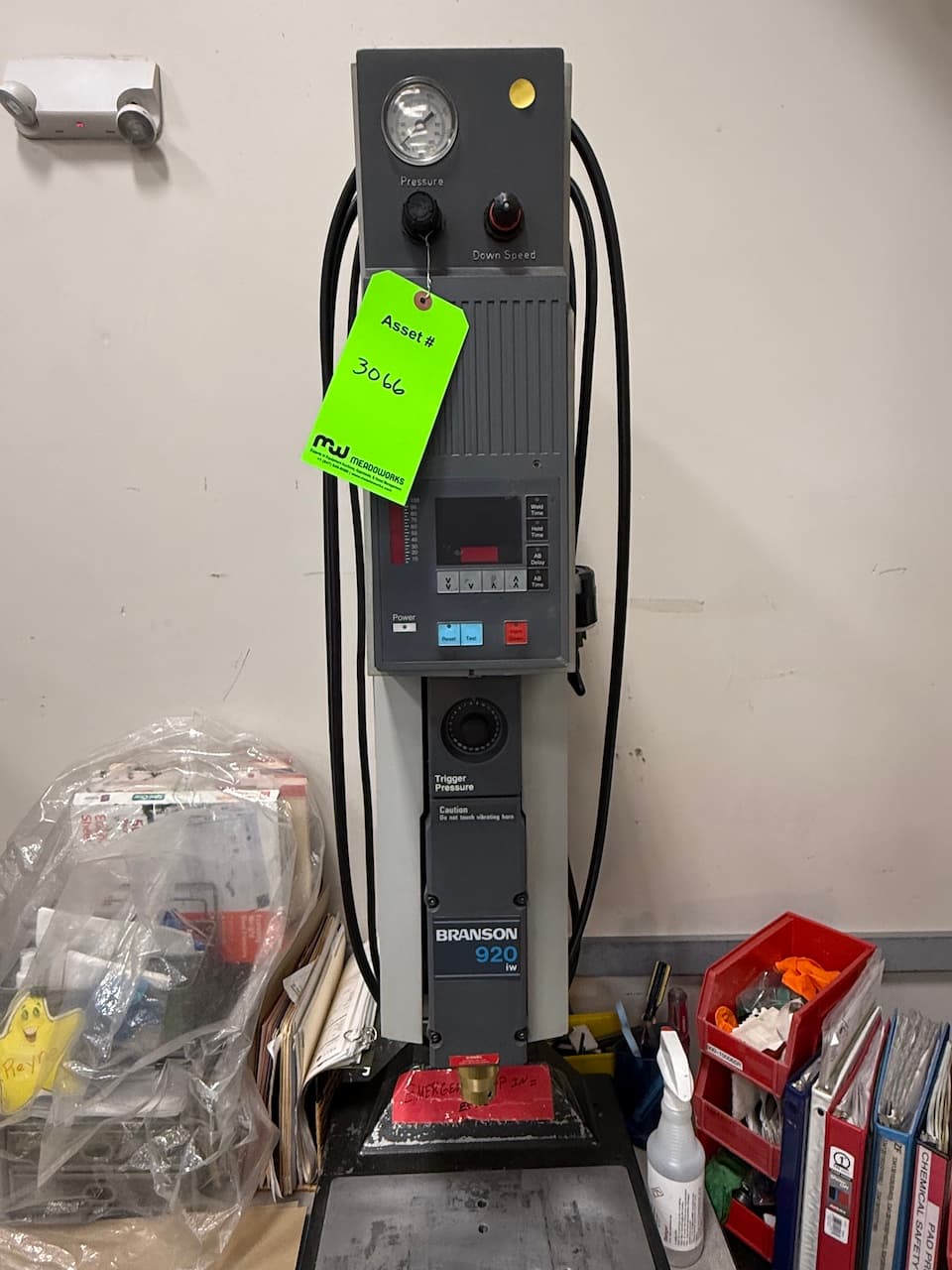
Branson Ultrasonic Welder
USA
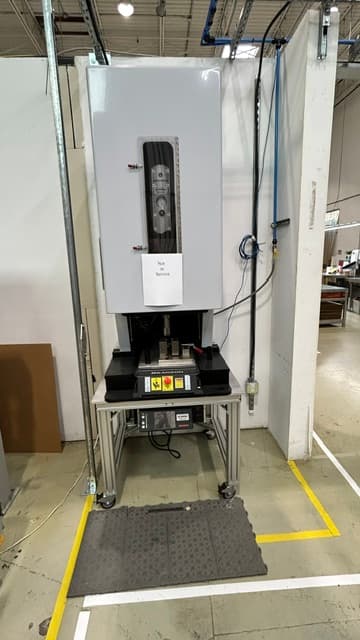
Lot 56
Branson 2000Xea Ultrasonic Plastic Welder, 20 kHz 2500W
Coquitlam, BC
Live auction · Tue, Oct 20, 10:00 AM CT
Looking for Something Specific?
Most of our inventory sells before we can list it online. If you need a specific brand, model, or specification, tell us what you need—we have access to unlisted equipment and machines coming in from plant closures.
Looking to Sell?
Meadoworks is an active cash buyer of used industrial equipment. Get a free valuation from our AMEA-certified appraisers.
About Used Ultrasonic Welders
An ultrasonic welder joins two thermoplastic parts by pressing a tuned metal horn on the joint while the horn vibrates at one fixed frequency. The acoustic stack is a converter, a booster and a horn. A generator drives that stack from ordinary plant power, commonly 120 to 240 volts. Friction at a small energy director melts a thin layer of resin. The slide then holds the parts together while that melt freezes. Leave the hold out and the joint can look closed and still peel. A hand-held probe is enough for a short run or a repair. A vertical press repeats the cycle all day behind a guard.
Frequency decides the horn, and it is not a quality ranking. Twenty kilohertz moves more amplitude through a larger horn, which suits bigger housings, softer resins and joints with more area. Forty kilohertz uses a smaller horn and a shorter stroke, which suits thin walls and show surfaces that mark when the amplitude is high. A horn is machined for one frequency and will not tune on a generator built for another. Booster gain changes amplitude without a new horn. A 2:1 booster doubles what the converter delivers. A 0.5:1 booster cuts it in half. Output on these systems runs from about 200 watts on a small stack to about 5,000 watts when the horn and the joint are large. Glass-filled resin usually wants more amplitude than an unfilled grade of the same polymer.
The controller ends the cycle by time, by energy or by collapse distance. Time is the simple choice when the director is sharp and the parts repeat. Energy, measured in joules, lets the weld run a little longer or shorter when the wall varies. Collapse stops the vibration after the horn has traveled a set distance, which keeps a joint at a finished height. Trigger force starts the vibration only after the horn is already loaded. A cracked horn often screams or draws more power than the last good setup, and keeping it in service can break the ceramics in the converter.
The station sits after the molding press. An operator or a robot sets the part in a nest, and a two-hand control or a light curtain releases the slide. Shop air and the generator supply are the utilities. Vibration will not form a retaining head on a molded stud. That job is heat staking, with a heated tip and a dwell. It will not lay a silicone or epoxy gasket either. That job is a meter mix dispenser. Match the horn face to the director before you compare frames.
Fire a used ultrasonic welder into a coupon, not an empty stroke. Listen for a rattle at the stack studs, which means amplitude is leaking out as heat. Read the frequency and the watts on the plate and confirm they match the horn you intend to run. A loose stud between converter, booster and horn is a common fault on a machine that still looks clean.
Meadoworks moves these presses out of molding-cell closures, consignments and auctions. Look at the horn face, the studs and the generator before the unit is skidded, and send the nest with the press when the cell travels together. A dead generator is cheaper to find on the floor than after the pallet is opened at the dock.
How to Choose a Used Ultrasonic Welder
20 kHz vs 40 kHz on an Ultrasonic Welder
Frequency is the first split, and it is not a quality ranking. Twenty kilohertz moves more amplitude through a larger horn, so it fits bigger parts and softer resins. Forty kilohertz uses a smaller horn and a shorter stroke, so it fits small parts, thin walls and surfaces that show a mark. The horn is machined for one frequency. It will not tune on the other generator. Production stacks are also built at 15 and 30 kHz.
If your parts span both sizes, you are shopping two machines, not a switch on one cabinet. Read the generator plate before you fall in love with the press frame. The frame can be repainted. The frequency cannot. Match the horn you will actually run, not the horn that happens to be bolted on for the photo.
How to Size an Ultrasonic Welder
Size from the joint, not from the press that molded the part. Weld area, resin stiffness and the number of joints in one stroke set the watts you need. Dukane's application notes put generator output from about 200 watts to about 5,000 watts, with the larger horn wanting the larger supply. A small energy director in a commodity resin can live on a modest generator. A large joint, a glass-filled resin or several points at once needs more power and a stiffer slide so the horn meets the part square.
Then match the booster. A 2:1 booster doubles converter amplitude. A 0.5:1 booster cuts it in half. Too little amplitude leaves a cold weld. Too much marks the surface or fractures a nearby boss. Confirm voltage at the same time, commonly 120 to 240 volts.
Ultrasonic Welder Specs to Compare
| Spec | Typical range | Why it matters |
|---|---|---|
| Frequency (kHz) | 15, 20, 30 or 40 | Sets horn size and amplitude. A horn cut for one frequency will not run on another generator. |
| Generator power (W) | 200 to 5,000 W | Watts have to cover the weld area and the resin. A small generator on a large joint welds cold. |
| Booster gain | 0.5:1 to 3:1 | The booster sets amplitude without a new horn. The wrong gain marks the part or leaves a cold joint. |
| Horn face | The horn is the tool. A face that does not match the energy director will not make a repeatable weld. | |
| Weld mode | Time, energy or collapse is how the cycle ends. Collapse tracks the joint better when the plastic varies. | |
| Press force | Force holds the parts while the melt freezes. A light or leaking slide will not repeat the weld. |
Frequency (kHz)
Typical range: 15, 20, 30 or 40
Sets horn size and amplitude. A horn cut for one frequency will not run on another generator.
Generator power (W)
Typical range: 200 to 5,000 W
Watts have to cover the weld area and the resin. A small generator on a large joint welds cold.
Booster gain
Typical range: 0.5:1 to 3:1
The booster sets amplitude without a new horn. The wrong gain marks the part or leaves a cold joint.
Horn face
The horn is the tool. A face that does not match the energy director will not make a repeatable weld.
Weld mode
Time, energy or collapse is how the cycle ends. Collapse tracks the joint better when the plastic varies.
Press force
Force holds the parts while the melt freezes. A light or leaking slide will not repeat the weld.
What to Inspect on a Used Ultrasonic Welder
Listen to the converter
A rattle or a scream usually means a loose stack or a failing converter, and the weld will scatter until it is fixed.
Inspect the horn face
Cracks, worn tips and a face that misses your energy director are tooling problems, not a control setting.
Check stack studs
Loose studs between converter, booster and horn steal amplitude and overheat the stack.
Read frequency and watts
The generator plate has to match the horn you plan to run, and the watts have to cover the joint.
Cycle force and hold
The slide should come down square and hold after the vibration stops. A leak leaves a weak weld.
Run a coupon weld
A dry cycle only proves the press moves. A coupon shows whether amplitude and time actually join the plastic.
Confirm voltage and air
Match the generator supply and the press air pressure to the cell before you plan the install.
Related Equipment
- Plastics Assembly & Welding
Overview of weld, stake and dispense
- Heat Stakers
Form a boss when vibration is wrong
- Dispensing
A gasket bead instead of a weld
Ultrasonic Welders Brands We've Sold
Common Applications
Frequently Asked Questions
How does a 20 kHz ultrasonic welder differ from 40 kHz?
A 20 kHz stack drives a larger horn and more amplitude, so it suits bigger parts, softer resins and joints with more weld area. A 40 kHz stack uses a smaller horn and a shorter stroke, which protects thin walls and surfaces that mark easily. The horn is cut for one frequency and will not tune on the other generator. Production equipment is also built at 15 and 30 kHz. Match the horn face to the energy director first, then keep the frequency the horn was built for. Frame size does not change that rule.
How do I size generator watts and booster gain?
Start with weld area, resin and how many points fire in one stroke. A small director in a commodity resin can run on a modest generator. A large joint, a glass-filled grade or several points at once needs more watts and a slide that stays square. Generator output on these systems runs from about 200 watts to about 5,000 watts. Then set amplitude with the booster. A 2:1 booster doubles what the converter delivers. Too little leaves a cold weld. Too much marks the show surface. Voltage has to match the plate.
What should I listen for on a used ultrasonic welder?
Fire a coupon and listen. A rattle or a scream points at a loose stack stud or a tired converter, and the weld strength will wander until that is fixed. A cracked horn can keep running while it overloads the ceramics in the converter, so stop if the tone is wrong. Look at the horn for cracks and a worn face. Cycle the slide and confirm it holds force after the vibration stops. Read frequency and watts on the generator so you know the horn you own will tune.
When should the weld end on time, energy or collapse?
Time is the simple mode, and it works when the parts and the director are consistent. Energy stops the cycle when the joint has absorbed a set amount of work, which helps when wall thickness varies a little. Collapse, or distance, stops when the horn has traveled a set amount, which tracks a joint that must end at a height. Pick the mode your part can repeat. A timer on a rounded or short director hides weak welds that still look finished.
Can vibration form a retaining head on a stud?
No. Vibration melts a designed joint. It does not form a stud into a head the way a heated tip does. Using a horn on a boss marks the plastic and still leaves a shape that will not retain a mating piece. If the feature is a stud, shop heat staking. If the feature is a gasket groove, shop a meter mix dispenser. Keep the ultrasonic press for the energy director it was built to hit.
What does a Branson welder plate tell me about the stack?
A Branson welder plate lists frequency and power, and those two numbers decide whether the stack fits your joint. Series names matter less than whether you are holding a 20 kHz horn or a 40 kHz horn, and whether the generator watts cover the weld area. Dukane plates publish the same facts in their own layout. Match the plate to the horn you will actually run, then compare slide condition and whether the controls still change time, energy or collapse.
