Used Beside-the-Press & Central Granulators for Sale
7 results

Lot 20
2023 Rapid Granulator
Royse City, TX
Live auction · Thu, Oct 22, 10:00 AM CT

Lot 21
2023 Rapid Granulator
Royse City, TX
Live auction · Thu, Oct 22, 10:00 AM CT

Wittmann Generation 3 4.4 HP Granulator, New in 2021
USA

Wittmann SJM2A 1.7 HP Granulator, New in 2018
USA
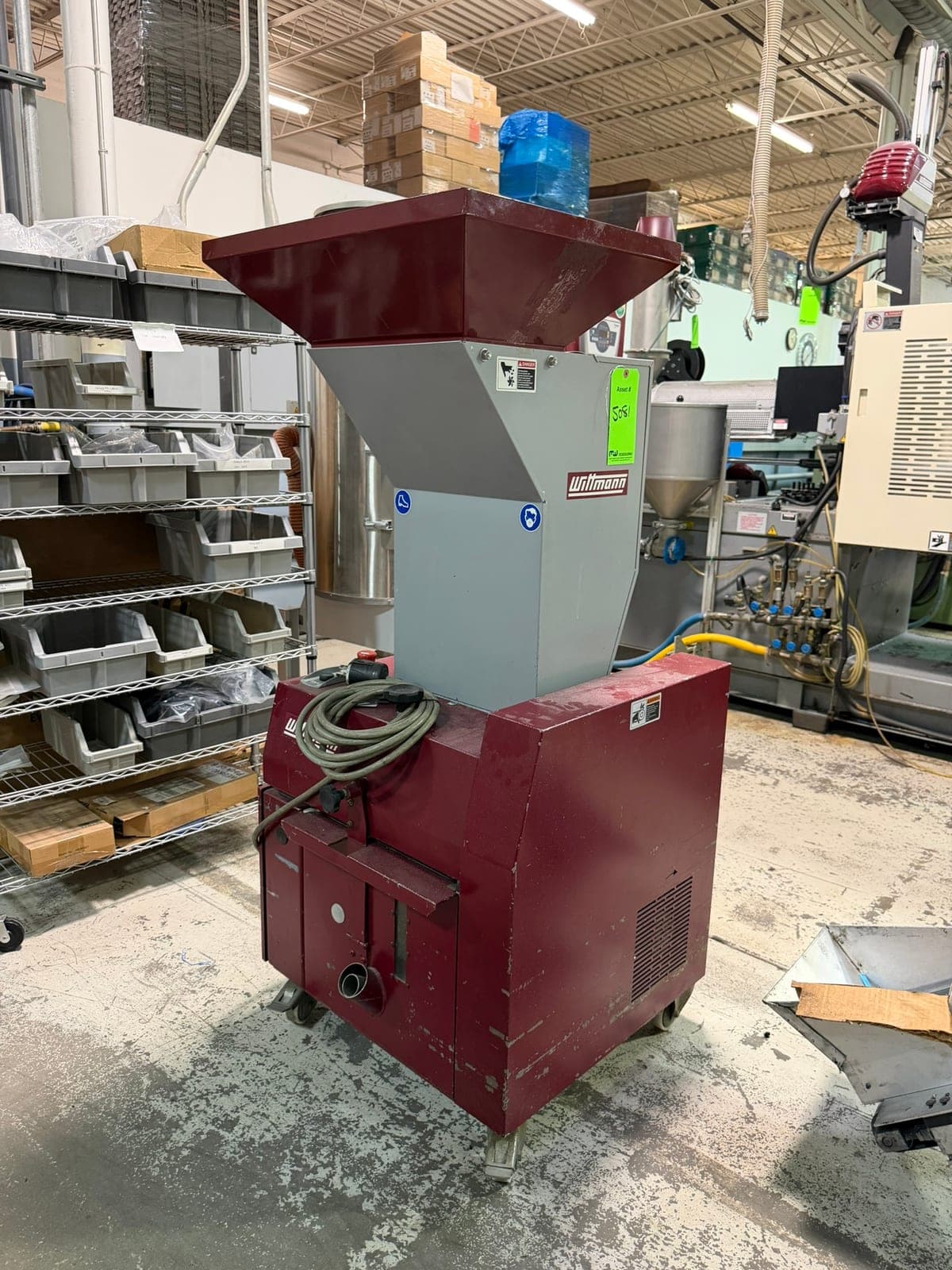
Lot 115
2008 Wittmann Granulator
Naperville, IL
Live auction · Tue, Oct 27, 10:00 AM CT

100 HP Granulator w/ Blower & Cyclone
USA

Rapid - B-18
USA
Looking for Something Specific?
Most of our inventory sells before we can list it online. If you need a specific brand, model, or specification, tell us what you need—we have access to unlisted equipment and machines coming in from plant closures.
Looking to Sell?
Meadoworks is an active cash buyer of used industrial equipment. Get a free valuation from our AMEA-certified appraisers.
About Used Beside-the-Press & Central Granulators
A granulator cuts sprues, runners and reject parts into regrind that can go back into the same molding cell. Rotor knives work against bed knives, and a screen under the chamber sets the chip size. These cutters live next to presses. They are not the heavy shredders that take bales, purgings and bulky scrap on a recycling line. Open rotors run cooler on soft olefins. Staggered or closed rotors carry thicker parts through the cut. Size from pounds of scrap per hour, not from press tonnage.
The small machine under or beside the clamp is usually fed by a sprue picker or by hand, and it keeps one color with one job. The larger machine in the aisle takes scrap from several presses, by conveyor or blower, and one knife set serves the bay. Sound hoods matter on the press floor. Screenless compact cutters, the kind that nip a runner without a perforated screen, are a narrower machine. Horsepower follows throat size. Five horsepower can live on runners. A thick housing needs more rotor mass than that small cutter has. Knife gap, not just a shiny edge, decides whether the cut is clean or a tear.
The cutter sits after the press and before the loader that returns regrind to the hopper. A picker drops the runner in. A blower or a gaylord takes the chips out. Recycling shredders are a different job, and a molding cutter should not eat drums of purge all day. Fines from a dull rotor plug vacuum loaders and melt differently than a clean chip. Keep the discharge clear. A packed line makes a sharp machine look dull.
Plant closures are the usual path for a used granulator onto our floor, because the cutter was bolted into the cell and leaves with the press. Inspection starts with knife gap, screen condition and the rotor bearings, not with a fresh coat of paint. Coordinate the blower and the sound hood when those were part of the same cell. Ask which screen hole was installed. That hole is the chip size you will actually mold.
How to Choose Used Beside-the-Press & Central Granulators
How to Size a Granulator
Weigh an hour of sprues and rejects, and add the shots you expect to scrap on startup. That pounds-per-hour number picks the granulator, not the tonnage of the press. Throat width has to accept the longest runner without a operator cutting it first. A picker-fed machine can be smaller than a conveyor-fed machine eating bulky housings. Horsepower follows the cut. Thin polyethylene runners need less rotor energy than glass-filled nylon parts. Screen hole is a quality choice. A coarser hole raises rate and makes chips the screw may not melt evenly. Leave room for the sound hood and for the bin or blower under the granulator. If several presses share one cutter, size for the hour when they all change jobs together.
Beside-the-Press or Central Granulator
A beside-the-press cutter keeps one job's regrind at that press, which is what you want when colors change often. It is usually lower horsepower, with a small throat and a hopper the picker can reach. A central machine serves a bay. Rate is higher, the screen is easier to standardize, and one set of knives serves many tools. The risk is mixed colors and mixed resins in one bin. Do not send glass-filled parts and clear polycarbonate through the same cutter. Screenless compact cutters are a narrower set, for a runner rather than a bulky part. Screened press-side machines and central machines both belong in this discussion. Recycling shredders are for bulky scrap, not for a runner.
Beside-the-Press & Central Granulators Specs to Compare
| Spec | Typical range | Why it matters |
|---|---|---|
| Cutting chamber (in) | About 8x12 in up to much larger | The throat has to swallow the runner or the part without a person pre-cutting every shot by hand. |
| Motor (hp) | Often 5–30 hp beside a press | Too little horsepower stalls on thick parts, and too much on thin runners just makes heat and fines. |
| Screen hole (in) | Often 1/4 to 3/8 in for molding | Hole size is the chip size the screw will see, and it also sets how fast the chamber clears. |
| Rotor style | Open rotors run cooler on soft scrap, and a heavier rotor carries thick parts through the knives without stalling. | |
| Knife count | Commonly 2 or 3 rotating | More knives can raise throughput, and each one is a gap you have to set and keep sharp. |
| Infeed and voltage | Hand, picker or conveyor feed has to match the cell, and the motor volts have to match the bus at the press. |
Cutting chamber (in)
Typical range: About 8x12 in up to much larger
The throat has to swallow the runner or the part without a person pre-cutting every shot by hand.
Motor (hp)
Typical range: Often 5–30 hp beside a press
Too little horsepower stalls on thick parts, and too much on thin runners just makes heat and fines.
Screen hole (in)
Typical range: Often 1/4 to 3/8 in for molding
Hole size is the chip size the screw will see, and it also sets how fast the chamber clears.
Rotor style
Open rotors run cooler on soft scrap, and a heavier rotor carries thick parts through the knives without stalling.
Knife count
Typical range: Commonly 2 or 3 rotating
More knives can raise throughput, and each one is a gap you have to set and keep sharp.
Infeed and voltage
Hand, picker or conveyor feed has to match the cell, and the motor volts have to match the bus at the press.
What to Inspect on Used Beside-the-Press & Central Granulators
Set and feel knife gap
A wide gap tears and makes fines, and a gap that kisses the bed knife chips edges the first time a hard piece enters.
Inspect the screen
Elongated holes and a cracked screen let longs through, and a plugged screen stalls the rotor and heats the chamber.
Rock the rotor bearings
Play or a growl in the bearings will open the knife gap by itself and can destroy the chamber.
Open the hopper interlock
A defeated switch is a hand injury waiting, and a switch that will not close means the granulator will not start.
Look for metal scars
Bright gouges in the chamber mean a bolt or an insert went through, and the knives are probably chipped.
Check the discharge path
A packed blower line or a bin with no room makes the granulator look dull when the knives are fine.
Read motor volts and amps
Match the plate to the cell, and rising amps on a normal load are the early sign the knives are dull.
Meadoworks Track Record
309
Sold through Meadoworks
7
Listed now
Makes we have handled most
Conair, Rapid, Granutec, Nelmor, Polymer Systems, Cumberland
Common models
Conair NC-614S, Rapid 69-SR, Conair CGW-1418, Granutec 1212LPZ-10, Nelmor 716
Related Equipment
- Beside-the-Press Granulators
Screenless compact cutters, a narrower set
- Plastic Granulators
Heavy recycling machines, a different job
- Sprue Pickers
The arm that drops runners into the cutter
Beside-the-Press & Central Granulators Brands We've Sold
Conair
US auxiliary line with press-side granulators.
Rapid
Swedish granulator maker for press-side and central.
Granutec
US granulator builder for molding regrind.
Nelmor
US granulator brand long paired with molding presses.
Polymer Systems
US granulator maker for molding scrap.
Cumberland
US size-reduction brand on granulators and pelletizers.
Cincinnati Milacron
Press builder that also badged granulators.
Nissui
Common Applications
Frequently Asked Questions
How do I size a granulator for a molding cell?
Weigh the sprues, runners and expected rejects for one hour and pick a granulator that can clear that rate with room to spare. Throat width has to take the longest runner the tool makes. A picker dropping one runner wants a small beside-the-press machine. Bulky housings want a wider chamber or a central granulator and a conveyor. Horsepower follows the material. Glass-filled parts and thick walls need more rotor than polyethylene runners. Choose the screen hole for the chip you can remelt. Press tonnage is not the sizing number.
Beside the press granulator or a central granulator?
A beside-the-press cutter keeps one color and one resin at that machine, which matters when jobs change daily. It is smaller, often picker-fed, and it lives under the clamp. A central machine takes scrap from several presses and usually makes a higher rate with one knife set. It will mix colors if you let it. Use central when the bay runs one resin group and someone owns the bin labels. Use beside the press when regrind must stay with the job. Screenless compact units are a separate, smaller cutter.
What should I inspect on a used granulator?
Open the chamber and check knife gap, not just whether the knives look shiny. A wide gap tears. A zero gap chips. Look at the screen for oval holes and cracks. Rock the rotor for bearing play. Read the chamber walls for metal scars from a screw or an insert. Cycle the hopper interlock so the granulator cannot run open. Confirm volts and look at the blower or the bin under the discharge. Ask for the screen hole that was installed. That hole is the regrind you will mold.
What screen hole should a plastic granulator run?
For most injection runners, a hole around a quarter inch to three eighths is the usual start, and the plastic granulator should still clear the hour of scrap. Smaller holes make a finer chip and more fines, and they cut the rate. Larger holes raise rate and can leave pieces the screw does not melt evenly. Glass-filled resin wears the screen and the knives faster, so plan to look sooner. Match the hole to the virgin pellet only loosely. The screw cares more about consistency than about a perfect match.
Why does a granulator make fines and dust?
Dull knives, a gap that is too wide, or a screen that is too fine. The granulator tears instead of cutting, and the extra passes through the chamber make dust. Heat from a dull rotor makes soft olefin smear and then break into fines. A blower that is too strong can chip pellets again in the line. Set the gap, sharpen or replace knives, and open the screen hole one step before you blame the resin. Fines plug vacuum loaders and they melt differently than chips.
Does a molding granulator replace a recycling shredder?
No. A molding cutter is built for sprues, runners and ordinary reject parts beside a molding cell. A recycling shredder and a heavy cutter take bales, purgings and bulky scrap the press cutter should not see. Forcing drums of purge through a small chamber stalls the rotor and destroys knives. If the scrap is a runner, you want the press-side machine. If the scrap is a gaylord of mixed housings or a purge pile, you want a recycling cutter. The cell and the wash line are different jobs.
