Used Silos & Storage Tanks for Sale
Nothing is listed right now — these are machines we've recently sold. or tell us what you need.
Recently sold
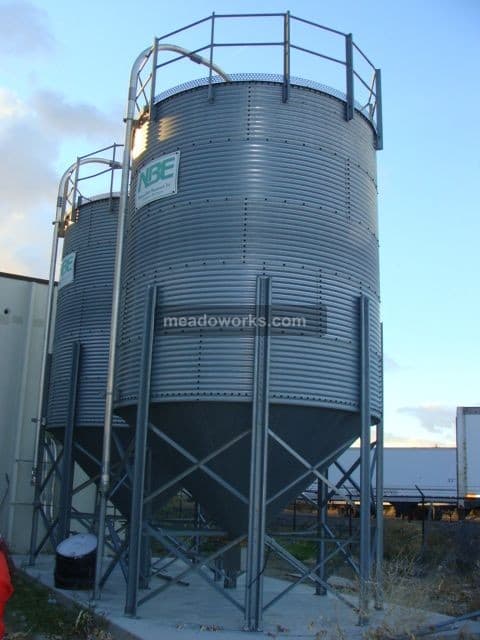 SOLD
SOLD2007 NBE 60,000 LB X 30'
USA
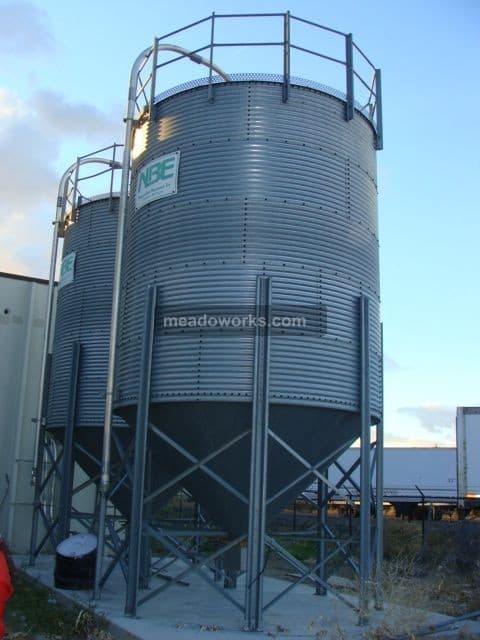 SOLD
SOLD2007 NBE 60,000 LB X 30'
USA
 SOLD
SOLDGSI 90000 lb
USA
 SOLD
SOLDGSI 90000 lb
USA
 SOLD
SOLDGSI 60000 lb
USA
Looking for Something Specific?
Most of our inventory sells before we can list it online. If you need a specific brand, model, or specification, tell us what you need—we have access to unlisted equipment and machines coming in from plant closures.
Looking to Sell?
Meadoworks is an active cash buyer of used industrial equipment. Get a free valuation from our AMEA-certified appraisers.
About Used Silos & Storage Tanks
A resin silo stores plastic pellets above a plant and meters them into a conveying system. It is a vessel, not a dryer and not a gaylord tilter. GSI and NBE are names that repeat. Capacity is in pounds or cubic feet, and the number only means something at the bulk density of the resin you run. A silo rated for a light resin will not hold the same pounds of a filled compound. Cone or funnel bottoms are how the pellets flow. A silo that bridges will look full and starve the line.
Footprint and overall height have to fit the pad and the sky, including the ladder, the cage and the fill line. Skirt height sets where the discharge valve sits relative to the blower or the vacuum takeoff. A valve, an airlock, level sensors and a vent filter are the parts that make it a system. A bare tank without them is storage you cannot fill or empty safely. Venting matters. Filling a silo from a truck blows air in with the pellets, and that air has to leave through a filter or it leaves through the seals.
Structure is the condition. Look at the cone for dents that will hang material, at the skirt for rust at the base, and at the ladder and cage for a way a person can actually climb. A silo that lived outdoors needs the roof and the manway to keep rain out of the resin. Interior coatings, when a resin is abrasive or sticky, are worth asking about. Level sensors that do not work are how you overfill.
A used resin silo should be measured, not just pictured. Confirm capacity at your resin's pounds per cubic foot, the discharge height, and whether the valve, filter and sensors are included. A vessel sized for one resin will bridge on another. Plan the pad and the truck access before you plan the paint. NBE builds discharge equipment as well as vessels. A tilter in the same offering is not a silo. Truck access and a level pad are part of the install, not a later surprise.
How to Choose Used Silos & Storage Tanks
How to Size a Resin Silo
Start with the resin and the pounds you need on site, then the pad. Capacity, diameter and height travel together. A taller vessel stores more on a smaller footprint and needs a foundation, a fill pipe that reaches the top, and truck clearance. The cone has to discharge in funnel flow without bridging. A silo designed for a light pellet is not automatic for a heavier one. Ask whether the valve, the airlock, the level sensors and the vent filter are included. The conveying line under the cone has to match what you will connect. Gaylord tilters are a different machine for a box on the floor. Do not size this vessel as if it were a tilter.
Outdoor Vessels, Not Box Tilters
A resin storage tank in this catalog stands outside and is filled from a truck. GSI and NBE are the names that repeat, with capacities in the tens of thousands of pounds. A gaylord tilter tips a box at floor level and lives on the auxiliary group. Buying a silo when you needed a tilter, or a tilter when you needed a month of pellets outside, wastes the look. Look at the cone, the ladder and the rust. Discharge hardware may have stayed at the last plant. Anchors and the pad are part of putting it back up. The height is a crane and a foundation question, not a forklift question.
Silos & Storage Tanks Specs to Compare
| Spec | Why it matters |
|---|---|
| Capacity | Pounds of resin on site are the reason for the vessel. Match them to your usage. |
| Diameter and height | The pad, the truck and the fill line all have to fit the vessel you buy. |
| Discharge | The cone has to empty the pellet without bridging. A flat bottom is a different machine. |
| Design density | A heavier resin than the design can overload a vessel that looks large enough. |
| Access | Someone has to reach the top safely. Missing access is a real gap. |
| Accessories | They may not be on the vessel. Ask before you count the silo as a system. |
Capacity
Pounds of resin on site are the reason for the vessel. Match them to your usage.
Diameter and height
The pad, the truck and the fill line all have to fit the vessel you buy.
Discharge
The cone has to empty the pellet without bridging. A flat bottom is a different machine.
Design density
A heavier resin than the design can overload a vessel that looks large enough.
Access
Someone has to reach the top safely. Missing access is a real gap.
Accessories
They may not be on the vessel. Ask before you count the silo as a system.
What to Inspect on Used Silos & Storage Tanks
Read pounds and height
Capacity and overall height have to fit the resin and the pad, including truck clearance.
Inspect the cone
Look for rust, dents and a discharge that still opens. Funnel flow depends on that cone.
Ask what hardware stays
Valve, airlock, level sensors and vent filter may have been removed.
Check ladder and cage
Access to the top should be present and not rotted or bent.
Note design density
Confirm the pellet you will store is not heavier than the vessel was built for.
Look at anchors and the skirt
The vessel has to be tied down. A damaged skirt is a foundation problem.
Match the conveying outlet
The pickup under the cone has to meet the line you will connect.
Related Equipment
- Gaylord Tilters
Box tippers, a different job from an outdoor silo
- Resin Dryers
Dry the pellet after it leaves storage
- Conveyors
Move parts, not the bulk resin in the silo
More in Plant & Material Handling
Silos & Storage Tanks Brands We've Sold
Common Applications
Frequently Asked Questions
Is a resin silo the same thing as a gaylord tilter?
No. A resin silo is an outdoor vessel for bulk pellets, filled from a truck and emptied through a cone. A gaylord tilter tips a box at floor level and is on the auxiliary group. GSI and NBE are the silo names that repeat here. Capacity is in the tens of thousands of pounds, and height is part of the same choice. If you need to empty a box beside a press, you are on the wrong group.
How do I size diameter, height and the cone?
Capacity, diameter and height have to fit the pad, the truck and the pounds you use. A taller vessel stores more on a smaller footprint and needs a fill line that reaches the top. The cone should be a funnel flow discharge so pellets do not bridge. Design density matters if your resin is heavier than the one the vessel was built for. Ask about the valve and the airlock. The conveying pickup under the cone has to match your line.
What hardware might be missing from a resin silo?
The discharge valve, an airlock, level sensors and a vent filter are the usual pieces that stay behind or get sold separately. The ladder and cage should still be on the vessel if someone has to reach the top. Photos of the cone tell you more than a shot of the shell. Ask for a list of what is bolted on today. A bare tank can still be the right vessel, and it is not a complete conveying system until those pieces are named.
What should I look for on a vessel that stood outside?
Rust at the cone, the bolts and the skirt. Dents that change the discharge. A ladder or cage that is bent. Anchors and the base that will have to be tied to your pad. The nameplate, if it is still readable, for capacity and design density. These are not indoor machines. A fresh paint job on the shell does not answer the cone. Plan a crane and a foundation, not a forklift and a pallet.
Can I use a resin silo for any pellet?
Only if the design density and the cone suit that pellet. A vessel built for a light resin can be the wrong weight for a heavier one even when the cubic size looks generous. Funnel flow that worked for one pellet can bridge on another. Confirm the resin the vessel stored and compare it with yours. The conveying line and the dryer that follow are separate equipment. The silo only stores.
Where do indoor box tilters live?
On the gaylord tilter group, with the loaders and hoppers. That machine tips a box. This group is the outdoor resin storage tank. Mixing them is easy because both hold pellets and both sit near conveying. The scale is different, the foundation is different, and the fill method is different. Wait for GSI and NBE vessels. Leave for the tilter when the container is a box on a pallet.
