Used Tooling & Workholding for Sale
2 results

Looking for Something Specific?
Most of our inventory sells before we can list it online. If you need a specific brand, model, or specification, tell us what you need—we have access to unlisted equipment and machines coming in from plant closures.
Looking to Sell?
Meadoworks is an active cash buyer of used industrial equipment. Get a free valuation from our AMEA-certified appraisers.
About Used Tooling & Workholding
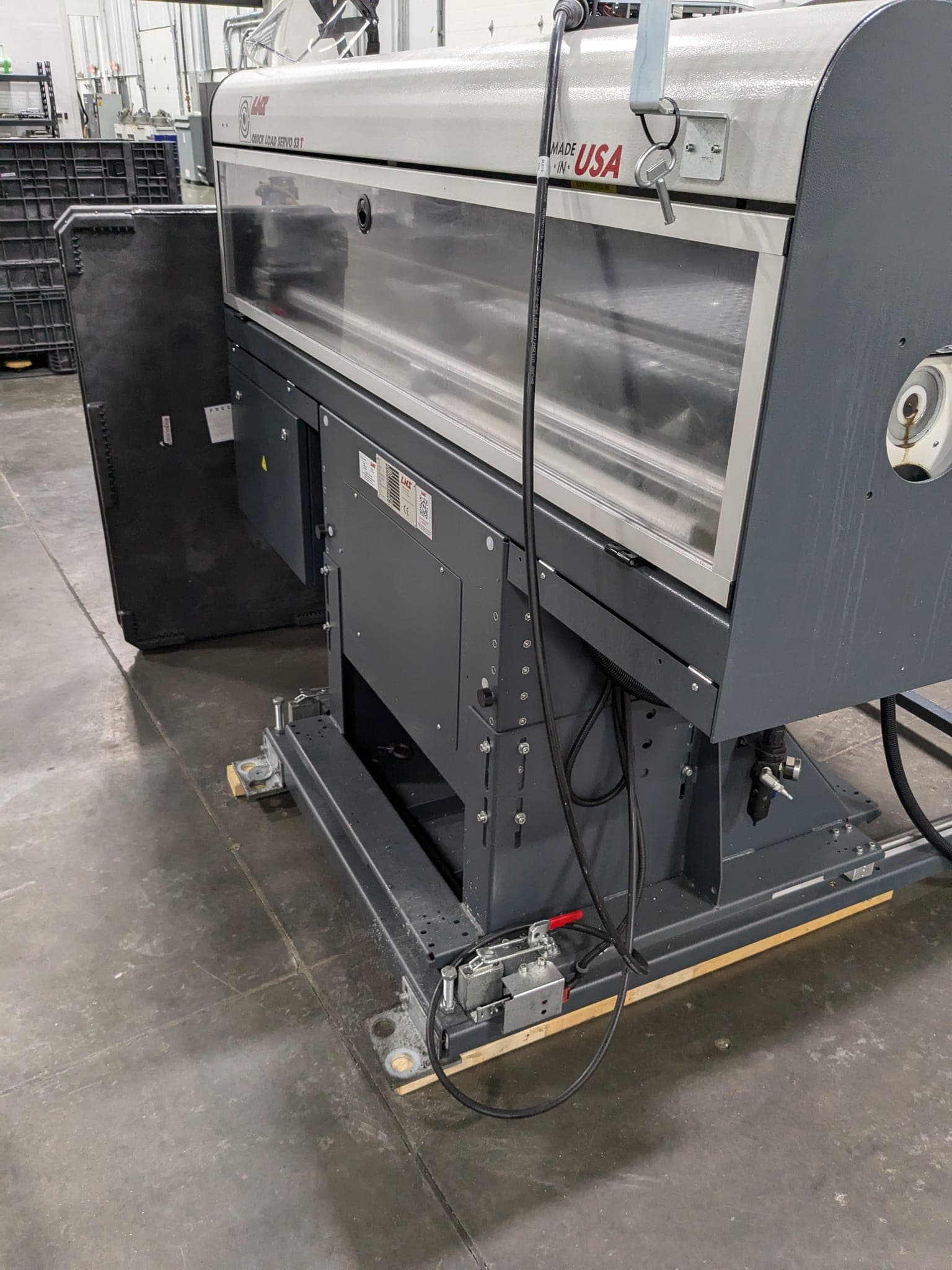
What repeats in this group is the bar feeder, not a drawer of vises. A magazine or a channel pushes bar into a lathe spindle so the next part starts without a person loading a blank. Edge is the make that repeats more than once. A vise, a chuck or a fixture can ride along in a closure, and it is still an accessory for a specific spindle. The machine that matters on this offering is the feeder that keeps a turning center in bar.
Bar diameter is a pair of limits. The feeder channel or the magazine liners have to pass the bar, and the lathe bore has to pass it too. A feeder that will handle 2 inches does nothing for a spindle bored to 1.5 inches. Shape matters. Round bar in a round liner is the simple case. Hex or square needs a liner and a collet that match, or the bar walks and the remnant becomes scrap. Length is the other split. A short magazine holds bars of a few feet. A hydrodynamic channel is built for 12-foot bar and needs the floor behind the lathe to prove it.
The remnant is the stub the feeder cannot use. A long remnant is lost material on every bar. Alignment to the spindle, the pusher or the servo that advances to a stop, and the signal that tells the lathe the bar is in position are the interface. A feeder from a different control era may turn and still never handshake. Voltage and a clean air drop, when the pusher is pneumatic, have to be there.
Liners, pushers and the guide channel wear. A spun liner lets the bar whip. A bent pusher scars the bore of the spindle, which is a much more expensive part than the feeder. Cycle the advance empty and then with a bar. Listen for a whip at speed.
A used bar feeder should be matched to one lathe, not collected as general workholding. Measure the bore, the bar you run and the floor behind the spindle. Confirm the handshake. A pile of vises in the same lot is useful only if you already know the table they fit. Name the lathe first.
How to Choose Used Tooling & Workholding
Workholding vs a Bar Feeder on This group
Workholding clamps a part that is already a piece: a vise on a mill, a chuck on a lathe. A bar feeder does not clamp the finished part. It feeds raw bar into the spindle so the lathe can make the part.
This set is the feeder. Do not shop it for a vise brand that is not here. If the photo is a channel, a magazine and a pusher, you are in the right aisle. Open the bar feeder chip for magazine versus hydrodynamic detail, liner size and remnant length.
How to Size a Bar Feeder
Size the maximum bar diameter and the bar length to the lathe spindle bore and to the parts you run. A bar that will not pass the bore will not be saved by a larger magazine. The liner and the collet have to match that diameter.
Short magazines suit bars already cut to a length. Hydrodynamic channels suit long bars. Remnant length is scrap you should know before you buy. Confirm the lathe control can fire the load signal the feeder expects. Measure the bore before you pick a rack.
Tooling & Workholding Specs to Compare
| Spec | Why it matters |
|---|---|
| Bar diameter | The bar has to fit the feeder and the lathe bore. A larger magazine does not enlarge the bore. |
| Bar length | Short bars live in a magazine. Long bars need support so they do not whip at speed. |
| Spindle liner | The liner guides the bar inside the spindle. The wrong liner lets the bar rattle and marks the stock. |
| Pusher and collet | The pusher advances the bar. A bent pusher or the wrong collet misfeeds and crashes the cutoff. |
| Remnant length | Every bar leaves a remnant. A long remnant is scrap you should count before you like the rate. |
| Lathe interface | The feeder has to talk to the lathe and sit on center. A misaligned channel wears the liner and the collet. |
Bar diameter
The bar has to fit the feeder and the lathe bore. A larger magazine does not enlarge the bore.
Bar length
Short bars live in a magazine. Long bars need support so they do not whip at speed.
Spindle liner
The liner guides the bar inside the spindle. The wrong liner lets the bar rattle and marks the stock.
Pusher and collet
The pusher advances the bar. A bent pusher or the wrong collet misfeeds and crashes the cutoff.
Remnant length
Every bar leaves a remnant. A long remnant is scrap you should count before you like the rate.
Lathe interface
The feeder has to talk to the lathe and sit on center. A misaligned channel wears the liner and the collet.
What to Inspect on Used Tooling & Workholding
Push a sample bar
The bar should advance smoothly and stop where the lathe expects it. A dead pusher is not a software quirk.
Measure bar diameter
Compare the channel, the collet and the lathe bore with the bar you actually run.
Inspect the liner
A worn or missing spindle liner lets the bar whip inside the headstock and marks the stock.
Check magazine or channel
Short-bar magazines and oil channels fail differently. Look at the style you need, not a generic frame.
Feel alignment to the spindle
The feeder has to sit on center with the lathe. A crooked mount wears the collet and the liner.
Ask about the remnant
Know how much stub is left. A long remnant changes the economics of every bar you load.
Confirm the load signal
The lathe and the feeder have to agree when to load. A missing interface is a controls job.
Related Equipment
- Bar Feeders
Magazine and hydrodynamic feeders in detail
- Lathes & Turning Centers
The CNC lathe a feeder has to serve
- Additional Equipment
The rest of the surrounding plant gear
Tooling & Workholding Brands We've Sold
Common Applications
Frequently Asked Questions
How do I choose a bar feeder for a CNC lathe?
Match the largest bar diameter to the lathe spindle bore and to the channel, then match bar length to a short magazine or a long supported channel. The liner and the collet have to fit that diameter. The lathe has to be able to call for a new bar. A feeder with no lathe in the plan is a corner full of channel. Open the dedicated chip for the magazine versus hydrodynamic comparison. This group is the map that says the machines listed here are feeders, not a vise aisle.
What should I inspect on a used bar feeder?
Push a bar. The pusher should advance it smoothly and the collet should grip the size you run. Look through the spindle liner for wear, and sight the channel against the headstock so the mount is on center. Ask how long the remnant is. A bent pusher or a chewed liner appears as misfeeds and marked stock. Confirm the load signal the lathe expects is still on the feeder. A frame that only looks straight has not fed a bar.
What workholding is this group besides a bar feeder?
In principle, vises, chucks and collets. In the listings, the machines are bar feeders. There is not a vise brand to name, and inventing one would mislead a buyer who needs a milling vise. Treat workholding as the neighboring idea: something has to hold the part, and on a bar lathe the feeder is what presents the material. If your photo is a channel and a magazine, wait and then open the chip. If your photo is a vise, you are in a different look.
Short magazine or hydrodynamic: which bar feeder fits?
A short magazine fits bars that are already cut to a manageable length and loaded beside the spindle. A hydrodynamic feeder supports a long bar on oil so it can spin without whipping. The lathe bore still has to pass the bar either way. The chip group goes further into remnant length and liners. Use this overview to know both exist, then size diameter before you argue about oil versus a magazine rack. A long bar in a short magazine is the wrong pairing.
Which lathe spindle bore matches a bar feeder?
The bore has to be larger than the bar, with a liner that guides that bar, or the feeder is pushing stock the headstock cannot accept. Measure the bore, the liner and the bar together. A feeder rated for a larger bar does not drill your spindle. Alignment matters as much as diameter. A channel that sits off center wears the liner and marks the stock even when the bar fits on paper. Bring the lathe drawing or the spindle spec when you look at the feeder.
Where is the dedicated group for a bar feeder?
On the bar feeder chip linked from this group. That group is the one that stays on magazine and hydrodynamic feeders, liners and remnants, without the workholding preface. This group exists so a buyer who landed on tooling and workholding can see that the machines in the set are feeders and can leave for the chip. Do not expect a vise comparison there. Do not expect this overview to repeat the chip paragraph. Pick the lathe, then the feeder, then the chip.
