Used Plate Rolls for Sale
2 results
Looking for Something Specific?
Most of our inventory sells before we can list it online. If you need a specific brand, model, or specification, tell us what you need—we have access to unlisted equipment and machines coming in from plant closures.
Looking to Sell?
Meadoworks is an active cash buyer of used industrial equipment. Get a free valuation from our AMEA-certified appraisers.
About Used Plate Rolls
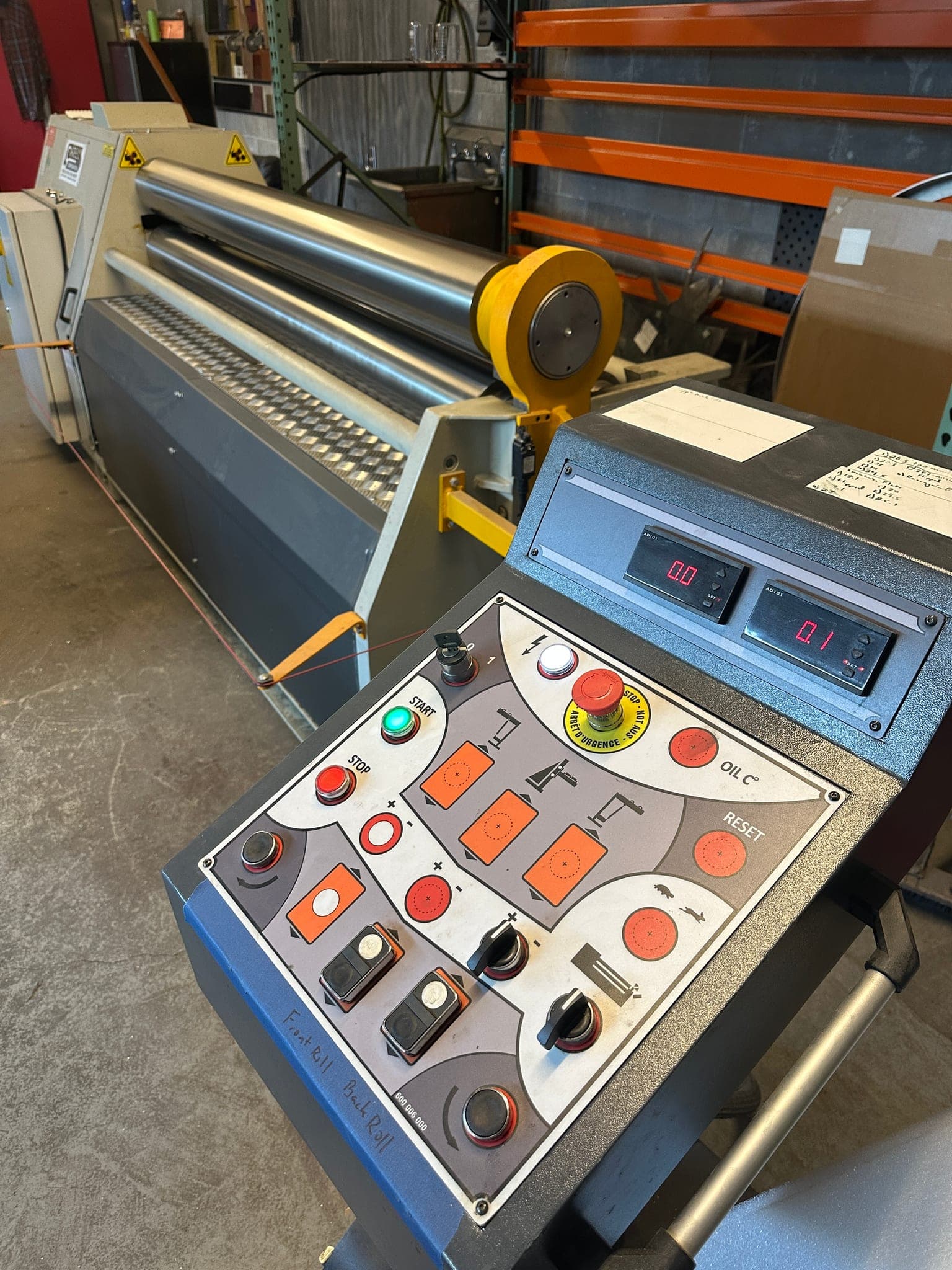
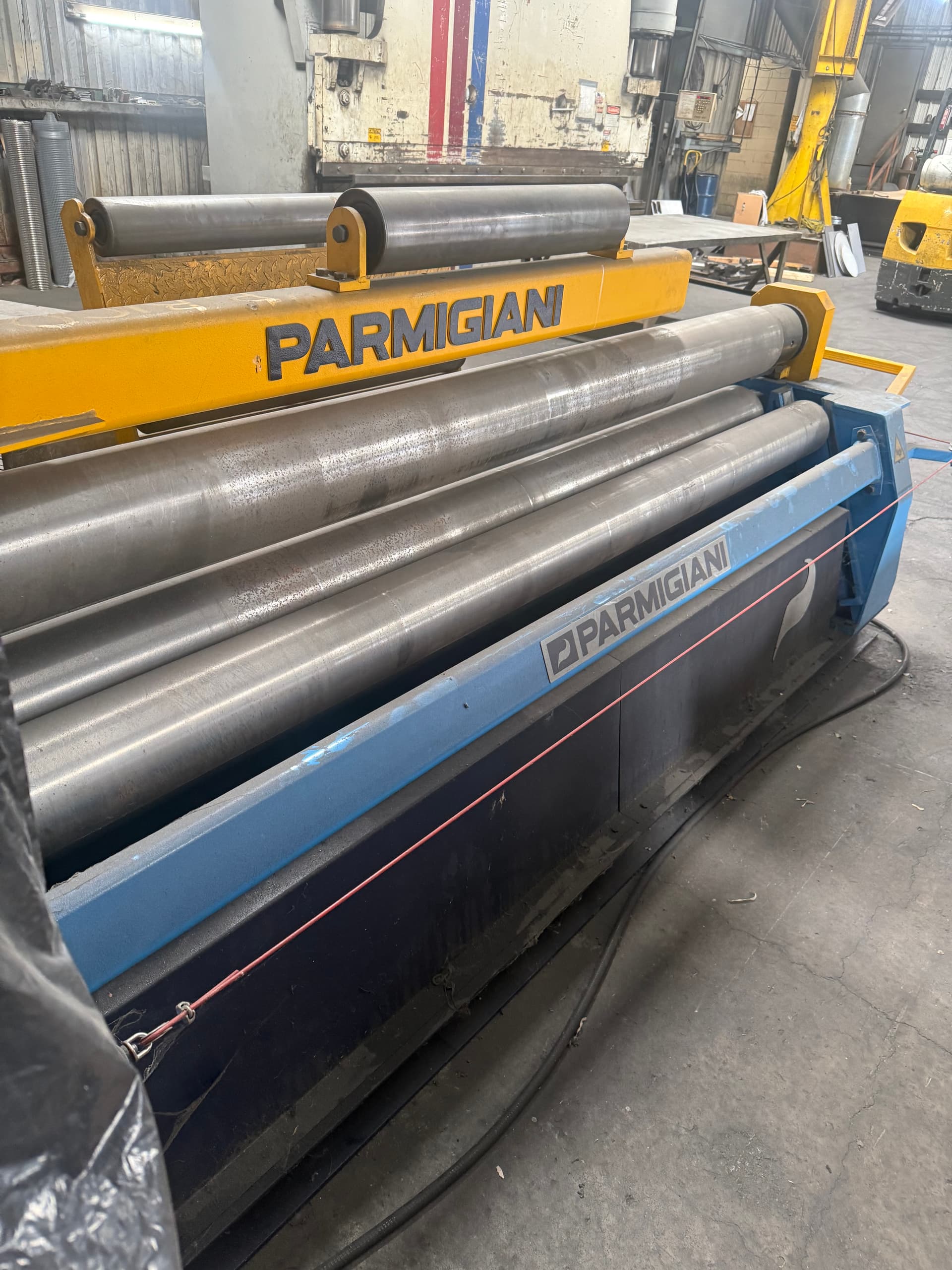
Flat plate becomes a cylinder, a cone, or a tank shell by passing between powered rolls, one plate at a time. A plate roll is not a roll former. A former pulls coil through a row of stands and leaves a long profile with one cross-section. It is also not a press brake, which flanges sheet rather than wrapping it into a closed shell. The layout in front of you is either three rolls or four, and those layouts do not treat the leading edge the same way. A variable-geometry three-roll moves the top roll up and down and the side rolls in and out. A skilled operator can get a very short flat. A four-roll pinches the plate with a lower roll so both ends can be pre-bent without pulling the plate out and turning it around.
Read capacity as thickness by width at a stated yield, usually mild steel. A stronger alloy, or a wider plate than the chart, will not make the diameter you want just because you take another pass. Pre-bending the edge takes more force than rolling the body, so the pre-bend figure is the one that decides whether the seam closes clean. Top-roll diameter sets how tight a cylinder you can wrap, because the plate has to follow that roll. Rolling width has to clear the plate with room at the end frames. Two machines with the same width and thickness and different roll diameters are not the same machine.
Cones need one end of the plate to travel farther than the other, usually by tilting a roll. Parallel rolls make cylinders. They do not gradually become cones because someone leaned on one side. Several passes are normal: the first starts the curve and later passes tighten it. Light rolls on a wide, thick plate deflect and leave a barrel. Side supports, when the shell is large, keep a heavy cylinder from dropping as the diameter closes. Pinch has to be even left and right, or the plate walks. A double-pinch three-roll sits between the simple initial-pinch machine and a true four-roll, so count the rolls and ask how the ends are formed.
A used plate roll should be run empty and then with a scrap strip, so a gearbox, a bearing, or a clutch that slips under a real bite can be heard. Roll faces with deep scores will print into every shell. Hydraulic drops should move together, not one end first. Meadoworks brings bending rolls out of tank shops and fab closures, apart from presses and brakes. Bring thickness, width, yield, and the finished diameter. A chart that misses that set will not be saved by a slower pass, and the base plus the rolls want a planned lift.
How to Choose a Used Plate Roll
Three-Roll or Four-Roll
A three-roll, especially an initial-pinch machine, is the simpler cylinder bender. Plan on a flat at the leading end unless you pre-bend that end first. A four-roll pinches the plate and uses the side rolls to pre-bend both ends without turning the plate around, which matters when the seam has to close.
Double-pinch three-roll geometry sits between those ideas and can pre-bend both ends with more handling. Ask which geometry you are actually looking at. A photo of three rolls is not a full specification. Variable geometry, with the top roll moving vertically, can get a very short flat in skilled hands. The pre-bend rating, not the rolling rating, decides the seam.
Thickness, Width, and Diameter on a Plate Roll
Read capacity as thickness by width at a yield strength. A stronger alloy or a greater width than the chart is a different machine, not a slower pass. Top-roll diameter limits how tight the cylinder can be. Rolling width has to clear the plate plus a margin at the frames.
Cones need tilt or a cone attachment. Cylinders do not. If the product is a long constant profile from coil, you want a roll former. If the product is one shell from one plate, bring thickness, width, yield, and the finished diameter. Two charts with the same width and a different roll diameter are not duplicates.
Plate Roll Specs to Compare
| Spec | Typical range | Why it matters |
|---|---|---|
| Roll layout | 3-roll initial pinch, double pinch, or 4-roll | Layout decides whether both ends can be pre-bent in the machine or the leading edge stays flat. |
| Capacity | A chart written for mild steel will not roll the same thickness in a stronger plate at the same width. | |
| Top-roll diameter | The plate wraps the roll. A large roll will not make a small-diameter shell, whatever the width. | |
| Rolling width | The shell has to fit between the end frames with room so the plate is not riding the housings. | |
| Cone capability | Parallel rolls make cylinders. Cones need one end of the plate to travel farther than the other. | |
| Pinch and drop adjustment | If one side pinches harder, the plate walks during the pass and the shell will not close. |
Roll layout
Typical range: 3-roll initial pinch, double pinch, or 4-roll
Layout decides whether both ends can be pre-bent in the machine or the leading edge stays flat.
Capacity
A chart written for mild steel will not roll the same thickness in a stronger plate at the same width.
Top-roll diameter
The plate wraps the roll. A large roll will not make a small-diameter shell, whatever the width.
Rolling width
The shell has to fit between the end frames with room so the plate is not riding the housings.
Cone capability
Parallel rolls make cylinders. Cones need one end of the plate to travel farther than the other.
Pinch and drop adjustment
If one side pinches harder, the plate walks during the pass and the shell will not close.
What to Inspect on a Used Plate Roll
Identify 3-roll or 4-roll
Count the rolls and ask how the ends are pre-bent. A three-roll photo can still be a double-pinch geometry.
Compare the capacity chart
Match thickness, width, and yield to your plate. Do not assume a slower pass fixes an undersized roll.
Measure the top roll
Diameter limits the tightest cylinder. Scores in the roll face will print into the shell.
Run a scrap strip
Listen for gearbox noise, a rough bearing, and a clutch or brake that slips under a real bite.
Watch both ends of the pinch
The adjustment should move evenly. A plate that walks sideways is a pinch or a tilt problem.
Check cone tilt if you need cones
If the rolls only stay parallel, budget a different machine or a real cone attachment.
Inspect hydraulics and frames
Look for leaks at the drop cylinders and for cracks at the end frames where the rolls are supported.
Related Equipment
- Hydraulic Presses
Force frames for forming, not for rolling a cylinder
- Roll Forming Machines
Continuous profiles from coil, not one plate at a time
- Press Brakes
Flanges and bends in sheet, not a rolled shell
Common Applications
Frequently Asked Questions
What is the difference between a 3-roll and a 4-roll plate roll?
A three-roll machine, often initial pinch, bends the plate between rolls and commonly leaves a flat at the leading end unless you pre-bend that end first. A four-roll pinches the plate and can pre-bend both ends without removing the plate and turning it around. Double-pinch three-roll geometry sits between them. Counting rolls in a photo does not tell you the geometry. Ask how the ends are formed. That answer decides whether the seam closes cleanly.
Can a plate roll pre-bend the ends of a cylinder?
Some can, in the machine. A four-roll and many double-pinch three-rolls pre-bend both ends so the flat is short enough to close. A plain initial-pinch three-roll often needs the leading end pre-bent as a separate step, sometimes in the same machine with extra handling. If your weld seam cannot tolerate a long flat, do not buy the simpler layout and hope a slower pass fixes it. Ask for a demonstration on your thickness.
How do I match thickness and width to a plate roll?
Read the chart as thickness by width at a yield strength, usually mild steel. Your plate has to sit inside that box, and a stronger alloy reduces the thickness you can roll at the same width. Rolling width also has to clear the frames. Top-roll diameter then limits how tight the cylinder can be. Bring those three facts. A machine that is wide enough and too light, or tight enough and too narrow, is still the wrong plate roll.
What does a cone setup change on a plate roll?
It lets one end of the plate travel farther than the other, usually by tilting a roll or by using a cone attachment. Parallel rolls make cylinders. They do not gradually make cones because you leaned on one side. If cones are the product, confirm the tilt actually works and that the capacity still covers your thickness at the wide end. If you only roll cylinders, you can ignore the cone hardware and spend your attention on pinch and roll condition.
What should I listen for in the drive of a plate roll?
Roll a scrap strip, not only an empty machine. A growl in the gearbox, a rough bearing, or a clutch that slips once the rolls bite is the expensive noise. Watch whether both ends of the pinch move together so the plate does not walk. Look at the roll faces for scores that will telegraph into the shell. Hydraulic leaks at the drop cylinders matter on machines that position the rolls that way. A quiet empty roll can still fail under plate.
Is a plate roll the same machine as a roll former?
No. One bends a single plate into a curve, usually a cylinder or a cone, and then you weld the seam. A roll former pulls coil through a line of stands and produces a long part with one cross-section. The shared word is the trap. Thickness and width against a bending chart belong with the plate machine. A continuous profile from coil belongs with the former. Buying one because the other was unavailable will not make the part, and a slower pass will not turn a profile into a shell.
