Used Gantry & Bridge Mills for Sale
2 results
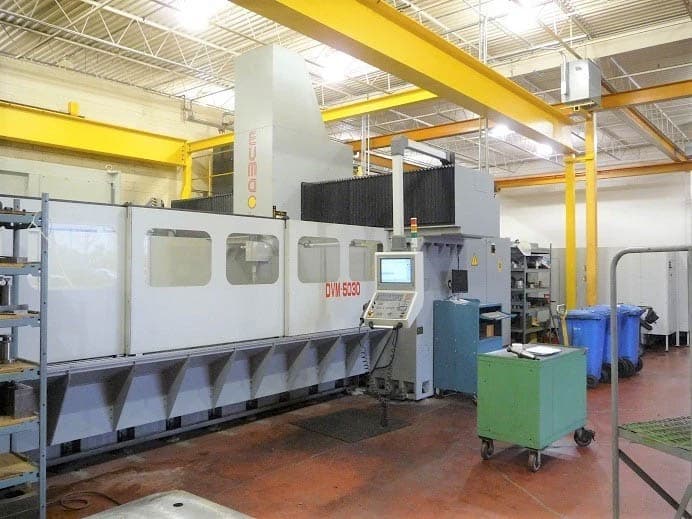
Eumach DVM 5030 5-Axis CNC Gantry Machining Center
Canada
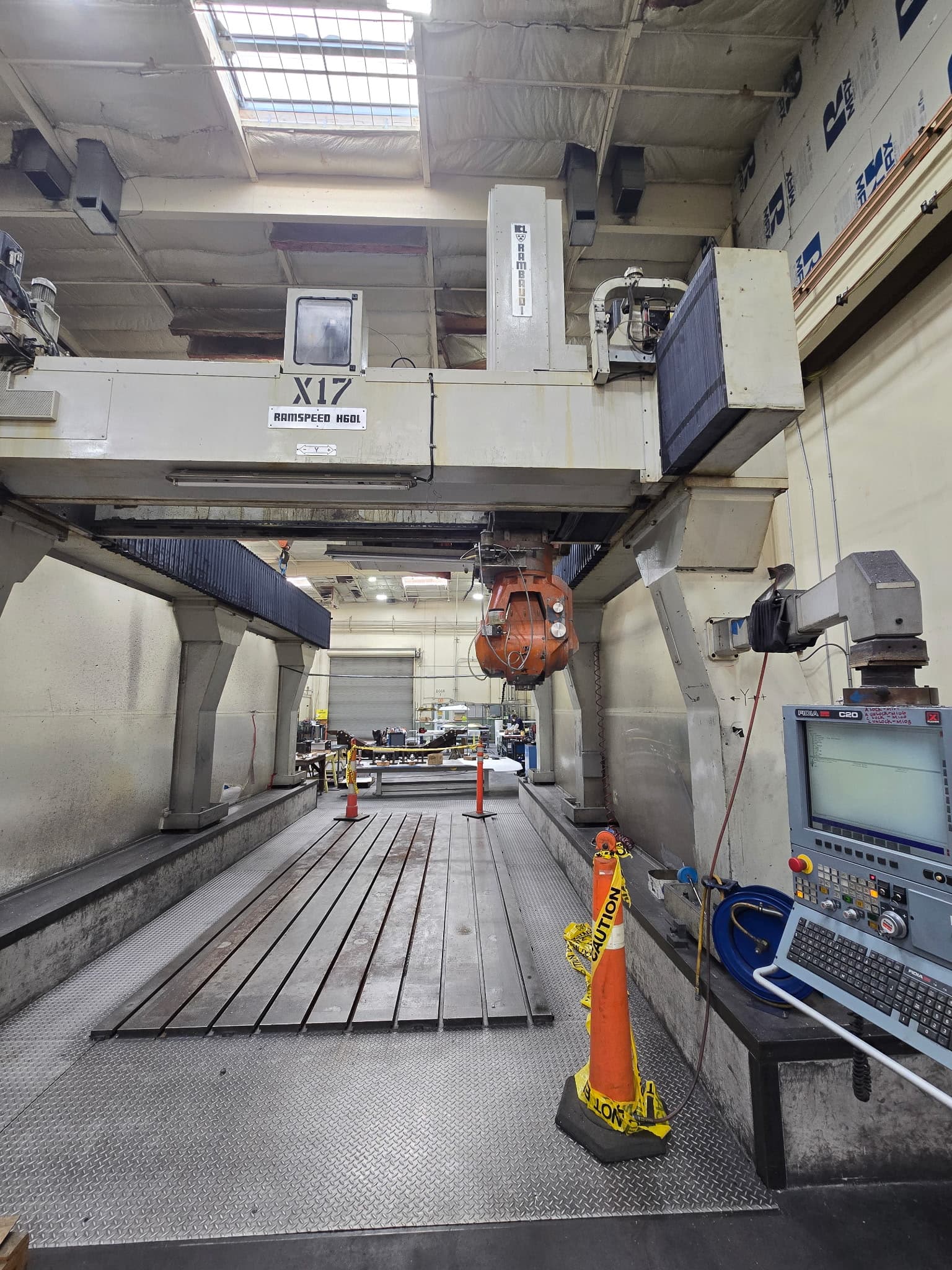
Rambaudi Ramspeed H60L 5-Axis CNC Gantry Mill
USA
Looking for Something Specific?
Most of our inventory sells before we can list it online. If you need a specific brand, model, or specification, tell us what you need—we have access to unlisted equipment and machines coming in from plant closures.
Looking to Sell?
Meadoworks is an active cash buyer of used industrial equipment. Get a free valuation from our AMEA-certified appraisers.
About Used Gantry & Bridge Mills
A gantry mill carries the spindle on a bridge over a long table, or it moves the table under a fixed bridge. The point is a plate, a weldment or a mold base that will not fit a knee or a vertical machining center. Travel along the length is the spec that matters first. Travel across the bridge is the width. Height under the spindle, with the head at the top of its range, is the part plus the tool plus the fixture. A three-axis bridge faces and bores. A five-axis head on the same bridge reaches angled faces. Those are different heads on a similar frame.
The table has to carry the weight and has to be long enough that you are not repositioning a plate in the middle of a tolerance. Some machines move the gantry and leave the plate still, which is kinder to a very heavy weldment. Others move the table. Know which motion you are buying, because the foundation and the floor loading follow it. Spindle taper and power have to match the facing cutter you will use. A light high-rpm head will not slab a steel plate. A heavy geared head will not finish a small pocket the way a mold machine will.
Square is the condition. A bridge that is out of square cuts a taper along a long face, and no cutter will program that away if the geometry is bent. Ways or a rack on a long axis wear in the middle of the most-used travel. Backlash there reads as a mismatch when a pass reverses. The head should tram. A nodding head on a long reach is a loose way or a tired bearing.
A used gantry mill should be indicated along the travel you will actually use, not only at the ends. Run the spindle. Move the full length and listen for a tight spot. Measure the plate you weld or machine against the travels and the height under the spindle. Confirm the taper and whether a right-angle head, if you need one, is included. This is a big-piece machine. A knee in the same shop does not become one because the part got longer. Anchors and a level bed matter more here than they do on a machine you can push into a corner.
How to Choose Used Gantry & Bridge Mills
Moving Bridge vs Moving Table Gantry Mill
On a moving-bridge machine the table stays put and the bridge travels. That suits a very heavy plate you do not want to accelerate. On a moving-table machine the bridge is fixed and the table carries the work. That can be simpler and it still has to be long enough.
Either way the bridge has to be square and the foundation has to hold it. Read which mass moves before you plan the pit or the anchors. A photo of a bridge does not tell you which half travels. Watch one axis move before you design the anchors.
How to Size a Gantry Mill
Size X to the length of the plate, Y to the width the bridge must reach, and Z to the height of the part under the spindle, including fixtures. Five-axis only if a face is not square to the spindle.
Spindle taper and power have to match the facing cutter. Leave room to load the plate with a crane or a fork. A control that boots is not a size. The iron and the foundation are the size. Leave crane room for the plate you will actually cut here too.
Gantry & Bridge Mills Specs to Compare
| Spec | Why it matters |
|---|---|
| X travel | The long axis has to clear the part. A bridge that is short of the plate leaves an uncut end. |
| Y travel | Width under the bridge has to cover the plate. A narrow gantry will not face the full part. |
| Z and head | Z has to clear the part. A tilting head is only useful when a face is not square to the spindle. |
| Which mass moves | A heavy plate often wants a moving bridge. Know which half moves before you design the foundation. |
| Spindle power | A light spindle on a large face stalls. Power and taper have to fit the cutter you will hang. |
| Foundation | An out-of-square bridge cuts a taper across a plate. The floor has to hold the geometry. |
X travel
The long axis has to clear the part. A bridge that is short of the plate leaves an uncut end.
Y travel
Width under the bridge has to cover the plate. A narrow gantry will not face the full part.
Z and head
Z has to clear the part. A tilting head is only useful when a face is not square to the spindle.
Which mass moves
A heavy plate often wants a moving bridge. Know which half moves before you design the foundation.
Spindle power
A light spindle on a large face stalls. Power and taper have to fit the cutter you will hang.
Foundation
An out-of-square bridge cuts a taper across a plate. The floor has to hold the geometry.
What to Inspect on Used Gantry & Bridge Mills
Move every axis
Command or jog X, Y and Z. A bridge that stalls at one end has a drive or a way problem.
Check the bridge square
Indicate across the travel. A bridge out of square machines a taper you cannot fixture out.
Read the travels
Compare X, Y and Z with the plate and the fixture. A brochure number the axis cannot reach is not travel.
Identify which mass moves
Confirm the bridge or the table is the moving half. The foundation plan depends on that.
Run the spindle
Listen through the speed range. A growl on a large spindle is a bearing job you should hear now.
Boot the control
The control should come up and move an axis. A dark screen on a large machine is not a small repair.
Plan the lift
The bridge is a heavy move. Confirm the seller's floor and your floor can both take the rigging.
Related Equipment
- Machining Centers
A VMC when the plate fits a smaller machine
- Knee Mills
A knee when the part is toolroom size
- Mills & Drills
Manual mills and drills for smaller work
Common Applications
Frequently Asked Questions
How do I size a gantry mill for plate size?
X has to clear the length, Y has to clear the width under the bridge, and Z has to clear the part and the fixture. Five-axis is a separate question, only if a face is not presented square to the spindle. Spindle taper and power have to match the facing cutter. Know whether the bridge or the table moves, because that changes the foundation. Leave a way to load the plate. A control that looks modern does not add travel the iron does not have.
What should I inspect on a used gantry mill?
Move every axis and indicate the bridge. Out of square is a taper across the plate. Listen to the spindle. Boot the control and command a move. Read the real travels against your plate, not a brochure. Confirm which mass moves so the foundation plan is honest. Look at way covers and drives at the ends of travel, where crashes hide. Rigging is part of the inspection, because a bridge you cannot lift is not a purchase. A machine that only jogs one axis has not shown you the square.
How is a gantry mill different from a knee mill?
A knee mill lifts a small table on a knee under a ram. A gantry mill puts a bridge over a large plate. The work on a gantry is the part that will not fit the knee. Foundation, travels and rigging are in another class. Buying a knee mill for a machine base will not reach. Buying a gantry mill for a bracket is a waste of floor. If the part fits a knee, stay on the knee mill group.
Moving bridge or moving table: which gantry mill fits?
A moving bridge leaves a heavy plate still and moves the structure around it. That is the usual choice when the work is massive. A moving table carries the work under a fixed bridge and can be simpler when the plate is not enormous. Both still have to be square, and both still need a foundation that holds that square. Read the layout before you design anchors or a pit. A photo of a bridge does not say which half travels. Ask, and watch an axis move.
What does five-axis mean on a gantry mill?
The spindle can tilt, so a face that is not square to the bridge can be reached without refixturing the plate. It is not a substitute for travels that are too short. If every face you cut is presented from above, a three-axis gantry mill is the simpler machine. If you must reach a side of a large weldment in one setup, the tilting head earns its keep. The head has to indicate true, and the control has to know the pivot.
Which foundation does a gantry mill need?
One that keeps the bridge square under the moving mass, anchored the way the builder specified. A floor that flexes cuts a taper. Know whether the bridge or the table moves before you pour or before you set anchors. The ceiling and the crane have to load the plate and, later, service the machine. Rigging the bridge in is part of the foundation plan, not a detail after the sale. If your floor cannot hold the geometry, the travels on the plate do not matter.
