Used Lifts & Work Platforms for Sale
2 results
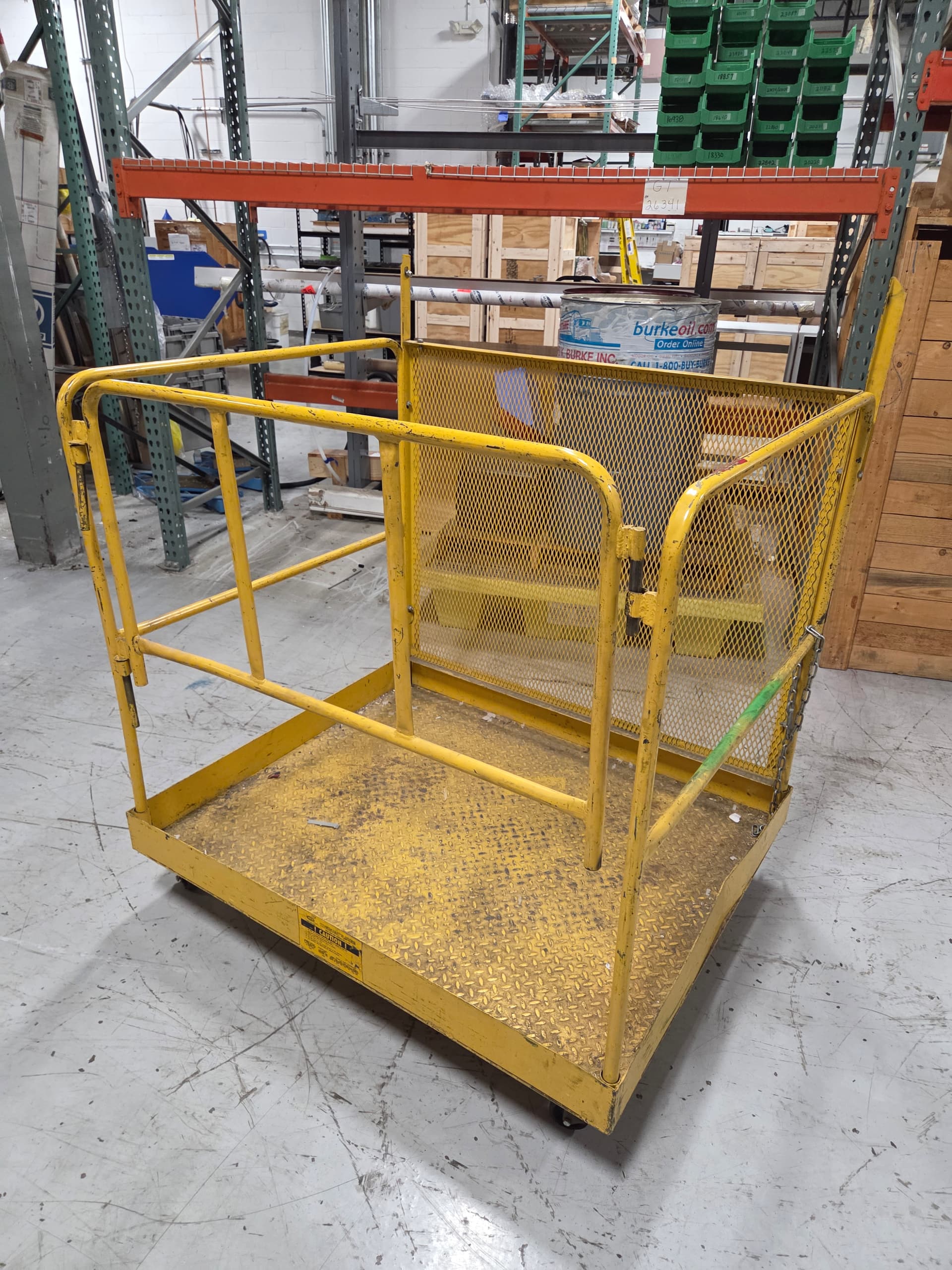
Lot 18
Meco Forklift Maintenance Platform Lift
Wilmington, MA
Ends Tue, Oct 13, 10:00 AM CT
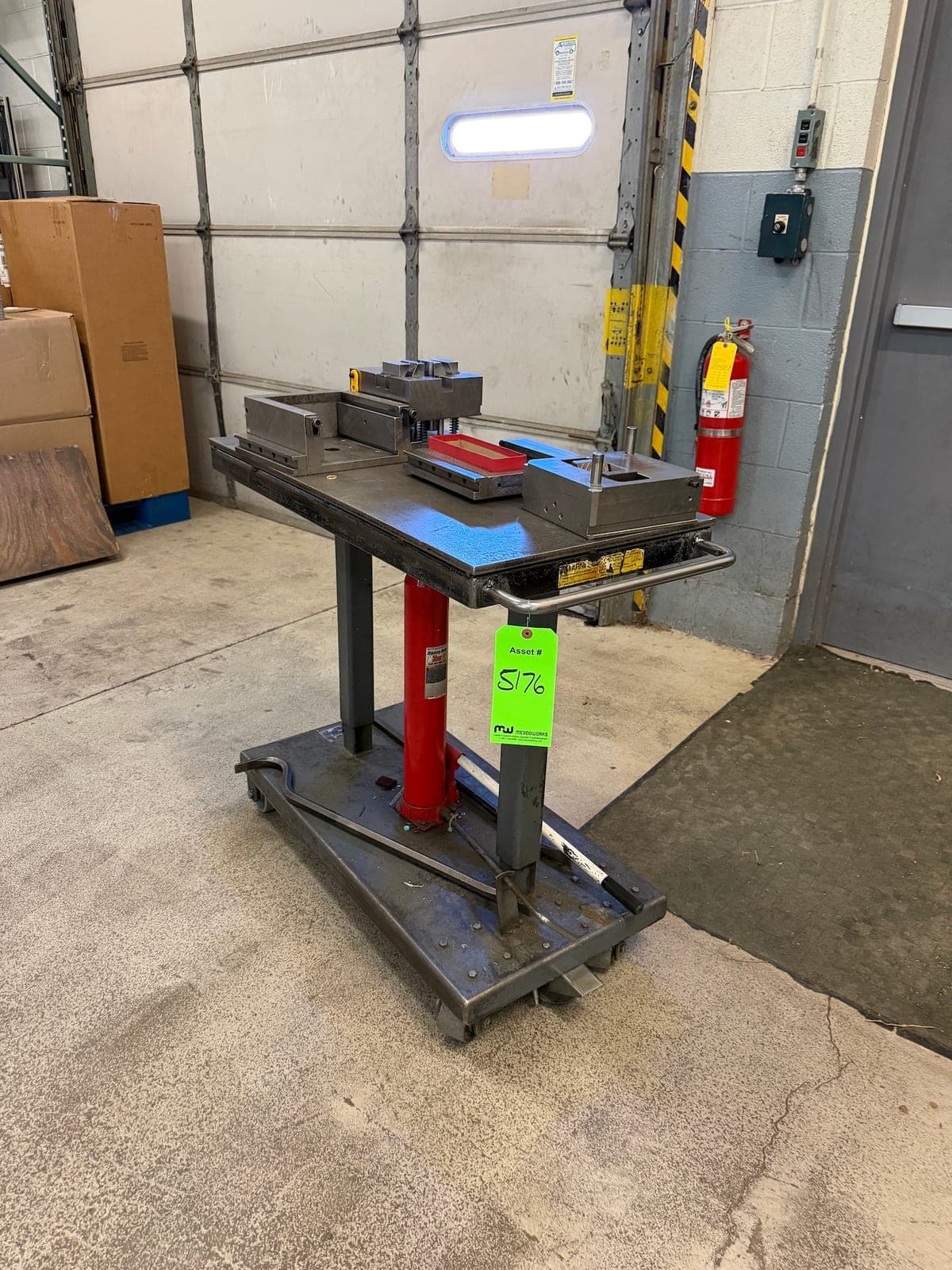
Lot 157
Esco 1,000 lb Mobile Hydraulic Lift Table
Naperville, IL
Live auction · Tue, Oct 27, 10:00 AM CT
Looking for Something Specific?
Most of our inventory sells before we can list it online. If you need a specific brand, model, or specification, tell us what you need—we have access to unlisted equipment and machines coming in from plant closures.
Looking to Sell?
Meadoworks is an active cash buyer of used industrial equipment. Get a free valuation from our AMEA-certified appraisers.
About Used Lifts & Work Platforms
Height is the only thing these machines share. A lift table raises a load on a deck. A forklift maintenance platform holds a truck so someone can work on it. A vehicle lift raises a car or a light truck on arms or a runway. A capacity number does not transfer from one to the next. Sort the title before you compare anything else. The industrial deck is the usual piece, foot pedal or powered. Southworth's LS series, a hydraulic scissor deck used at a bench or a press, is rated from 2,000 to 12,000 pounds and can raise a platform as high as about 94 inches, with tops up to about 60 by 156 inches. The post lift is a service-bay machine. The maintenance platform is shaped for one kind of truck.
Collapsed height and raised height are the numbers a title skips on a deck. A low collapsed height is what lets a pallet jack roll on. Many ordinary decks sit high enough, even when fully lowered, that they need a forklift to load. Travel is raised height minus collapsed height, not the photo. Platform length and width have to hold the skid. Capacity is the centered load. Southworth's warning on its heavy-duty decks is to place the load in the center and not to exceed the rating on the platform skirt. An off-center skid is a smaller number than the tag. Those heavy-duty frames collapse to about 13 inches and are built up to 25,000 pounds. Do not read that rating onto a service-bay post lift, and do not read a truck weight onto a scissor deck.
Power may be a foot pump, a 115 volt plug or a three-phase motor. The same maker's decals cover 115 volt single phase and 208, 230 and 460 volt three phase. Toe guards and a maintenance prop are the safety pieces people remove and then forget. A velocity fuse, where fitted, keeps the deck from dropping if a hose is cut. A vehicle lift needs locks, arms and usually floor anchors. A deck does not have those parts. Wheels on a mobile deck have to lock or the platform walks while you work.
Buying a used lift table means matching travel, platform size and capacity to the load, or matching a vehicle lift to the truck. A deck from a closure was usually at one bench or one die station. Meadoworks carries these machines from plant closures, consignments and auctions. Buyers can cycle the hydraulics and measure both heights. Photos should show the top, the collapsed position and the tag. A maintenance platform sold beside a scissor deck is its own tool.
How to Choose Used Lifts & Work Platforms
How to Size a Lift Table
Decide which machine you are buying before you size it. A hydraulic lift table needs a collapsed height low enough for your pallet jack or die cart, a raised height that meets the bench or the machine, and a platform that holds the skid. Capacity is the centered load. A load at the edge is a smaller number. Power may be a foot pump, a 115 volt plug or a three-phase motor. A vehicle lift is sized by the truck weight and the post height, not by a table top. A forklift maintenance platform is sized by the truck it must support. Using one rating method for all three will pick the wrong listing.
Tables, Maintenance Platforms and Vehicle Lifts
These machines share a job of changing height and not much else. A lift table changes the height of a load you roll or set onto a deck. A forklift maintenance platform holds a truck so someone can work under or around it. A vehicle lift raises a car or a light truck on arms or a runway, and it needs locks, anchors and a floor that can take the posts. Scissor-style decks are common in the first group and are not the whole set. Read the title for which of the three you are looking at, then apply the dimensions that belong to that machine. A capacity number alone will not tell you.
Lifts & Work Platforms Specs to Compare
| Spec | Typical range | Why it matters |
|---|---|---|
| Machine type | The three do not share dimensions. Name the machine before you compare capacity. | |
| Collapsed height | About 13 in on heavy decks | A deck that sits too high will not take the load you planned to roll on. |
| Raised height | Up to about 94 in | The useful lift is raised height minus collapsed height, not the photo. |
| Platform size | Up to about 60 x 156 in | A small top will not hold the skid. Vehicle lifts use arms or a runway instead. |
| Capacity | 2,000–12,000 lb | Edge loading cuts the rating. A vehicle lift rating is not a deck rating. |
| Power | Foot pump, 115 volts, or three phase | A manual table and a powered table are different installs even at the same capacity. |
Machine type
The three do not share dimensions. Name the machine before you compare capacity.
Collapsed height
Typical range: About 13 in on heavy decks
A deck that sits too high will not take the load you planned to roll on.
Raised height
Typical range: Up to about 94 in
The useful lift is raised height minus collapsed height, not the photo.
Platform size
Typical range: Up to about 60 x 156 in
A small top will not hold the skid. Vehicle lifts use arms or a runway instead.
Capacity
Typical range: 2,000–12,000 lb
Edge loading cuts the rating. A vehicle lift rating is not a deck rating.
Power
Typical range: Foot pump, 115 volts, or three phase
A manual table and a powered table are different installs even at the same capacity.
What to Inspect on Used Lifts & Work Platforms
Name the machine first
Confirm lift table, forklift maintenance platform or vehicle lift before you read the numbers.
Measure collapsed and raised
Write both heights. Travel is the difference, and the low height has to accept your cart.
Check platform or arms
A table needs a deck that fits the skid. A vehicle lift needs arms or a runway that fit the truck.
Read the capacity tag
Note whether the rating is a centered table load or a vehicle weight. They are not the same.
Test locks and the prop
A vehicle lift needs working locks. A table needs a maintenance prop if someone will work under it.
Cycle the hydraulics
The deck or the arms should rise and hold. A drift means a valve or a cylinder.
Match power and anchors
Confirm volts or a foot pump, and whether a vehicle lift must be anchored to the floor.
Related Equipment
- Plant & Material Handling
Other floor equipment around the same bay
- Electric Forklifts
Trucks that a maintenance platform is built to hold
- Cranes & Hoists
Overhead lifts when a table cannot reach
More in Plant & Material Handling
Common Applications
Frequently Asked Questions
What is a lift table, as opposed to a vehicle lift?
A lift table is the industrial deck that raises a skid, a die or a crate. The same offering also holds a forklift maintenance platform and vehicle lifts that raise a car or a truck. A scissor-style deck is common and is not the only shape. Read the title before you compare capacity. A deck rating, a platform built to hold a forklift, and a post lift for a vehicle answer three different jobs. The dimensions do not transfer from one machine to the next.
How do I size collapsed height and platform on a lift table?
Collapsed height has to be low enough for the pallet jack or the cart you will roll on. Raised height has to meet the bench or the machine. Travel is the difference. Platform length and width have to hold the skid with the load centered, because capacity drops toward the edge. Power is the next check: foot pump, a 115 volt plug, or a three-phase motor. A vehicle lift ignores platform size and uses post height and truck weight instead.
How is a vehicle lift different from a hydraulic lift table?
A hydraulic lift table supports a load on a deck. A vehicle lift supports a car or a truck on arms or a runway, with locks and usually floor anchors. You do not put a die on a post lift, and you do not drive a truck onto a scissor table. Capacity numbers look similar and mean different things. Inspect arms, locks and anchors on the vehicle lift. Inspect deck, toe guards and the prop on the table.
What is a forklift maintenance platform doing here?
It is a platform built so a technician can work on a forklift, not a deck for staging a skid. It raises a truck, and it should be read on its own terms. The rating has to match the truck it will hold. A deck capacity will not describe it. Photos should show how the truck sits. Do not buy it as a general scissor deck and then discover the shape only fits a forklift.
What should I inspect before a lift table ships?
Identify the machine, then cycle it. A table should rise, hold and lower without drifting. Measure collapsed and raised height if the listing does not. Look at the deck, the wheels and the locks. Read voltage or confirm it is a foot pump. On a vehicle lift, inspect the arms, the locks and the anchor plan. A missing maintenance prop on a table is a problem if anyone will be under the deck. Photograph the tag.
Can I use one lift table rating for every listing?
No. A table rating is a centered load on a deck. A vehicle lift rating is a truck. A maintenance platform rating is the forklift it was built to hold. Comparing those numbers as if they were the same machine will pick a unit that does not fit the job. Sort the title first, then apply travel and platform size to tables, and post height and locks to vehicle lifts. Power and anchors come after the type is clear.
