Used Bar Feeders for Sale
See all 2 Tooling & Workholding →
2 results

Looking for Something Specific?
Most of our inventory sells before we can list it online. If you need a specific brand, model, or specification, tell us what you need—we have access to unlisted equipment and machines coming in from plant closures.
Looking to Sell?
Meadoworks is an active cash buyer of used industrial equipment. Get a free valuation from our AMEA-certified appraisers.
About Used Bar Feeders
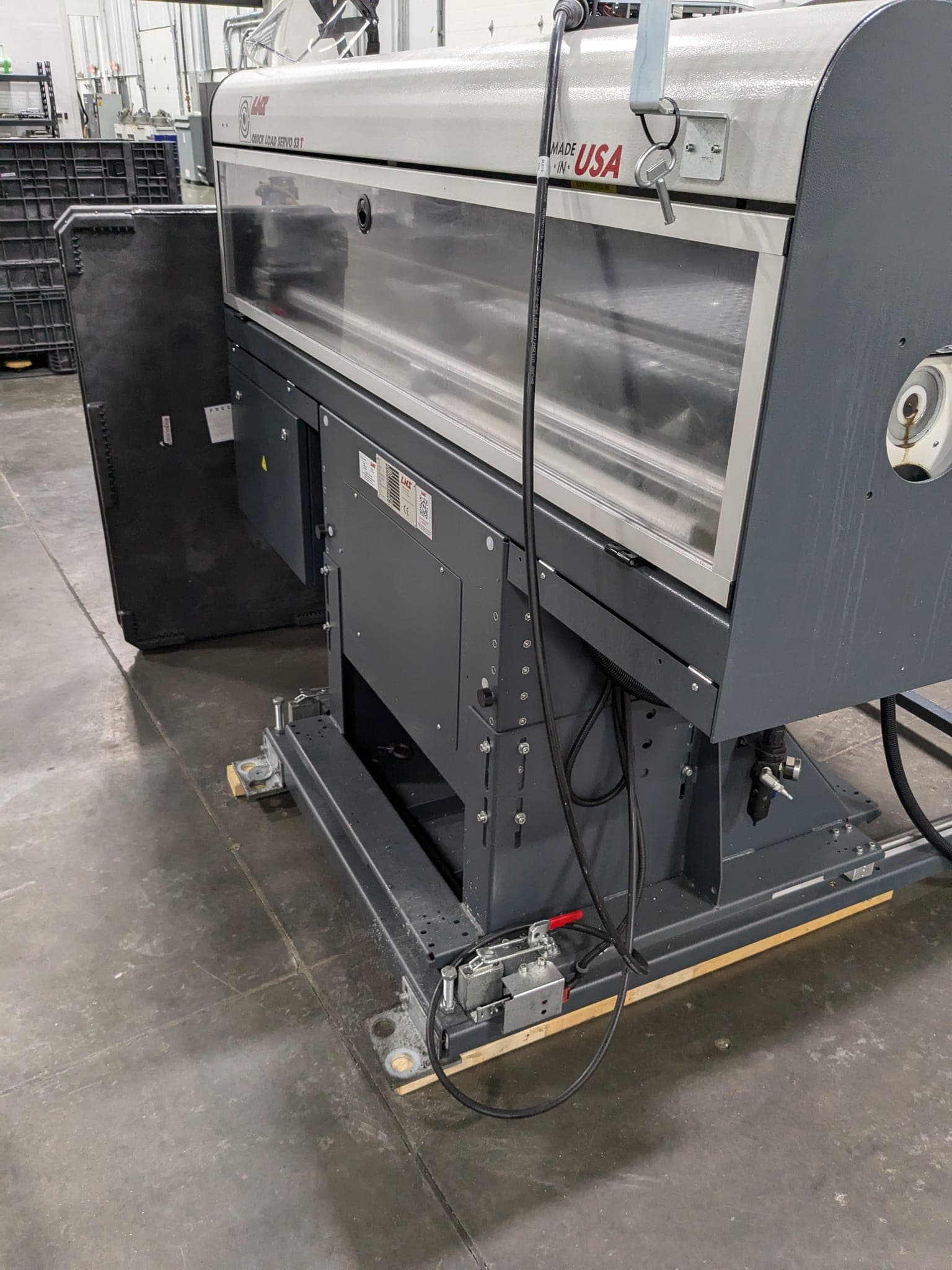
A magazine bar feeder holds short bars, often a few feet long, in a rack or a bundle and feeds them one at a time into a lathe. It is the compact feeder, the one that does not need a 12-foot aisle behind the spindle. A hydrodynamic channel for full-length bar is a different machine with a different footprint. Edge is the name that repeats on these magazines. The job is the same idea, a push to the next part, in a smaller envelope.
Diameter and length are the capacity. The magazine and the liners have to accept the bar you buy, and the lathe bore has to accept it too. A magazine rated past the spindle bore is not extra capacity. It is a bar you cannot run. Round is the usual liner. Hex needs the liner and the spindle collet together. The rack has to hold enough bars for the run you want unattended, and the loader that drops the next bar has to do it without a person at the back of the machine every cycle.
The advance is a pusher or a servo that moves the bar to a stop the lathe trusts. That stop, and the signal that says the bar is home, are the handshake. A feeder that advances and never tells the control will sit loaded and idle. Remnant length is the stub left after the last part. On a short bar the remnant is a larger share of what you bought, so a feeder that wastes a long stub is expensive on small-diameter stock. Alignment is a centerline. A feeder that points at the spindle door and not through the bore will scar the drawtube.
Guides, liners and the selection fingers wear. A finger that drops two bars, or none, is the unattended run ending. Cycle the select, then the advance, with the bar you actually use. Feel for a bind in the liner.
A used magazine bar feeder is sized to one spindle. Measure bore, bar diameter and bar length. Stand behind the lathe and see whether the magazine fits without blocking the aisle the operator uses. Confirm voltage and the load signal. A short-bar magazine will not become a 12-foot channel because you want longer stock later. Write the remnant you can accept before you write the brand.
How to Choose a Used Bar Feeder
Short Magazine vs a Hydrodynamic Channel
A short magazine racks bars cut to a length the rack can hold and feeds them one at a time. A hydrodynamic feeder supports a long bar on a film of oil so the bar can spin without whipping. The second is not a magazine.
Choose the magazine when your bars are already short and you want a simple rack beside the spindle. Choose oil support when the bar is long. Diameter and the spindle bore still rule both. Do not put a long bar in a short magazine and hope the guide tube will cope.
How to Size a Magazine Bar Feeder
Size maximum diameter to the lathe bore and to the collets you have, then size magazine length to the bars you will actually load. The liner has to match that diameter or the bar rattles inside the spindle.
Remnant length is part of the size. A feeder that leaves a long stub changes how many parts you get from each bar. Confirm the lathe can issue the load command, and that the pusher stops where the program thinks the stock is. Alignment is the last check, and it is not optional.
Bar Feeder Specs to Compare
| Spec | Why it matters |
|---|---|
| Bar diameter | The bar has to fit the feeder and pass the spindle. The magazine cannot enlarge the lathe bore. |
| Magazine length | A short magazine only carries bars cut to fit it. Longer stock belongs on a hydrodynamic feed. |
| Spindle liner | The liner guides the bar inside the headstock. The wrong size lets the bar whip and marks the stock. |
| Pusher | A bent or short pusher misfeeds. The lathe then cuts air or crashes the remnant. |
| Remnant | Every bar leaves a remnant. Know the length before you believe the parts-per-bar number on the feeder. |
| Bar shape | Hex needs a collet and a liner for hex. A round setup will not quietly feed a hex bar. |
Bar diameter
The bar has to fit the feeder and pass the spindle. The magazine cannot enlarge the lathe bore.
Magazine length
A short magazine only carries bars cut to fit it. Longer stock belongs on a hydrodynamic feed.
Spindle liner
The liner guides the bar inside the headstock. The wrong size lets the bar whip and marks the stock.
Pusher
A bent or short pusher misfeeds. The lathe then cuts air or crashes the remnant.
Remnant
Every bar leaves a remnant. Know the length before you believe the parts-per-bar number on the feeder.
Bar shape
Hex needs a collet and a liner for hex. A round setup will not quietly feed a hex bar.
What to Inspect on a Used Bar Feeder
Feed one bar
Watch the pusher carry it to the spindle. A rack that only looks full has not proven a feed.
Match the diameter
Compare the collet, the liner and the lathe bore with the bar you run. All three have to agree.
Inspect the pusher
A bent pusher or a worn tip misfeeds and can crash the cutoff. Look at it extended.
Check the liner kit
The liners for your diameters should be present. A missing liner is a rattle inside the headstock.
Ask the remnant length
Know the stub the feeder cannot use. A long remnant is scrap on every bar you buy.
Sight the alignment
The channel should sit on center with the spindle. An off-center mount wears the liner and the collet.
Confirm the load signal
The lathe and the feeder have to agree when to load the next bar. A dead interface stops the cell.
Related Equipment
- Tooling & Workholding
The family group that points here
- Lathes & Turning Centers
The CNC lathe the magazine feeds
- Engine Lathes
Manual lathes are a different feed problem
Bar Feeders Brands We've Sold
Common Applications
Frequently Asked Questions
How do I size a magazine bar feeder for bar diameter?
The largest bar has to pass the lathe spindle and fit the collet and the liner, not only the magazine opening. Measure those three together. Magazine length then has to accept the cut length you will load. A short magazine will not swallow a full twelve-foot bar. That bar wants a hydrodynamic feed, which is a different machine. Remnant length still comes off every bar. Confirm the lathe can call for a load.
What should I inspect on a used magazine bar feeder?
Load one bar and watch the pusher meet the spindle. Look at the pusher for a bend, and look through the liner for wear. The collet should match the bar you run. Sight the channel to the headstock. Ask the remnant length so you know the scrap. Confirm the load signal still works with a lathe, or with the lathe in the same sale. A rack of bars that will not advance is not a magazine. It is storage.
How does a magazine bar feeder differ from a hydrodynamic bar feed?
A magazine racks short bars and feeds them one at a time from beside the spindle. A hydrodynamic feed supports a long bar on oil so the bar can rotate without whipping in open air. Both push stock into a lathe. They are not interchangeable frames. Put short, cut bars in the magazine. Put long bars on the oil channel. The spindle bore and the liner rule either choice. This group is the magazine. Do not read a long-bar channel into a short rack because both nameplates name feeder.
What spindle liner does a magazine bar feeder need?
A liner that matches the bar diameter and guides it through the headstock. Too large and the bar rattles and marks. Too small and the bar will not enter. The liner is a lathe part as much as a feeder part, and it has to be in the sale or in your drawer. A magazine that is perfect and a spindle that is empty of a liner will still feed badly. Bring the bore size.
Can a magazine bar feeder run hex bar?
Yes, when the collet, the liner and the magazine guides are for hex, and the across-flats size passes the spindle. A round setup will not quietly feed hex. The pusher face has to suit the shape so it does not slip or broach the end. If the listing only shows round collets, budget the hex set or walk away. Diameter rules still apply. The lathe program still has to know where the stock stops. Shape is an extra match, not a replacement for the bore.
Where does a magazine bar feeder stand relative to the lathe?
At the headstock, on center with the spindle, with enough aisle to load the magazine. It is not at the tailstock and it is not a cart you can park anywhere in the cell. The load signal cable and the alignment are the install. When the lathe and the feeder sell together, move them as a pair so the liner and the channel stay matched. A feeder in a corner with no lathe is a project.
