Used Band Saws for Sale
3 results
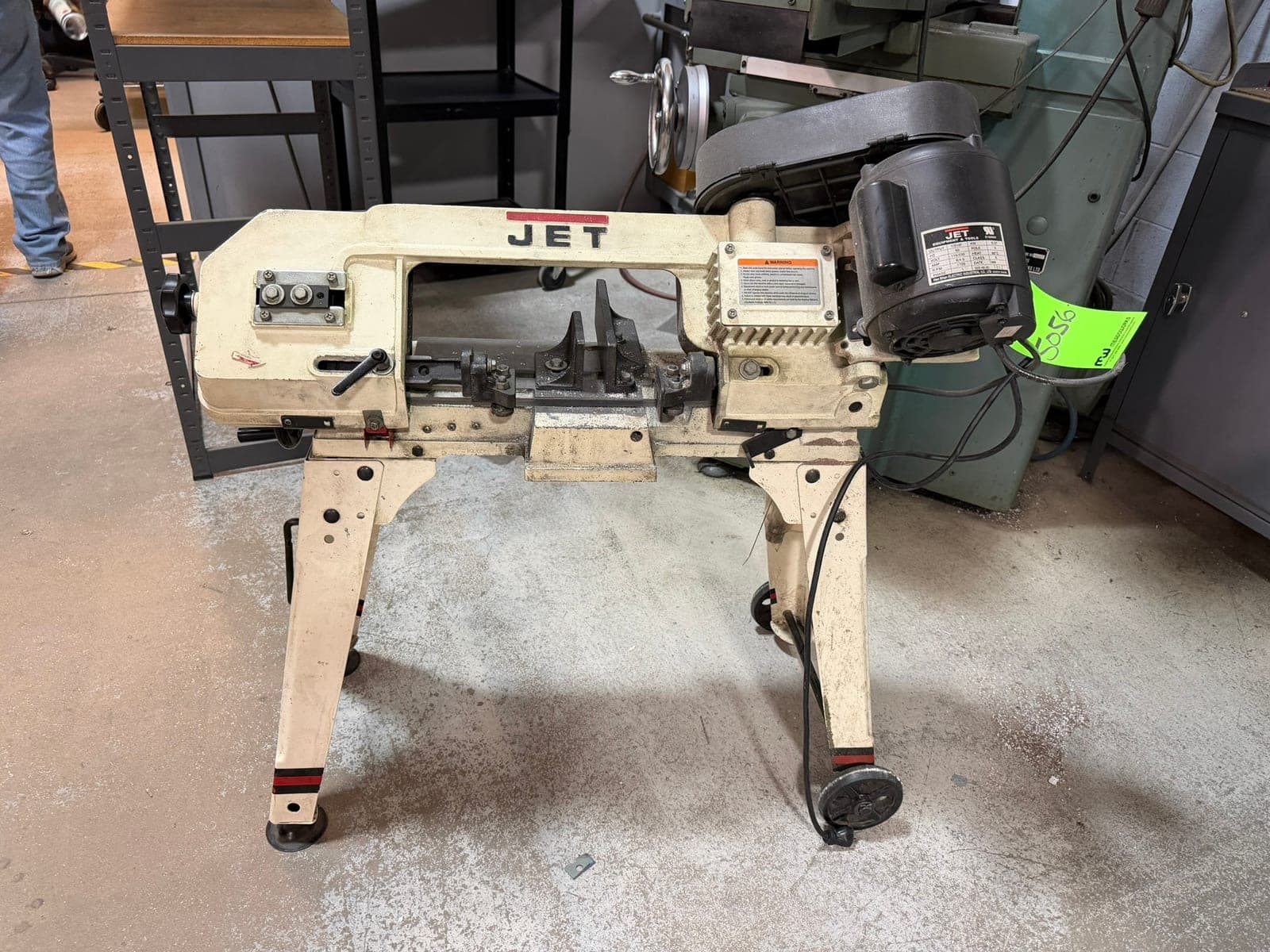
Lot 40
Jet Horizontal/Vertical Metal Cutting Band Saw
Naperville, IL
Live auction · Tue, Oct 27, 10:00 AM CT
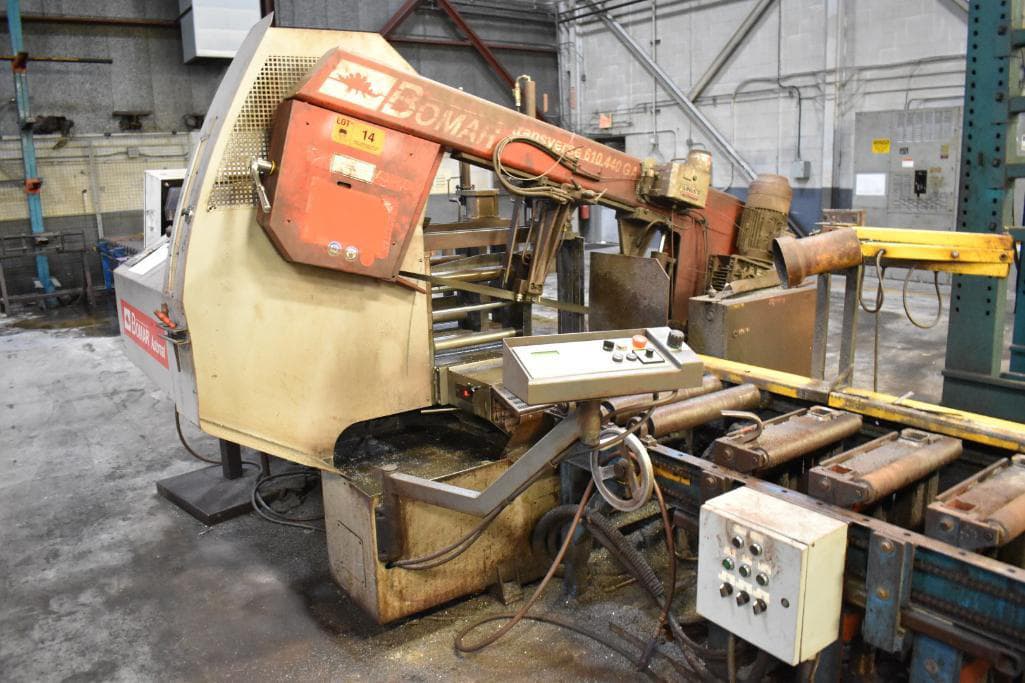
Bomar Transverse 610.440 GANC Band Saw
Canada
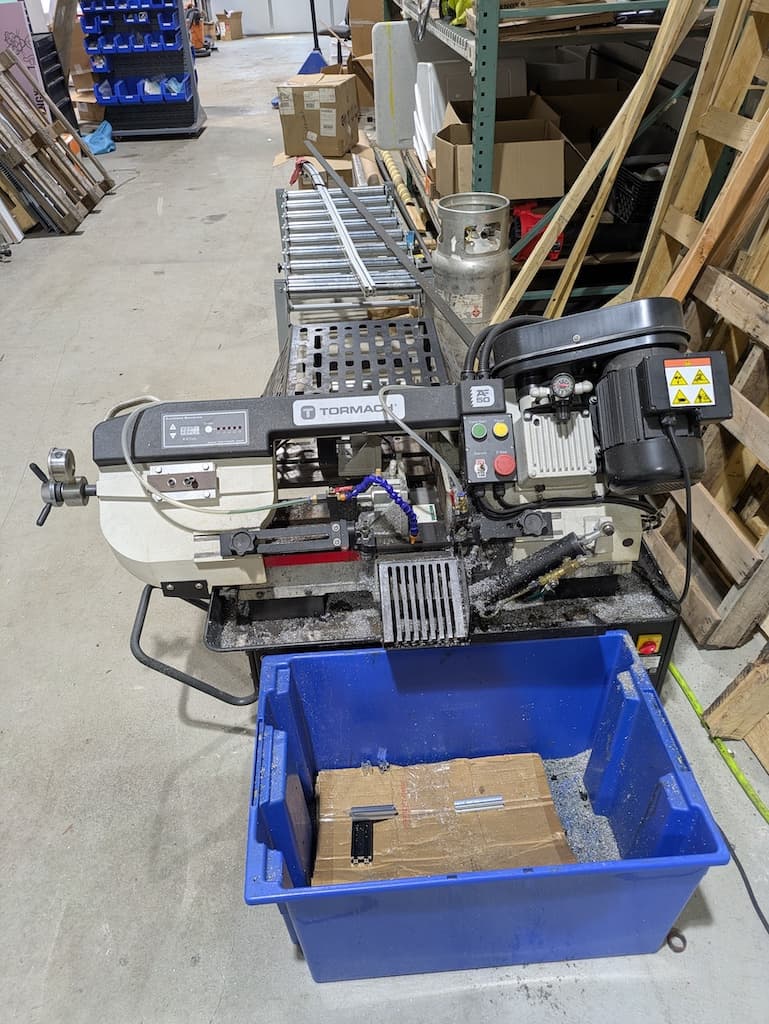
Tormach AF50 Horizontal Bandsaw
USA
Looking for Something Specific?
Most of our inventory sells before we can list it online. If you need a specific brand, model, or specification, tell us what you need—we have access to unlisted equipment and machines coming in from plant closures.
Looking to Sell?
Meadoworks is an active cash buyer of used industrial equipment. Get a free valuation from our AMEA-certified appraisers.
About Used Band Saws
A head drops a blade through bar, tube, or a structural shape clamped in a vise, then lifts for the next piece. That cutoff motion is what a band saw is doing in a fab shop or a machine-shop cutoff cell. It is not a contour saw. On a contour saw the table stays put, the blade stands upright, and the operator feeds the work. Capacity here is the round and the rectangle the bow and the vise can actually close on, at ninety degrees and again at the angle you use. Swinging the head for a miter often shrinks that rectangle. A catalog inch that ignores the vise is how people buy a saw that will not close on their largest bar.
Tooth pitch has to match the section. A fine tooth buried in a heavy solid loads up. A coarse tooth in thin tube can strip teeth. Speed follows the material, in surface feet per minute, so one speed for steel, stainless, and aluminum is a compromise you should notice. Downfeed should be a controlled rate and cutting pressure, not only a gravity drop that crashes or rubs. Flood coolant is part of blade life on steel. A dry cut spends blades. Guides belong close to the work, and tension has to be real. A loose blade cuts a taper that looks like a dull tooth or a bad vise.
A bundle claim is only real if the vise and the bow close on the stack. Many miter saws are single-bar machines. Outfeed rollers and the vise jaws decide whether the drop and the stock stay put. Square, in your material, is the test. An idle bow does not prove the gearbox, the blade, or the feed. A frozen pivot is not a miter yet. If you never leave ninety degrees, ignore a seized swing and spend the visit on square, speed, and guides. If angles are the job, swing the head and measure the cut, and read capacity at that angle rather than only at square.
A used band saw should make that cut in the largest section you run. Listen for a gearbox growl once the blade is loaded. Wheels should track without a flat spot, and the guides should support the blade without pinching it. Meadoworks takes cutoff saws from shop floors and from closures, apart from upright contour saws. Drain the coolant before the head travels. A machine an inch short on the rectangle is a different saw, not a slower feed, and the vise has to hold the bar you actually cut.
How to Choose a Used Band Saw
Cutoff Capacity Before a Fancy Miter
Write down the largest round and the largest rectangle you cut, including a bundle if that stack is the real job. The bow and the vise have to close on that section. A miter head is useful only after the capacity is honest, and the rectangle often shrinks once the head is swung.
Contour work, internal shapes, and a blade that stays upright while you feed the plate are a different saw. A machine advertised as both still has to pass a square cutoff in your bar before the angle scale means anything. Measure the vise opening, not only the bow.
Blade, Speed, and Feed on a Band Saw
Tooth pitch follows the material and the wall thickness. Thin tube wants a different pitch from a fine tooth buried in a solid. Speed and downfeed have to be adjustable enough that the blade cuts instead of rubbing or crashing. Surface speed is not the same number for steel and aluminum.
Coolant, or a deliberate dry setup for the material you run, belongs in the same decision. Guides close to the work and a tensioned blade are what keep the cut square. A saw that only looks square with a new blade and a light feed is not finished. Flood coolant needs a pump and a tank, not only a tray.
Band Saw Specs to Compare
| Spec | Typical range | Why it matters |
|---|---|---|
| Capacity | Round and rectangle at 90 degrees, plus the miter you use | The bow and the vise have to enclose the bar you actually cut, including at the angle. |
| Miter | Angle cuts without a layout depend on a scale that still moves, locks, and matches the cut. | |
| Blade speed | One speed for steel, stainless, and aluminum is how blades are destroyed. Pitch still has to match. | |
| Downfeed | The head should descend at a controlled rate and lift clear, without a crash or a rub. | |
| Vise and bundle | A bundle claim that does not clamp is just a larger opening on paper. Many saws cut one bar. | |
| Coolant | Dry steel cutting spends blades. Confirm the pump and the tank, not only the chip tray. |
Capacity
Typical range: Round and rectangle at 90 degrees, plus the miter you use
The bow and the vise have to enclose the bar you actually cut, including at the angle.
Miter
Angle cuts without a layout depend on a scale that still moves, locks, and matches the cut.
Blade speed
One speed for steel, stainless, and aluminum is how blades are destroyed. Pitch still has to match.
Downfeed
The head should descend at a controlled rate and lift clear, without a crash or a rub.
Vise and bundle
A bundle claim that does not clamp is just a larger opening on paper. Many saws cut one bar.
Coolant
Dry steel cutting spends blades. Confirm the pump and the tank, not only the chip tray.
What to Inspect on a Used Band Saw
Cut your largest section
Square and finish matter. An idle bow does not prove the gearbox, the blade, or the feed.
Check tracking and tension
The blade should stay on the wheels. A loose or wandering blade cuts a taper that looks like a bad vise.
Inspect guides and wheels
Pinched guides and a wheel with a flat spot will not be fixed by a new blade alone.
Cycle the feed
The head should come down smoothly and lift. A crash or a stall is hydraulic or mechanical, not technique.
Swing the miter if you need angles
The scale should lock and the cut should match it. A frozen pivot is a project.
Look at the vise
Jaws should close square and hold. Bundle fixtures have to clamp the stack you claim to cut.
Confirm coolant
Pump, tank, and nozzles. A dry steel saw will tell you about blade cost in the first week.
Related Equipment
- Saws
Cutoff and contour saws, before you pick a head or a table
- Vertical Band Saws
Contour cuts where the table stays and the blade is upright
- Deburring & Finishing
Edges left by a cutoff often need a second step
Common Applications
Frequently Asked Questions
What capacity should I read on a band saw?
The round and the rectangle the bow and the vise can actually enclose, at ninety degrees and at the miter you use. A catalog inch that ignores the vise opening is how people buy a saw that will not close on their largest bar. If you cut bundles, the capacity is the stack, not one piece repeated on a sign. Measure your biggest section and compare it with the listing, then confirm with a cut. A saw that is an inch short is a different machine, not a slower feed.
How do blade speed and tooth pitch affect a band saw?
Pitch has to match the section. A fine tooth buried in a heavy solid loads up, and a coarse tooth in thin tube can strip. Speed follows the material, so a saw with one speed is a compromise you should notice before you buy it. Downfeed has to let the blade cut rather than rub or crash. Coolant is part of the same setup on steel. Ask what blade is on the machine and whether the speed control actually changes.
Can a band saw cut bundles or only one bar?
Only if the vise and the bow really close on the stack and the blade is happy in that combined section. A bundle fixture that is a loose claim will not clamp. Cutting several bars at once also changes the tooth choice, because the blade is seeing more interruptions. Confirm the feature with a stack, not with a sentence in the listing. If you only ever cut one bar, ignore the bundle hardware and spend the visit on square, feed, and guides.
How is this band saw different from a vertical contour saw?
Cutoff clamps the bar and brings the blade down through it. A contour saw leaves the blade standing and asks the operator to push the plate. Buying a cutoff saw to nibble a shape inside a plate will disappoint you, and buying an upright saw to slug bar all week will disappoint you the other way. A machine that claims both still has to cut your largest section square before the angle scale is worth trusting. Capacity at the miter, not only at ninety degrees, is the number that counts.
What should I inspect on the wheels and guides of a band saw?
The blade path. Wheels should track the blade without a flat spot or a thrown tire, and the guides should support the blade close to the cut without pinching it. Tension has to be real. A loose blade cuts a taper and looks like a dull tooth or a bad vise. Run a cut in your material and check square. Gearbox noise under load matters more than a quiet idle. Those are the parts that decide whether a new blade will even have a chance.
Does a miter head change what a band saw can cut?
It changes the angle, and it often reduces the rectangle you can still enclose once the head is swung. A miter that does not lock, or a scale that does not match the cut, is not a feature yet. Straight ninety-degree cutoff does not need the pivot, so do not pay attention to a frozen miter if you never leave square. If angles are the job, swing it during the visit and measure the result. Capacity at the angle is the number that counts, not capacity at ninety alone.
