Used Blast Cabinets for Sale
See all 1 Deburring & Finishing →
1 result
Looking for Something Specific?
Most of our inventory sells before we can list it online. If you need a specific brand, model, or specification, tell us what you need—we have access to unlisted equipment and machines coming in from plant closures.
Looking to Sell?
Meadoworks is an active cash buyer of used industrial equipment. Get a free valuation from our AMEA-certified appraisers.
About Used Blast Cabinets
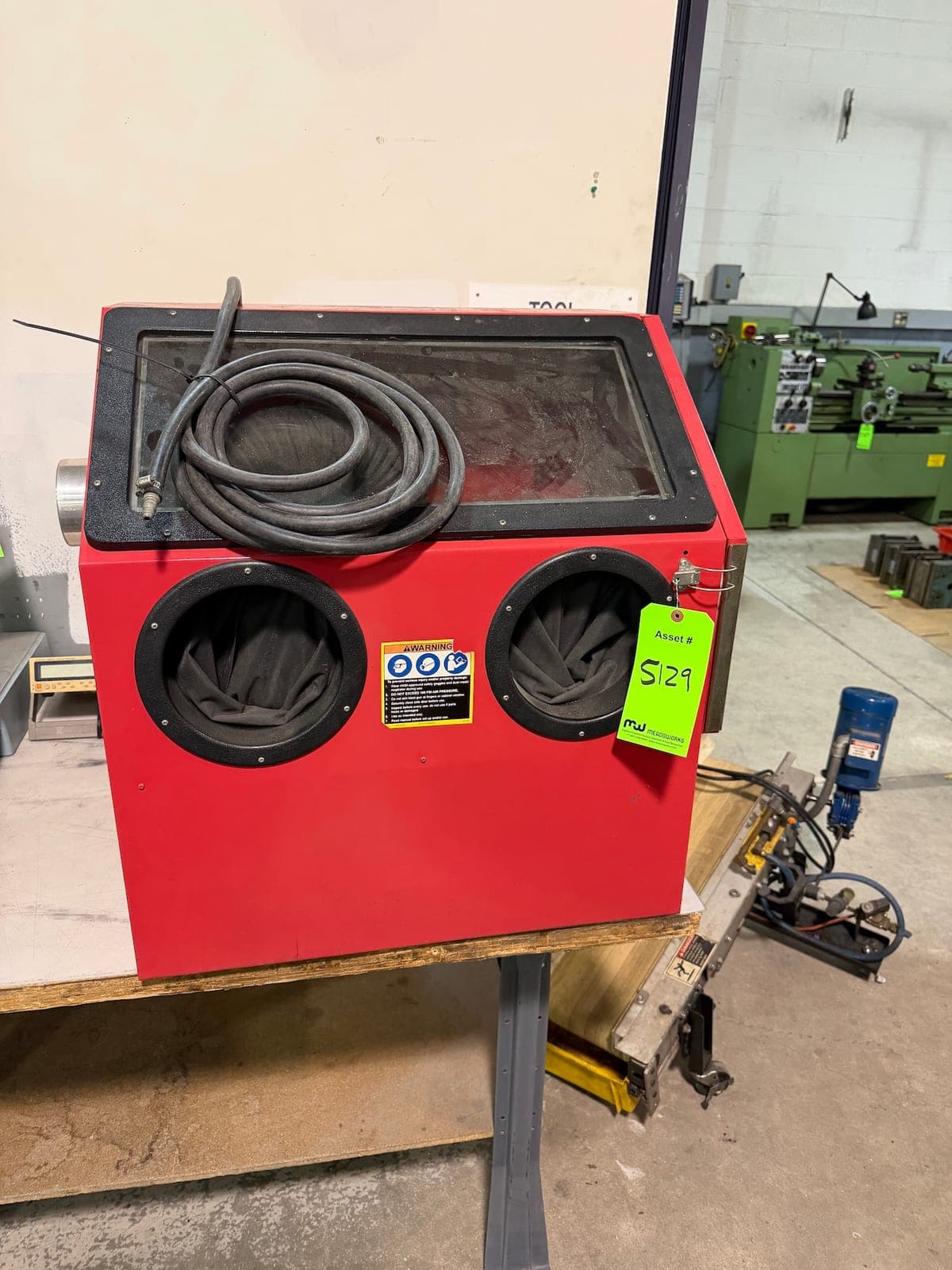
A blast cabinet is a closed box where you hold a part in gloves and hit it with media from a gun. Glass bead, aluminum oxide or another grit leaves a texture, strips a coating or cleans scale. It is the same style of cabinet that also gets filed with deburring when the job is a blasted finish rather than a belt or a tumbler. The iron is a box, a window, gloves, a gun, a media hose and usually a dust collector or a reclaimer. It is not a tumbler and it is not an open-air blast room.
Inside size has to fit the part plus your hands and room to turn the work. A cabinet that looks large in a photo and will not accept the casting is the wrong box. Media has to match the finish. Bead peens and cleans without cutting as hard as a sharp grit. Grit cuts faster and leaves a coarser anchor for a coating. Mixing them ruins both. The gun needs airflow your compressor can hold at the pressure the nozzle wants. A big nozzle on a small compressor is a weak blast and a wet one if the air is not dried.
The window, the gloves and the reclaimer are the condition. A cloudy pane is a cabinet you cannot see in, and that is how nozzles get aimed at the glass. Torn gloves are a media leak. A reclaimer that does not separate fines will throw dust back at the part and into the room. The collector, when it is a separate canister, has to be included or you are buying half a system. Lights inside the box matter more than people expect.
A used blast cabinet should be pressurized with dry air and a little media, with the gloves on. Look through the pane. Feel the gun. Confirm inside dimensions, the media you will run and whether the collector is in the sale. A cabinet that shared a shop with a tumbler is still a cabinet. Buy the tumbler only if the photo is a tub, not a glove box.
How to Choose a Used Blast Cabinet
The Box, the Gun, and the Air
Size the cabinet to the part in your hands, not to a wish for a bigger process. Media follows the finish: bead for a softer look, a harder grit when you need to cut. The collector and the compressor have to keep up with that media and that nozzle.
This group is not the belt-versus-bowl overview. If you are still choosing a process, go back to the deburring family. If you already want a cabinet, stay and inspect the gloves, the window, and the air.
What Wears and What Leaks
Gloves, window, nozzle, and door seals are the parts that make a cabinet look tired and the parts that decide whether it still contains the media. A collector full of fines, or a collector that does not run, turns the box into a cloud.
Run it. An empty gun tells you little. Moisture in the air clumps media and is a dryer problem, not a mystery inside the pot. Lighting is part of quality because a dark cabinet hides the finish you think you are blending.
Blast Cabinet Specs to Compare
| Spec | Why it matters |
|---|---|
| Interior size | A benchtop cabinet will not accept a large casting, whatever the gun can do. |
| Media | Media is the process. The cabinet only contains it. |
| Gun and nozzle | A starving gun is a compressor or a clogged nozzle, and the finish will show it. |
| Dust collector | Without it the window whites out and the media breaks down into dust. |
| Gloves and window | These are wear items. A torn glove or a frosted window ends the work. |
| Air quality | Wet air clumps media. A dryer belongs in the setup, not as an afterthought. |
Interior size
A benchtop cabinet will not accept a large casting, whatever the gun can do.
Media
Media is the process. The cabinet only contains it.
Gun and nozzle
A starving gun is a compressor or a clogged nozzle, and the finish will show it.
Dust collector
Without it the window whites out and the media breaks down into dust.
Gloves and window
These are wear items. A torn glove or a frosted window ends the work.
Air quality
Wet air clumps media. A dryer belongs in the setup, not as an afterthought.
What to Inspect on a Used Blast Cabinet
Fit the part in the box
Hands, gloves, and the part together. If it does not fit, the gun does not matter.
Run media through the gun
Look for steady flow and a nozzle that is not already blown out. An empty trigger is not a test.
Inspect gloves and the window
Tears and a frosted pane are replacements. They are also how you tell a cabinet was actually used.
Start the dust collector
The box should clear, not haze. A dead collector is part of the machine, not an accessory.
Check door seals
Media on the floor around the cabinet means the door or the glove ports are open to the room.
Confirm dry air
Moisture clumps the pot. See that a dryer or a clean supply exists before you blame the gun.
Turn on the light
You have to see the finish. A dark cabinet hides both the part and the wear on the window.
Related Equipment
- Deburring & Finishing
Family overview of belt, vibratory, and blast
- Band Saws
Cutoff edges that sometimes come to the cabinet next
- Fiber Lasers
Sheet cutting whose edge is often a belt job, not a cabinet
Common Applications
Frequently Asked Questions
What media belongs in a blast cabinet?
The media that makes the finish you can ship. Glass bead is the softer, cosmetic choice. A harder grit cuts more and asks more of the collector and the window. The cabinet does not care about the name on the bag as much as the size and whether the reclaim can handle it. Wet or oily media will not flow. Match the media to the part, then confirm the pot, the hose, and the nozzle are happy with it. Changing media later means cleaning the box, not flipping a switch.
What air supply does a blast cabinet gun need?
Dry air at a pressure and a volume the nozzle can use continuously, not a puff that dies when the gun stays open. A compressor that is too small appears as a finish that fades halfway across the part. A dryer belongs ahead of the cabinet because moisture clumps the media and clogs the gun. Confirm the supply with the nozzle that is actually installed. A listing that is silent on air is a question for your shop, not a reason to assume any compressor will do.
What does the dust collector do on a blast cabinet?
It pulls fines out so the window stays clear and the media that remains can still cut or peen. A stopped collector turns the box into a cloud and dumps dust in the room when you open the door. Filters and the fan are part of the machine. Run them during a test and see whether the view recovers. A cabinet sold without its collector is an incomplete setup. Include that second piece in the rigging plan so it does not stay on the seller's floor.
What should I inspect on the gloves and window of a blast cabinet?
Tears, soft spots, and glove ports that no longer seal. A torn glove is both a leak and a safety problem. The window should be clear enough to judge a finish, and a frosted or pitted pane is a replacement, not something you will squint through. Those parts wear faster than the cabinet shell and they tell you the machine was used. Seals around the door belong in the same look. Media on the surrounding floor is the report. Replace the wear items and keep the box.
How do I size the work envelope of a blast cabinet?
The part plus both hands in the gloves, with room to turn the surface you need to hit. A benchtop cabinet is for small work. A larger stand-up box is for a casting or a fixture that will not fit a bench. Measure the interior, not the footprint of the collector. If the part does not fit, no nozzle upgrade will help. Bring the largest piece you intend to finish. A cabinet that fits a sample and not the real part is the wrong purchase.
How is a blast cabinet group different from the deburring overview?
The overview is where belt, vibratory, and blast are compared, and it says plainly that the current family stock is cabinets. This group refuses that comparison and stays inside the box: media, gloves, window, gun, air, and the collector. If you are still unsure a cabinet is the process, go back. If you are buying the cabinet, the edge-break essay will not tell you whether the gloves are torn. Keep the two reads separate so a belt decision does not get buried in nozzle detail.
