Used Tube End Formers for Sale
See all 2 Tube & Pipe Benders →
Nothing is listed right now — these are machines we've recently sold. or tell us what you need.
Recently sold
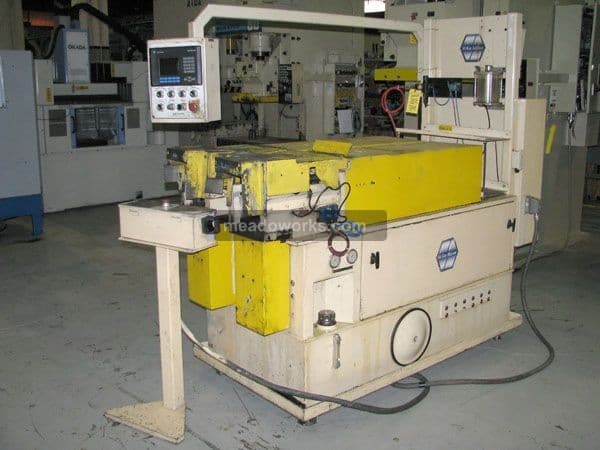 SOLD
SOLD2001 Addison McKee FM-70RS Digispin + Digispin
USA
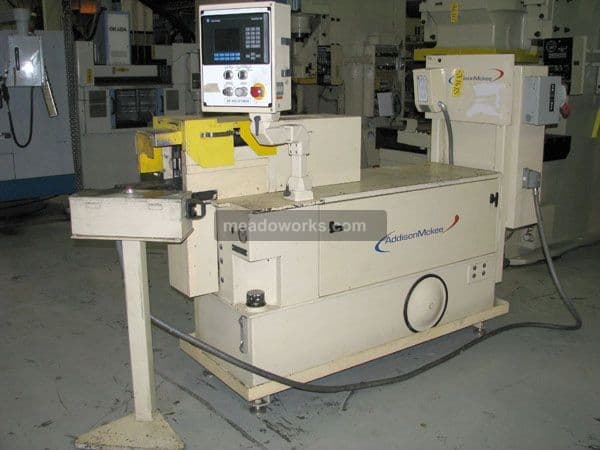 SOLD
SOLD2002 Addison McKee FM-70RF Digiform
USA
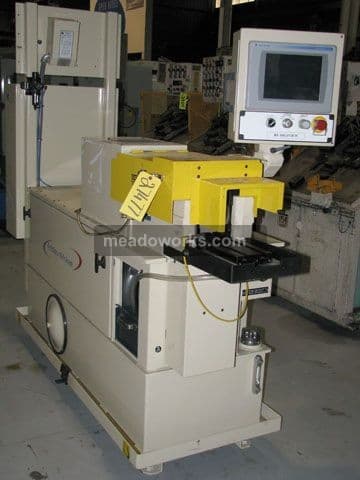 SOLD
SOLD2007 Addison McKee FM-70RF Digiview
USA
Looking for Something Specific?
Most of our inventory sells before we can list it online. If you need a specific brand, model, or specification, tell us what you need—we have access to unlisted equipment and machines coming in from plant closures.
Looking to Sell?
Meadoworks is an active cash buyer of used industrial equipment. Get a free valuation from our AMEA-certified appraisers.
About Used Tube End Formers
A tube end former changes the end of a tube. It beads, flares, reduces, expands or closes the end, depending on the punches and the clamps. Addison McKee is a name that repeats. It is not a bender. The tube stays straight and the end is formed. A ram drives a punch into the end, or a spinning head forms it. Those are different motions. A ram machine and a spinner do not share tooling.
Diameter and wall are the capacity of the clamp and the punch. A clamp that is too large will not hold a small tube concentric, and the form will run out. Stroke has to finish the form without crushing the wall behind it. Several stations, when the machine has them, let a reduce and a flare happen in sequence. One station is one form. Punches and clamps are the tooling, and a used machine often arrives with the last job's tools, which may not be yours.
The ram, the clamps and the alignment are the condition. A clamp that does not close square marks the tube. A ram that has play will bell the form to one side. Hydraulics leak. A spinning head adds bearings and a speed. Cycle it on a scrap of your tube if the tooling allows, or at least close the clamp and stroke the ram empty and feel for a knock.
A used tube end former should be matched to the end on the print, not to a photo of a bead. Confirm diameter, the forms the punches can make, and whether those punches are in the sale. A bead punch will not flare. A machine tooled for one hose end will not make your fitting until the punch changes. Measure the clamp bore. If the end also has to be bent, that is the bender, and this machine does not replace it. Hydraulic pressure on the nameplate has to be enough to finish the form in your wall thickness. A pump that only approaches and will not hold is not a finished end.
How to Choose a Used Tube End Former
An End Shape, Not a Radius
Bead, flare, reduce, expand. If the print says one of those, you are in the right place. If the print says a centerline radius, you want the CNC tube bender group. The machines often share a cell and they do not share a job.
Addison McKee is the name in this range. The punch and the clamp still have to match the diameter. A frame without that tooling is a project.
Clamp, Stroke, and Concentricity
The clamp has to hold the tube without crushing it, close enough to the end to support the form and far enough from a nearby bend to fit. Stroke has to finish the bead or the flare.
Cycle your tube. An oval end means the clamp or the punch is cocked. A dry cycle tells you the ram moves and almost nothing about the form. Confirm whether the motion is a ram or a spin before you assume the tools you have will even mount.
Tube End Former Specs to Compare
| Spec | Why it matters |
|---|---|
| End forms | The frame does not imply every form. The punches that are present do. |
| Tube diameter | A neighboring diameter is not close enough. The tooling has to match. |
| Stroke and force | A short stroke or a light ram will not complete a bead the print requires. |
| Clamp | A cocked clamp makes an oval. Distance to a nearby bend has to fit the clamp. |
| Motion | The two do not take the same tools. Read the listing before you assume a punch. |
| Tooling included | The expensive part of an end former is often the tool for your specific form. |
End forms
The frame does not imply every form. The punches that are present do.
Tube diameter
A neighboring diameter is not close enough. The tooling has to match.
Stroke and force
A short stroke or a light ram will not complete a bead the print requires.
Clamp
A cocked clamp makes an oval. Distance to a nearby bend has to fit the clamp.
Motion
The two do not take the same tools. Read the listing before you assume a punch.
Tooling included
The expensive part of an end former is often the tool for your specific form.
What to Inspect on a Used Tube End Former
Form your diameter
Bead, flare, or reduce a real tube. A dry ram stroke does not prove the tool.
Inventory the punches
Match them to the print. A missing bead punch is a second purchase, not a small extra.
Check concentricity
An oval end means the clamp or the punch is cocked. Look at the clamp bore.
Confirm ram or spin
The motion has to match the process you run. Tools from one style may not mount on the other.
Watch for crush behind the form
The clamp should hold without collapsing the wall. Too much force is its own scrap.
Look at the hydraulics
Leaks and a ram that drifts are the usual repair. Cycle it under a real form, not empty.
Fit the tube length
A bend already in the tube may not clear the clamp. Bring the part, not only a straight sample.
Related Equipment
- Tube & Pipe Benders
Parent group for bends and end forms together
- CNC Tube Benders
Mandrel rotary-draw radii, not an end bead or flare
- Deburring & Finishing
Ends and edges that still need a finish after forming
Tube End Formers Brands We've Sold
Common Applications
Frequently Asked Questions
What end shapes can a tube end former make?
The ones it is tooled for. Bead, flare, reduce, and expand are the usual calls, and each one is a punch and a clamp, not a setting in a menu. A frame that can accept several tools still cannot make a form whose punch is missing. Read the listing for the tools in the crate and compare them with the print. Addison McKee machines here follow that rule like any other end former. Diameter has to match. A near size is a different tool.
How is a tube end former different from a bender?
A tube end former changes the end. A bender changes the path of the tube and makes a radius. They often leave the same shop and they answer different lines on the print. Buying an end former to make an exhaust bend will not work, and buying a bender only to flare a straight tube is the same kind of miss. Use the CNC tube bender group for the radius. Wait for the bead or the flare. The parent tube group shows both so you can tell them apart.
What clamp and stroke do I need on a tube end former?
A clamp that holds your diameter without crushing the wall, close enough to the end to support the form, and clear of any bend already in the tube. Stroke and force have to finish the bead or the flare and then stop. Cycle your part, not a dry ram. An oval result means the clamp or the punch is cocked. If the tube is already bent, bring that tube. A straight sample can hide a clamp that will not fit the real part.
Can a tube end former bead and flare on the same machine?
Sometimes, if both tool sets exist and the clamp can change. The frame does not promise both. A bead punch will not flare, and a flare punch will not bead. Ask what is in the sale and what diameter each tool is. A second diameter is another set, not a small adjustment. If you only need one form, ignore the tools you will not run and make sure the one you need is actually there and not just compatible in theory.
What tooling has to match a tube end former?
The punch for the form and the clamp for the diameter, and they have to match each other. A ram machine and a spinning process may not even mount the same pieces, so identify the motion first. Wear on the punch appears as a form that no longer matches the print. Include the tools in the inspection the way you would include a bend die on a bender. A clean frame with an empty tool drawer is not a ready machine.
What should I cycle-test on a tube end former?
Your diameter, your form, and, if the production tube is already bent, that tube. Look for an oval, a crushed wall, a short bead, or a flare that cracks. Listen for a hydraulic complaint and look for leaks while it is working. A dry stroke only proves the ram moves. Count the tools afterward so the punch you just watched does not stay behind. That cycle is the whole specification. The nameplate is only the introduction.
