Used CNC Routers for Sale
Recently sold
CNC Routers by the numbers
From our own catalog: machines listed now and machines we have sold. Updated every few minutes.
Looking for Something Specific?
Most of our inventory sells before we can list it online. If you need a specific brand, model, or specification, tell us what you need—we have access to unlisted equipment and machines coming in from plant closures.
Browse Used CNC Routers by Brand
Browse Used CNC Routers by Country
Looking to Sell Your CNC Routers?
Meadoworks is an active cash buyer of used industrial equipment. Get a free valuation from our AMEA-certified appraisers.
About Used CNC Routers
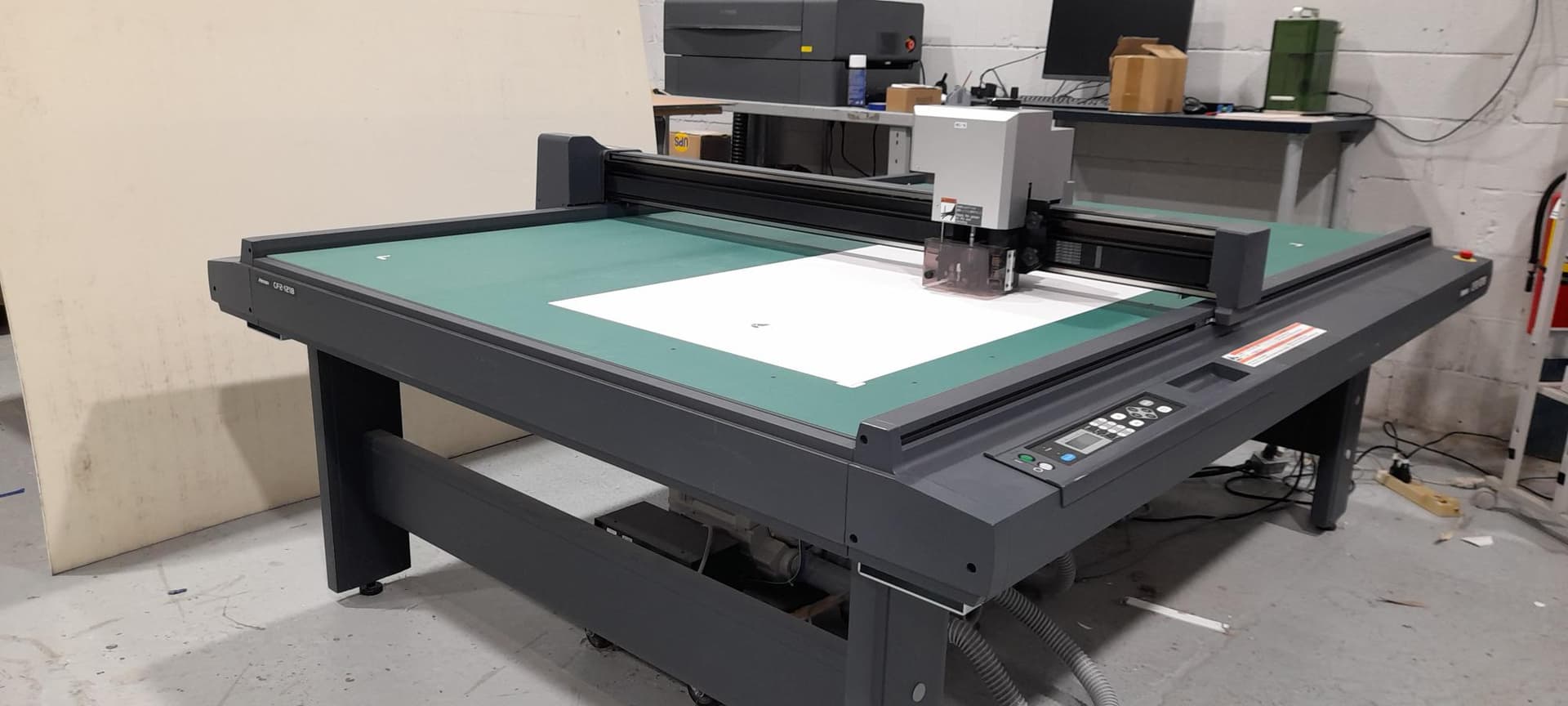
CNC routers are gantry-style machining centers built for cutting, drilling, and shaping sheet materials — wood, plastics, composites, foam, and non-ferrous metals like aluminum. With large table sizes (4x8 ft and up), vacuum hold-down, and high-RPM spindles, CNC routers are the workhorses of cabinet shops, sign makers, plastic fabricators, aerospace composite shops, and point-of-purchase display manufacturers. Automatic tool changers, multi-spindle heads, and nested-based manufacturing software make modern routers highly productive for sheet processing.
A CNC router is a gantry over a large table. The spindle moves across sheet goods, and the table stays put. Wood, plastic, foam, composites and aluminum sheet are the materials. Steel plate is not. Vacuum hold-down is how a full sheet stays flat without a pattern of clamps, and the table is usually zoned so a smaller nest does not have to pull vacuum across the whole bed. A spoilboard on top of the vacuum plenum is a wear surface. It is meant to be skimmed and replaced.
Table size is the first spec, often a 4 by 8 foot sheet and sometimes larger. Gantry clearance is the Z you actually get once the spoilboard and the material are on the table. A high-rpm spindle, often into the tens of thousands, is right for small tools in wood and plastic and for light aluminum sheet. It is the wrong spindle for a steel pocket. That work is a machining center or, when the plate is large, a gantry mill. Those gantries are metal-cutting machines. They are not this router with a heavier look.
An automatic tool changer and a second spindle, or a drill bank, are how a nested sheet of cabinet parts keeps moving. Nesting software has to still run, or the machine is a gantry with no path. Rack-and-pinion drives are common on long axes. Ball screws appear on shorter ones. Either can be worn, and the symptom is a corner that does not meet on a large panel. MAS is on this range with Thermwood, AXYZ, Biesse and Techno. Other router names can appear as a single machine and are not a line we treat as carried.
On a used CNC router, pull vacuum on each zone with a scrap of sheet, run the spindle, and cut a square that spans the table. Indicate the gantry if the square is out. Cycle the changer. Ask whether the control and the nesting software are still supported. A pump that only sounds busy, with a zone that will not hold, will not cut a nest.
How to Choose a Used CNC Router
How to Size a CNC Router
Size the table to the sheet you nest, not to a single part. A 4 by 8 foot bed is the common start. Larger sheets need a larger gantry, and the floor has to hold that length plus room to load. Z has to clear the material, the spoilboard and the longest tool.
Vacuum zones are the next size. A zoned table lets you cover the unused area and hold a smaller nest. One zone for the whole bed wastes the pump on every small job. Spindle rpm and power have to match the material. Wood and plastic want speed. Aluminum sheet wants a spindle that can take the load, still not a steel mill. Tool-change capacity matters when the nest uses several tools. If the part is a steel plate, leave this machine.
Vacuum Table, Gantry, and Sheet Goods
The gantry carries the spindle over a stationary table so a full sheet does not have to move. Vacuum, through a spoilboard and a zoned plenum, holds that sheet. Clamps are the fallback for a part vacuum cannot seal, and they eat usable area.
This is not a gantry mill. A gantry mill is built to cut metal plate with a rigid bridge. A router is built to move quickly across wood, plastic, foam and composites. A vertical machining center is the small, rigid machine for a metal block. Use the router when the work is a sheet and the hold-down is vacuum. Use the mill when the work is steel or a tolerance the router frame was not asked to hold.
By Size: Used CNC Router Price Ranges
Small tables, 4 x 4 to 4 x 8 ft: about $5,000–$30,000.
5 x 10 to 5 x 12 ft with tool changers: about $20,000–$80,000.
Large or 5-axis routers: about $60,000–$250,000.
What moves the price: table size, vacuum pumps and zones, spindle power, tool changer, drive type and the control and software that come with it. These are typical used-market ranges, not a quote on any one machine. Call 800-323-0307 for a current price.
CNC Router Specs to Compare
| Spec | Typical range | Why it matters |
|---|---|---|
| Table size (ft) | 4 by 8 ft is a common sheet | The bed has to take the sheet you nest. A larger sheet needs a larger gantry and a place to load it. |
| Vacuum zones | Zoned vacuum holds a small nest without pulling the whole bed. A single zone fights you on every partial sheet. | |
| Z clearance (in) | Clearance is what is left after the spoilboard and the material. The brochure Z is not the thickness you can cut. | |
| Spindle speed (rpm) | Often 10,000–24,000 rpm | High rpm suits wood, plastic and small tools. It is not a steel-cutting spindle. |
| Drive type | Either drive can be worn. Backlash appears as a corner that does not close on a large panel. | |
| Tool changer | A nest with several tools needs a changer or a second spindle. A manual swap in the middle of a sheet defeats the table. |
Table size (ft)
Typical range: 4 by 8 ft is a common sheet
The bed has to take the sheet you nest. A larger sheet needs a larger gantry and a place to load it.
Vacuum zones
Zoned vacuum holds a small nest without pulling the whole bed. A single zone fights you on every partial sheet.
Z clearance (in)
Clearance is what is left after the spoilboard and the material. The brochure Z is not the thickness you can cut.
Spindle speed (rpm)
Typical range: Often 10,000–24,000 rpm
High rpm suits wood, plastic and small tools. It is not a steel-cutting spindle.
Drive type
Either drive can be worn. Backlash appears as a corner that does not close on a large panel.
Tool changer
A nest with several tools needs a changer or a second spindle. A manual swap in the middle of a sheet defeats the table.
What to Inspect on a Used CNC Router
Pull vacuum on each zone
A scrap of sheet should hold. A pump that runs while the zone leaks will not keep a nest in place.
Cut a square across the table
The corners should meet. An open corner is gantry alignment or a worn drive, not a dull bit.
Run the spindle
Listen at the rpm you will cut. Hours on a router spindle matter because these spindles live at high speed.
Cycle the tool changer
If there is a changer, run a swap. A drill bank or a second spindle should move, not only be mounted.
Inspect spoilboard and plenum
A chewed spoilboard can be skimmed or replaced. A crushed plenum or a dead zone valve cannot.
Check rack or screw backlash
Feel the long axis. Backlash on a rack appears as a mismatched corner on a wide panel.
Confirm control and software
The control and the nesting software have to still run. A gantry with a dead post is a table.
Related Equipment
- Machining Centers
Rigid mills for steel rather than a sheet
- Gantry Mills
Metal-cutting bridges, not wood and panel routers
- Vertical Machining Centers
A smaller envelope when the part is a metal block
Related CNC Mills & Machining Centers
Vertical Machining Centers (VMC)
Vertical machining centers (VMCs) are the most popular CNC milling machines, featuring a vertically oriented spindle.
Horizontal Machining Centers (HMC)
Horizontal machining centers (HMCs) feature a horizontally oriented spindle and are designed for high-volume production and 4-axis machining.
5-Axis Machining Centers
5-axis machining centers add two rotary axes to standard 3-axis milling, enabling machining of complex contoured surfaces and undercuts in single setups.
Drilling & Tapping Centers
Drilling and tapping centers are high-speed CNC machines optimized for hole-making operations.
All CNC Machines
Browse the full used CNC machine inventory — machining centers, lathes, EDM, and more.
Top Brands for Used CNC Routers
Common Applications
Frequently Asked Questions
How do I size the table on a CNC router for sheet goods?
Match the bed to the sheet, which is often 4 by 8 feet, and leave room in the shop to load that sheet onto the table. Z has to clear the spoilboard, the material and the tool. A part smaller than the sheet still wants a table that can nest several of them. Vacuum zones matter as soon as the nest does not cover the whole bed. A single-zone table will not hold a small panel unless you mask the rest.
What does a zoned vacuum table change about hold-down?
You can pull vacuum only under the sheet you loaded, instead of across an open bed that leaks. A spoilboard spreads that vacuum and is meant to be skimmed when it is chewed. Zones that do not hold are valves, gaskets or a plenum problem, and a loud pump will not hide them. Test each zone with a scrap. Clamps are the backup for a part that will not seal, and they steal area from the nest. A table with no vacuum at all can still be a router.
What is a CNC router used for?
A CNC router is a gantry over a large table for sheet goods: wood, plastic, foam, composites and aluminum sheet. Vacuum hold-down keeps a full sheet flat, often in zones so a smaller nest does not pull the whole bed. It is not a machine for steel plate. A high-rpm spindle suits small tools in wood and plastic and light aluminum sheet. Steel pockets belong on a machining center, or on a gantry mill when the plate is large. Table size, often a 4 by 8 foot sheet, is the first spec.
What spindle speed fits wood, plastic and aluminum sheet?
High rpm, often from about 10,000 into the 20,000s, with a tool sized for that speed. Wood and plastic want the speed. Aluminum sheet can run on the same class of spindle if the tool, the feed and the hold-down agree, and it is still not a steel cut. Horsepower has to survive the largest tool you will bury in a panel. A spindle that only sounds fine at a low warmup speed has not been heard where a router works. Ask for hours. These spindles accumulate them quickly.
How do I check backlash on a long router gantry?
Cut a rectangle that uses most of the table and see whether the corners close. Then feel the axis, or indicate it, for lost motion in the rack or the screw. A small amount of backlash that you would accept on a short part becomes a visible mismatch across a 4 by 8 foot sheet. Look for a crash in the rack, a loose pinion or a screw that is rough at one end of travel. Vacuum and a sharp tool will not close a corner the gantry cannot.
Which control and nesting software have to still run?
The ones that post the nest you will actually cut. A router without a working control is a gantry. A control that boots and cannot take a nested sheet is not much more. Ask which software the seller used and whether you can run it, or replace it, without a project. Tool-change macros and vacuum-zone outputs are part of that path. A machine that only jogs has not shown you a program. Confirm the computer, the license and the post are in the sale.
Related Resources
Looking for Specific CNC Routers?
Can't find what you need? Contact our team with your requirements. We source equipment from facilities across North America.
