Used Engine Lathes for Sale
1 result
Looking for Something Specific?
Most of our inventory sells before we can list it online. If you need a specific brand, model, or specification, tell us what you need—we have access to unlisted equipment and machines coming in from plant closures.
Looking to Sell?
Meadoworks is an active cash buyer of used industrial equipment. Get a free valuation from our AMEA-certified appraisers.
About Used Engine Lathes
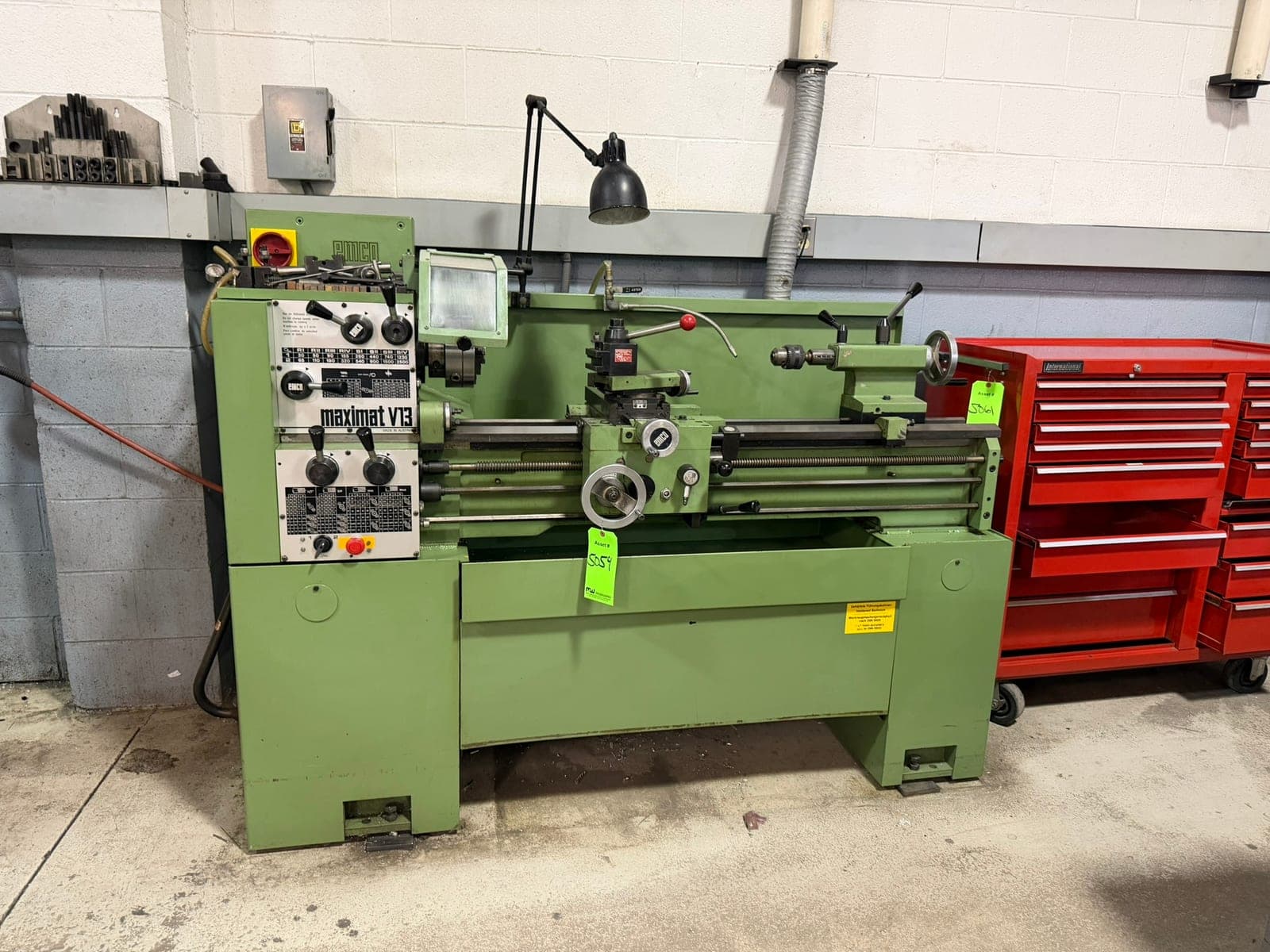
An engine lathe turns a round part with a chuck or between centers, and a person runs the carriage. Gears select the speed and the feed. There is no program. It is the machine for a one-off shaft, a bushing, a thread you cut with the leadscrew, or a repair that does not belong on a CNC turning center. Swing over the bed is the largest diameter that clears. Swing over the cross slide is smaller, and that is the number that matters once a tool is in the cut. Distance between centers is the longest shaft.
The bore through the spindle is the bar or the slug that can pass the headstock. A gap bed, when the machine has one, drops a section of the ways so a flange larger than the swing can hang beside the headstock. It is a feature you either need or you do not. The leadscrew and the gearbox have to cut the pitches you use. A quick-change box that will not engage a pitch is a lathe that will not thread. Spindle speeds, from a geared head, have to include a slow speed for a large diameter and a faster one for a small one.
Centers, the tailstock and the chuck are the holding. A tailstock that is off center turns a taper you did not ask for. A chuck with bell-mouthed jaws will not hold a finish. Ways wear in the first foot, where every job lives, and a lathe can look straight and still turn a taper there. Indicate a bar between centers before you believe the ways. The cross slide and the compound should lock without a jump.
A used engine lathe should be run in backgear and at a higher speed. Listen to the headstock. Engage a feed and a thread. Measure the bore and the swing you actually need, including the tool. A CNC turning center will repeat a program. This machine will let a person chase a single repair. Buy it for that, and confirm the centers and a chuck come with it. Oil level in the headstock and a leadscrew that is not a dry rust line are the two things a glossy paint job hides.
How to Choose a Used Engine Lathe
Gap Bed vs Straight Bed Engine Lathe
A straight bed is simpler and stiffer for work that fits the swing. A gap bed lets you swing a larger diameter for a short distance in front of the headstock, then return to a normal shaft along the bed.
Take the gap only if you actually have that flange or that large diameter. A gap you never use is a joint in the bed. Swing over the cross slide is smaller than swing over the bed. Measure both against the part, not against the biggest number on the plate.
How to Size an Engine Lathe
Size swing to the largest diameter, distance between centers to the longest shaft, and spindle bore to any bar that must pass the headstock. The gearbox has to cut the threads you need.
Horsepower and bed weight follow the cut. A light lathe with a long bed will chatter on a heavy roughing pass. Centers, a chuck and a tool post have to be with the machine or in your drawer. Voltage is part of the size if the motor is three phase. Bring the longest shaft you turn with you.
Engine Lathe Specs to Compare
| Spec | Why it matters |
|---|---|
| Swing | Swing is the largest diameter you can turn. The cross slide number is the one that bites on a facing cut. |
| Distance between centers | A shaft longer than the centers will not fit. Bed length is the size, not a guess from the photo. |
| Spindle bore | Bar that must pass the spindle has to clear the bore. A longer bed does not drill the spindle. |
| Gearbox threads | If the thread you need is not in the box, the lathe will not invent it. Read the plate. |
| Gap | A gap swings a short large diameter. A straight bed is simpler when you never need that diameter. |
| Drive | Speeds have to cover the diameters you turn. A head with no slow speed will not face a large part. |
Swing
Swing is the largest diameter you can turn. The cross slide number is the one that bites on a facing cut.
Distance between centers
A shaft longer than the centers will not fit. Bed length is the size, not a guess from the photo.
Spindle bore
Bar that must pass the spindle has to clear the bore. A longer bed does not drill the spindle.
Gearbox threads
If the thread you need is not in the box, the lathe will not invent it. Read the plate.
Gap
A gap swings a short large diameter. A straight bed is simpler when you never need that diameter.
Drive
Speeds have to cover the diameters you turn. A head with no slow speed will not face a large part.
What to Inspect on a Used Engine Lathe
Turn the spindle by hand
Listen to the headstock. A growl or a tight spot is bearings, and it will be worse under a cut.
Feel the carriage
The carriage should move the length of the bed without a tight spot. A scored bed appears here.
Engage the feeds
Longitudinal and cross feeds should engage and release. A leadscrew that skips will not cut a thread.
Read swing and centers
Measure against your largest diameter and your longest shaft. The plate and the part have to agree.
Check the spindle bore
A bar you need to pass must clear the bore. Look through it. A sleeve or a center may be stuck inside.
Inspect the gap
If there is a gap, the block should seat and clamp. A gap that rocks is a finish problem on large diameters.
Confirm chuck and centers
A lathe without a chuck or centers is not ready to turn. See what is actually on the spindle.
Related Equipment
- Mills & Drills
Knee mills and drill presses beside the lathe
- Lathes & Turning Centers
A CNC lathe when the job is production
- Knee Mills
Mill a feature this lathe will not
Common Applications
Frequently Asked Questions
How do I size an engine lathe for swing and centers?
Swing over the bed has to clear the largest diameter, and swing over the cross slide is the number that matters when you face. Distance between centers has to take the longest shaft, including the centers themselves. Spindle bore has to pass any bar that goes through the headstock. The gearbox has to include the threads you cut. A gap adds a short larger swing and is useless if you never have that part. Horsepower and the weight of the bed decide whether a heavy cut chatters.
What should I inspect on a used engine lathe?
Turn the spindle by hand and listen. Move the carriage the length of the bed and feel for a tight spot or a score. Engage both feeds and see that the leadscrew drives. Read swing, centers and bore against your work. If there is a gap, seat the block and see that it clamps. Look for a chuck and centers, because a bare spindle is not a ready lathe. A pretty apron on a noisy headstock is the wrong bargain. Power up only after the hand turn sounds clean.
How is an engine lathe different from a CNC turning center?
An engine lathe is geared and manual. A person selects the speed, sets the tool and watches the cut. A CNC turning center runs a program, often with a turret and a bar feeder, and it is built for a repeat. The engine lathe is the toolroom and the repair machine. It will not keep up with a production bar job, and it should not be asked to. If you need unattended cycles, shop the CNC lathe group.
What spindle bore should an engine lathe have?
Large enough for any bar or tube that must pass the headstock, and no larger than you need if that extra bore cost you rigidity you wanted. Look through the spindle. A stuck sleeve changes the real bore. The bore does not change the swing over the bed. A long bed with a small bore still will not swallow a large bar. Bring the bar diameter. If nothing passes through, the bore matters less than swing and centers, and you can stop worrying about it.
Does a gap bed change which engine lathe I buy?
Only if you swing a diameter larger than the straight bed allows, and only for a short length in front of the headstock. A flange is the usual reason. A gap you never open is a joint in the bed you did not need. The block has to seat solidly. Swing over the carriage is still the limit for a long cut. If all of your work fits the straight swing, buy the straight bed and spend the attention on the headstock and the ways.
Which threads matter on an engine lathe gearbox?
The pitches you actually cut. The plate on the headstock lists them. If a thread is missing, the lathe will not approximate it into a gauge. Metric and inch mixes are a common surprise on an older machine. Read the plate before you load the truck. A leadscrew that is worn will not hold even a pitch that is noted, so feel the carriage under power too. The gearbox is the threading tool. The chuck is not.
