Used Heat Stakers for Sale
See all 9 Plastics Assembly & Welding →
2 results
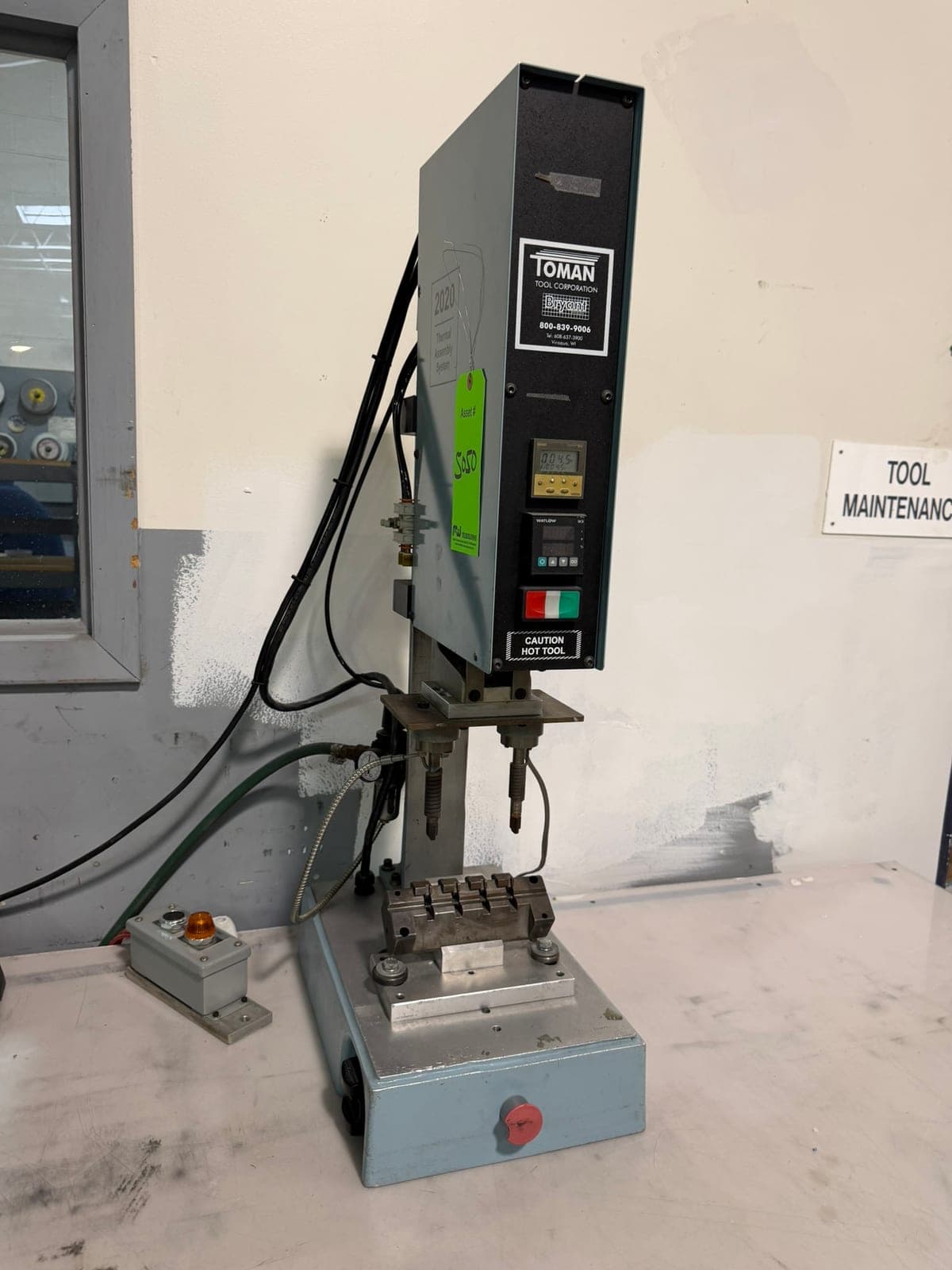
Lot 12
Toman Tool Thermal Assembly System / Heat Stake Press
Naperville, IL
Live auction · Tue, Oct 27, 10:00 AM CT
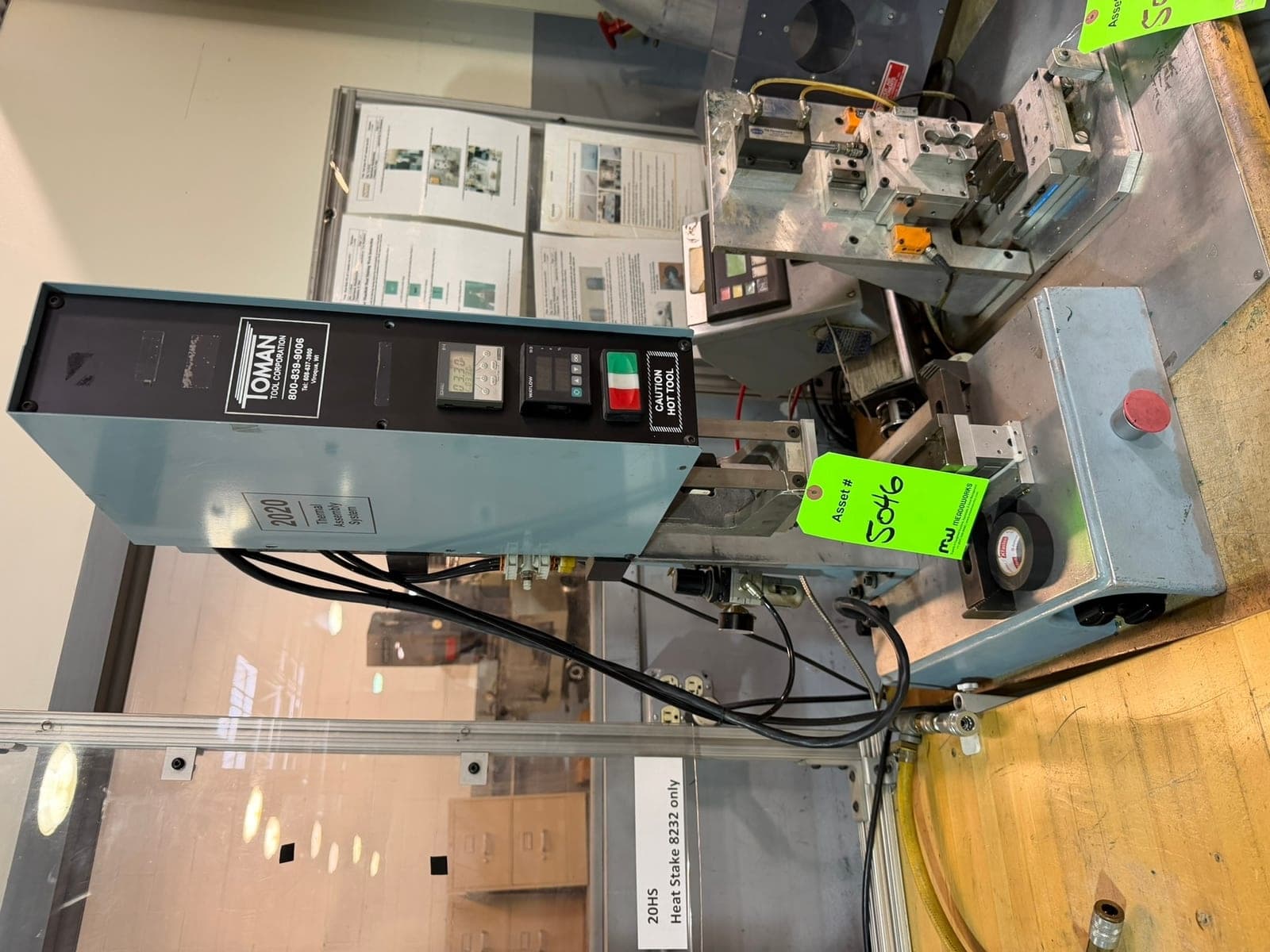
Lot 11
Toman Tool Thermal Assembly System / Heat Stake Press
Naperville, IL
Live auction · Tue, Oct 27, 10:00 AM CT
Looking for Something Specific?
Most of our inventory sells before we can list it online. If you need a specific brand, model, or specification, tell us what you need—we have access to unlisted equipment and machines coming in from plant closures.
Looking to Sell?
Meadoworks is an active cash buyer of used industrial equipment. Get a free valuation from our AMEA-certified appraisers.
About Used Heat Stakers
Heat staking forms a head on a molded plastic boss so the boss can capture a board, a filter, a lens or a second piece. A heated tip comes down, softens the stud and shapes the plastic into the cavity of the tip. The ram stays down while the head sets. It is a thermal process. There is no horn, no booster and no ultrasonic generator. The tip and the boss have to match, or the stud mushrooms, or the head will not clear the hole it is supposed to lock. A cold cycle only burnishes the plastic and looks finished until someone pulls the parts apart.
A light bench press is the right layout for one small stud. Toman's smaller pneumatic frames develop about 120 lb, and the heavier bench version about 500 lb, enough for several stakes or inserts up to about 3/8 in. A single-point automation frame rated near 1,200 lb at 100 psi is the step up when the stud is large or the station has to drop into a line. Those frames list a stroke near 4 in and a tip range of about 80 to 999 °F. One boss can be one tip. A pattern of studs wants a plate, and Toman's line frames offer from one heat zone up past a dozen, each on its own control, so the far boss is not left cold. Low pressure and a real dwell beat a hard slam. Too much heat degrades the resin and leaves a brittle head. Too little heat cracks the stud by cold deformation. Glass-filled nylon and common grades such as polypropylene, ABS and polycarbonate will form when the tip, the time and the stud diameter agree. Thermosets will not reform this way.
The station sits after the molding press, in a nest that locates the part before the tips come down. Load the mating piece first, then cycle. Do not buy this process for a joint that was designed with an energy director. Vibration welding is the tool for that feature. Do not buy it to lay a silicone bead. A meter mix head does that. Air and a heater circuit are the utilities. A light housing can live on a bench. A wide pattern needs a slide that stays square so every tip hits its boss.
Cycle a used heat staking press on a real boss and look at the head, not only at the travel of the ram. The tip should climb to setpoint and hold, and the ram should stay down for the full dwell. A leak that lifts early leaves a head that springs back. Worn tips are the usual wear item, and they are obvious if you form a part.
Meadoworks takes these presses from molding cells, consignments and auctions. You can stake a coupon on the floor before the skid is built, and a small bench unit usually rides with the cell rather than on its own trailer. A dead cartridge or a bad probe is the fault to find while the tip is still on the machine.
How to Choose a Used Heat Staker
Heat Staking vs an Ultrasonic Weld
Heat staking forms a stud. An ultrasonic weld melts a designed joint. If the plastic feature is a boss that must capture another piece, you want a heated tip and a dwell, not a horn. If the feature is a tongue, a shear joint or an energy director, you want vibration. Running the wrong process marks the part and still fails a pull test.
Cosmetics follow the same split. A tip leaves a formed head where the stud was. A horn can print a mark on a show surface near the joint. Pick the feature you actually have, then shop the machine that makes that feature. The two frames can share a bench. They cannot share a tool.
How to Size Heat Staking Tips and Dwell
Match each tip to the boss diameter and to the head shape you need, a dome or a flare that clears the mating hole. One stud is a single-point setup. A pattern of studs is a multi-point plate, and the press has to deliver even pressure across that plate or the far bosses under-form. Light benches are rated near 120 lb, heavier benches near 500 lb, and a single-point line frame near 1,200 lb at 100 psi.
Temperature and dwell do the melting. Toman's controllers span about 80 to 999 °F. Too little heat and the head springs back or the stud cracks. Too much heat and the resin degrades. Start from the resin and the stud size, then confirm on a real part. Air pressure has to hold the tip through the dwell without bouncing.
Heat Staker Specs to Compare
| Spec | Typical range | Why it matters |
|---|---|---|
| Number of tips | 1 to 12 zones | One boss is a single tip. A pattern of studs needs a plate, and each zone should be able to hold its own heat. |
| Tip temperature | 80 to 999 °F | The tip has to soften the stud without burning it. A cold tip only burnishes the boss. |
| Dwell time | Dwell is how long the head is held while it sets. Too short and the head springs back after the tip lifts. | |
| Press force | 120 to 1,200 lb | Force forms the head. Uneven force on a multi-point plate leaves the far bosses unfinished. |
| Boss diameter | Up to about 3/8 in | A tip that is the wrong size mushrooms the stud or will not clear the mating hole. |
| Slide stroke | About 4 in | Stroke has to clear the mating piece and still reach the boss. A short slide will not set up. |
Number of tips
Typical range: 1 to 12 zones
One boss is a single tip. A pattern of studs needs a plate, and each zone should be able to hold its own heat.
Tip temperature
Typical range: 80 to 999 °F
The tip has to soften the stud without burning it. A cold tip only burnishes the boss.
Dwell time
Dwell is how long the head is held while it sets. Too short and the head springs back after the tip lifts.
Press force
Typical range: 120 to 1,200 lb
Force forms the head. Uneven force on a multi-point plate leaves the far bosses unfinished.
Boss diameter
Typical range: Up to about 3/8 in
A tip that is the wrong size mushrooms the stud or will not clear the mating hole.
Slide stroke
Typical range: About 4 in
Stroke has to clear the mating piece and still reach the boss. A short slide will not set up.
What to Inspect on a Used Heat Staker
Form a head on a boss
Look at the head, not only the slide. A full head that clears the hole is the test. A smear is not.
Match tips to bosses
Each tip should fit the stud diameter and the head shape you need. Extra time will not save a wrong tip.
Check heater response
The tip should climb to setpoint and hold. A dead cartridge or a bad probe leaves a cold stake.
Watch the dwell hold
The press should stay down for the full dwell. A leak that lifts early leaves a head that springs back.
Feel the slide
Side play throws multi-point tips off the bosses. Square travel matters more than a fresh paint job.
Inspect the nest
A worn nest lets the part shift, so one boss forms and the next one misses. Locate the part first.
Read air and voltage
Confirm shop air and the heater supply match the cell. A voltage miss stops the tips before they heat.
Related Equipment
- Plastics Assembly & Welding
Weld, stake and dispense in one overview
- Ultrasonic Welders
Vibration joints, not formed bosses
- Dispensing
Beads and shots instead of a stake
Heat Stakers Brands We've Sold
Common Applications
Frequently Asked Questions
What does heat staking do to a molded boss?
Heat staking softens a plastic stud with a heated tip and forms a head that captures a mating piece. The press holds through a dwell so the head sets before the tip lifts. It is a thermal process, so there is no horn and no ultrasonic generator. The tip has to match the boss diameter. A mismatch mushrooms the stud or leaves a head that will not pass the hole it is supposed to lock. One boss can be a single tip. A pattern wants several tips, each able to hold its own temperature.
How do I set heat staking tip temperature and dwell?
Match the tip to the stud diameter and to the head you need, then set temperature and dwell for that resin. Bench controllers of this type span about 80 to 999 °F. A cold tip only burnishes the boss or cracks it. A tip that is too hot degrades the plastic and leaves a brittle head. Dwell has to be long enough for the head to set under pressure. A pattern of studs needs a multi-point plate and a press that loads every tip evenly. Air pressure has to hold through the dwell.
How is heat staking different from an ultrasonic weld?
Heat staking forms a boss into a head. An ultrasonic weld melts a joint that was designed with an energy director. The machines are not convertible. A horn on a stud marks the plastic and still does not make a retaining head. A heated tip on a weld joint smears the director and does not make a structural weld. Shop the feature you have. A stud means a heated tip and a dwell. A designed weld joint means vibration, a horn and a generator.
What should I check on a used heat stake press?
Stake a real boss and look at the head. Confirm each tip matches a stud you actually mold, and that the heater reaches setpoint and holds. The slide should stay down for the full dwell and travel square, especially on a multi-point plate. A worn nest lets the part shift so one boss forms and the next misses. Read air and voltage against the cell. Worn tips are the usual wear item, and they are obvious if you form a part instead of only jogging the ram.
Which thermoplastics are a normal fit for heat staking?
Most thermoplastics that can be softened and reformed will stake, including polypropylene, ABS, polycarbonate and glass-filled nylon, when the tip temperature and the dwell match the stud. The limit is the resin, not a brand of press. A resin that degrades as soon as it softens needs a lower tip temperature and a longer dwell, or it needs a different joint. Thermosets do not reform this way. Confirm the grade on a coupon before you commit the press to a cell.
Does heat staking need a horn or a booster?
No. Those parts belong to an ultrasonic stack. Heat staking uses a heated metal tip, a temperature control and a press that can dwell. Buyers sometimes ask for a booster because the two machines sit in the same assembly aisle. There is nothing to tune at 20 or 40 kHz on a stake press. Spend the attention on tip shape, heater health and whether the slide holds force. If the quote mentions a horn, you are looking at a welder.
