Used Dispensing Systems for Sale
See all 9 Plastics Assembly & Welding →
2 results
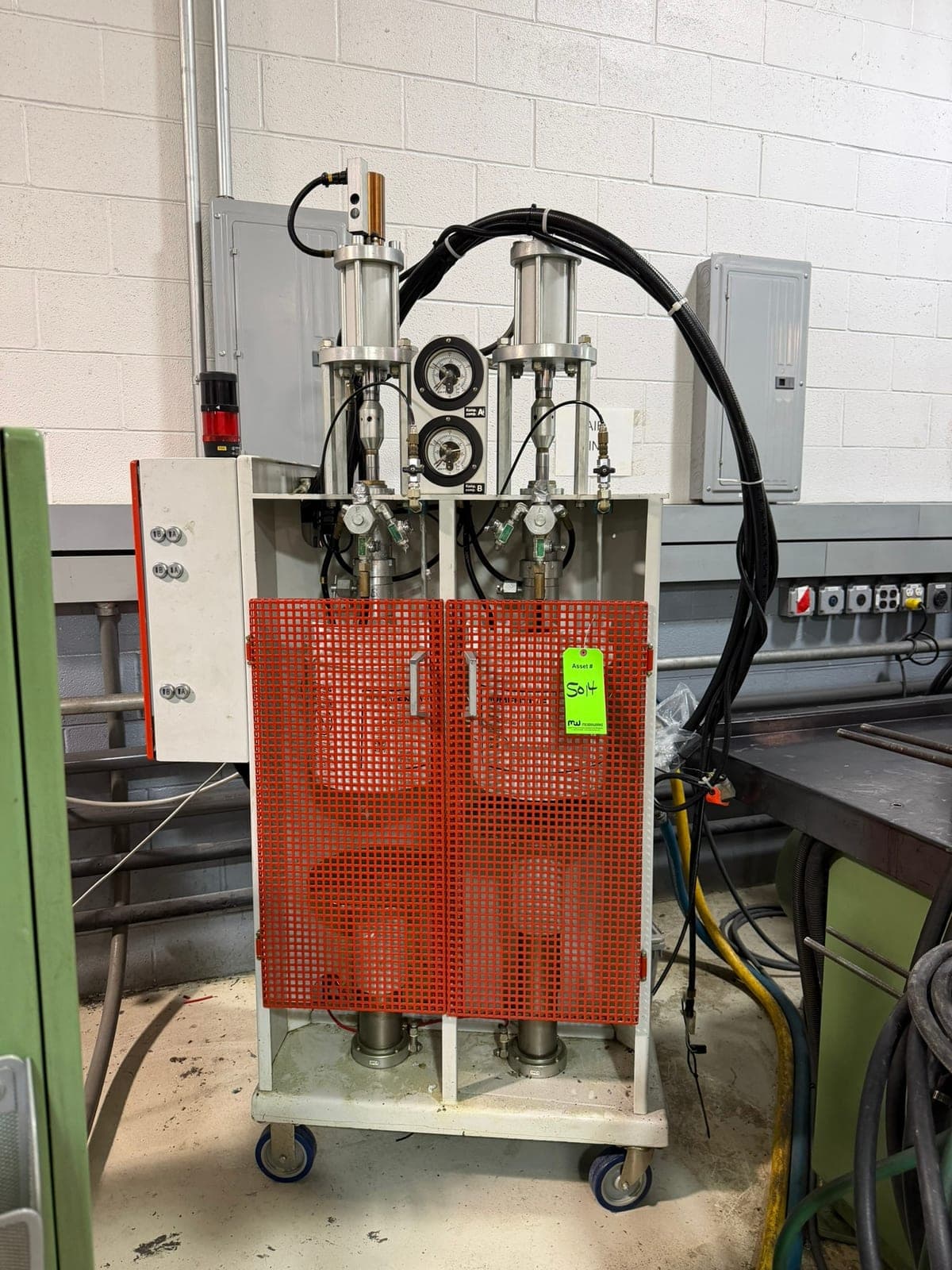
Lot 121
2KM Two-Component Metering and Mixing System
Naperville, IL
Live auction · Tue, Oct 27, 10:00 AM CT

Fluid Automation - 622-1A LSR Mixing & Dispensing System
USA
Looking for Something Specific?
Most of our inventory sells before we can list it online. If you need a specific brand, model, or specification, tell us what you need—we have access to unlisted equipment and machines coming in from plant closures.
Looking to Sell?
Meadoworks is an active cash buyer of used industrial equipment. Get a free valuation from our AMEA-certified appraisers.
About Used Dispensing Systems
A meter mix machine pumps two liquid components at a set ratio, blends them and lays down a shot or a bead. Silicone and epoxy are the usual materials on a plastics cell, including liquid silicone rubber that is mixed just before it hits the part. The pumps, not a hand cartridge, are what keep the ratio steady when the job runs all day. Parts stay apart until they meet at the nozzle, so the pot life of the mixed material is a nozzle problem rather than a tank problem. A static mixer is the simple blend for many epoxies and silicones. Nordson EFD notes that most two-part epoxies want a static mixer with about 15 to 24 elements, and more when the ratio is wide or the two viscosities are far apart. A dynamic mixer is the step up when the materials are thick or awkward to fold in a tube.
Ratio and shot size are the two numbers that size the unit. Graco's LSR frames are built around a 1:1 silicone ratio, with an optional kit that trims that from about 0.8:1 to 1.20:1, and they are rated for viscosities from about 50,000 to 5,000,000 cps. EFD's two-component manifolds are offered for 1:1 and for wider 4:1 or 10:1 paths. A pump that cannot hold the ratio cures soft, or it does not cure. Filled or abrasive sides score a light pump that was built for a thin epoxy. Contour motion follows a path so a gasket lands in a groove. A fixed valve over a nest is enough when every shot lands in the same pocket. Flow has to keep up with parts per hour or the far end of a bead starves.
The station sits after molding when the part needs a gasket, a potting shot or an adhesive, not a weld and not a formed boss. The dispensing system is the head that places what the pumps have already proportioned. Do not size it from press tonnage. Size it from the bead volume, the ratio on the resin sheet and the parts per hour. Air, voltage and a purge cup are the practical utilities. A weld horn will not do this job, and a stake tip will not either.
Ask to purge a used meter mix unit and to weigh a shot. A quiet cabinet can hide a pump that has drifted off ratio, and a display can agree with a worn section. Hardened residue in the mixer means the last job was left to cure in the head. Leaking seals and a kinked hose starve one side without a dramatic noise.
Meadoworks releases these skids from silicone and epoxy cells in closures and auctions. Seals, hoses and the mixer can be opened before you commit, and the pumps can ship beside the press they fed. Residue you can see on the floor is a cleaning job. Residue you discover after the skid arrives is a lost shift.
How to Choose a Used Dispensing System
Shot vs Bead on a Meter Mix Head
A shot drops a set volume into a pot or a pocket. A bead follows a path, usually a groove that will become a gasket. The pumps can be the same. The motion is not. A fixed valve over a nest is enough for a shot that always lands in one place. A bead needs contour motion, a robot or a slide that traces the groove at a steady speed.
Pot life decides the rest. Material that cures in minutes has to be mixed at the nozzle and purged often. The two sides stay apart until that nozzle, which is why a disposable static mixer is the usual cleanup. Write down shot size or bead length before you compare cabinets.
How to Size a Meter Mix Ratio
Read the resin sheet for the mix ratio by volume or by weight, and for the viscosity of each side. The pumps have to hit that ratio across the shot size you actually run, not just at one lucky setpoint. Liquid silicone frames are often built at 1:1, with a narrow trim around that ratio. Epoxy paths are commonly 1:1, 4:1 or 10:1. A small gasket and a large potting shot may not share a pump size.
Filler changes the pump. Abrasive or heavily filled sides score seals and need a pump built for that duty. Then match flow to parts per hour so the bead does not starve at the far end of the path. Air and voltage still have to match the cell.
Dispensing System Specs to Compare
| Spec | Typical range | Why it matters |
|---|---|---|
| Mix ratio | 1:1 up to 10:1 | Cured properties depend on ratio. A pump that drifts softens the gasket or leaves it uncured. |
| Shot or bead volume | About 10 g/min and up | Volume per cycle has to fill the joint without starving the end of a long bead. |
| Mixer type | 15 to 24 elements | Many epoxies want that many static elements. Thick ratios or LSR may need a different mixer. |
| Viscosity range | 50,000 to 5,000,000 cps | An LSR pump covers that span. A pump built for a thin resin will not push a paste. |
| Motion | A shot can land in one nest. A gasket bead needs a path that tracks the groove at a steady speed. | |
| Purge and pot life | Mixed material left in the nozzle cures into a plug. Pot life sets how often you must purge or swap the mixer. |
Mix ratio
Typical range: 1:1 up to 10:1
Cured properties depend on ratio. A pump that drifts softens the gasket or leaves it uncured.
Shot or bead volume
Typical range: About 10 g/min and up
Volume per cycle has to fill the joint without starving the end of a long bead.
Mixer type
Typical range: 15 to 24 elements
Many epoxies want that many static elements. Thick ratios or LSR may need a different mixer.
Viscosity range
Typical range: 50,000 to 5,000,000 cps
An LSR pump covers that span. A pump built for a thin resin will not push a paste.
Motion
A shot can land in one nest. A gasket bead needs a path that tracks the groove at a steady speed.
Purge and pot life
Mixed material left in the nozzle cures into a plug. Pot life sets how often you must purge or swap the mixer.
What to Inspect on a Used Dispensing System
Weigh a dispensed shot
A scale shows whether the ratio and the volume are real. A display alone can agree with a worn pump.
Purge the mixer
Hardened residue in the mixer or the nozzle means the last job was left to cure in the head.
Inspect pump seals
Leaking seals and scored cylinders lose ratio first. Look for wet fittings and dried material on the shafts.
Check hoses and valves
A kinked hose or a sticky valve starves one side and the mix goes off ratio without a loud failure.
Watch the motion path
On a contour unit, the head should track smoothly. A jerky axis leaves a bead that is thick, then thin.
Read ratio and materials
Confirm the pumps were built for your ratio and viscosity, including filled silicone if that is the job.
Match air and voltage
The pumps and the motion pack need the supply on the plate. A mismatch stops the head before it dispenses.
Meadoworks Track Record
11
Sold through Meadoworks
2
Listed now
Makes we have handled most
Common models
Fluid Automation 622-1A, EFD Ultra TT Series 325, Graco C500 - 3D Contour Motion Material Dispenser
Related Equipment
- Plastics Assembly & Welding
Weld and stake beside the dispense step
- Ultrasonic Welders
A welded joint instead of a bead
- Heat Stakers
A formed boss instead of a gasket
Dispensing Systems Brands We've Sold
Common Applications
Frequently Asked Questions
How do I size a meter mix system for a two-part resin?
Read the ratio and the viscosity on the resin sheet, then the volume you must place on one part. The pumps have to hold that ratio at the shot size you actually run, not only at a single demo setpoint. Silicone frames are often 1:1. Epoxy paths include 1:1, 4:1 and 10:1. A small gasket and a large pot may need different pump displacement. Filled or abrasive sides need a pump that can pass the filler. Flow has to keep up with parts per hour so the end of a bead is not starved.
What is the difference between a meter mix shot and a bead?
A shot is a set volume dropped into a pocket or a pot. A bead is a continuous path, usually a groove that becomes a gasket. The same pumps can feed either one. The motion cannot. A fixed valve over a nest is enough for a shot that always lands in one place. A bead needs a slide, a robot or contour motion that tracks the groove at a steady speed. Pot life still decides how quickly the mixed material must leave the nozzle before it starts to cure.
What should I inspect on a used meter mix machine?
Purge it and weigh a shot. The scale is the honest check on ratio and volume. Look for hardened material in the mixer and the nozzle, leaking seals, and scored pump sections. A kinked hose or a sticky valve can starve one side without a loud failure. If the head moves on a path, watch that path for a jerk that will leave a thick-and-thin bead. Confirm the pumps match your viscosity, including filled silicone if that is what you run.
When do I need a dispensing system instead of a cartridge?
A cartridge is fine for a few parts and a forgiving ratio. A dispensing system, fed by meter mix pumps, is what you want when the ratio has to stay put across a shift and the bead or the shot repeats. Hand mixing drifts, and a tired cartridge hides that drift until parts fail a leak test. If the cell already runs all day, put the proportioning in the machine and keep the operator on loading parts, not on folding two liquids by hand.
Can a meter mix unit handle filled LSR?
Only if the pumps, seals and valves were built for a filled or abrasive fluid. A light pump sized for a thin epoxy will score and lose ratio on a filled liquid silicone. Ask what ran through the machine, not only the cabinet name. LSR metering systems are a common fit for two-part silicone and are often rated into the millions of centipoise. Epoxy potting is a different viscosity and often a different pump. Match the duty, then match the shot size.
Where does a meter mix station sit after molding?
After the press, when the part needs a gasket, a potting shot or an adhesive. It does not weld a joint and it does not form a boss. Those are the ultrasonic press and the heat-stake press. The head needs a nest, a purge cup and enough room to move if the bead follows a path. Air and voltage are the usual utilities. When a closure sells the press and the dispenser together, keep them paired so the fixture stays with the pumps.
