Used Palletizers for Sale
See all 1 Packaging & Labeling →
Nothing is listed right now — these are machines we've recently sold. or tell us what you need.
Recently sold
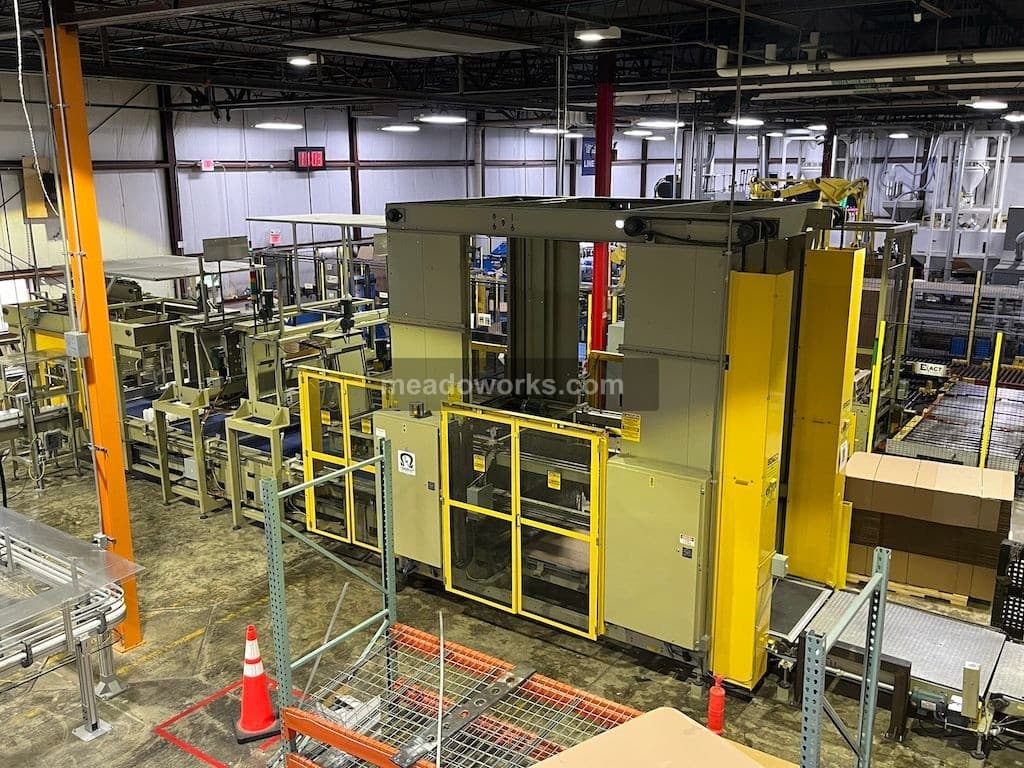 SOLD
SOLDOMS BKP-IIOWS-575-LT-I
USA
 SOLD
SOLD2003 Emmetti Palletizer
USA
 SOLD
SOLDSeco 30-2P High Level Semi Automatic Palletizer
USA
 SOLD
SOLD2003 Emmetti Palletizer
USA
 SOLD
SOLDGoldco R1406ACS-L Automatic High Level Palletizer
USA
 SOLD
SOLDSeco 40-2P High Level Semi Automatic Palletizer
USA
Looking for Something Specific?
Most of our inventory sells before we can list it online. If you need a specific brand, model, or specification, tell us what you need—we have access to unlisted equipment and machines coming in from plant closures.
Looking to Sell?
Meadoworks is an active cash buyer of used industrial equipment. Get a free valuation from our AMEA-certified appraisers.
About Used Palletizers
A palletizer takes cases, bags or bundles off a line and stacks them in a pattern on a pallet. Conventional machines build each layer with stops, pushers or a row former, then place that layer on the load. Robotic cells pick with an arm and suit lines that change patterns often or mix products. It does not wind film. The stretch wrapper downstream only contains the stack this machine made.
Infeed height is the first fork. A high-level machine takes cases from an overhead conveyor, usually off a mezzanine, and builds the load from the top. A low-level machine takes cases at floor height, which is easier to clear when a case jams, and it uses more floor. Either one has to keep up with the case sealer at your largest case, not the smallest case on a spec sheet. The pattern, column or interlocked, has to be one your case can survive. A soft carton that cannot be pushed will not become a square layer because a brochure shows a neat picture.
Pallet size, load height and case rate are the numbers. A dispenser that feeds empty pallets, and a discharge conveyor that takes the full load away, are often quoted as options and are often missing on a used frame. Slip sheets and tier sheets are more options. Without a way to get empty pallets in and full loads out, the stacker is a monument. Guarding and a light curtain are part of running it, because the layer former moves through a space a person can walk into.
Wear collects in the pusher slides, the hoist that lowers or lifts the load, and the case stops. A layer that drops crooked is a slide, a brake or a photoeye, and it will crush product before it looks dramatic. Run your case. A machine that was happy on a rigid shipper can stall on a flimsy one.
A used palletizer should be watched through a full pallet, including the empty-pallet feed if it has one. Count cases per minute at your case, not the nameplate peak. Measure the infeed elevation against the conveyor you actually have. A high-level frame on a floor-level line is a mezzanine project. Write down the patterns stored in the control and whether your crew can still edit them. Emmetti and Seco are names that repeat on conventional stackers.
How to Choose a Used Palletizer
High-Level vs Low-Level Palletizer
High-level infeed keeps cases upstairs and builds the load at that elevation. It suits a mezzanine or a conveyor that is already high. Low-level infeed takes cases near the floor and raises the load or the cases as the pallet grows. It suits a plant that does not want a platform.
The pattern hardware can look similar. The building does not. Measure infeed height and the ceiling before you fall in love with a rate. A tall mast in a short room is not a find. Measure the ceiling before you compare rates.
How to Size a Palletizer
Size to the case footprint, the layer pattern and the cases per minute leaving the sealer. The pallet size has to be one you already ship. Infeed height has to meet your conveyor without a second engineering project.
Confirm whether pallets are dispensed automatically. A rate that assumes a person is feeding pallets is a different machine from the number on the guard. Leave room for the full load to leave, and for the wrapper that usually sits next. That exit path is part of the size you must check.
Palletizer Specs to Compare
| Spec | Why it matters |
|---|---|
| Infeed height | The cases have to meet the machine where your conveyor already is. A mezzanine and a floor line are different buys. |
| Case size range | The layer has to match the case. A pattern built for a different footprint overhangs or collapses. |
| Pallet size | The hoist and the discharge have to take that pallet. A mismatch is a handling change, not a setting. |
| Rate | The palletizer has to keep up with the sealer. A slower machine turns into a pile of cases on the floor. |
| Pattern | The pattern is stability. A pretty layout that your case cannot form will not ship. |
| Pallet handling | Automatic rates assume empty pallets arrive on their own. A person feeding pallets is a different cycle. |
Infeed height
The cases have to meet the machine where your conveyor already is. A mezzanine and a floor line are different buys.
Case size range
The layer has to match the case. A pattern built for a different footprint overhangs or collapses.
Pallet size
The hoist and the discharge have to take that pallet. A mismatch is a handling change, not a setting.
Rate
The palletizer has to keep up with the sealer. A slower machine turns into a pile of cases on the floor.
Pattern
The pattern is stability. A pretty layout that your case cannot form will not ship.
Pallet handling
Automatic rates assume empty pallets arrive on their own. A person feeding pallets is a different cycle.
What to Inspect on a Used Palletizer
Form a layer with cases
Watch a real layer. Empty motions do not show a case that hangs off the pallet or a pusher that misses.
Measure infeed height
Compare it with your conveyor. A high-level machine in a floor-level plant is a platform project.
Check pushers and stops
Bent stops and worn pushers make a loose layer. Look at the parts that actually touch the case.
Run the hoist
The lift should be smooth under a load. A jerky hoist drops a layer or shocks the mast.
Confirm pallet size
The dispenser and the discharge have to take the pallet you ship. Bring the dimension, not a guess.
Read the rate honestly
Ask what case and pattern produced the number. A rate on a tiny case will not repeat on yours.
Look at ceiling and floor
The mast has to fit the room, and the floor has to carry a full pallet cycling all day.
Related Equipment
- Stretch Wrappers
Film the load after the pattern exists
- Case Packers & Tapers
Close cartons before they are stacked
- Labelers
Label the container before the case
Palletizers Brands We've Sold
Common Applications
Frequently Asked Questions
How do I size a palletizer for case rate?
Start with the cases per minute leaving the sealer, the case footprint and the pallet you ship. The layer pattern has to be one those cases can form without overhang. Infeed height has to meet the conveyor you have, high-level or low-level. A rate printed for a small case will not repeat on a larger one. Confirm whether empty pallets are dispensed or handed in by a person. Leave room for the full load to exit and for the wrapper that usually sits next in line.
What should I inspect on a used palletizer?
Run cases and watch a layer. Bent pushers, worn stops and a hoist that jerks appear as a loose or dropped layer. Measure infeed height against your conveyor so you do not discover a mezzanine problem at install. Confirm the pallet size at the dispenser and the discharge. Ask which case produced the rate on the guard. Look at ceiling clearance for the mast and at the floor under a full pallet. A machine that only cycles with no cases has not shown you a pattern.
High-level or low-level: which palletizer fits the line?
Choose high-level when cases already travel on a mezzanine or a high conveyor and you want the layer built up there. Choose low-level when cases arrive near the floor and you would rather not build a platform. The pattern parts can look alike. The building does not. Measure the infeed and the ceiling before you compare rates. A tall mast in a short room is not a bargain. The wrapper downstream still has to accept the load height you just built.
How is a palletizer different from a stretch wrapper?
A palletizer stacks cases into a pattern. A stretch wrapper winds film around a stack that already exists. They sit next to each other and they do not swap jobs. Film will not build a layer. A hoist will not contain a load for the highway. Buy the palletizer when the missing step is the pattern. Buy the wrapper when the pattern exists and the load falls apart on the truck. The case sealer is earlier still. It closes the carton both of these machines assume is already shut.
What case sizes can a palletizer stack?
The range the stops, pushers and pattern were built for, which you should prove with your case, not with the smallest case in the manual. A footprint that overhangs the pallet or that cannot interlock will not become stable because the hoist is strong. Changeover between sizes is real work. Ask how long it takes and whether the parts are with the machine. If you run one case forever, a narrow range is fine. If you run several, the change parts matter as much as the mast.
What pattern flexibility should a palletizer have?
Enough patterns to make a stable load from the cases you actually ship, column or interlocked as the footprint allows. A controller full of patterns you will never run is not flexibility. A machine that can only build one layout is fine when you only ship one case. Watch a layer form. Gaps, overhang and a column that wants to twist appear immediately. The wrapper cannot invent stability the pattern did not provide. Set the pattern before you set the film.
