Used Rotary Screw Compressors for Sale
See all 4 Air Compressors & Air Dryers →
1 result
Looking for Something Specific?
Most of our inventory sells before we can list it online. If you need a specific brand, model, or specification, tell us what you need—we have access to unlisted equipment and machines coming in from plant closures.
Looking to Sell?
Meadoworks is an active cash buyer of used industrial equipment. Get a free valuation from our AMEA-certified appraisers.
About Used Rotary Screw Compressors
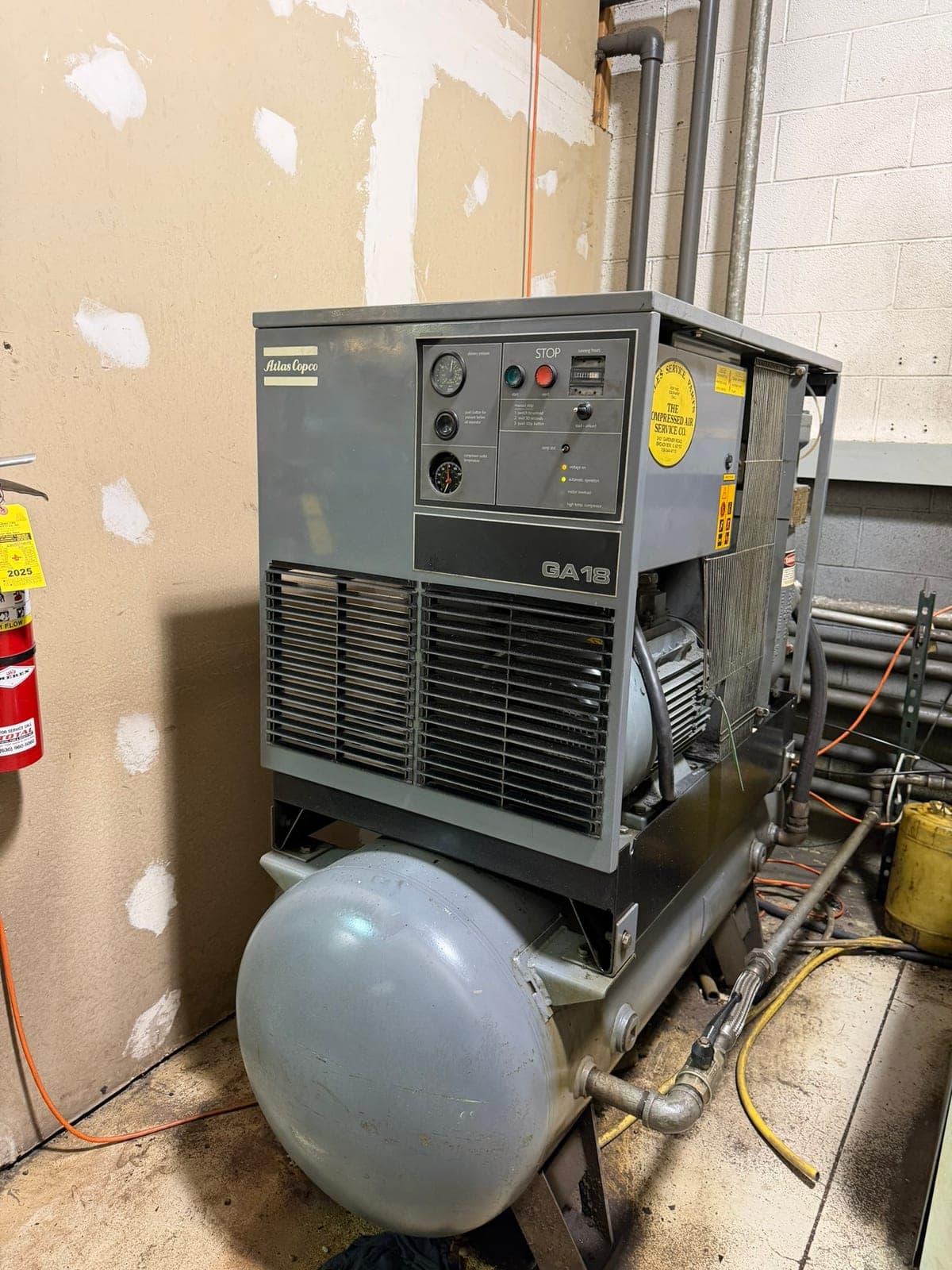
Most plants that want steady air for tools, valves and blow-off are describing an oil-injected screw package, built to stay running rather than to start and stop like a small piston unit. A rotary screw compressor in that role is shop air, sized by flow at a real pressure. Atlas Copco, Sullair and Kaeser are the names that repeat. Tank-mounted and base-mounted builds both appear. Horsepower is only a rough stand-in for the air you will get, because raising the setpoint cuts the flow the airend can deliver. High-pressure oil-free air for PET bottles is a different machine. This is ordinary shop air. Oil carryover on a flooded screw can be as little as about 3 parts per million, and a filter still belongs ahead of instruments.
The controller is the history. Kaeser Sigma Control 2 tracks load hours, the time the airend was compressing, separately from the hours the motor simply ran. A wide gap means the last plant was oversized and the unit spent time spinning unloaded. That is easier on the airend than the same hours fully loaded, and it also means you may not need that much compressor. Fixed speed loads and unloads, which is simple when demand barely moves. Atlas Copco treats a variable-speed drive as the match when demand rises and falls through the shift, and a fixed-speed package when the load stays steady. A drive that has been bypassed and only runs full on is a repair, not a variable-speed machine. Unlike a piston, a screw is built to run for long stretches without a cool-down period, so a unit that short-cycles all day was probably the wrong size for the header.
Voltage in a US plant is usually three phase, and the tag has to match the bus. An integrated dryer is convenient. A separate dryer is easier to change when it fails. Oil, the separator and the coolers are the service items. The airend is the expensive one. A knock under load is a different repair from a noisy fan. The enclosure matters when the package will sit near people rather than in a compressor room. A receiver, on the frame or on the header, covers short bursts so the airend is not chasing every trigger pull. A master controller can spread load hours across two packages instead of leaving one idling.
Buying a used rotary screw compressor means asking for load hours, pressure, flow and voltage before the paint color. A package from a closure often leaves with the dryer and the tank that sat on its header. Meadoworks takes these packages from plant closures, consignments and auctions. Buyers can inspect the cabinet and photograph the controller so the hours are visible. Do not expect this air to blow a bottle, and do not buy a high-bar skid to run an impact wrench.
How to Choose a Used Rotary Screw Compressor
How to Size a Shop Screw Compressor
Add up the tools and machines that will run together, not the nameplate of the largest one. Flow at your real pressure is the number that matters. A compressor rated at a lower pressure will look larger than it is once you raise the setpoint. Horsepower is only a rough stand-in for that flow. Leave margin for leaks and for a tool that someone will add next year. Voltage and phase have to match the plant, usually 230 or 460 volts, three phase. A tank, integrated or separate, covers short bursts so the airend is not starting constantly. If demand swings through the day, a variable-speed package earns its keep. If demand is flat, fixed speed is the simpler machine.
Hours, Load and Variable Speed
Ask for two hour readings. Run hours include idle. Load hours are the time the airend was compressing. A machine with high run hours and low load hours has been spinning unloaded, which is easier on the airend than the same hours fully loaded, and it also means the last plant was oversized. A variable-speed drive matches output to demand and spends less time in that wasteful unloaded state. A fixed-speed unit loads and unloads, which is fine when the load is steady and the controls are simple to support. Neither reading replaces a look at oil leaks, the cooler and the separator. The controller screen is the document. Photograph it.
Rotary Screw Compressor Specs to Compare
| Spec | Why it matters |
|---|---|
| Flow at pressure | Horsepower does not tell you the air you will get once the setpoint changes. |
| Drive type | Variable speed suits swinging demand. Fixed speed is simpler when the load barely moves. |
| Hours | Load hours are the airend's real work. Run hours include unloaded idle. |
| Package | A receiver covers bursts. A base mount needs a separate tank on the header. |
| Voltage | A mismatch needs a different package or a transformer before the unit can run. |
| Dryer on board | An onboard dryer is convenient. A separate dryer is easier to swap when it fails. |
Flow at pressure
Horsepower does not tell you the air you will get once the setpoint changes.
Drive type
Variable speed suits swinging demand. Fixed speed is simpler when the load barely moves.
Hours
Load hours are the airend's real work. Run hours include unloaded idle.
Package
A receiver covers bursts. A base mount needs a separate tank on the header.
Voltage
A mismatch needs a different package or a transformer before the unit can run.
Dryer on board
An onboard dryer is convenient. A separate dryer is easier to swap when it fails.
What to Inspect on a Used Rotary Screw Compressor
Photograph the controller hours
Write run hours and load hours. A blank controller hides the only history the airend has.
Read flow and pressure
Record cfm at the rated pressure. Do not compare two units on horsepower alone.
Check for oil leaks
Wet seams, a wet cooler and a separator that weeps are service items, not cosmetic dirt.
Listen to the airend
A knock or a howl under load is a different repair from a noisy fan. Run it if you can.
Confirm fixed or variable speed
A variable-speed drive that only runs at full speed is a failed drive, not a fixed-speed machine.
Match voltage and phase
Confirm the motor leads match the plant bus before you plan the install.
Note tank and dryer
See whether the receiver and the dryer are part of this package or a separate listing.
Related Equipment
- Air Compressors & Air Dryers
All shop air types before you pick a screw
- Air Dryers
Dry the air this compressor produces
- High-Pressure Compressors
PET and high-bar air, not shop screws
More in Plant & Material Handling
Rotary Screw Compressors Brands We've Sold
Common Applications
Frequently Asked Questions
What is a rotary screw compressor used for in a plant?
It makes the steady shop air that tools, valves, blow-off and ordinary cylinders run on. Atlas Copco, Sullair and Kaeser packages here are that industrial air compressor, oil-flooded and built to stay running. It is not the high-pressure oil-free machine that blows PET bottles. Read flow at a stated pressure, then hours, voltage and whether a tank or dryer is included. A piston compressor is a different pattern, better for short duty than for all-day plant air.
How should I read hours on a screw package?
Ask for run hours and load hours. Run hours count every minute the motor turned, including time spent unloaded. Load hours count only compressing. A large gap means the last plant was oversized and the airend was idling. High load hours with clean oil and a quiet airend can still be a fair buy. High load hours with a knock, a hot cooler or a separator full of oil is a different conversation. Photograph the controller. A missing screen is a missing history.
Fixed speed or variable speed for shop air?
Choose variable speed when demand rises and falls through the shift. The drive follows the header instead of loading and unloading a fixed airend. Choose fixed speed when the load is steady and you want simpler controls. A variable-speed unit that has lost its drive and only runs full speed should be priced as a repair. Either way, match flow at your pressure and match voltage to the bus. The drive type does not change the need for a dryer downstream.
How do I size flow for a shop header?
Add the air of the tools and machines that run at the same time, then add margin for leaks. Use flow at the pressure you will actually set, not horsepower and not a rating taken at a lower pressure. A receiver covers short bursts so the airend is not chasing every trigger pull. If a heatless dryer or a nitrogen generator will also draw from the header, include that purge. Voltage and phase still have to match before any of those numbers matter on the floor.
What should I inspect on a screw package?
The controller hours, oil leaks, the cooler, the separator and the sound of the airend under load. Confirm whether the speed control still varies, or whether it is stuck at full output. Read voltage. See if the tank and the dryer are in the same listing. A quiet fan and a dirty cabinet can hide a good airend, and a freshly painted cabinet can hide a tired one. Hours plus a run under load tell you more than the sheet metal.
How is shop screw air different from PET high-pressure air?
Shop screw air is oil-flooded air at ordinary plant pressure for tools and valves. PET bottle blowing wants oil-free air at a much higher pressure, from a different kind of compressor, and that equipment is a different compressor. Do not buy a shop package and expect it to blow bottles. Do not buy a high-bar PET skid to run an impact wrench. The dryer that follows a shop screw is a refrigerated or desiccant air dryer, also separate from resin drying.
