Used Air Dryers for Sale
See all 4 Air Compressors & Air Dryers →
1 result
Looking for Something Specific?
Most of our inventory sells before we can list it online. If you need a specific brand, model, or specification, tell us what you need—we have access to unlisted equipment and machines coming in from plant closures.
Looking to Sell?
Meadoworks is an active cash buyer of used industrial equipment. Get a free valuation from our AMEA-certified appraisers.
About Used Air Dryers
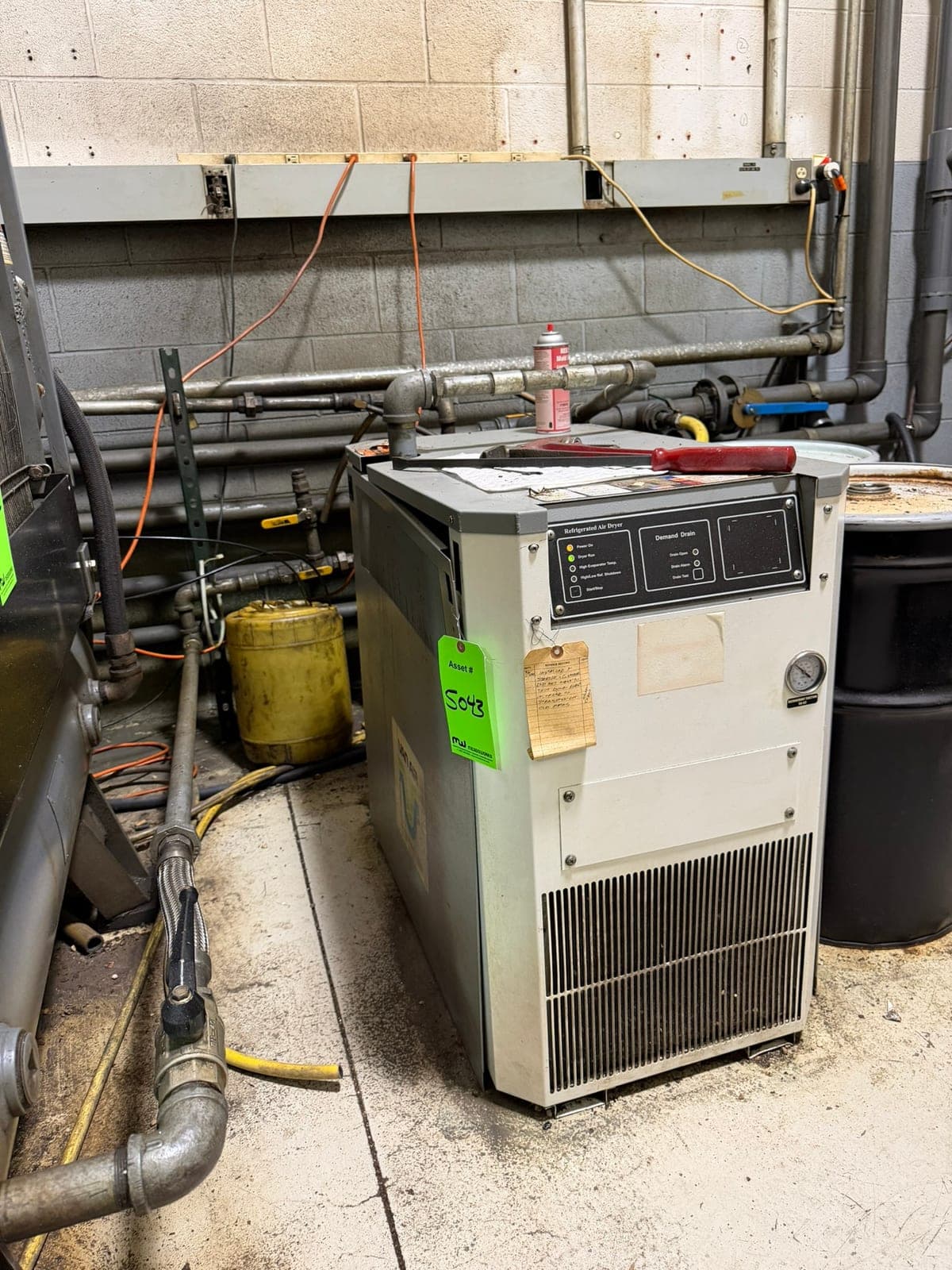
Compressed air leaves a compressor saturated. As it cools in the pipe, that vapor becomes liquid and rusts valves, instruments and tools. An air dryer is the cabinet that pulls the water out before the header. A refrigerated unit chills the stream so water drops out. Kaeser describes that class as cooling the air to about 35°F to 50°F, which sets a pressure dew point in the same band and is enough for most shop tools. Atlas Copco draws the line near 37°F: colder than that, and the job usually wants adsorption rather than refrigerant. Neither machine dries plastic pellets. Nylon and other resins belong on a resin dryer. Airtek is the name that repeats on these compressed-air cabinets.
Rated flow has to be read at a stated pressure and inlet temperature. A number printed at a cooler inlet will overstate what you get on a hot discharge. Inlet and outlet size have to meet the pipe. Maximum inlet pressure has to sit above the compressor setpoint. A small refrigerated cabinet is often single phase. Larger ones need three phase. On a heatless desiccant air dryer, Kaeser notes that about 15 percent of the dried air is spent regenerating the off-stream bed, so the compressor has to cover that extra flow. A heated design uses far less purge, on the order of 1 to 7 percent, and more power. Oil upstream of either type coats the exchanger or the beads. A coalescing filter belongs just ahead of the cabinet.
The refrigerant circuit and the drain are what fail on a refrigerated cabinet. A drain that stays open wastes air. One that stays shut sends water down the header. Kaeser's refrigerated layout reheats the dried air before it leaves, which keeps the downstream pipe from sweating. On a desiccant tower the beads are the wear item, especially if oil reached them. Channeling, a path the air cuts through the bed, reads as a dew point that will not hold even when the media still looks full. Put the cabinet after the compressor and after the air has shed some heat. A hot discharge makes the nameplate a wish.
Buying a used air dryer means matching dew point, corrected flow and voltage to the compressor it will follow. A cabinet from a closure often sat on the same header as the screw package. Meadoworks finds these cabinets in plant closures, consignments and auctions. Buyers can look at the nameplate, the drain and the inlet before they commit. Photos should show whether the cabinet is a refrigerated box or a twin-tower unit. If the job is drying pellets, this is the wrong machine.
How to Choose a Used Air Dryer
How to Size an Air Dryer
Start from the compressor, not from the cabinet color. The dryer has to pass the compressor flow at the pressure you actually run, and a rating printed at a lower pressure will overstate what you get. Dew point comes next. Shop tools, valves and ordinary cylinders live happily on a refrigerated dryer. Instruments and any spec that names a very low dew point want desiccant. Connection size has to match the header, and maximum inlet pressure has to clear the compressor setpoint. Voltage has to match the wall, 115 volts on many small refrigerated units and three phase on larger ones. Leave spare flow if a heatless desiccant unit purges air to regenerate. If the job is pellets, stop. This cabinet will not dry nylon or PET resin.
Refrigerated or Desiccant Air
A refrigerated air dryer is the everyday plant cabinet. It chills the air, knocks out liquid water, and returns air that is dry enough for tools and most valves. It is simple, and the failure is the refrigerant circuit or a drain that sticks. A desiccant air dryer uses a bead bed and reaches a much lower dew point. Heatless versions spend some of your compressed air as purge, so size the compressor with that in mind. Heated versions use less purge and more power. Oil upstream of either dryer ruins the exchanger or the media, so a coalescing filter belongs in the plan. Neither machine belongs on a resin hopper. Pellet dryers are a different machine.
Air Dryer Specs to Compare
| Spec | Typical range | Why it matters |
|---|---|---|
| Dryer type | Refrigerated air covers shop tools. Desiccant is for a lower dew point. Pellet dryers are a different catalog. | |
| Rated flow | A bare cfm number without pressure and inlet temperature does not say whether the dryer can follow the compressor. | |
| Pressure dew point | About 35–50°F, or near -40°F | Tools tolerate a refrigerated dew point. Instruments and some processes do not. |
| Inlet connection | The header and the dryer have to join without a nest of reducers that add pressure drop. | |
| Max inlet pressure | A dryer rated under your discharge pressure cannot be installed on that header. | |
| Voltage | Small refrigerated cabinets are often single phase. Larger units need the plant bus. |
Dryer type
Refrigerated air covers shop tools. Desiccant is for a lower dew point. Pellet dryers are a different catalog.
Rated flow
A bare cfm number without pressure and inlet temperature does not say whether the dryer can follow the compressor.
Pressure dew point
Typical range: About 35–50°F, or near -40°F
Tools tolerate a refrigerated dew point. Instruments and some processes do not.
Inlet connection
The header and the dryer have to join without a nest of reducers that add pressure drop.
Max inlet pressure
A dryer rated under your discharge pressure cannot be installed on that header.
Voltage
Small refrigerated cabinets are often single phase. Larger units need the plant bus.
What to Inspect on a Used Air Dryer
Confirm refrigerated or desiccant
The cabinet type sets the dew point you can expect. Do not assume a desiccant tower because the paint is blue.
Read flow and pressure
Write the rated flow and the pressure it was rated at. Compare that pair with the compressor.
Check the drain
A stuck drain floods the line. A drain that never shuts wastes air. Cycle it if you can.
Look at inlet filters
Oil-wet elements mean the dryer has been swallowing compressor oil. Budget filters with the cabinet.
Inspect desiccant if fitted
Spent, oily beads do not dry air. A refrigerated unit instead needs a sealed refrigerant circuit.
Match pipe size
Inlet and outlet threads or flanges have to meet the header you will tie into.
Read the voltage
A 115 volt refrigerated cabinet will not replace a three-phase unit without an electrician.
Related Equipment
- Air Compressors & Air Dryers
Shop compressors and dryers before you split them
- Rotary Screw Compressors
The shop compressor this dryer usually follows
- Resin Dryers
Pellet dryers, a different job from plant air
More in Plant & Material Handling
Air Dryers Brands We've Sold
Common Applications
Frequently Asked Questions
Is an air dryer the same machine as a resin dryer?
No. An air dryer removes water from plant compressed air after a compressor. A resin dryer removes moisture from plastic pellets before they enter a screw. The cabinets can both say desiccant, and that shared word causes the mix-up. If you are drying nylon, PET or any other resin, look at a resin dryer instead. If you are drying the air that runs tools, valves or instruments, you are in the right place. Airtek is the make that repeats on these cabinets.
When do I need a desiccant air dryer instead of refrigerated?
Choose refrigerated when shop tools, valves and ordinary cylinders are the load. That dew point, near the freezing point of water, is what most plants live on. Choose desiccant when a spec, an instrument line or a process calls for much drier air. Heatless desiccant spends some compressed air as purge, so the compressor has to be large enough to cover it. Oil ahead of the bed ruins the media. A coalescing filter is part of the install, not an optional extra.
How do I size an air dryer to a compressor?
Match rated flow at the pressure you run, not a bare cabinet size. A number printed at a lower pressure will look bigger than the dryer will deliver on your header. Then match dew point to the job, connection size to the pipe, and maximum inlet pressure to the compressor setpoint. Voltage comes last and still stops the install if it is wrong. Leave margin if a heatless desiccant unit purges. The dryer follows the compressor. It does not replace one.
What fails first on a used compressed-air dryer?
On a refrigerated cabinet, the drain and the refrigerant circuit. A drain that stays open wastes air, and one that stays shut sends water downstream. On a desiccant cabinet, the media is the wear item, especially if oil reached the bed. Filters ahead of either type tell the story. Also read the nameplate for flow, pressure and voltage before you compare two cabinets that look the same size. A quiet fan does not prove the dew point.
Where should the dryer sit in the air system?
After the compressor and after a wet tank or an aftercooler, so the air has already shed some heat. A coalescing filter belongs just upstream so oil does not coat the exchanger or the beads. The dry header then feeds tools, valves and any nitrogen generator that needs clean inlet air. Putting the dryer on the wet side of a hot discharge makes it work harder than the rating assumes. Pipe size should stay consistent through that short run.
What should photos of an air dryer show?
The nameplate, the drain, the inlet and outlet, and enough of the cabinet to see whether it is refrigerated or a twin-tower desiccant unit. A filter housing in the frame is worth seeing too. If the listing is a compressor with a dryer bolted on, confirm you are buying the dryer and not only the compressor. Meadoworks lists these cabinets from closures and consignments. Buyers can inspect before they commit. Pellet dryers will not appear in those photos as a hopper.
