Used Desiccant Dryers for Sale
7 results
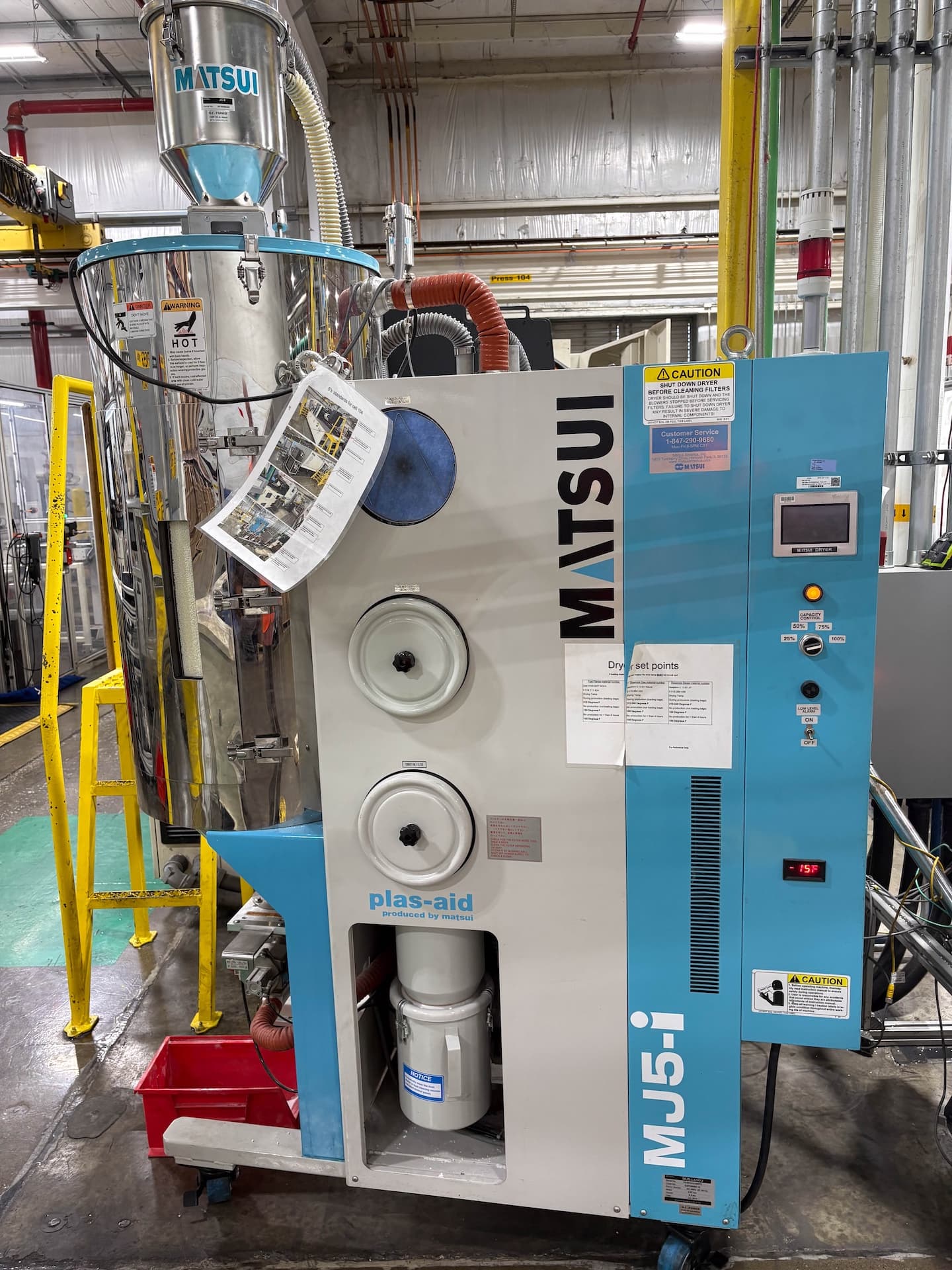
Lot 20
2020 Matsui MJ5-i-650U Desiccant Dryer
Albion, IN
Ends Thu, Oct 29, 10:38 AM CT
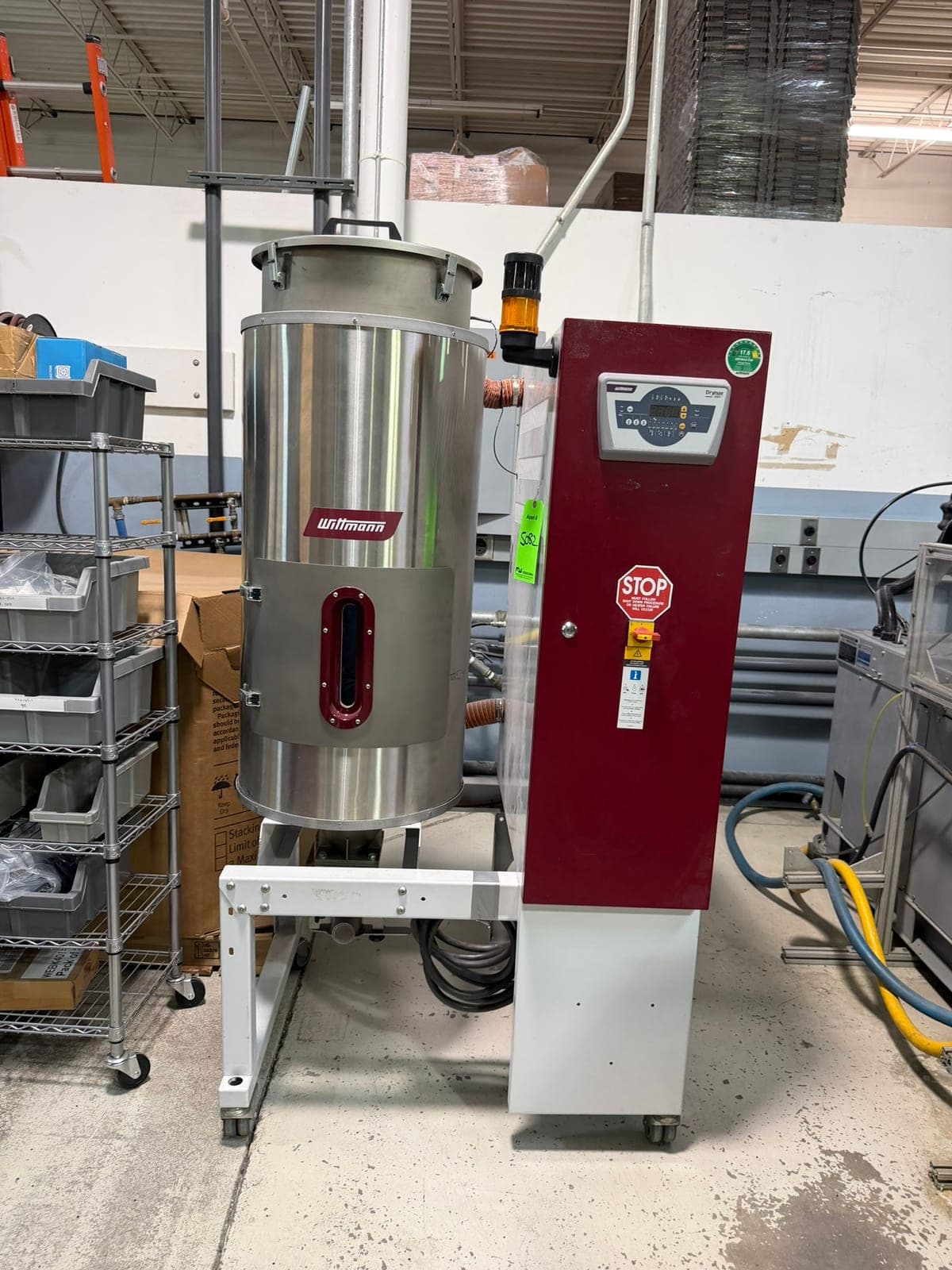
Lot 109
2016 Wittmann Desiccant Dryer w/Drying Hopper
Naperville, IL
Live auction · Tue, Oct 27, 10:00 AM CT
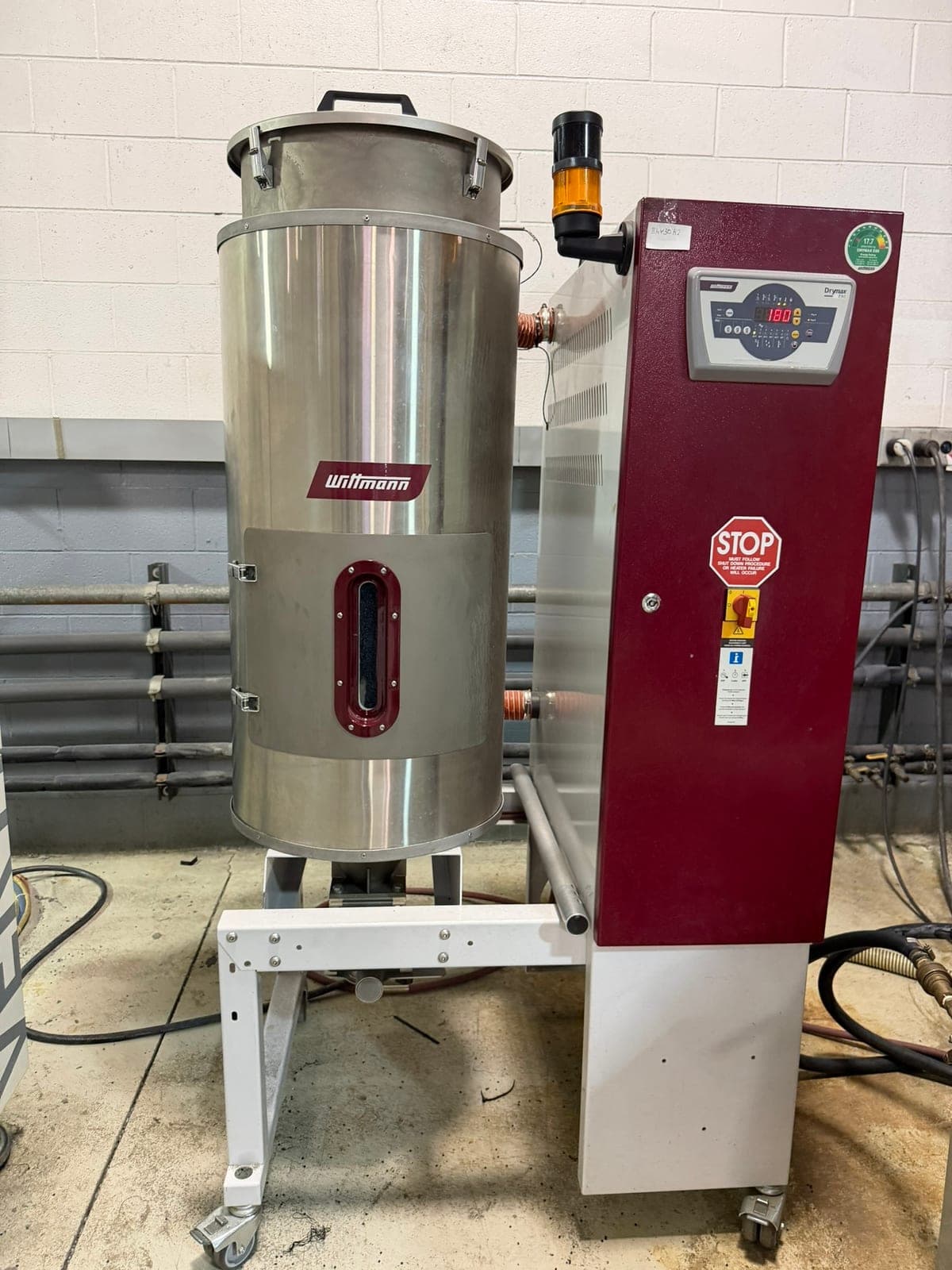
Lot 108
2016 Wittmann Desiccant Dryer w/Drying Hopper
Naperville, IL
Live auction · Tue, Oct 27, 10:00 AM CT
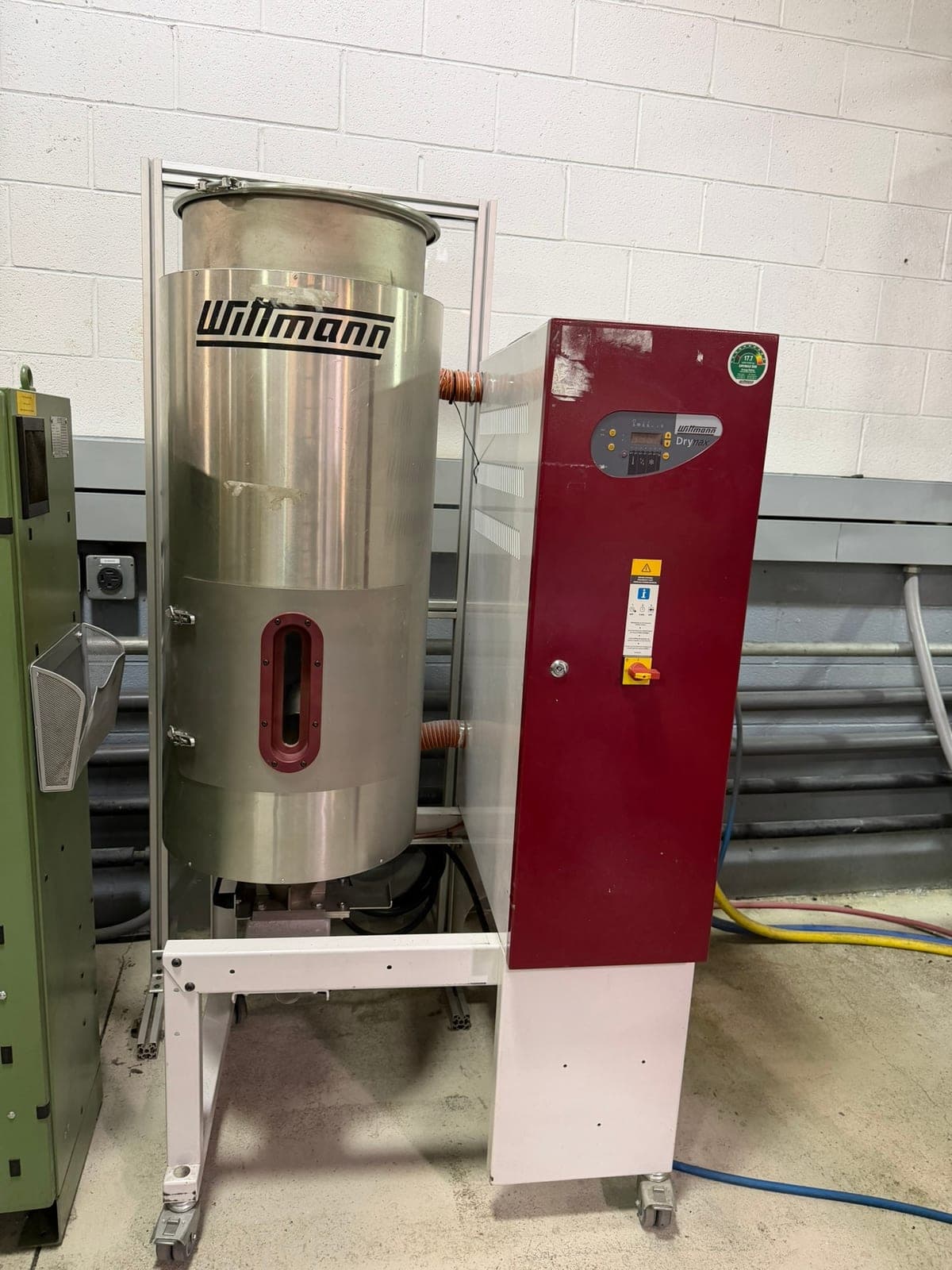
Lot 110
2012 Wittmann Desiccant Dryer w/Drying Hopper
Naperville, IL
Live auction · Tue, Oct 27, 10:00 AM CT
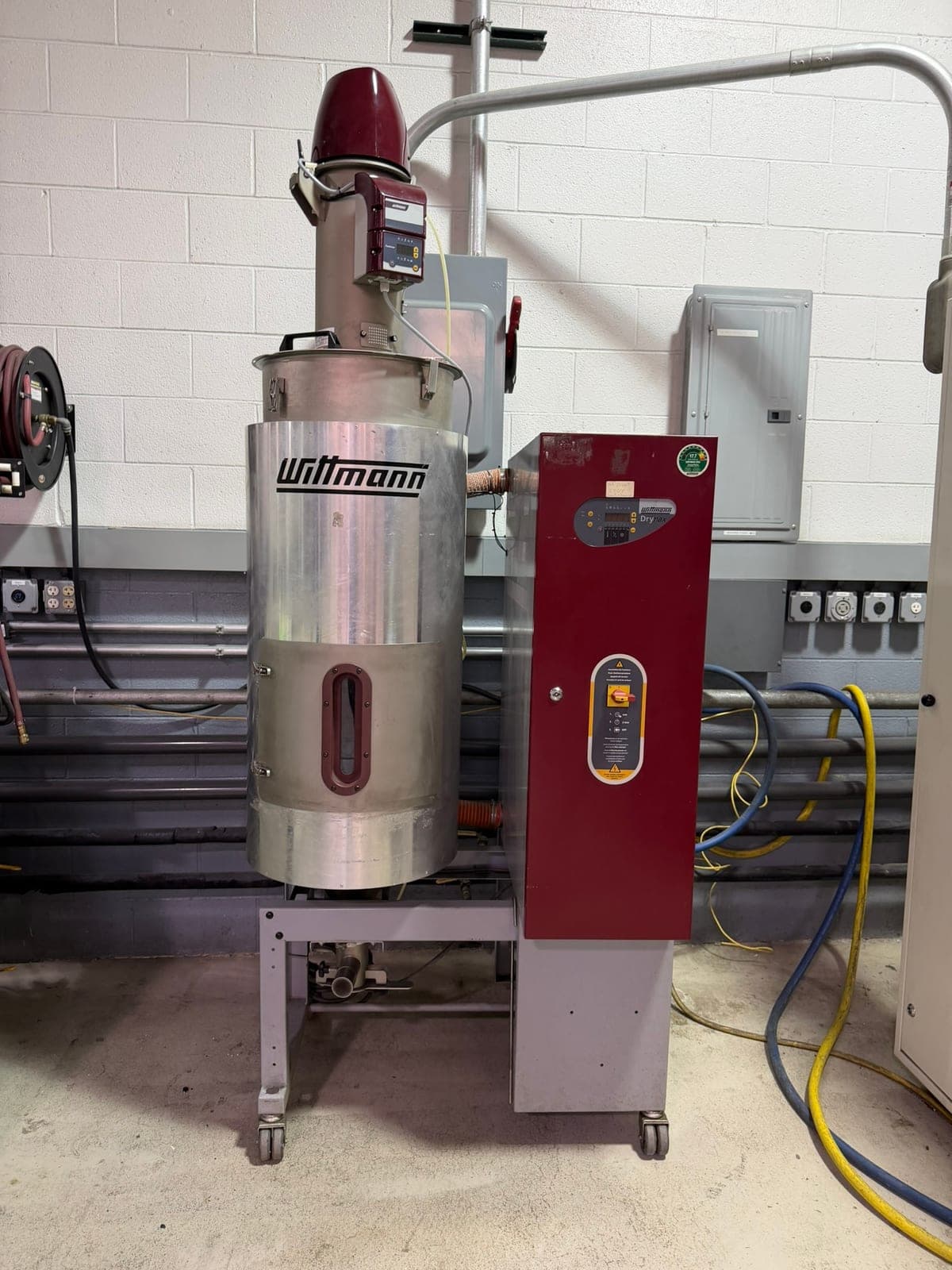
Lot 111
2010 Wittmann Desiccant Dryer w/Drying Hopper and Feedmax Loader
Naperville, IL
Live auction · Tue, Oct 27, 10:00 AM CT
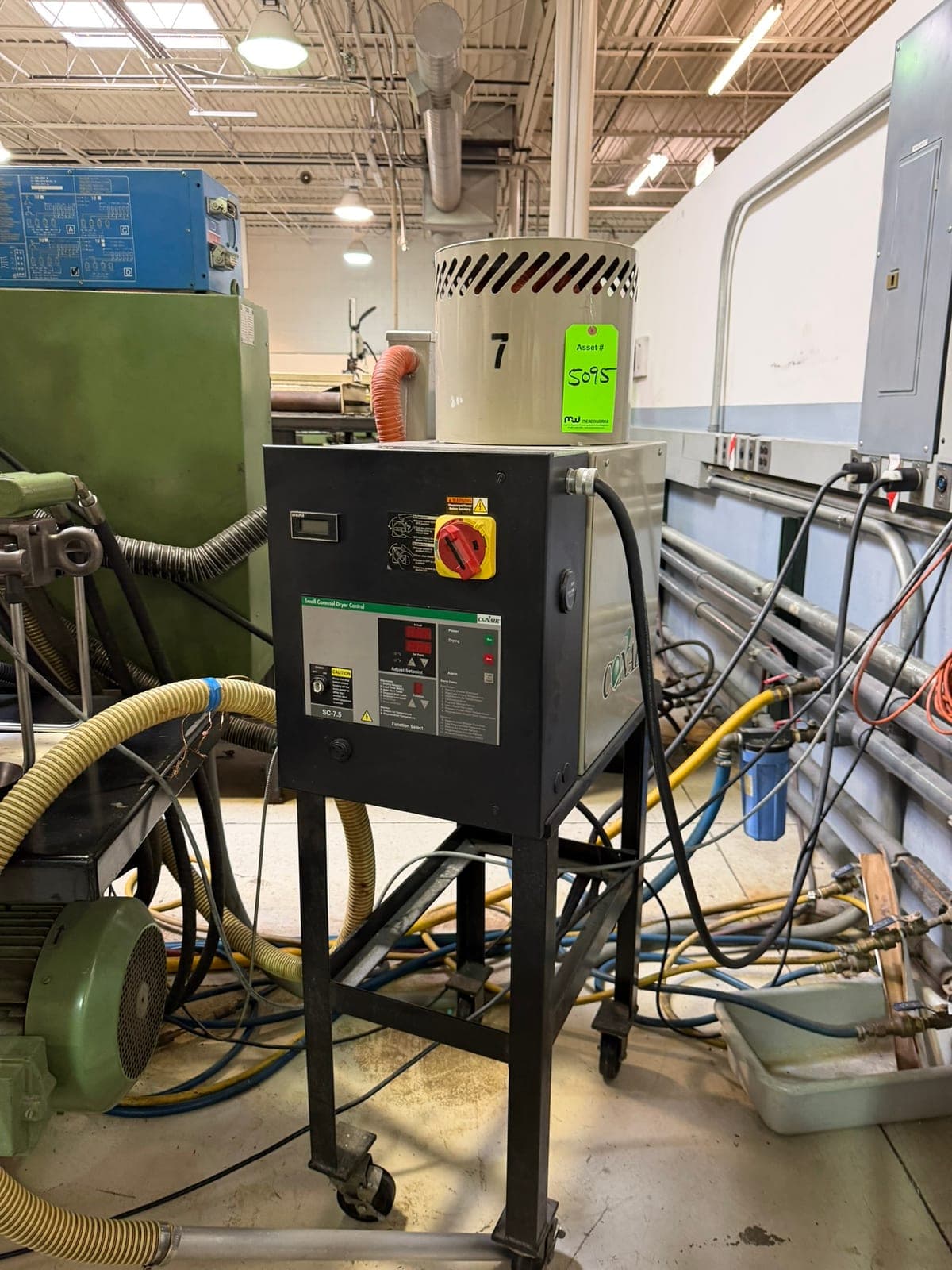
Lot 114
Conair Small Carousel Desiccant Dryer
Naperville, IL
Live auction · Tue, Oct 27, 10:00 AM CT
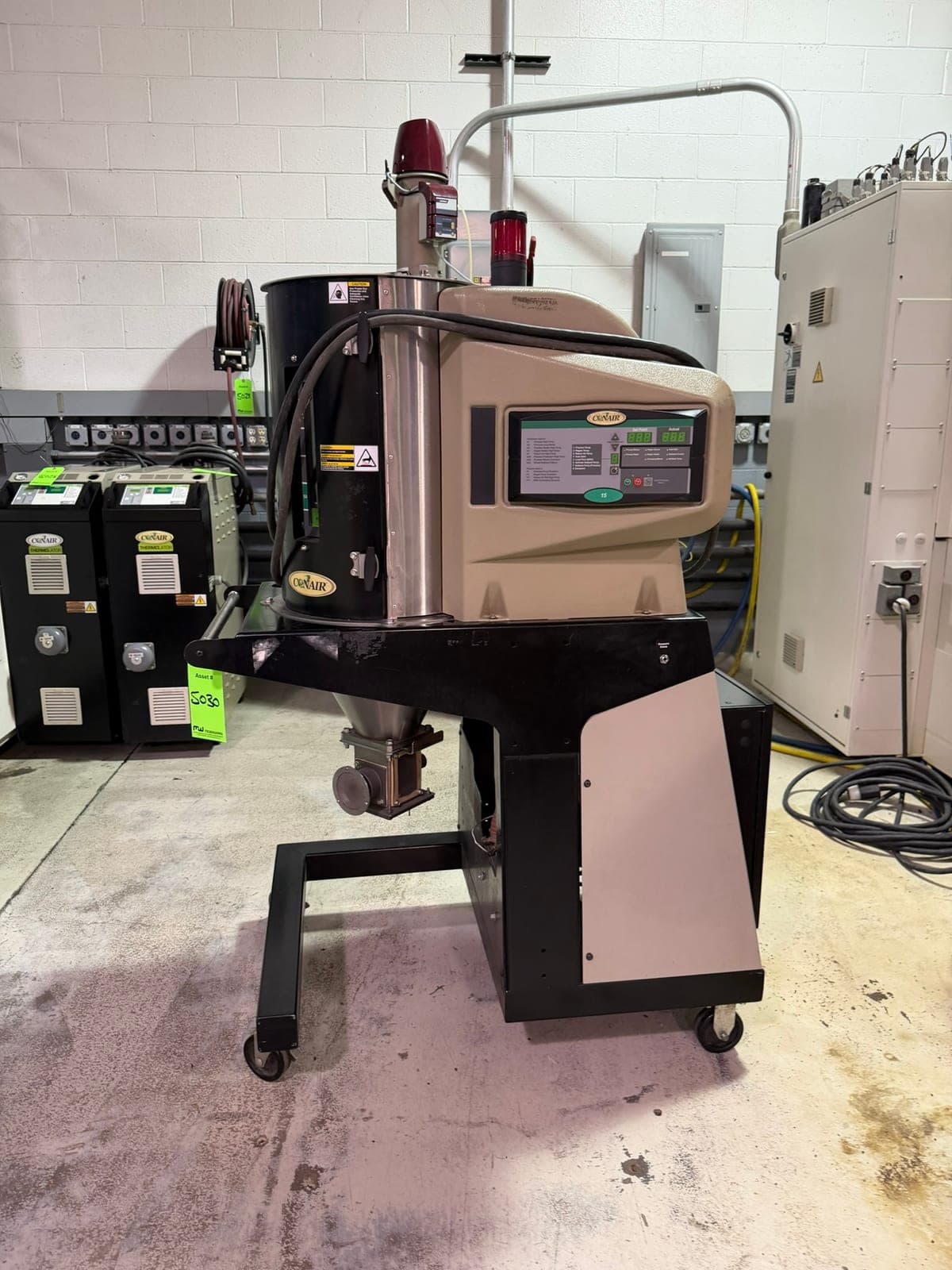
Lot 112
Conair Portable Desiccant Dryer w/Drying Hopper
Naperville, IL
Live auction · Tue, Oct 27, 10:00 AM CT
Looking for Something Specific?
Most of our inventory sells before we can list it online. If you need a specific brand, model, or specification, tell us what you need—we have access to unlisted equipment and machines coming in from plant closures.
Looking to Sell?
Meadoworks is an active cash buyer of used industrial equipment. Get a free valuation from our AMEA-certified appraisers.
About Used Desiccant Dryers
A desiccant dryer pushes hot, very dry air through a hopper of pellets so hygroscopic resin gives up moisture before it is molded. It is not a hot-air blower that only warms the pellets. Beds or a wheel of desiccant grab water from the process air, then a regeneration circuit drives that water back out. Dew point is how you know the air is actually dry, not just hot. Nylon, PET, polycarbonate and many polyurethanes are why a plant buys one at all. With airflow and hopper flow both right, PET usually wants about four to six hours around 320 to 350 F. Time alone, with wet air, does not dry the pellet core.
A dual-bed cabinet keeps one bed on process while the other regenerates, so drying does not stop for a bake-out. A wheel turns the media through process and regeneration at the same time. Smaller carts put the blower, the beds and a hopper on one frame beside the press. Larger cabinets sit on the floor and feed one big hopper or a manifold of several. Airflow in cubic feet per minute has to match that hopper, or the cabinet looks powerful and the pellets stay wet in the middle. Temperature is the resin's drying temperature, not a number copied from the barrel. Return air that comes back too hot lowers how much water the media can hold, which is why an aftercooler on the return is part of the drying circuit and not an extra.
The cabinet sits at the start of the cell, ahead of the blender and the screw. A cart that rolls to one press is the same idea with a smaller hopper. One cabinet feeding several hoppers earns the floor when those machines run the same resin all week. A drying hopper without dry air is only a bin. Vacuum loaders fill that hopper. They do not dry it. Match voltage to the cell, usually a three-phase bus. Leave the hose between the cabinet and the hopper short and insulated, or the dry air arrives wet and cool. A lid that does not seal pulls room moisture in faster than the beds can remove it.
Meadoworks offers a used desiccant dryer most often with the press and the hopper it already ran, and consignments fill in when a molder leaves engineering resins. Inspection means a dew-point reading under load, not a heater that merely gets warm. Regeneration heaters, bed valves and the process blower are the parts that age. Move the cabinet with its hopper when the cell is the sale, so the air path stays the one that was actually drying.
How to Choose a Used Desiccant Dryer
How to Size a Desiccant Dryer
Size from resin pounds per hour and the hours that resin must stay in the hopper, then pick airflow that can turn that hopper over. A desiccant dryer with plenty of cubic feet per minute still fails if the hopper is too small, because the pellets leave before they are dry. The reverse fails too. A huge hopper on a small dryer never reaches temperature in the core. Use the resin sheet for temperature and for time. Nylon and PET are not the same number. Dew point has to stay low while the dryer is at that temperature, not just at idle. Add a margin when the resin is wet from a cold warehouse. Voltage and heater kilowatts have to match the plant. Do not buy airflow you cannot push through the hose you actually have.
Dual Bed Dryer or a Press Cart
A dual bed dryer is the usual cabinet. One bed dries the process air while the other bakes clean, so the line never waits. A wheel does the same handoff in one rotor. Either belongs on a cabinet that runs all week on the same resin. A press cart is the same drying idea with a small hopper on the frame, and it is the right buy when you only need one machine. Do not put a cart on a press that runs more resin than the little hopper can hold for the required hours. Do not buy a central cabinet for a single slow press. Confirm whether you are buying the cabinet alone or the cabinet plus the hopper. A dew point dryer is another name for the same cabinet.
Desiccant Dryer Specs to Compare
| Spec | Typical range | Why it matters |
|---|---|---|
| Process airflow (cfm) | Has to turn the hopper air over fast enough that the core of the pellet bed actually sees dry air. | |
| Dew point (F) | About -40 F on many nameplates | Tells you the air is dry enough for nylon and PET, not merely that the heater is on. |
| Drying temperature (F) | About 160–350 F, from the resin sheet | Too cool leaves moisture in the pellet, and too hot can cook the color or the resin itself. |
| Hopper capacity (lb) | Pounds divided by the press rate is residence time, which is the real drying clock for that resin. | |
| Heater and voltage | Often 460 V, 3 phase | A dryer that cannot reach temperature on your bus will never hit the dew point you bought it for. |
| Desiccant style | Dual beds and wheels can both dry the air, and the bed valves or the wheel drive are what you will rebuild later. |
Process airflow (cfm)
Has to turn the hopper air over fast enough that the core of the pellet bed actually sees dry air.
Dew point (F)
Typical range: About -40 F on many nameplates
Tells you the air is dry enough for nylon and PET, not merely that the heater is on.
Drying temperature (F)
Typical range: About 160–350 F, from the resin sheet
Too cool leaves moisture in the pellet, and too hot can cook the color or the resin itself.
Hopper capacity (lb)
Pounds divided by the press rate is residence time, which is the real drying clock for that resin.
Heater and voltage
Typical range: Often 460 V, 3 phase
A dryer that cannot reach temperature on your bus will never hit the dew point you bought it for.
Desiccant style
Dual beds and wheels can both dry the air, and the bed valves or the wheel drive are what you will rebuild later.
What to Inspect on a Used Desiccant Dryer
Read dew point under load
A heater that gets hot with the hopper empty proves little, because dew point is the number that says the beds are working.
Watch a regeneration cycle
The offline bed has to heat and then cool back into service, or the desiccant dryer will climb in dew point after an hour.
Inspect bed valves
A valve that does not seat sends wet regeneration air into the process and the dew point never settles.
Check the process filter
A loaded filter cuts airflow, so the hopper core stays wet while the return air still looks acceptable.
Look at the desiccant
Dust and broken beads mean channeling, and the dryer will miss dew point even with new heaters.
Confirm hopper and hoses
Crushed or uninsulated hose between dryer and hopper dumps the dryness you just paid to make.
Match heater volts
Read kilowatts and phase on the plate and compare them with the cell before the cabinet is wired.
Meadoworks Track Record
67
Sold through Meadoworks
7
Listed now
Common models
Novatec MDM-15A Desiccant Dryer, Novatec MDM-15 Desiccant Dryer, Novatec MDM-25A Desiccant Dryer, Novatec MDM-25 Desiccant Dryer, Novatec NDB-15A Desiccant Dryer
Related Equipment
- Portable Dryers
Press carts with their own drying hopper
- Central Dryers
One dryer feeding several hoppers
- Resin Dryers
Desiccant, portable and central together
Desiccant Dryers Brands We've Sold
Novatec
US builder of desiccant dryers and loaders.
Conair
US builder of dual-bed desiccant dryers.
AEC-Whitlock
US Whitlock line of desiccant resin dryers.
Wittmann
Austrian auxiliary line with desiccant dryers.
Matsui
Japanese auxiliary maker of dryers and blenders.
Dri-Air
US maker of compact desiccant dryer carts.
Bry-Air
Desiccant-system maker used for low-dew-point drying.
Cincinnati Milacron
Press builder that also badged resin dryers.
Common Applications
Frequently Asked Questions
How do I size a desiccant dryer from pounds per hour?
Take the press or extruder rate and the hours the resin sheet calls for. Hopper pounds must cover that residence, and the desiccant dryer airflow must heat and dry that whole bed, not just the top. A small hopper on a big dryer shorts the time. A big hopper on a small dryer never dries the core. Dew point has to hold at the drying temperature, under load. Cold wet gaylords need more time than the sheet's best case, and the bus has to match the heater.
Dual bed dryer or desiccant wheel, which runs all week?
A dual bed dryer switches beds so one is always on process. A wheel turns through process and regeneration without a hard switch. Both are a desiccant dryer, and both can hold a low dew point if the heat and the seals are right. Beds are familiar to rebuild. Wheels have a drive and a seal to watch. Neither is a hot-air dryer. For one slow press, a small cart may be enough. For several hoppers, look at a central dryer.
What should I inspect on a used desiccant dryer?
Put it under load and read dew point, then watch one full regeneration. Heaters that glow while the dew point sits high usually mean tired desiccant, a leaking bed valve or a choked filter. Open the beds or the wheel housing and look for dust and broken beads. Check the process blower for noise and the aftercooler if the return air runs hot. Crushed delivery hose will undo a good cabinet. Read volts and kilowatts. A desiccant dryer that only proves it gets warm is not proven.
Does a resin dryer include the drying hopper?
Sometimes. A resin dryer listing may be the desiccant dryer cabinet alone, or a cart with the hopper on the same frame. The hopper is where residence time happens. The desiccant dryer is where dew point happens. You need both. A hopper with no air source will not dry nylon. A dryer with no hopper has nowhere for the pellets to wait. Look for a cone, a diffuser and an air hose before you assume the hopper is included.
Why would a desiccant dryer miss its dew point?
Tired desiccant, a bed valve that does not seat, a regeneration heater that is open, or a process filter packed with fines. Overloading the hopper so pellets leave early looks like a dew-point problem and is actually time. Wet hose or a hopper lid that leaks pulls room moisture in faster than the desiccant dryer can remove it. High return-air temperature can also keep the beds from grabbing water. Fix airflow and leaks before you condemn the media.
When should a desiccant dryer be portable instead?
When one press runs the hygroscopic resin and the hopper pounds fit on a cart. A portable desiccant dryer rolls in, dries that machine and leaves the rest of the plant alone. It is the wrong tool when several presses need the same dry resin all day. That is a central dryer and a manifold. It is also wrong when the cart hopper cannot hold four or more hours of the press rate. Check pounds, not the caster frame, before you pick the small desiccant dryer.
