Used Gravimetric Blenders for Sale
See all 7 Blenders & Color Feeders →
Nothing is listed right now — these are machines we've recently sold. or tell us what you need.
Recently sold
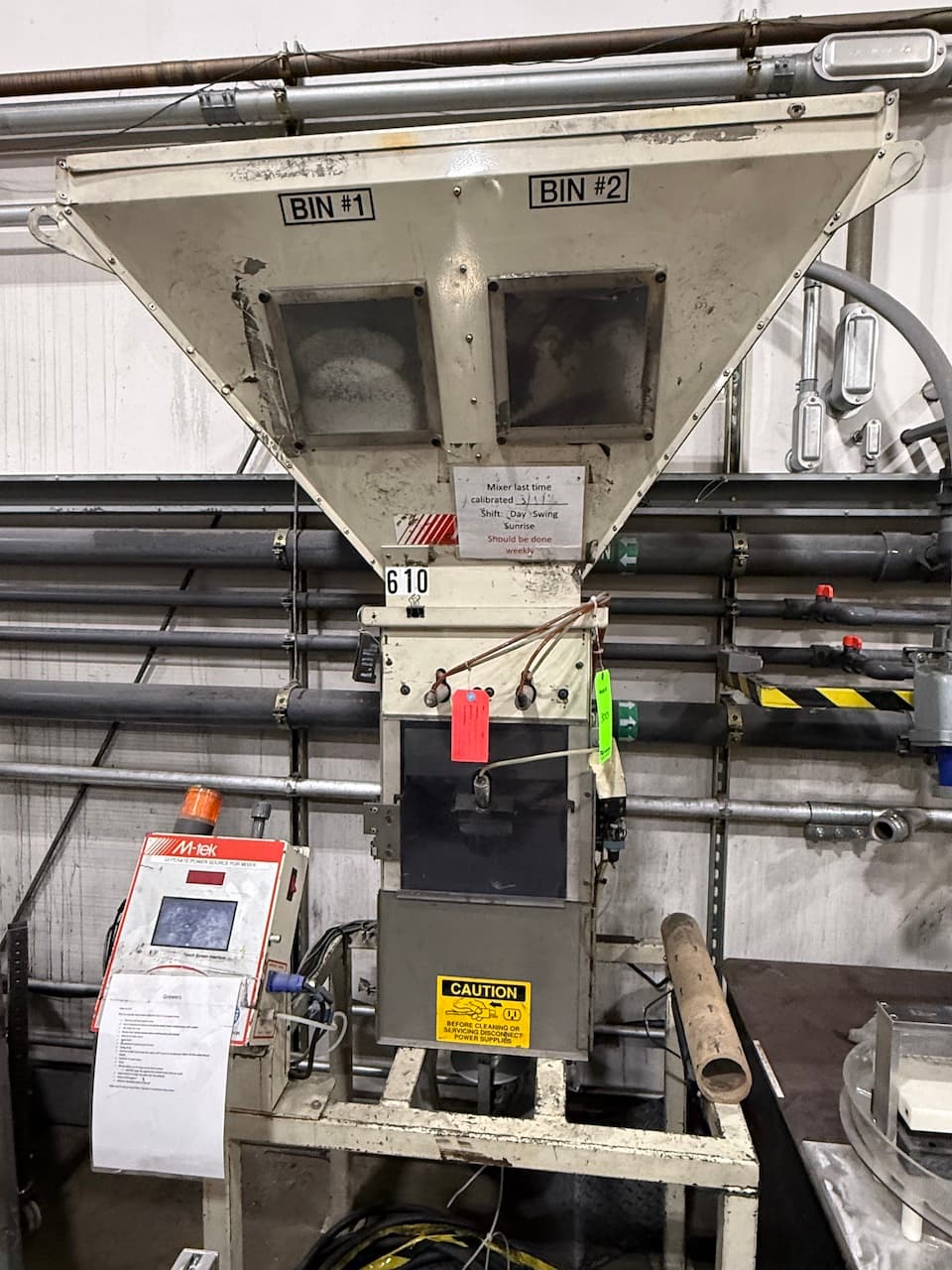 SOLD
SOLDM-tek Gravimetric Material Blender
USA
 SOLD
SOLDWittmann Material Blender on Casters, New in 2025
USA
 SOLD
SOLDWittmann Gravimax G34 Gravimetric Blender, New in 2015
USA
 SOLD
SOLDWittmann Gravimax G76 Gravimetric Blender, New in 2022
USA
 SOLD
SOLDWittmann Gravimax G34 Gravimetric Blender, New in 2018
USA
 SOLD
SOLDMould-Tek GXB Gravimetric 4-Component Blender
USA
 SOLD
SOLDMould-Tek GXB Gravimetric 4-Component Blender
USA
Looking for Something Specific?
Most of our inventory sells before we can list it online. If you need a specific brand, model, or specification, tell us what you need—we have access to unlisted equipment and machines coming in from plant closures.
Looking to Sell?
Meadoworks is an active cash buyer of used industrial equipment. Get a free valuation from our AMEA-certified appraisers.
About Used Gravimetric Blenders
A gravimetric blender weighs each ingredient into a batch, mixes that batch and drops it toward the screw. Load cells, not auger turns, are the control. A weigh blender and a batch blender are the same machine. A color feeder is not. A feeder meters volume and never sees grams. Separate bins hold virgin, regrind, color and additive. Gates or small augers dose into a weigh pan until each target is met, then a mixer homogenizes the batch before the throat. On a common weigh-scale sequence, regrind goes in first, virgin next, and color or additive last, figured from the virgin that actually landed. A slow gate on the resin then does not throw the color percent off by itself.
Batch weight is the first size, because throughput is batches per hour times that weight. The mixer has to finish before the press or the extruder runs the throat empty. A small batch suits a slow press and a tight color. A larger batch suits a faster rate and is less bothered by one slow valve. Four stations is the usual count: virgin, regrind, color and one additive. Empty stations you cannot pipe do not count. Scale resolution is what lets a small color target exist beside a large virgin weigh-in. A coarse cell will not hold a light letdown. Sticky regrind bridges in the bin, and the pan never sees it. The frame has to sit level. Vibration from the press has to be isolated or the cell hunts. A move can shift the zero. Recalibrate on an empty pan before you trust a recipe that arrived with the machine. That habit is what keeps a gravimetric blender honest after a truck ride.
The unit mounts on the feed throat or on a stand beside an extruder. A color feeder is enough when you only need one volumetric dose. Dryers and hoppers sit upstream. This machine does not dry resin and it does not convey it. A vacuum loader refills the bins. Keep the discharge adapter tight. A leak there loses the batch you just weighed, and the screw sees whatever ratio happens to fall through.
Lots beside the press are where one of these usually arrives, still wearing the hoppers from the last recipe. On a used gravimetric blender, hang a test weight and see whether the reading repeats, then cycle every valve and run the mixer. A painted frame with a dead station is a smaller blender than the hopper count suggests. Ask whether you can read and clear the last recipes. Level the frame before the first batch, or the cell will alarm until the scale is quiet.
How to Choose a Used Gravimetric Blender
How to Size a Gravimetric Blender
Divide the press or extruder pounds per hour by the batches you can mix per hour. That product is the batch size the gravimetric blender must hold. If the mixer runs empty, the screw sees a ratio swing. Leave the color and additive targets inside the resolution of the scale. A huge virgin weigh-in and a tiny color weigh-in on a coarse cell will not hold a light letdown. Count the ingredients you truly run, including regrind, and do not buy empty stations you will never pipe. Mounting height has to clear the press and the loader on the lid. Vibration isolation is part of the size. A blender that cannot stay still cannot stay accurate.
Gravimetric Blender or Color Feeder
The weigh blender weighs every ingredient every batch. A color feeder turns an auger for a time and hopes the bulk density stayed put. Choose the gravimetric blender for more than one resin, for regrind that varies, or for a ratio you cannot check with a cup every hour. Choose the color feeder for a single concentrate on a simple job. Several builders make both, and a hopper full of color does not tell you which machine you are looking at. Load cells and a weigh pan mean weight. An auger at the throat and no scale means volume. Do not expect the feeder to become accurate because you cleaned it.
Gravimetric Blender Specs to Compare
| Spec | Typical range | Why it matters |
|---|---|---|
| Batch weight | Has to be large enough that the press does not outrun the mixer, and small enough to stay accurate. | |
| Ingredient stations | Often 4 | Each station is one material you can weigh, and empty stations you cannot pipe simply do not count. |
| Throughput (lb/hr) | Batches per hour times batch weight has to stay ahead of the screw with a little time to spare. | |
| Load-cell resolution | A coarse scale cannot hold a small color target sitting next to a large virgin weigh-in. | |
| Mixer style | The batch has to be homogeneous before it drops, or the screw sees stripes of color and regrind. | |
| Mount and voltage | Throat mount or a stand has to fit the machine, and the cabinet has to match the cell voltage. |
Batch weight
Has to be large enough that the press does not outrun the mixer, and small enough to stay accurate.
Ingredient stations
Typical range: Often 4
Each station is one material you can weigh, and empty stations you cannot pipe simply do not count.
Throughput (lb/hr)
Batches per hour times batch weight has to stay ahead of the screw with a little time to spare.
Load-cell resolution
A coarse scale cannot hold a small color target sitting next to a large virgin weigh-in.
Mixer style
The batch has to be homogeneous before it drops, or the screw sees stripes of color and regrind.
Mount and voltage
Throat mount or a stand has to fit the machine, and the cabinet has to match the cell voltage.
What to Inspect on a Used Gravimetric Blender
Calibrate the load cell
A gravimetric blender that does not repeat a test weight will not hold a recipe, no matter how clean it looks.
Cycle every valve
A valve that sticks open overfeeds that ingredient, and a valve that sticks shut starves it.
Look in the weigh pan
Pellets hung in the pan or a cracked dump door make the next batch start heavy and finish wrong.
Run the mixer
A mixer that does not turn, or that is packed with melted color, delivers an unmixed batch to the screw.
Check each hopper gate
Bridged regrind and a leaking gate change the recipe before the scale ever sees the material.
Level the frame
A blender sitting out of level or bolted to a shaking press will hunt and alarm on the load cell.
Clear old recipes
Unknown setpoints from the last owner will run on the first power-up unless you can see and delete them.
Related Equipment
- Color Feeders
Volumetric dosing when one additive is enough
- Blenders & Color Feeders
Weigh blenders and volumetric feeders together
- Desiccant Dryers
Dry the resin before the blender weighs it
Gravimetric Blenders Brands We've Sold
Common Applications
Frequently Asked Questions
How do I size a gravimetric blender for shot weight?
Turn shots per hour into pounds per hour, then pick a batch the gravimetric blender can weigh and mix before the throat runs empty. A batch that is too small keeps the mixer in a panic. A batch that is too large for the scale makes a small color target noisy. Count real ingredients, including regrind. Confirm the mount fits the press and that a loader can refill the lids. Vibration has to be isolated or the load cell lies. Press tonnage is not a blender size.
Gravimetric blender or color feeder, which one weighs the batch?
The weigh pan does. The color feeder counts auger turns and never sees grams. Use the gravimetric blender when more than one material matters or the ratio cannot drift. Use the feeder for a single concentrate you will cup-check. Load cells and a weigh pan are the tell. An auger at the throat with no scale is volume dosing. Cleaning a feeder does not turn it into a scale. If the job is a real recipe, you want the load cell.
What should I inspect on a used gravimetric blender?
Hang a test weight and see if the gravimetric blender repeats. Cycle every dosing valve, look in the weigh pan and run the mixer. A stuck valve, a cracked dump or a mixer full of old color will not hold a recipe. Check hoppers for bridges and leaking gates. Set the frame level. Power the control and make sure you can read and clear the last recipes. Ask how many stations actually dose. A painted four-hopper frame with one dead valve is a three-station machine.
How many ingredients can a gravimetric blender dose?
As many as it has working stations, commonly four, and more on larger frames. A station with no valve, no auger or a dead output does not count. Regrind, virgin, color and one additive is the usual four. If you need six, read the plate rather than the hopper count, because some lids are blanks. The gravimetric blender still has to resolve the smallest target. Extra hoppers do not fix a coarse scale.
Why does a gravimetric blender alarm on a load cell?
The pan is touching something, the frame is out of level, the press vibration is in the cell, or the cell itself has drifted. A gravimetric blender will also alarm when a valve overshoots and the batch cannot hit the target in time. Look for pellets jammed beside the pan before you replace the cell. Re-zero on an empty pan. If the alarm started after a move, the transport probably shifted the stop. Do not keep running on a bypass. You have left weighing behind.
Can a gravimetric blender sit on the press throat?
Yes, and that is the usual injection mount, with loaders on the lids and the mixer discharge into the feed throat. The gravimetric blender has to clear the robot and the mold-open space above the press. An extruder often wants a stand beside the screw instead. Either way the frame must be level and quiet enough for the scale. A throat mount that leaks at the adapter loses the batch you just weighed. Confirm the bolt pattern before the blender is in the air.
