Used Wire EDM Machines for Sale
Recently sold
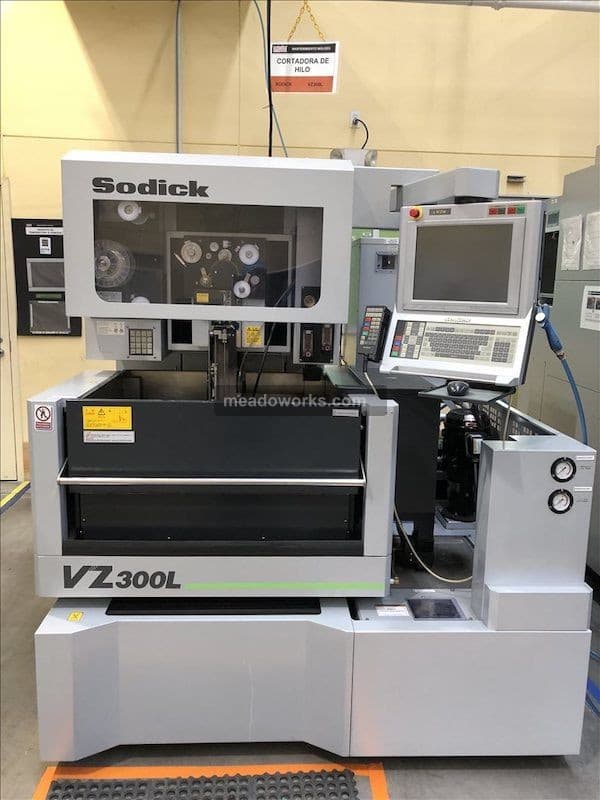 SOLD
SOLD2015 Sodick VZ300L Wire EDM
USA
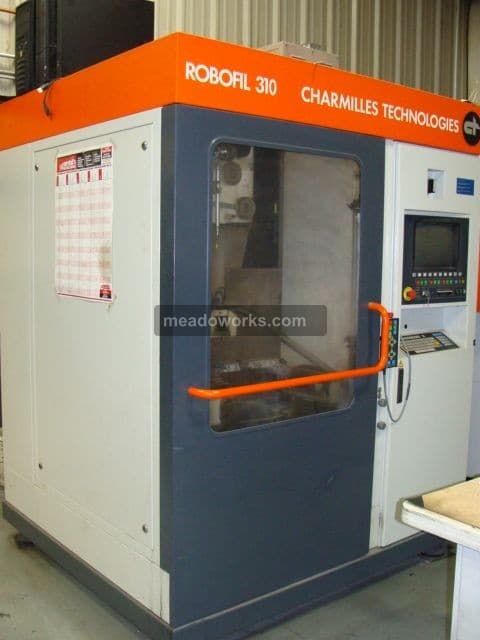 SOLD
SOLD1994 Charmilles ROBOFIL 310 Wire EDM
USA
Looking for Something Specific?
Most of our inventory sells before we can list it online. If you need a specific brand, model, or specification, tell us what you need—we have access to unlisted equipment and machines coming in from plant closures.
Browse Used Wire EDM by Brand
Browse Used Wire EDM by Country
Looking to Sell Your Wire EDM?
Meadoworks is an active cash buyer of used industrial equipment. Get a free valuation from our AMEA-certified appraisers.
About Used Wire EDM Machines
Wire EDM machines (wire electrical discharge machines) cut conductive materials using a thin, continuously traveling wire electrode — typically 0.004-0.012" brass or coated wire — guided by CNC through the workpiece. Because the process is non-contact and hardness-independent, wire EDM is the standard method for cutting punches, dies, extrusion tooling, and precision profiles in hardened tool steel and carbide. Submerged cutting, automatic wire threading, and taper capability are key features on modern machines.
A wire EDM cuts with a traveling wire, usually brass, that never touches the part. Sparks in deionized water erode a path, and the wire is scrap by the time it leaves the guides. The path has to go through the part. A punch, a die opening, an extrusion profile and a hardened insert are the work. A blind cavity is not. That cavity is a sinker job, and this machine does not try to size electrodes or orbit.
Wire diameter is the first process choice. A finer wire turns a tighter inside corner and cuts more slowly. A heavier wire is faster and leaves a larger corner. Shops keep more than one spool because the print, not the machine, picks the diameter. The guides and the power contacts have to match the wire you will actually run. A machine that only has guides for one size is a one-wire machine until you buy the rest.
Submerged cutting puts the work under the water for the whole cut. That is steadier for finish and for taller parts than a machine that only flushes the gap. Older machines often cut with a flush and no full tank. They still cut. They are a different thermal setup, and a tall die will show it. Automatic wire threading is what lets the machine rethread after a break, or start the next opening, without someone standing at the tank. A threader that works is the difference between a night shift and a machine that waits until morning. Taper is the angle the wire can lean, for relief on a die. Travels and table weight still decide whether the block fits.
On a used wire EDM, ask for a test cut and watch the threader complete a cycle. Look at the guides, the contacts and the resin bottles. A dirty filter or a dead deionizer will make a good generator look bad. Seals on a submerged tank should not weep. The parent EDM machine is the comparison if you are still choosing wire or sinker. The sinker machine is the cavity. A machining center is the cutter, for work that does not have to be this sharp or this hard.
How to Choose a Used Wire EDM Machine
How to Size a Wire EDM
Size travels and table weight to the largest die you will put in the tank, including the fixture. Thickness has to be inside what the machine will flush or submerge. Then pick the wire diameters the corners on your prints require. A finer wire is not a setting you can invent if the guides are not there.
Taper comes next, if the die needs relief. A machine with no taper, or with less angle than the print, will not lean the wire enough. Automatic threading is a capacity question as much as a convenience. If the job is one opening and an operator is there, a manual thread is tolerable. If the plate has many openings, or you want it to run after the shift leaves, the threader has to work. Submerged or flush is the last split, and it matters more as the part gets taller.
Wire Diameter, Submerged Cutting, Auto Thread
Wire diameter sets the smallest inside corner and the speed. Submerged cutting keeps the whole part in water, which is the steadier way to finish a tall block. A flush-only machine can still be the right buy for shorter work. Automatic threading is the system that restarts a broken wire or starts the next hole without a person at the door.
Do not buy a wire machine for a cavity. A sinker burns a blind shape with an electrode. A wire cannot, because the wire has to exit. If you are still choosing, compare the two processes before you size a tank. Come back to wire when the feature is a through profile and you need the wire, the tank and the threader.
Wire EDM Machine Specs to Compare
| Spec | Typical range | Why it matters |
|---|---|---|
| Wire diameter (in) | Often about 0.004–0.012 in brass | Finer wire makes a tighter corner and cuts more slowly. The guides have to match the spool you will run. |
| Submerged or flush | A submerged cut is steadier on a tall part. A flush machine can still cut shorter work. | |
| Automatic threading | A working threader restarts after a break and starts the next opening. A dead threader waits for an operator. | |
| X/Y/Z travels (in) | The die block has to fit. Z is the thickness you can cut, not a number you can stretch with a finer wire. | |
| Taper angle | Taper is the lean in the wire for die relief. A print with more angle than the machine will not be leaned into spec. | |
| Table weight (lb) | A heavy die can fit the travels and still overload the table. Read the weight next to the inches. |
Wire diameter (in)
Typical range: Often about 0.004–0.012 in brass
Finer wire makes a tighter corner and cuts more slowly. The guides have to match the spool you will run.
Submerged or flush
A submerged cut is steadier on a tall part. A flush machine can still cut shorter work.
Automatic threading
A working threader restarts after a break and starts the next opening. A dead threader waits for an operator.
X/Y/Z travels (in)
The die block has to fit. Z is the thickness you can cut, not a number you can stretch with a finer wire.
Taper angle
Taper is the lean in the wire for die relief. A print with more angle than the machine will not be leaned into spec.
Table weight (lb)
A heavy die can fit the travels and still overload the table. Read the weight next to the inches.
What to Inspect on a Used Wire EDM Machine
Watch a thread cycle
Automatic threading should complete, including a restart. A threader that only looks installed has not been proven.
Ask for a test cut
Finish and size in a known steel tell you more than hours. Compare it with the wire diameter you will use.
Inspect guides and contacts
Worn power contacts and the wrong guides mark the wire path. Match them to the diameters you run.
Check resin and filters
Deionized water needs resin that still works. A dirty filter makes a sound generator cut poorly.
Look at tank seals
On a submerged machine, the tank should hold water. A weep is a maintenance job you will own on day one.
Read taper and travels
Compare angle, X, Y and thickness with your largest die. A brochure taper the head cannot hold is not taper.
Confirm the control generation
An older control can still cut. Know whether it will hold the finish settings your current dies need.
Related Equipment
- EDM Machines
Wire and sinker compared before you pick a process
- Sinker EDM
Blind cavities a traveling wire cannot burn
- Machining Centers
A cutter when the profile does not need a spark
Related EDM Machines
EDM Machines (Wire & Sinker)
Electrical Discharge Machining (EDM) uses controlled electrical sparks to erode conductive materials with extreme precision.
Sinker EDM Machines
Sinker EDM machines (also called ram EDM or die-sinker EDM) erode cavities into conductive workpieces using a shaped graphite or copper electrode plunged into the material under CNC control.
All CNC Machines
Browse the full used CNC machine inventory — machining centers, lathes, EDM, and more.
Top Brands for Used Wire EDM Machines
Charmilles
Swiss wire EDM name, now part of GF Machining Solutions.
Mitsubishi
Japanese wire EDM builder with automatic wire threading.
Sodick
Japanese EDM builder known for linear-motor wire machines.
Common Applications
Frequently Asked Questions
How do I choose wire diameter on a wire EDM?
From the smallest inside corner on the print, and from how long you can stand the cut to take. A finer wire turns a tighter corner and removes less metal per pass. A heavier wire is faster and leaves a larger radius. The machine has to have guides and contacts for that diameter, not only a setting in the control. Most shops keep two spools and switch with the job. If the nameplate shows one set of guides, ask which diameter they are.
What does submerged cutting change on a tall die?
The whole block sits in deionized water, so the spark gap stays in fluid instead of depending on a flush nozzle that can miss a deep section. Finish and size are steadier as the part gets taller. A flush-only machine can still cut a shorter punch or a thin plate, and many older machines are built that way. Do not reject one for short work just because it has no tank. Do not expect a flush machine to behave like a submerged one on a tall extrusion die.
How does automatic threading change an unattended cut?
The machine can rethread after a wire break and can start the next opening without someone at the tank. A plate of die openings becomes a night job instead of a day of standing and threading. If the threader fails, the machine stops at the first break and waits. On a used machine, watch a full thread cycle, including a restart, not only the wire running once it is already through. Manual threading is acceptable when an operator is there and the job is a single profile.
What should the guides and power contacts show?
Wear that matches the wire you will run, and guides for that diameter. Contacts that are grooved cut the wire path and the finish before the generator gets a chance. Ask which wire sizes have been on the machine and whether the other guide sets are in the drawer. A test cut will show a contact problem as a poor surface or a wire that breaks in the same spot. Filters and resin belong in the same look. Dirty water will imitate a bad contact.
When is taper the spec that decides the machine?
When the die needs relief and the wire has to lean while it cuts. The angle on the print has to be inside the angle the machine can hold, over the thickness you are cutting. A larger angle on a thicker block is harder than the same angle on a thin plate. If your work is straight profiles with no relief, taper is not the reason to pick one machine over another. Travels, wire size and whether the tank submerges will matter more.
What is a wire EDM machine used for?
A wire EDM cuts a path through a part with a traveling brass wire. Sparks in deionized water erode the gap, and the wire never touches the steel. Punches, die openings, extrusion profiles and hardened inserts are the work, including inside corners as tight as the wire diameter. The path has to go through. A blind cavity is a sinker job, because the wire has to exit. Shops also use a wire machine to finish a start hole that a small-hole drill opened, and to cut a profile in material that is already hard.
Related Resources
Looking for Specific Wire EDM?
Can't find what you need? Contact our team with your requirements. We source equipment from facilities across North America.
