Used Laminators for Sale
See all 3 Converting & Laminating →
Nothing is listed right now — these are machines we've recently sold. or tell us what you need.
Recently sold
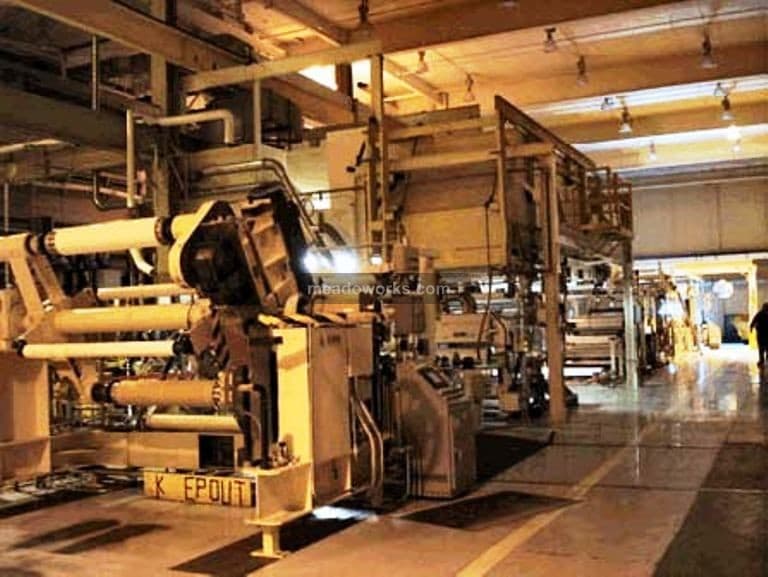 SOLD
SOLDBlack Clawson 5-Layer CO-Extrusion Laminator
USA
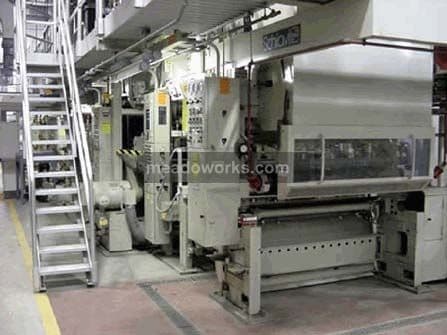 SOLD
SOLD1992 Schiavi 5-Layer CO-Extrusion Laminator
USA
 SOLD
SOLD2007 Black Bros. Co. RPP-C1575
USA
Looking for Something Specific?
Most of our inventory sells before we can list it online. If you need a specific brand, model, or specification, tell us what you need—we have access to unlisted equipment and machines coming in from plant closures.
Looking to Sell?
Meadoworks is an active cash buyer of used industrial equipment. Get a free valuation from our AMEA-certified appraisers.
About Used Laminators
A laminator bonds two or more webs into one structure. Web laminating with adhesive coats one web, dries or meters that coat, and closes the stack in a nip. Dry-bond machines, such as Karlville's Combi-Max and similar packaging lines, run solvent, water-based or solventless adhesive and then press the webs together. Extrusion laminating uses a curtain of molten polymer, often from a slit die, as the tie layer between two substrates. Qenos describes that nip as a chilled steel roll against a rubber-covered pressure roll, with the melt meeting the web just before the chill roll pulls heat out. The nip is common to both paths. Neither path slits a parent roll into sale widths, and neither path mills a rubber slab. Knives belong on a slitter rewinder. A mill gap belongs on a two-roll mill.
Width is the first size, because a web wider than the rolls will not track. Production extrusion-coating lines from Davis-Standard span about 24 to 180 in on high-volume fabric work, and about 24 to 126 in on lighter fabric lines. Roll diameters on those lines run from about 10 in to 80 in depending on the duty, and unwind cores of 3 in and 6 in are common. Nip pressure has to close the bond across the full face. Heavy on one side, the other side peels. Heat has to match the adhesive or the melt. A cold zone leaves a streak that looks sealed. Line speed only counts after the bond is real. High-volume fabric coaters are quoted from about 250 to 1,500 feet per minute. Lighter lines sit nearer 10 to 330. A fast drive on a slow adhesive makes a pretty, weak bond.
The machine sits in a converting line with unwinds, a nip and a rewind, often ahead of a slitter that is a separate frame. Do not buy it to change only the width of a roll. Do not buy it to warm rubber between mill rolls. Tension has to keep the webs flat before they reach the nip, or the bond wrinkles in. A scored roll prints that score into every web that follows. If the path is extrusion, you also need a die and an extruder that can feed it. An extrusion frame without that extruder is a nip without a purpose. If the webs already carry the adhesive, you do not need the die.
Thread a scrap web through a used laminator and watch the nip close. Scores, flats and a dead heater zone print into the bond. Tension should be settable at unwind and rewind. Measure the face against your parent web. A short face is not solved by slowing the line.
Meadoworks draws these frames from converting plants and auctions. You can thread a web on site, and rigging is part of the plan when the roll face is too wide for a standard truck. A tired nip bearing is the repair to find while a scrap web can still be run.
How to Choose a Used Laminator
Adhesive vs Extrusion on a Laminator
Adhesive laminating presses webs that already carry a glue, or that receive a coat which is dried and then nipped. Dry-bond, solventless and water-based paths all close at that nip. Extrusion laminating adds a molten curtain from a die, so you also need an extruder that can feed it. The nip is still what closes the structure.
If you do not have the extruder, an extrusion frame is a nip without a purpose. If the webs already carry the adhesive, you do not need the die. Write down where the bond material comes from before you choose the frame. Do that before you compare nip widths.
How to Size a Laminator Web
Size roll face and nip width to the parent web, with a little room so the web is not riding the edges. High-volume extrusion coating lines span about 24 to 180 in. Lighter fabric lines sit nearer 24 to 126 in. Temperature and nip pressure have to suit the adhesive or the molten layer. Speed has to stay inside what that bond can tolerate. Quoted fabric lines run from about 10 feet per minute on light duty to about 1,500 on high-volume coaters.
Unwind and rewind diameters decide the roll you can hang. Cores of 3 in and 6 in are common. Tension has to be adjustable across the path. A wide frame with a dead nip heater is a set of rolls, not a running laminator. Confirm heat and drive power with the width.
Laminator Specs to Compare
| Spec | Typical range | Why it matters |
|---|---|---|
| Bond method | Adhesive uses a coating on the web. Extrusion needs a die and an extruder feeding molten polymer into the nip. | |
| Web width | 24 to 180 in | A web that overhangs the rolls will not track. Width is the first reason a laminator will not fit the job. |
| Nip pressure | The nip closes the bond. Uneven pressure leaves an edge that looks sealed and peels after the roll cools. | |
| Nip temperature | A cold nip will not activate many adhesives. Extrusion still wants the melt to meet the web before the chill roll. | |
| Line speed | 10 to 1,500 fpm | Light fabric lines and high-volume coaters span that range. A fast drive on a slow adhesive makes a weak bond. |
| Roll diameters | 10 to 80 in | The stands have to take the parent rolls and the finished roll you intend to ship. |
Bond method
Adhesive uses a coating on the web. Extrusion needs a die and an extruder feeding molten polymer into the nip.
Web width
Typical range: 24 to 180 in
A web that overhangs the rolls will not track. Width is the first reason a laminator will not fit the job.
Nip pressure
The nip closes the bond. Uneven pressure leaves an edge that looks sealed and peels after the roll cools.
Nip temperature
A cold nip will not activate many adhesives. Extrusion still wants the melt to meet the web before the chill roll.
Line speed
Typical range: 10 to 1,500 fpm
Light fabric lines and high-volume coaters span that range. A fast drive on a slow adhesive makes a weak bond.
Roll diameters
Typical range: 10 to 80 in
The stands have to take the parent rolls and the finished roll you intend to ship.
What to Inspect on a Used Laminator
Thread a scrap web
Watch the webs enter the nip flat. A wrinkle before the nip becomes a permanent bond defect.
Inspect the nip rolls
Scores, flats and a crown you did not expect mark the web. Turn the rolls by hand and look.
Heat the nip
The nip should reach the temperature the bond needs. A dead heater zone leaves a cold streak.
Check tension zones
Unwind, process and rewind tension should be adjustable. A frozen brake will not hold a web.
Confirm extrusion fit
If the machine is extrusion laminating, confirm the die and that you have an extruder to feed it.
Measure the face width
Compare roll face with your parent web. A short face is not solved by slowing the line down.
Listen to nip bearings
A growl under load is a bearing. It will print into the web long before the roll looks ruined.
Related Equipment
- Converting & Laminating
Slitters, laminators and mills in one map
- Slitter Rewinders
Narrow the web after it is bonded
- Additional Equipment
Other equipment around the plant floor
Common Applications
Frequently Asked Questions
How do I size a laminator for web width?
The roll face and the nip have to clear the parent web, with enough room that the web is not riding the roll edges. Production coating lines span about 24 to 180 in. Then match nip heat and pressure to the adhesive or the molten layer, and keep line speed inside what that bond can survive. Unwind and rewind have to take the roll diameters you actually run. Tension needs to be settable on the way in and the way out. A wide frame with a dead heater is not a sized laminator.
What is the difference between adhesive and extrusion on a laminator?
Adhesive laminating bonds webs that already carry a glue, or that receive a coat which is dried and then closed in the nip. Extrusion laminating adds a curtain of molten polymer from a die, so the laminator is only half the machine. You also need an extruder that can feed that die. If you do not have the extruder, the extrusion frame cannot make the layer. If the webs already carry the adhesive, you do not need the die. The nip is common to both. The source of the bond material is not.
What should I inspect on a used laminator?
Thread a scrap web and watch it enter the nip. Scores on the rolls, a dead heat zone and a bearing that growls will print into the bond. Check that tension can be changed at unwind and rewind. Measure the face against your web. If the machine is extrusion laminating, confirm there is a die and that you can feed it. A machine that only jogs with the nip open has not shown you a bond. Ask what structures ran last so you know what is on the rolls.
Can a laminator slit the web after the bond?
Not as its job. A laminator closes a bond at a nip. Narrowing the web is a slitter rewinder, with its own knives, tension and rewind shafts. Some lines sit next to each other in a plant, and they are still two machines. Buying a laminator because you need three finished widths will not cut the roll. Keep the laminator for the bond, whether the bond material is an adhesive or a molten curtain, and put the cut on a slitter.
How even does laminator nip pressure need to be?
Even enough to close the bond across the full face, and not so heavy that you crush the web or mark it. The right number depends on the adhesive or the melt and on the webs, so a single universal pressure is a myth. What you need on a used machine is a nip you can adjust and a pressure that stays even from edge to edge. A nip that is heavy on one side peels on the other. Look at the rolls for scores that will print that pattern into every web.
Which webs belong on a laminator rather than a mill?
Films, papers and foils that must become one structure, either because an adhesive is already on one web or because a molten tie layer has to be added. The webs have to survive the nip temperature and the tension. A rubber slab belongs on a mill, where the gap and the roll heat do the work. A parent roll that only needs to be narrower belongs on a slitter. If you cannot name the two webs and where the bond material comes from, you are not ready to size the frame.
