Used Gantry Cranes for Sale
3 results
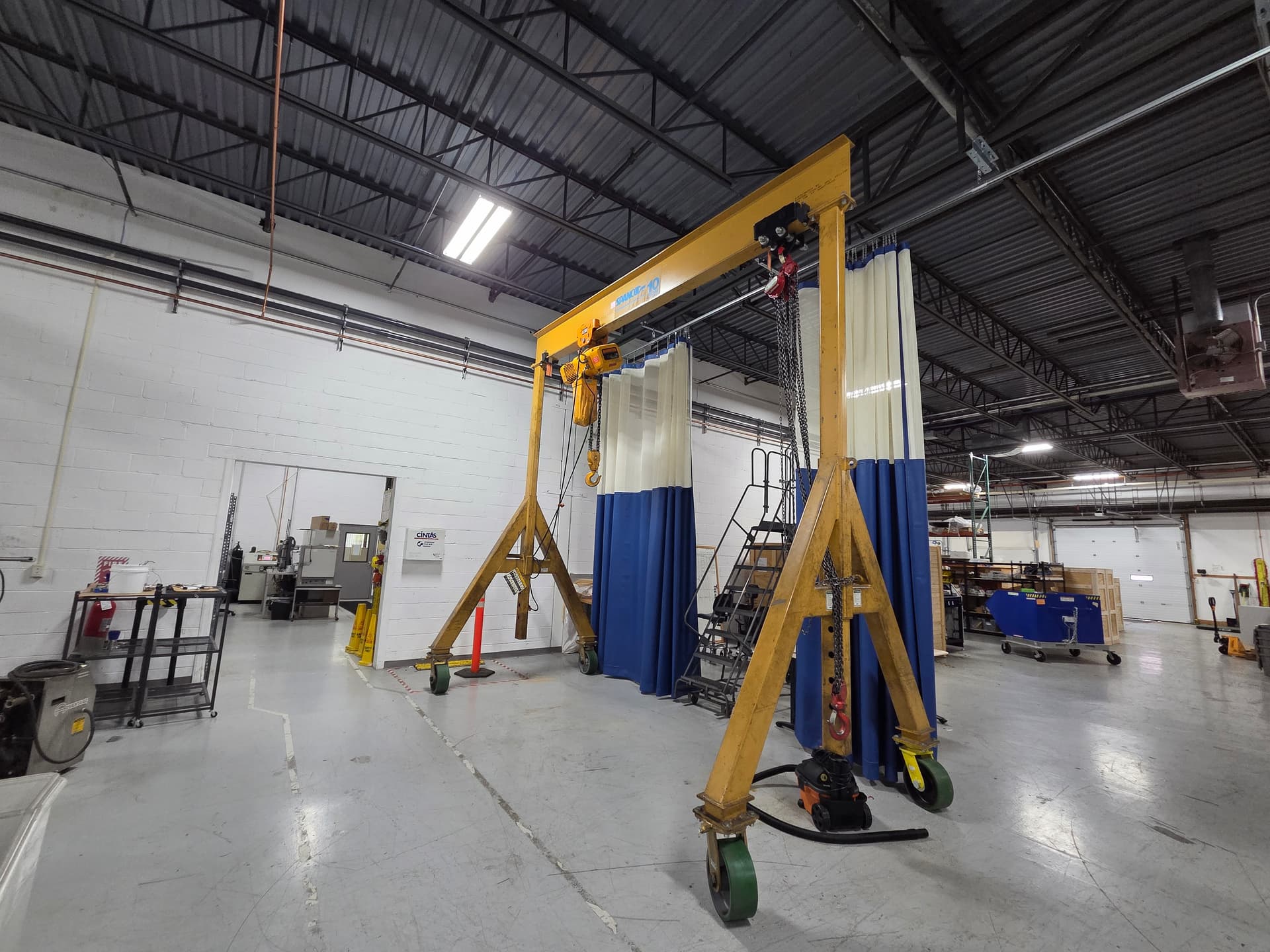
Lot 12
Spanco 10 Ton Portable A-Frame Gantry Crane w/(2) 5 Ton Hoists
Wilmington, MA
Ends Tue, Oct 13, 10:00 AM CT
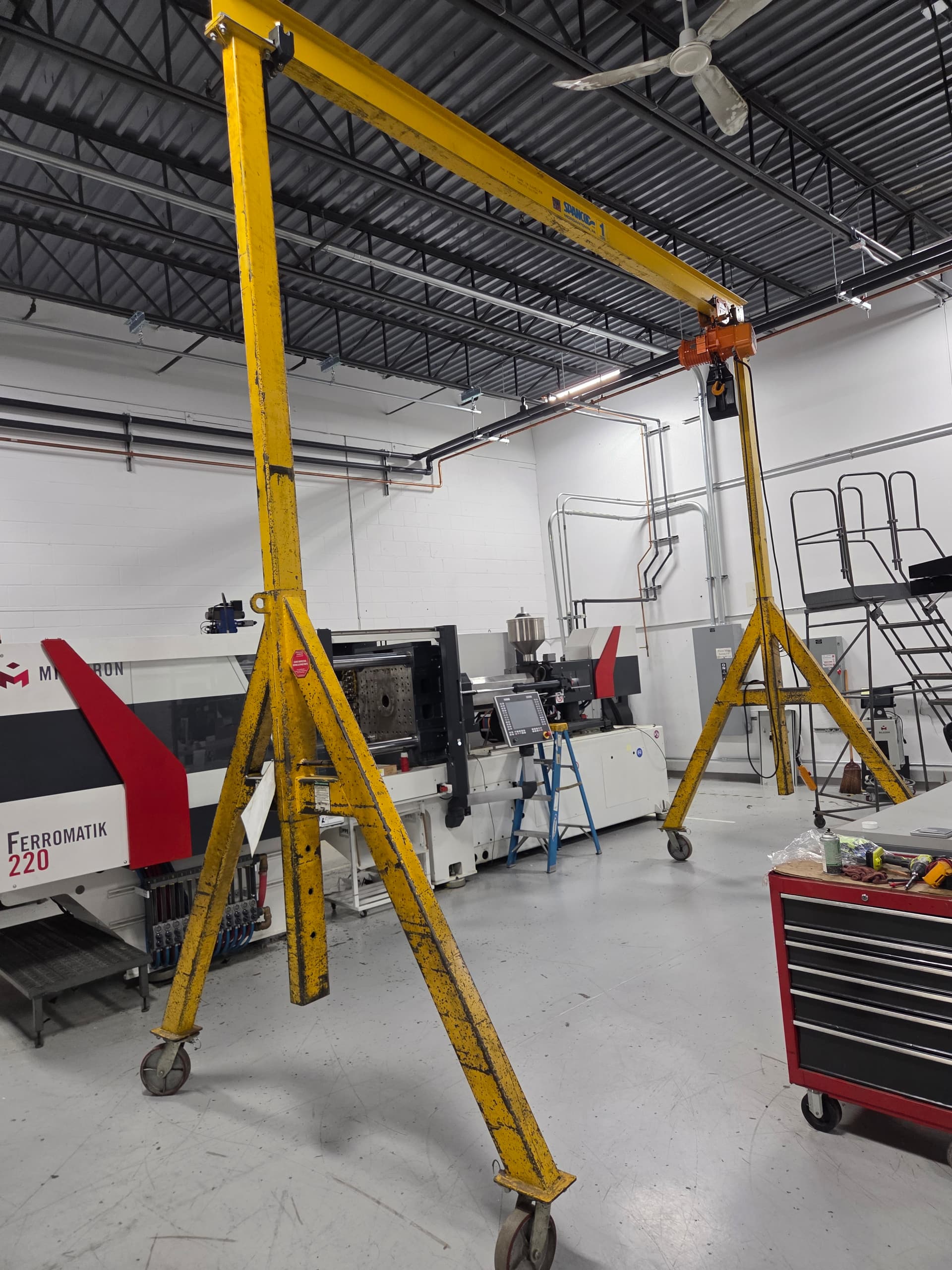
Lot 13
Spanco 1 Ton Portable A-Frame Gantry Crane w/Electric Chain Hoist
Wilmington, MA
Ends Tue, Oct 13, 10:00 AM CT
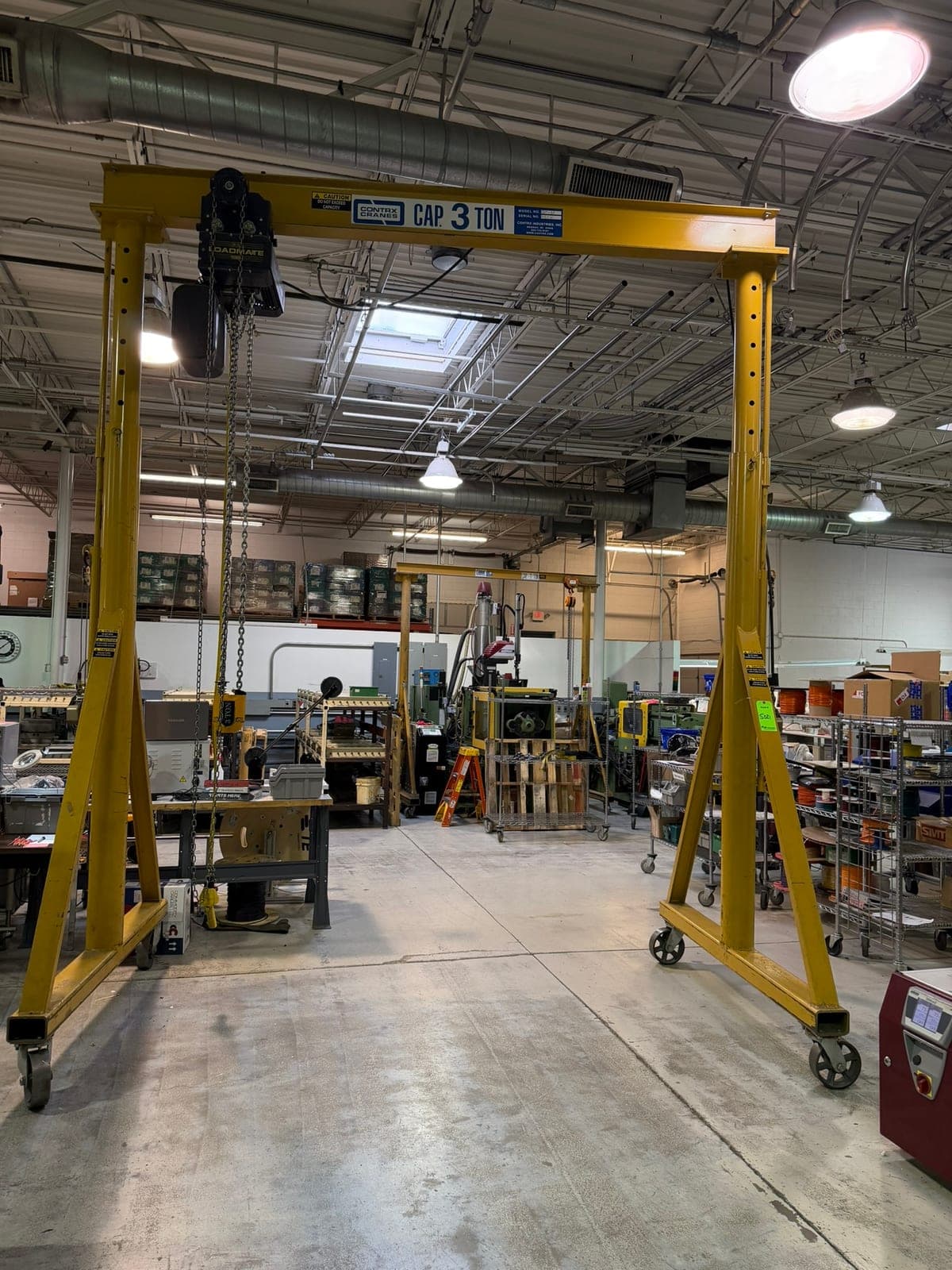
Lot 134
Contrx 3 Ton Portable Gantry Crane w/Electric Chain Hoist
Naperville, IL
Live auction · Tue, Oct 27, 10:00 AM CT
Looking for Something Specific?
Most of our inventory sells before we can list it online. If you need a specific brand, model, or specification, tell us what you need—we have access to unlisted equipment and machines coming in from plant closures.
Looking to Sell?
Meadoworks is an active cash buyer of used industrial equipment. Get a free valuation from our AMEA-certified appraisers.
About Used Gantry Cranes
A portable A-frame stands on the floor: two legs, a beam, casters, and usually a chain unit already on the beam. Spanco is the make that repeats. A gantry crane in this pattern rolls to the machine instead of living on a building runway. Steel A-series frames are built in capacities up to 10 tons, with standard spans from 10 to 40 feet, in adjustable-height or fixed-height versions, on swivel-lock casters with polyurethane wheels. Adjustable legs let the same frame clear a doorway and still reach over a press. The locks have to hold while you lift, not only while the frame is parked.
Span is the clear distance between the legs, and it has to cover the skid plus room to rig. Height under the beam has to clear the tallest point you will lift over. A frame that fits the work and misses the door does not fit the plant. Caster size and floor loading are the other gap. Small wheels on a soft slab can mark or punch it. Move the legs with the hook empty, the trolley near mid-span, and no load hanging off a cantilevered beam end. The minimum clear span is tied to the caster tread, so pulling the legs in too far is not a shortcut under a low door.
The chain unit on the beam has its own capacity, lift, speed and voltage. The system rating is the lower of the two tags. The beam on a gantry crane is designed with an allowance of about 15 percent of rated capacity for the trolley and lifting-unit weight, and about 25 percent for impact, and it is still not to be loaded past the nameplate. Two units on one beam share that frame rating. An I-beam and a box beam take different trolleys. A low-headroom unit with the motor parallel to the beam can twist a long span, which is why a fast lift, above about 50 feet per minute, deserves a harder look. Wheel brakes are part of the frame.
Buying a used gantry crane means matching capacity, span and under-beam height to the bay and the load. A frame from a closure often includes the lifting unit, so decide whether you need both before you split them. Meadoworks releases these A-frames from plant closures, consignments and auctions. Buyers can inspect the beam, the casters and both tags. Photos should show the capacity plate and the leg pins. The runway machine is an overhead crane. This one stays on the floor.
How to Choose a Used Gantry Crane
How to Size a Gantry Crane
Measure the load, then the bay. Span is the clear distance between the legs, and it has to cover the machine or the skid plus room to rig. Height under the beam has to clear the tallest point you will lift over. Adjustable legs are worth more than a fixed height when the doorway is shorter than the work. Capacity is the frame rating, not the hoist tag alone. If two hoists share the beam, they share that rating. Casters have to carry the frame plus the load on the floor you have, and the locks have to hold while you lift. A crane that fits the catalog photo and misses the doorway does not fit the plant.
A-Frame, Casters and the Hoist
A portable gantry crane is an A-frame on wheels. It goes to the job. An overhead crane stays on a runway and is a different machine. The lifting unit hanging on the beam may be included, and it still has its own lift, speed and voltage. Read both tags. A trolley has to match the beam section, I-beam or box. Caster diameter and brakes are part of the frame, not accessories you can ignore. Soft floors and thin slabs need a harder look at wheel load before a heavy frame rolls across them. If you only need the chain or wire unit, that is a separate purchase from the frame. Decide that before the truck is booked.
Gantry Crane Specs to Compare
| Spec | Typical range | Why it matters |
|---|---|---|
| Capacity | Up to 10 tons | The beam rating caps the lift. Two units on one beam share that number. |
| Span | 10–40 ft | The frame has to cover the load. A short span cannot reach the far side of a machine. |
| Under-beam height | The hook has to clear the work, and the frame may also have to pass a doorway. | |
| Casters | Wheel size and brakes decide whether the frame rolls and whether it stays put under load. | |
| Beam section | The trolley has to match the section or it will not sit on the beam. | |
| Lifting unit | The chain or wire unit is a second machine with its own lift, speed and voltage. Confirm it is included. |
Capacity
Typical range: Up to 10 tons
The beam rating caps the lift. Two units on one beam share that number.
Span
Typical range: 10–40 ft
The frame has to cover the load. A short span cannot reach the far side of a machine.
Under-beam height
The hook has to clear the work, and the frame may also have to pass a doorway.
Casters
Wheel size and brakes decide whether the frame rolls and whether it stays put under load.
Beam section
The trolley has to match the section or it will not sit on the beam.
Lifting unit
The chain or wire unit is a second machine with its own lift, speed and voltage. Confirm it is included.
What to Inspect on a Used Gantry Crane
Measure span and height
Write clear span and height under the beam, including the adjustable range if the legs move.
Read the frame tag
Use the beam capacity, not only the hoist tag. Note if two hoists share it.
Check caster locks
Locks should hold. Look for flat spots, bent forks and wheels that are too small for the floor.
Inspect the beam
A bent or twisted beam is not a paint issue. Confirm the trolley still rolls the full span.
Confirm the hoist is included
See whether the chain hoist is part of this listing or only pictured on the frame.
Match hoist voltage
If the hoist stays, its voltage has to match the bay, often 230 or 460 volts.
Test adjustable legs
Pins and telescoping legs should move and lock. A seized leg is a fixed height.
Related Equipment
- Cranes & Hoists
Overhead, gantry and hoist choices together
- Hoists
Chain and wire units that hang on the beam
- Overhead Bridge Cranes
Single-girder cranes on a building runway
More in Plant & Material Handling
Gantry Cranes Brands We've Sold
Common Applications
Frequently Asked Questions
What makes a gantry crane different from an overhead crane?
A gantry crane stands on the floor. Legs, a beam and casters make a portable A-frame that rolls to the machine. An overhead crane rides a runway fixed to the building. Spanco frames are the portable pattern that repeats here. You give up building coverage and gain the ability to move the crane. Span and under-beam height replace runway length as the dimensions that matter. If you need a crane that stays over one aisle, look at an overhead crane.
How do I size span and height on a portable frame?
Span is the clear distance between the legs, and it has to cover the load plus room to rig. Height under the beam has to clear the machine at the top of the lift. Adjustable legs help when the same frame must pass a doorway and still reach over a press. Write both numbers down before you compare two listings that share a tonnage. A frame with the right capacity and the wrong span will not straddle the job. Caster width adds to the aisle the frame needs.
Do caster locks and floor loading matter?
Yes. A gantry rolls, so the floor carries the frame plus the load through four wheels. Small casters on a soft slab can mark or punch it. Locks have to hold during the lift, not only while the frame is parked. Look at wheel diameter, brakes and whether the forks are bent. A crane that fits the bay and cannot be trusted to stay still is not ready. Ask what floor it ran on if the listing still names the plant.
Is the hoist part of the gantry purchase?
Often it is still on the beam, and you should confirm that in the sale rather than assume it. The hoist has its own capacity, lift height, speed and voltage. The system capacity is the lower of the hoist tag and the frame tag. Two hoists share the beam rating. If you need a different lifting unit, chain and wire rope are a separate choice from the frame. The frame dimensions stay with the A-frame either way.
What should I inspect on a portable A-frame?
The capacity tag, the beam for straightness, the trolley travel, the casters and the leg pins. Measure span and under-beam height yourself if the listing does not. Run the hoist if it is included and power is available. A seized adjustable leg turns an adjustable frame into a fixed one. Photograph the tags on both the beam and the hoist so those ratings are not mixed up later. A bent beam is a reason to stop.
Can a gantry crane pass through a doorway?
Only if the legs collapse below the header, or the whole frame is already shorter than the opening. Adjustable legs are the feature that makes that possible, and they have to move and lock. A fixed tall frame that fits the press may not fit the door on the way in. Measure the doorway and the minimum under-beam height before you plan the path. Casters help once it is inside. They do not shrink the frame.
