Used Air-Cooled Chillers for Sale
See all 6 Chillers & Cooling Towers →
2 results
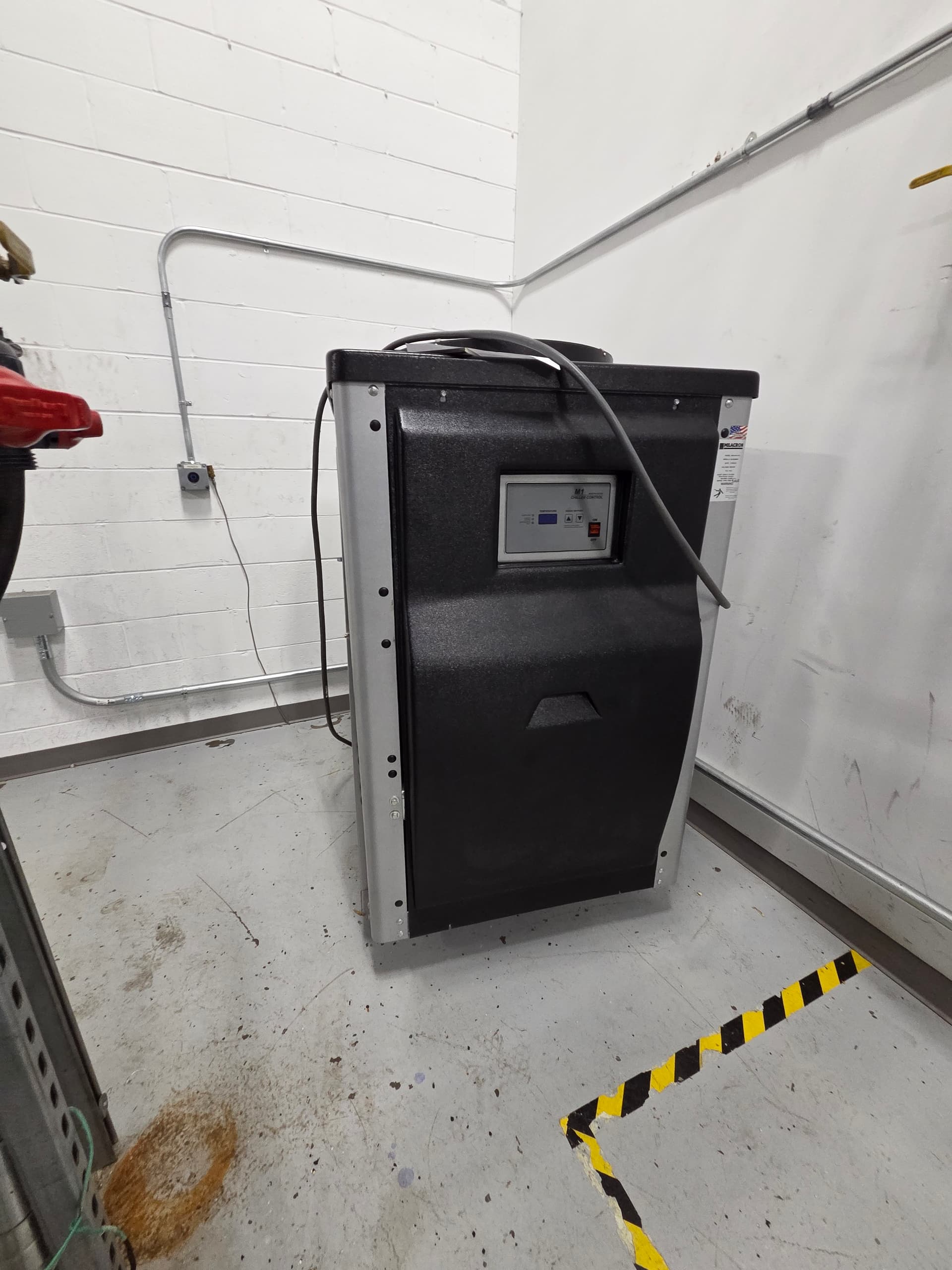
Lot 1
2015 Milacron 5 Ton Air-Cooled Portable Chiller
Wilmington, MA
Ends Tue, Oct 13, 10:00 AM CT
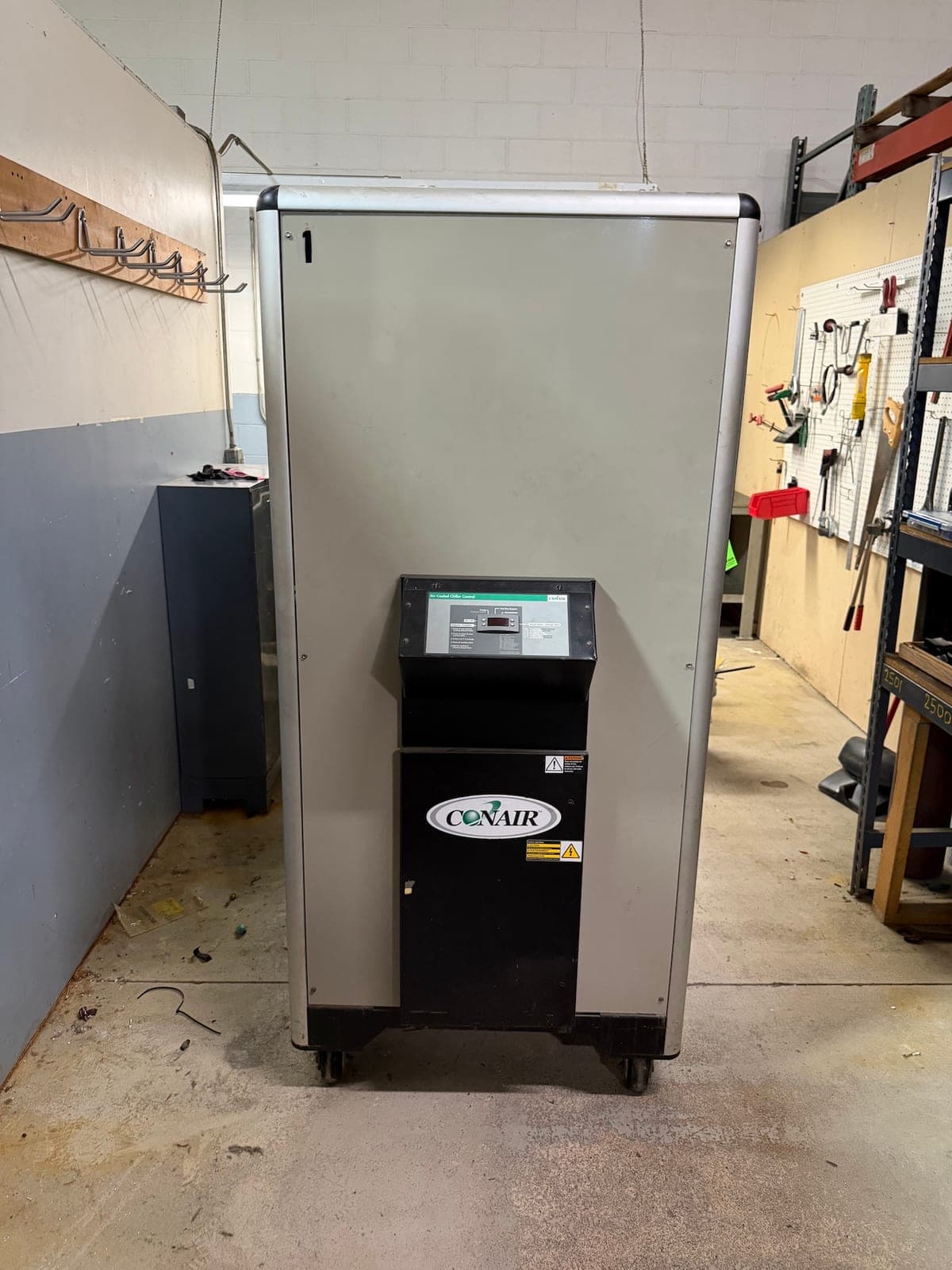
Lot 21A
Conair Air-Cooled Portable Chiller
Naperville, IL
Live auction · Tue, Oct 27, 10:00 AM CT
Looking for Something Specific?
Most of our inventory sells before we can list it online. If you need a specific brand, model, or specification, tell us what you need—we have access to unlisted equipment and machines coming in from plant closures.
Looking to Sell?
Meadoworks is an active cash buyer of used industrial equipment. Get a free valuation from our AMEA-certified appraisers.
About Used Air-Cooled Chillers
An air-cooled chiller rejects condenser heat into room air through fans and a finned coil built onto the cabinet. There is no cooling tower, no condenser-water pump and no chemical loop. The package is a compressor, that coil, the fans, a process pump and a reservoir. Many of the same cabinets also roll from press to press. A portable chiller with the condenser on the frame is this machine. The question that matters is where the heat goes. Casters are a separate choice. Tons fall as the air reaching the coil gets hotter. A nameplate is usually written with leaving water near 50 F and air on the coil near 95 F. A hotter aisle, a mezzanine or fins packed with dust will not deliver that plate.
Setpoints on this class of cabinet commonly run from about 20 F to about 80 F. Glycol belongs in the loop if you intend to run near freezing. Fan airflow and clean fins decide whether the compressor can make its tons. A matted coil looks like a weak compressor. Plan at least 36 inches of open air beside the cabinet, and give the hot discharge a path that does not blow straight back into the intake. Sitting indoors, the unit heats the room. Sitting outdoors, it needs a housing and a winter plan. Refrigerant is a service fact. Current packages in this size often carry R410A or R454B, and a technician has to be able to work on the charge that is actually in the circuit. Pump flow has to reach the mold or the machine circuit, not only circulate inside the tank.
The cabinet sits at the press or just outside the wall, in place of a tower loop. A rolling frame is the same air-coil package when one cell has to move. A cooling tower is the outdoor step when several water-cooled machines share a treated loop and the heat should leave the building. A water temperature controller still trims the mold. This cabinet only makes the cold water that controller borrows. Do not pipe an air-cooled chiller as if a tower were attached. Do not put the cabinet in a closet and expect the plate tons.
Shops that never built a tower consign these cabinets with the cell. On a used air-cooled chiller, run the fans, read suction and discharge, and look through the fins before you trust a wiped skin. Oil at the compressor fittings is a leak you will charge again. Confirm volts, often 460 V three phase on this class of frame, and confirm the ambient the tons were rated at before you promise the cabinet to a hot aisle. Clearance around the fans is part of the rating, not a layout detail you can skip.
How to Choose a Used Air-Cooled Chiller
How to Size an Air-Cooled Chiller
Start from process heat, then derate for the air the coil will actually see. An air-cooled chiller plate is usually written at a stated ambient. A hotter room, a mezzanine or a set of fins full of dust delivers fewer tons than that plate. Add resin heat and machine heat. Pump flow is separate. Cold water that cannot move is not cooling. If several presses share the cabinet, size the hour they all run, not the average hour. Glycol and freeze protection matter if the setpoint is aggressive or the unit sits outside. Voltage and refrigerant have to be serviceable where you are. Leave fan clearance in the layout before you fall in love with the footprint.
Air-Cooled Chiller or a Cooling Tower
The cabinet carries its condenser and needs no tower, no treatment and no extra pump for condenser water. It spends the heat in the air around the cabinet. A cooling tower rejects heat by evaporation and wants a water-cooled chiller or a water-cooled process load upstream of it. Choose the air-cooled chiller for one cell or a plant that will not maintain a tower. Choose the tower when the load is large, the heat should leave the building, and someone will treat the water. A rolling air-coil cabinet is the same machine people also buy when they want one unit at one press. A tower does not replace the refrigeration circuit. It only gives a water-cooled machine somewhere to send heat. Call the cabinet a process chiller, a condenser coil chiller or a packaged air chiller.
Air-Cooled Chiller Specs to Compare
| Spec | Typical range | Why it matters |
|---|---|---|
| Capacity (tons) | Nameplate tons assume a stated ambient, and a hotter room or a dirty coil delivers less than that number. | |
| Ambient rating (F) | Often near 95 F on the plate | Tells you the air temperature the tons were written for, which a closed hot aisle may exceed. |
| Fan airflow | Fans have to move real air across the fins, and a dead fan reads as high head pressure. | |
| Process pump | Flow has to reach the molds or the machines, not only circulate in the tank on the frame. | |
| Refrigerant | The type in the circuit decides which technician and which spare parts can still service the compressor. | |
| Supply voltage | Often 460 V, 3 phase | The cabinet has to match the building bus or it cannot be connected as it sits today. |
Capacity (tons)
Nameplate tons assume a stated ambient, and a hotter room or a dirty coil delivers less than that number.
Ambient rating (F)
Typical range: Often near 95 F on the plate
Tells you the air temperature the tons were written for, which a closed hot aisle may exceed.
Fan airflow
Fans have to move real air across the fins, and a dead fan reads as high head pressure.
Process pump
Flow has to reach the molds or the machines, not only circulate in the tank on the frame.
Refrigerant
The type in the circuit decides which technician and which spare parts can still service the compressor.
Supply voltage
Typical range: Often 460 V, 3 phase
The cabinet has to match the building bus or it cannot be connected as it sits today.
What to Inspect on a Used Air-Cooled Chiller
Spin every fan
A fan that wobbles, runs backward or does not start leaves the air-cooled chiller unable to reject heat.
Read the fins
Packed fins and bent coils cut capacity, and they are the usual reason a healthy compressor looks weak.
Check running pressures
Pressures far from the chart point to charge, a valve or a coil that is not doing its job.
Flow the pump
Seal leaks and cavitation mean the process loop is not getting the water the compressor just cooled.
Give the fans room
A cabinet shoved against a wall recirculates its own hot air and will not hold tons in summer.
Confirm refrigerant
Know what is in the circuit before you buy, because some older charges are a service problem.
Look for portable overlap
Casters and a small tank mean this may also be a portable chiller, which changes how you pipe it.
Related Equipment
- Portable Chillers
Rolling cabinets, often the same air-cooled frames
- Cooling Towers
Outdoor heat rejection for a water-cooled plant
- Chillers & Cooling Towers
Portable cabinets, air coils and towers together
Common Applications
Frequently Asked Questions
How do I size an air-cooled chiller without a tower?
Add the process heat and then derate for the air around the coil. An air-cooled chiller nameplate assumes an ambient printed on the plate. A hotter aisle, poor fan clearance or dirty fins mean fewer tons than that print. Pump flow is a second check, because cold water that sits in the tank does not cool a mold. Glycol belongs in the loop if the setpoint is low or the cabinet will see a freeze. Size shared machines for the hour they all run.
Air-cooled chiller or cooling tower, which rejects the heat?
The cabinet rejects heat at its own coil and needs no tower. A cooling tower rejects heat by evaporation and expects a water-cooled chiller or another water-cooled load in front of it. Pick the air-cooled chiller when you will not maintain tower water and the load fits a cabinet. Pick the tower when the plant is large and the heat should leave the building. A tower is not a substitute for the refrigeration circuit. Rolling air-coil cabinets are often the same frames sold as portable chillers.
What should I inspect on a used air-cooled chiller?
Run the fans and read pressures with the pump flowing. An air-cooled chiller with a dead fan, a matted coil or a low charge will not hold leaving temperature. Look for oil at the fittings. Confirm the refrigerant and the voltage. Measure the space you will actually give the fans, because a corner install recirculates hot air. If the frame has casters and a small tank, treat it as a portable too and pipe it that way. A wiped cabinet with bent fins is not a clean machine.
Does an air-cooled chiller overlap a portable chiller?
Often. A portable chiller that is air-cooled is both a cabinet you can roll and an air-cooled chiller. Read the frame. Casters and a small tank mean one press can take it along. A large plant cabinet with the condenser on the frame still rejects heat to air, and it does not roll. Use the condenser, not the casters, to decide whether tower water is required. Do not assume every air-coil cabinet is a cart.
Why does an air-cooled chiller lose tons in summer?
The coil is rejecting heat into hotter air, so head pressure rises and capacity falls. Dirty fins and a fan that is short of airflow make the same loss on a mild day. An air-cooled chiller rated at a mild ambient will not deliver that rating in a 100 F aisle or against a wall. Clean the coil, give the discharge a path out, and derate honestly. A water-cooled machine on a tower suffers less from room air and more from wet-bulb and water treatment. That machine still needs a treated loop.
What clearance does an air-cooled chiller need?
Enough open air at the intake and a path for the hot discharge that does not blow straight back into the coil. An air-cooled chiller in a closet or against a wall cools itself with its own exhaust and the water temperature drifts up. Follow the plate for inches, and then look at the real room. Overhead obstructions and a second hot machine beside the fans count. Outdoor units need the same airflow plus weather protection. Clearance is a capacity spec, not a housekeeping preference.
