Used Portable Chillers for Sale
See all 6 Chillers & Cooling Towers →
3 results
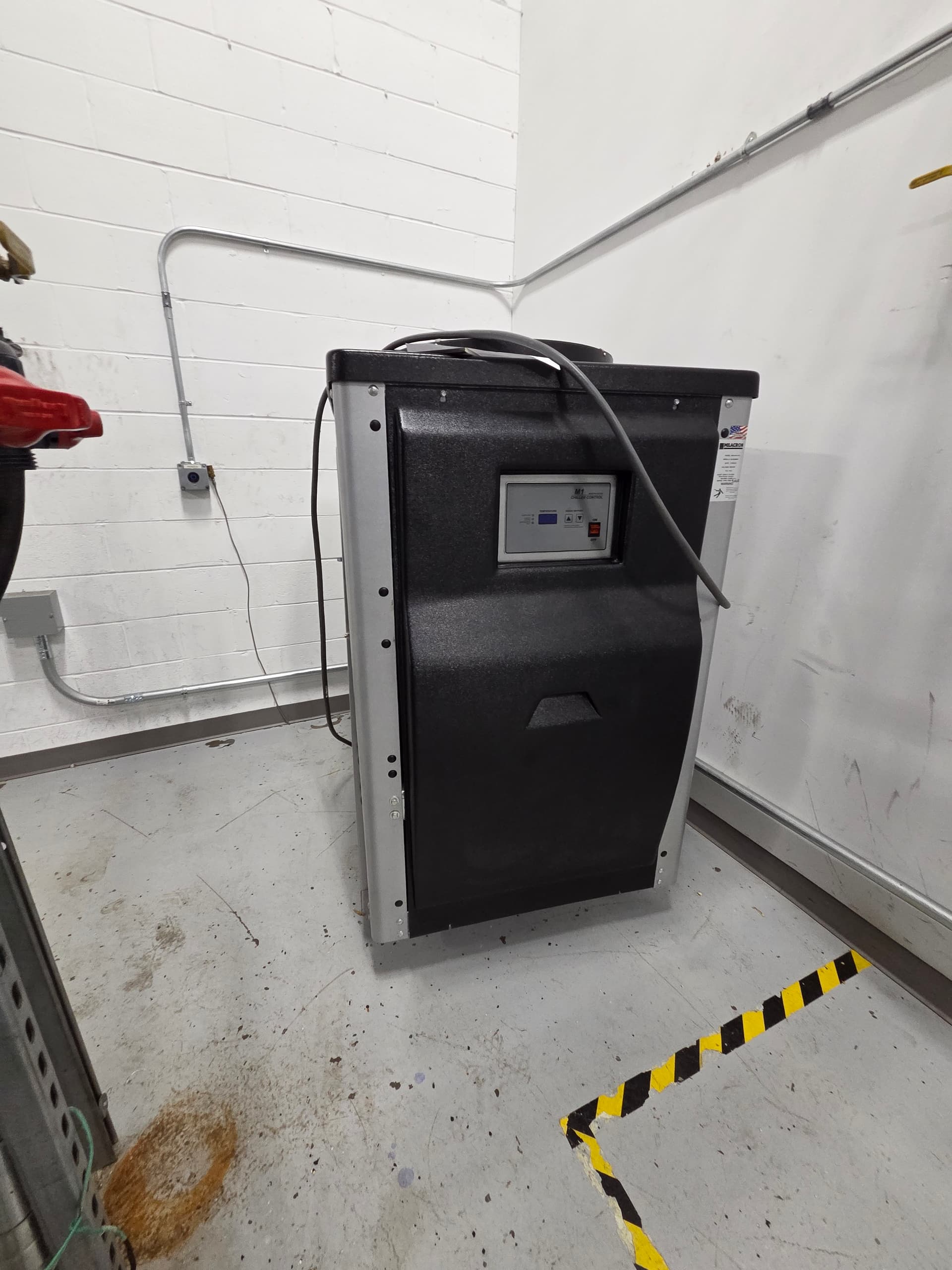
Lot 1
2015 Milacron 5 Ton Air-Cooled Portable Chiller
Wilmington, MA
Ends Tue, Oct 13, 10:00 AM CT
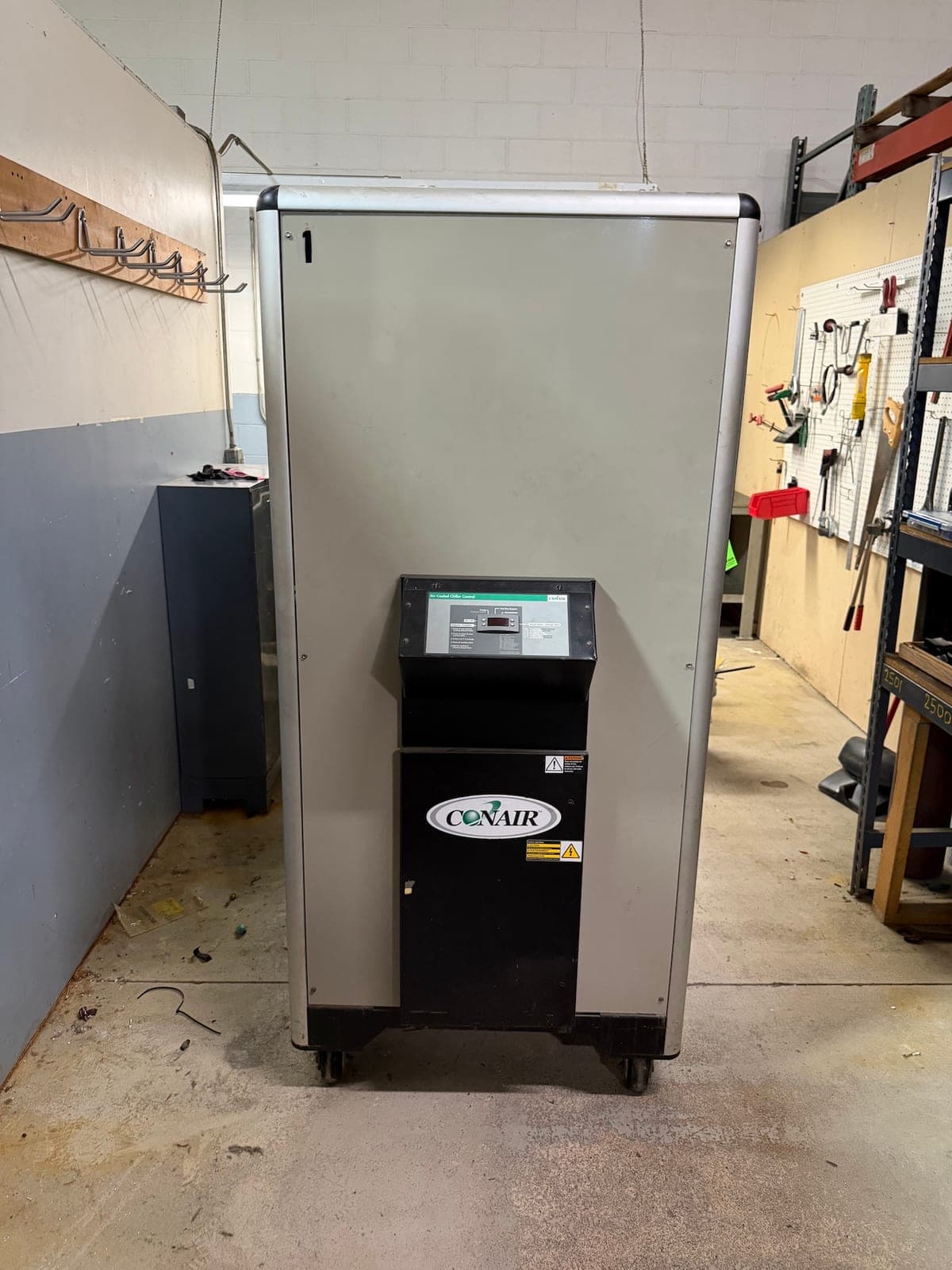
Lot 21A
Conair Air-Cooled Portable Chiller
Naperville, IL
Live auction · Tue, Oct 27, 10:00 AM CT
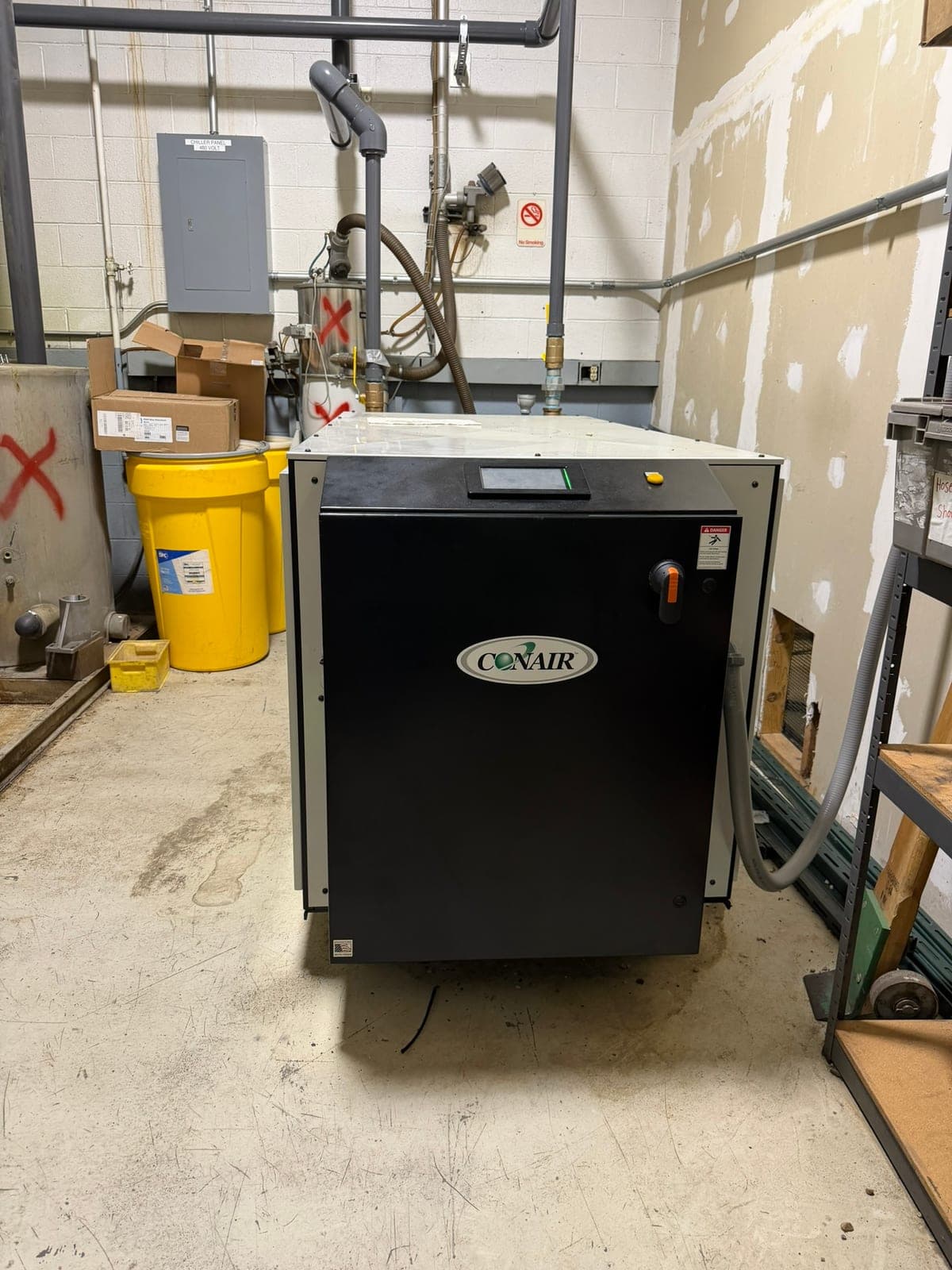
Lot 21
Conair Portable Water Chiller
Naperville, IL
Live auction · Tue, Oct 27, 10:00 AM CT
Looking for Something Specific?
Most of our inventory sells before we can list it online. If you need a specific brand, model, or specification, tell us what you need—we have access to unlisted equipment and machines coming in from plant closures.
Looking to Sell?
Meadoworks is an active cash buyer of used industrial equipment. Get a free valuation from our AMEA-certified appraisers.
About Used Portable Chillers
A portable chiller is a packaged refrigeration cabinet on casters that cools process water for one press or a small group of tools. The frame carries a compressor, a condenser, a pump and a reservoir. Air-cooled or water-cooled is a build choice. It is not a thermolator, and it is not the yard tower. Tons are the heat it can remove from the water at a stated room temperature. Conair's small EP1 cabinets cover about 1 to 3 tons, with process pumps from about 1/4 hp up to about 3 hp. The larger EP2 frames run from about 4 tons to about 43, air-cooled, water-cooled or with a remote condenser. A cabinet rolls to the cell and leaves with the job.
Leaving temperature is commonly held in a moderate band, cold enough for molds and hydraulics. Conair states EP2 setpoints from about 20 F to about 80 F, and a nameplate ton is written at a mild ambient, often near 95 F air on an air-cooled coil. Compressor size is not the tonnage once the aisle gets hot, because that coil loses capacity as the room rises. An air-cooled cabinet dumps its heat into the plant. A water-cooled cabinet dumps heat into tower water and is the wrong frame if you have no tower. Pump flow has to satisfy the circuit you connect, mold or machine. The reservoir keeps the compressor from short-cycling on a small loop.
The cabinet sits on the floor at the press, upstream of the water temperature controllers that only trim the mold. An air-cooled condenser on the cabinet is the same machine many people also file with air-cooled chillers. A cooling tower is the outdoor step when the plant rejects heat for a whole bay and one cabinet is too small a tool for that loop. A water unit still sets mold temperature. This cabinet only makes the cold water that unit borrows. Size it from resin heat and hydraulic heat together. Press tonnage alone will mis-pick the frame.
Cell auctions are the usual way a used portable chiller changes hands, casters still under the cabinet that cooled that press. Inspection covers refrigerant pressures, pump flow and a coil that is not blinded by dust or scale. Write air-cooled or water-cooled so a plant without a tower is not handed a water-cooled frame. Ask the tons at your real ambient before it is matched to a press.
How to Choose a Used Portable Chiller
How to Size a Portable Chiller
Add the heat the resin brings in and the heat the hydraulics add, then convert that load into tons at the water temperature you need. A rule of thumb that uses only press tonnage misses a hot resin and an efficient electric machine in opposite directions. Leave margin for a hot aisle if the condenser is air-cooled, because the nameplate is usually stated at a mild room. Pump flow is the second number. A chiller that makes cold water and cannot push it through the mold has not cooled the tool. Glycol is required if you intend to run near freezing. Voltage is almost always three phase. One portable chiller per press is the simple cell. Sharing one cabinet across two presses works only when both loads were in the original sum.
Air-Cooled or Water-Cooled Portable Chiller
An air-cooled cabinet has the condenser on the frame and needs clear air around the fans. It belongs in a plant with no tower, and it heats the room. A water-cooled cabinet is smaller for the same tons and it sends heat to a cooling tower, so it is the right frame only when that loop exists and is treated. Many of the same cabinets also answer the air-cooled condenser question. Do not buy a water-cooled unit and plan to set it in a corner with no tower water. Do not set an air-cooled unit in a closet. Filthy fins or a dead fan are how an air-cooled cabinet quietly loses tons in July. A press-side chiller, a portable process chiller and a packaged chiller are this same cabinet.
Portable Chiller Specs to Compare
| Spec | Typical range | Why it matters |
|---|---|---|
| Cooling capacity (tons) | Often about 3–10 tons on one press | Has to cover resin heat plus hydraulics at the water temperature and the room you actually run the cell in. |
| Condenser style | Air-cooled rejects heat to the aisle, and water-cooled rejects heat only if a tower loop already exists. | |
| Process pump (hp) | Flow and pressure have to reach the mold or the machine circuit, not just circulate inside the tank. | |
| Leaving water (F) | Often about 50 F setpoint | Colder water needs glycol, and warmer water may not pull the mold down on a fast cycle at all. |
| Compressor and refrigerant | The compressor is the wear item, and the refrigerant type decides what a technician can still service locally. | |
| Supply voltage | Often 460 V, 3 phase | A cabinet built for another voltage will not start on the press bus without a separate transformer. |
Cooling capacity (tons)
Typical range: Often about 3–10 tons on one press
Has to cover resin heat plus hydraulics at the water temperature and the room you actually run the cell in.
Condenser style
Air-cooled rejects heat to the aisle, and water-cooled rejects heat only if a tower loop already exists.
Process pump (hp)
Flow and pressure have to reach the mold or the machine circuit, not just circulate inside the tank.
Leaving water (F)
Typical range: Often about 50 F setpoint
Colder water needs glycol, and warmer water may not pull the mold down on a fast cycle at all.
Compressor and refrigerant
The compressor is the wear item, and the refrigerant type decides what a technician can still service locally.
Supply voltage
Typical range: Often 460 V, 3 phase
A cabinet built for another voltage will not start on the press bus without a separate transformer.
What to Inspect on a Used Portable Chiller
Read pressures on a run
Suction and discharge that are far off the chart mean a low charge, a bad valve or a coil that cannot reject heat.
Check the condenser coil
Fins packed with dust or scale cut tons, so the cabinet sounds fine and the water will not get cold.
Flow the process pump
A leaking seal or a cavitating pump leaves the mold starved even when the compressor is healthy.
Inspect the reservoir
Rust, a missing lid or a float that sticks will overflow or let the pump run dry on the first shift.
Look for oil stains
Oil at the compressor or the fittings is a leak you will be charging again, not a cosmetic mark.
Match volts and phase
The nameplate has to agree with the cell, or the cabinet is the wrong electrical machine.
Confirm air or water
An air-cooled cabinet needs fan clearance, and a water-cooled cabinet needs tower water or it has nowhere to send heat.
Related Equipment
- Air-Cooled Chillers
Condenser on the cabinet, often the same units
- Cooling Towers
Outdoor heat rejection when a tower loop exists
- Water Temperature Controllers
Mold trim that borrows this cold water
Portable Chillers Brands We've Sold
Common Applications
Frequently Asked Questions
How do I size a portable chiller from resin and hydraulics?
Add the heat entering with the resin to the heat the hydraulics reject, and turn that sum into tons at the water temperature you need. A portable chiller picked from press tonnage alone misses a hot resin and a cool all-electric machine in opposite ways. If the condenser is air-cooled, derate for a hot aisle, because the plate is usually written for a milder room. Then match the pump to the mold. Glycol belongs in the loop if you will run close to freezing. One cabinet per press is simpler.
Should a portable chiller be air-cooled or water-cooled?
Choose air-cooled when the plant has no cooling tower and you can give the fans open air. The cabinet then heats the room, and the same air-cooled frame is often filed with the air-cooled cabinets too. Choose water-cooled when a treated tower loop already exists and you want the heat outside. A water-cooled portable chiller with no tower has nowhere to send its condenser load. Do not hide an air-cooled frame in a closed mezzanine. Dirty fins are how July capacity disappears.
What should I inspect on a used portable chiller?
Run it and read pressures, then look at the coil and the pump. A portable chiller with a low charge, a packed condenser or a leaking pump seal will not hold water temperature even if the fans spin. Check the tank for rust and a working float. Oil stains at the compressor are a leak, not a stain to wipe. Confirm voltage and whether the condenser is air or water. Ask which refrigerant is in it so a technician can still work on the portable chiller.
Does a portable chiller replace a thermolator?
No. A portable chiller makes cold process water. A thermolator uses some of that water, or tower water, to hold a mold at a setpoint that is often much warmer. You usually need both on a molding cell. A portable chiller alone leaves every mold at whatever temperature the supply happens to be. A thermolator alone, with no cold source, will climb until it cannot cool. Size them as a pair. The chiller is the source. The thermolator is the trim at the tool.
What happens to a portable chiller in a hot room?
An air-cooled portable chiller loses tons as the air across the condenser gets hotter. The compressor works harder and the leaving water drifts up. That is why a nameplate written at a mild ambient overstates a July aisle. Give the fans clearance and keep the fins clean. A water-cooled portable chiller cares more about tower-water temperature than about room air, until the room is so hot the electrical cabinet suffers. If the cell is in a closed corner, move the air or pick a water-cooled frame that has a tower.
Can one portable chiller feed two presses?
Only when the sum of both loads, at the same time, fits the tons and the pump. A portable chiller that was right for one press will run warm the hour both tools are in cycle. Piping has to be balanced or the nearer press takes all the flow. Two cabinets are simpler when the presses move independently. Sharing makes sense for two small machines on one platform that always run together. Write both loads down before you tee the hoses and hope.
