Used Sprue Pickers for Sale
See all 19 Robots & Sprue Pickers →
3 results
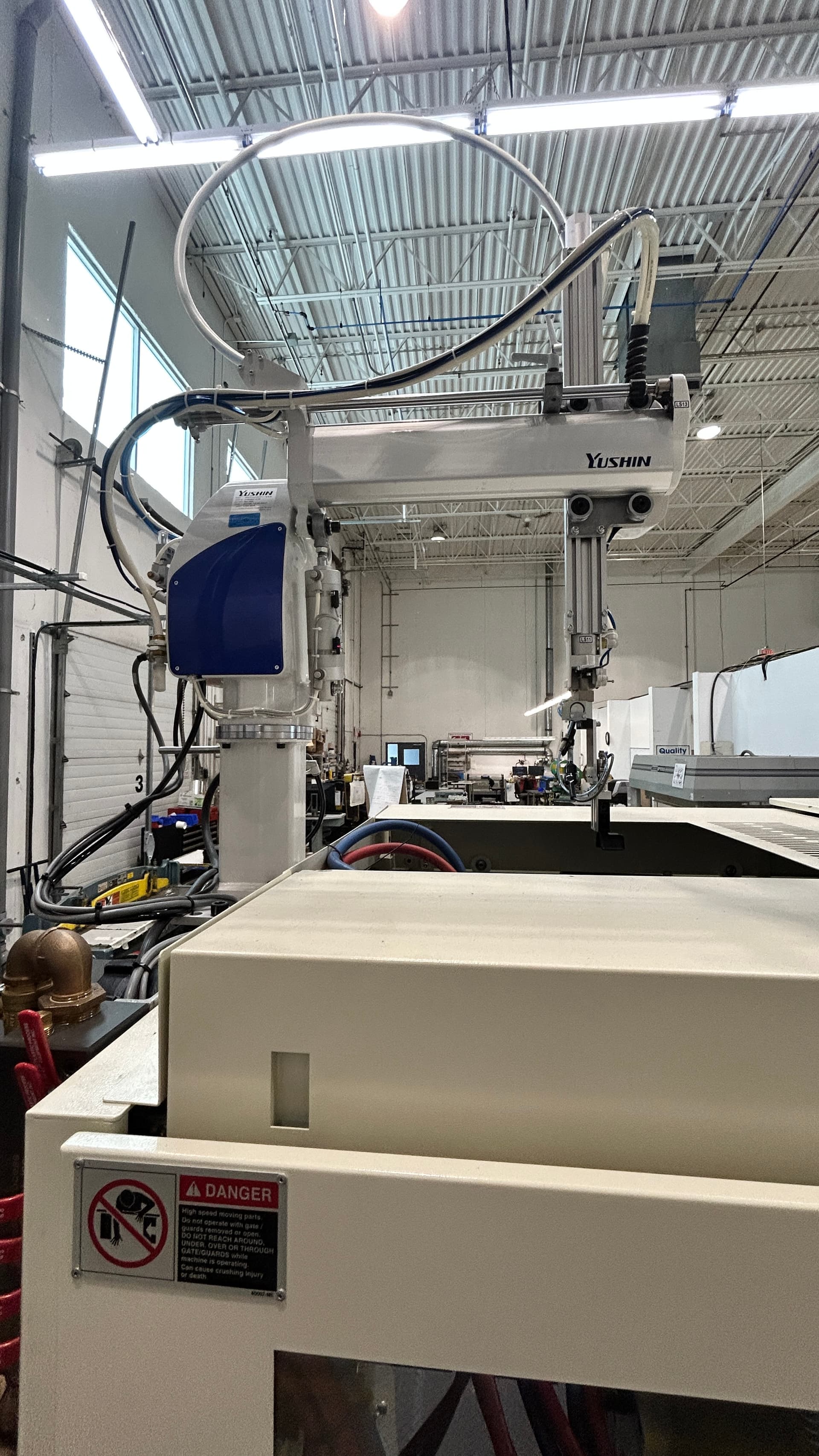
Lot 51
Yushin HOP FIVE-550XC-GIIB Sprue Picker / Take-Out Robot
Coquitlam, BC
Live auction · Tue, Oct 20, 10:00 AM CT
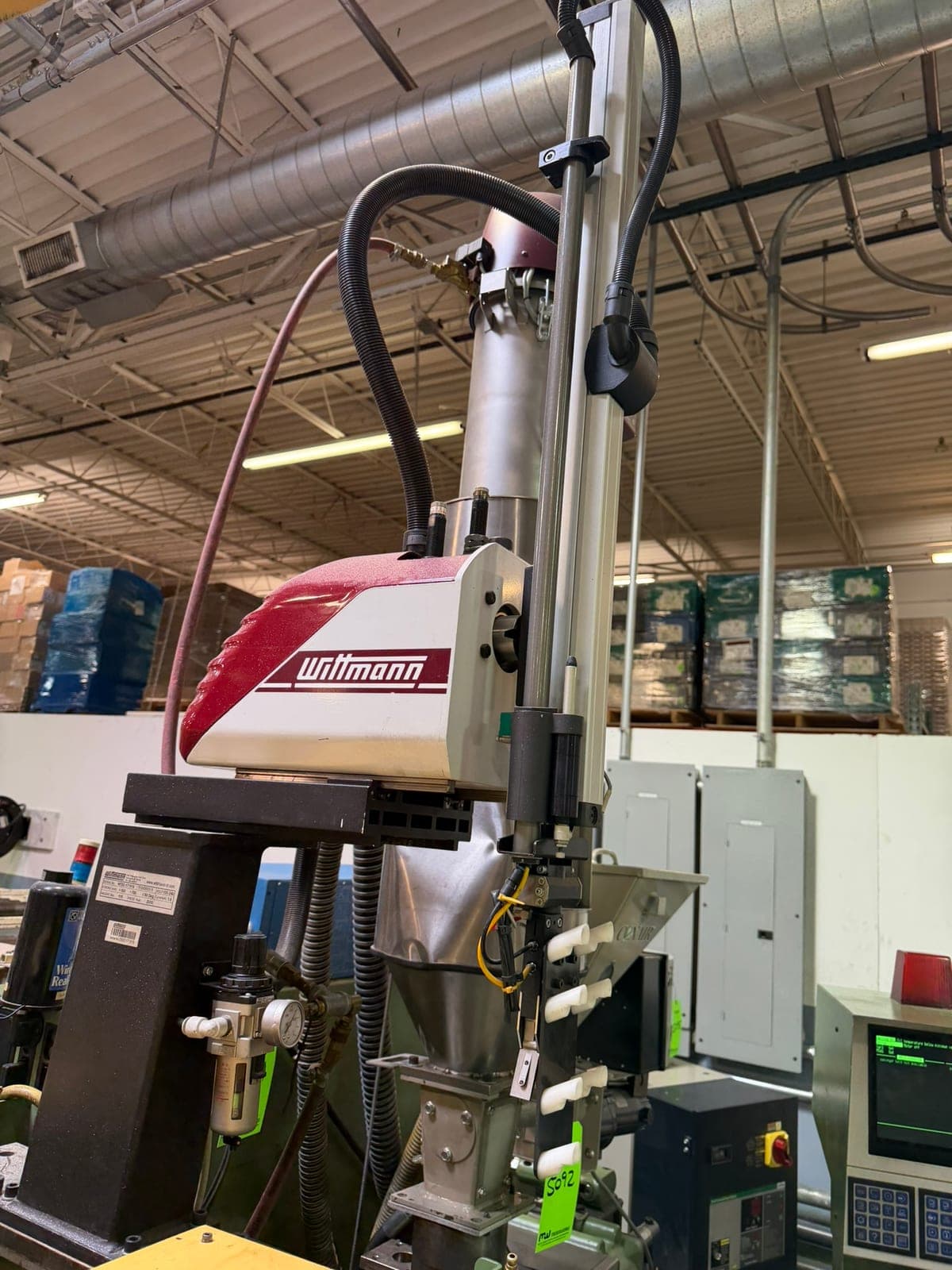
Lot 88
2015 Wittmann Sprue Picker Robot
Naperville, IL
Live auction · Tue, Oct 27, 10:00 AM CT
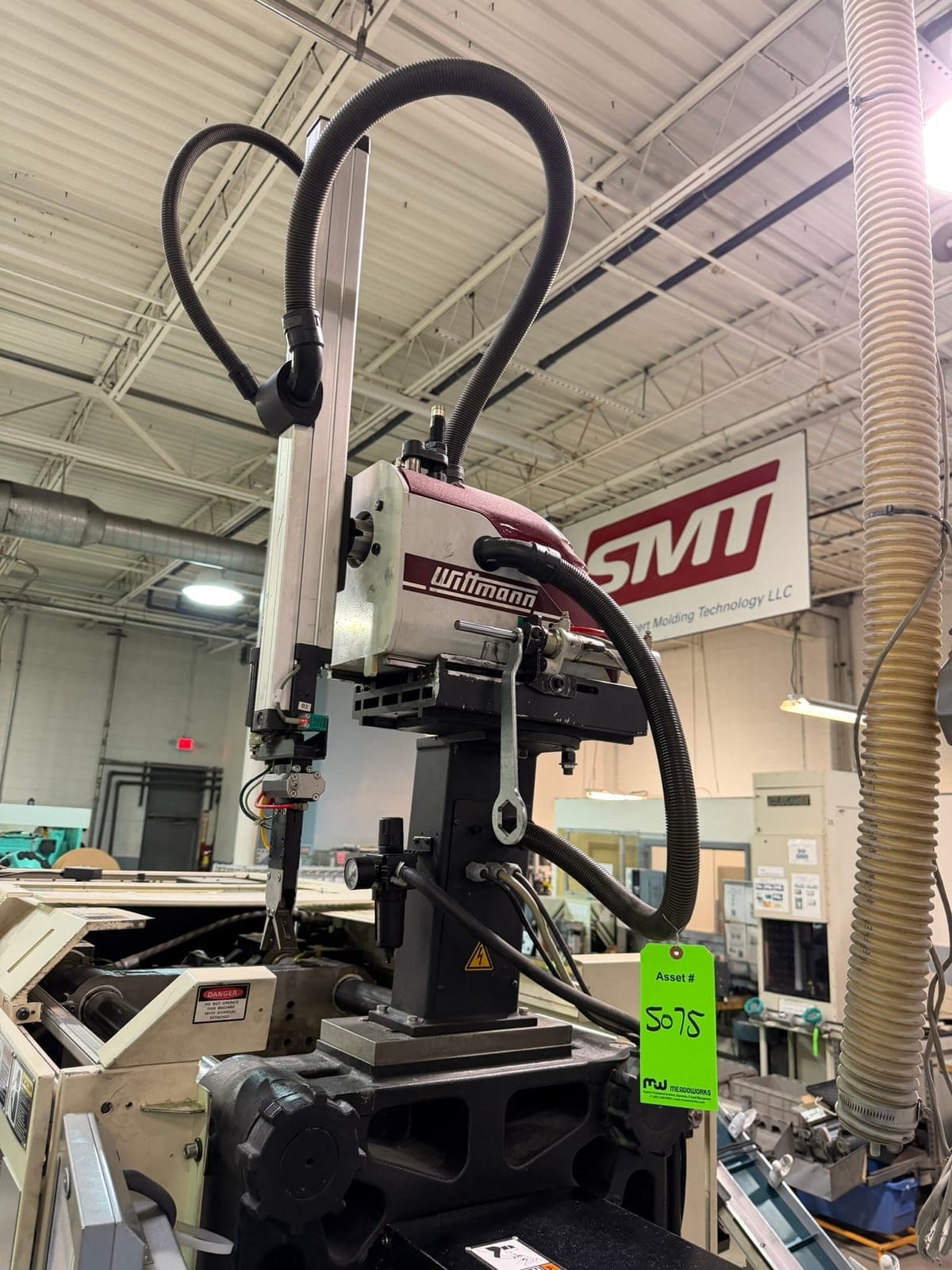
Lot 76
2008 Wittmann W702 Sprue Picker
Naperville, IL
Live auction · Tue, Oct 27, 10:00 AM CT
Looking for Something Specific?
Most of our inventory sells before we can list it online. If you need a specific brand, model, or specification, tell us what you need—we have access to unlisted equipment and machines coming in from plant closures.
Looking to Sell?
Meadoworks is an active cash buyer of used industrial equipment. Get a free valuation from our AMEA-certified appraisers.
About Used Sprue Pickers
A sprue picker is a swing-arm takeout that reaches into the mold, grips the runner and pulls it clear so the press can close. It pivots from a base on the fixed platen or the tiebars. It is not a three-axis traverse riding the top of the clamp. Vertical stroke, a kick and a swing are the three moves. A take-out robot in the swing-arm sense is this machine. Payload is a runner, sometimes a small part, not a housing. Wittmann's pneumatic pickers list a vertical stroke to about 700 mm, a kick to about 100 mm, a swing from about 45 to 95 degrees, and a wrist that turns about 90 degrees as the arm leaves the press. A locking cylinder is there so the arm does not drift into the mold if the air drops. The arm earns its place when the cycle is short and the only thing leaving the mold is the sprue.
Gripper fingers have to match the runner diameter. Worn fingers drop the runner on the mold and the next shot is scrap. Swing has to clear the mold and the tie bars and still reach a chute or a granulator. Kick stroke is what gets the gripper onto the sprue without hitting the core. Controls are usually a simple pendant, not a full path. Air cylinders do a lot of the wrist work. Voltage is often a light single-phase or a small three-phase supply, and it still has to match the press.
The arm mounts on the press, not on the floor beside it. A servo traverse is the next machine when you must take the part, not only the runner, and place it. A six-axis arm is the further step when you need to load inserts or pack. A beside-the-press granulator is where many shops drop what the arm pulls. Do not buy a traverse and call it a picker to save the top of the press. Do not ask a swing arm to palletize. Mold open time has to be long enough for the arm to exit before the clamp closes. That window is the real limit, more than brochure speed.
Consignment from presses being retooled is how a used sprue picker usually arrives, pulled off a machine that is getting a full servo instead. Inspection starts with swing, kick and gripper under air, plus the pendant, not with the arm paint. Record stroke and the press it came from so the arm is not offered onto a clamp it cannot clear. Ask for the gripper style before it is paired with a runner it has never held.
How to Choose a Used Sprue Picker
How to Size a Sprue Picker
Match vertical stroke to the mold opening and the distance from the mount to the sprue, not to press tonnage alone. The arm has to reach the runner and still swing clear of the tie bars before the mold closes. Kick stroke has to put the gripper on the sprue without striking the core. If mold-open time is already tight, a slow arm will lengthen the cycle and you may need a faster servo instead. Payload is the runner plus the fingers. A picker rated for a light sprue will not carry a cold three-plate runner with a steel gripper. Air has to be at the press. Confirm the mount pattern on the platen. A picker that fit a 200-ton machine will not automatically fit the next clamp.
Sprue Picker or a Traverse Robot
A sprue picker swings in, takes the runner and swings out. It is the right machine when the part drops and only the sprue must be removed. A servo traverse robot rides above the clamp, takes the part on a vacuum or a mechanical hand, and can place it, degate it or stack it. Buy the traverse when the part cannot drop, when you have inserts, or when the cycle includes anything besides a runner. Buy the sprue picker when you want a light arm, a short teach and no beam across the top of the press. A six-axis arm is a third choice for packing and odd reach. Do not put a traverse on a press that only needed the runner pulled. A runner picker is that swing arm.
Sprue Picker Specs to Compare
| Spec | Typical range | Why it matters |
|---|---|---|
| Vertical stroke (mm) | Often about 550–750 mm | Has to reach the sprue at your mold opening and still clear the tool on the way out. |
| Swing (degrees) | Often about 50–90 degrees | The arc has to clear the tie bars and land the runner in the chute or the granulator beside the press. |
| Kick stroke (mm) | Puts the gripper onto the sprue without striking the core, the cavity face or the steel leader pins. | |
| Payload | Fingers plus the sprue have to stay inside the arm rating or the swing slows and the runner drops. | |
| Gripper style | Has to match the runner diameter, or the picker pulls air and the mold closes on the plastic. | |
| Air and voltage | The cylinders need shop air at the platen, and the pendant needs the volts printed on the nameplate. |
Vertical stroke (mm)
Typical range: Often about 550–750 mm
Has to reach the sprue at your mold opening and still clear the tool on the way out.
Swing (degrees)
Typical range: Often about 50–90 degrees
The arc has to clear the tie bars and land the runner in the chute or the granulator beside the press.
Kick stroke (mm)
Puts the gripper onto the sprue without striking the core, the cavity face or the steel leader pins.
Payload
Fingers plus the sprue have to stay inside the arm rating or the swing slows and the runner drops.
Gripper style
Has to match the runner diameter, or the picker pulls air and the mold closes on the plastic.
Air and voltage
The cylinders need shop air at the platen, and the pendant needs the volts printed on the nameplate.
What to Inspect on a Used Sprue Picker
Swing the arm on air
A sticky swing cylinder or a cracked pivot will not clear the mold, and the next close hits the arm.
Check kick and gripper
Kick that falls short misses the sprue, and worn fingers drop it back onto the core.
Time a dry cycle
The arm has to be out before mold close, or you will add time or you will crash the tool.
Open the pendant
A dead screen, a missing teach box or an alarm that will not clear means the picker will not run.
Inspect the mount
Holes and brackets have to match the platen or the tiebars on your press, not the press it left.
Look at air lines
Leaking tubes and a tired wrist cylinder are the drop you will chase on the first shift.
Confirm part versus sprue
If the last job gripped a part, make sure you still only need a runner, or you want a servo instead.
Meadoworks Track Record
15
Sold through Meadoworks
3
Listed now
Common models
Star XQ-6-60F Sprue Picker, Wittmann W702 Sprue Picker, Yushin Sprue Picker HOPIII-750
Related Equipment
- Servo Robots
Traverse robots when the part must be placed
- 6-Axis Robots
Articulated arms for insert load and packing
- Robots & Sprue Pickers
Pickers, traverse robots and six-axis arms
Sprue Pickers Brands We've Sold
Yushin
Japanese maker of sprue pickers and traverse robots.
Star
Japanese Star Seiki line of swing-arm pickers.
Wittmann
Austrian maker of swing-arm sprue pickers.
Common Applications
Frequently Asked Questions
How do I size a sprue picker for mold opening?
Measure from the mount to the sprue at the opening you actually run, and pick a sprue picker whose vertical stroke and kick cover that point with room to clear the tie bars. Swing has to land the runner in a chute or a granulator, not into the next cavity. Mold-open time has to fit the move. A heavy three-plate runner needs a gripper and a payload the arm can hold. Tonnage is only a hint. Two presses of the same tonnage can have very different daylight. Check the mount.
Sprue picker or a three-axis traverse, which removes the runner?
A sprue picker is the swing arm. It takes a runner and gets out. A three-axis traverse is a servo robot over the clamp. It takes the part, and it can place that part, strip a gate or set it on a conveyor. Choose the sprue picker when the part can drop and the cycle only needs the sprue gone. Choose the traverse when the part must not drop or the cell has a second step. A six-axis arm is for reach and packing, not for a simple runner.
What should I inspect on a used sprue picker?
Put air on it and swing, kick and grip. A sprue picker with a sticky cylinder or worn fingers will drop the runner or stay in the mold. Time a dry cycle against your mold-open window. Power the pendant and clear any alarm. Check the mount against your platen. Look at the wrist tubing. Ask whether it last held a sprue or a part, because the gripper may be wrong for your runner. A pretty arm that will not finish the swing before close is not a savings.
What stroke does a sprue picker need?
Enough vertical travel to reach the sprue, enough kick to put the fingers on it, and enough swing to clear the tool and drop outside the platens. A number from another press is not your number. Measure your mold opening and the distance from the fixed platen mount to the runner. Many arms in this class sit in a band around a half meter to three quarters of a meter of vertical travel, and that still might miss a tall tool. A riser cannot clear a tie bar.
Can a sprue picker place a molded part?
Only a very small part, and only if the gripper and the payload say so. The usual sprue picker is built to yank a runner and release it into a chute. Placing a part on a conveyor, stacking it or loading an insert is a servo traverse or a six-axis arm. A vacuum cup and a long teach mean you may be looking at a take-out that someone called a picker. For a runner, stay with the swing arm. Placing parts is a different machine.
Why does a sprue picker miss the gripper?
Kick stroke is short for that mold, the fingers are worn to the wrong diameter, or the arm is mounted too far from the sprue. Air pressure that is low makes the same miss, because the cylinder never finishes. A bent gripper from a previous crash will hit the leader pin and stop. Re-teach the wait point, replace the fingers, and confirm shop air at the platen. If the mold opening changed with the new tool, the old stroke may simply be done. That is a different arm.
