Used Hot Oil Units for Sale
See all 41 Thermolators & Temperature Controllers →
5 results
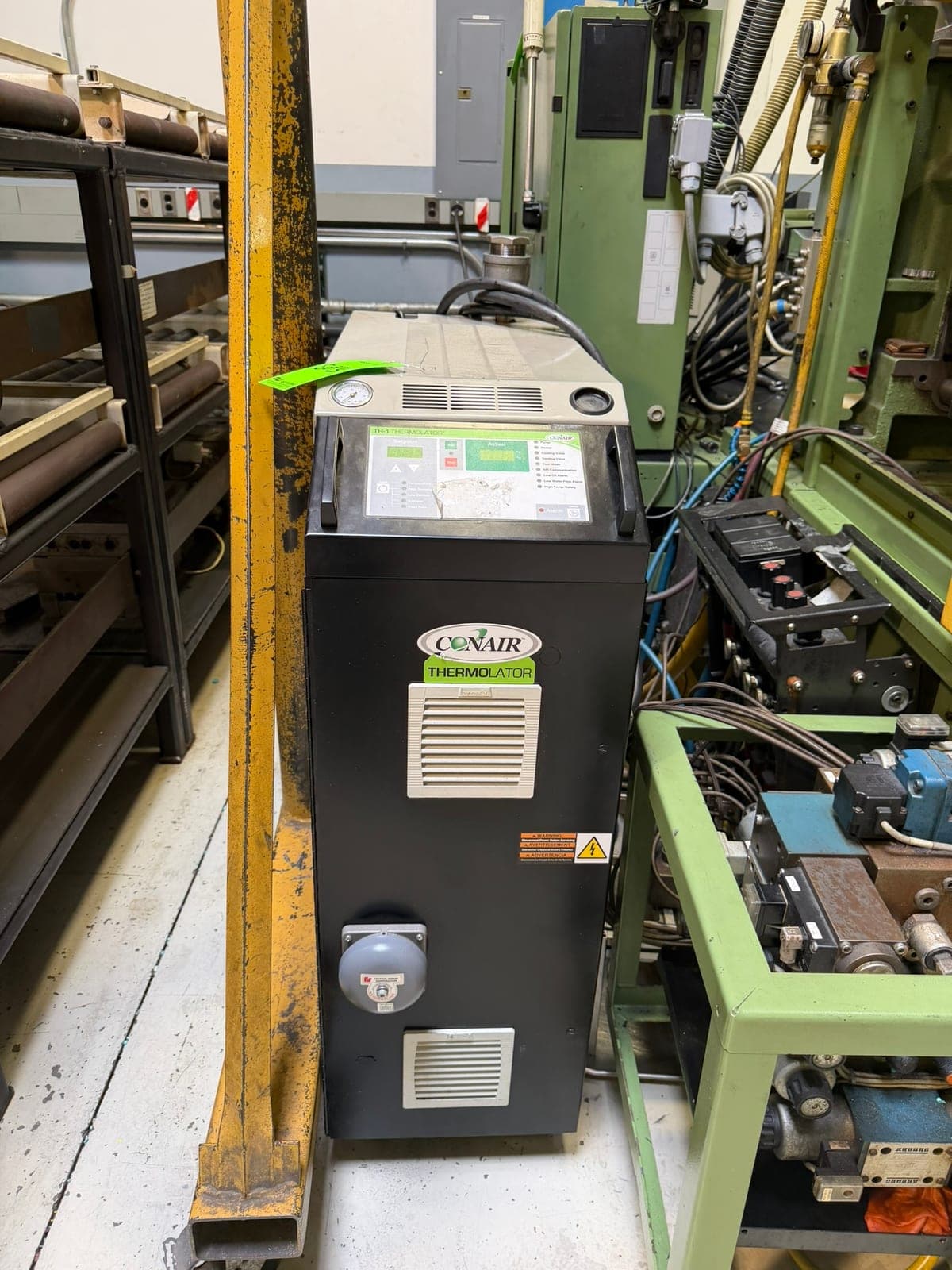
Lot 94
Conair Hot Oil Unit
Naperville, IL
Live auction · Tue, Oct 27, 10:00 AM CT
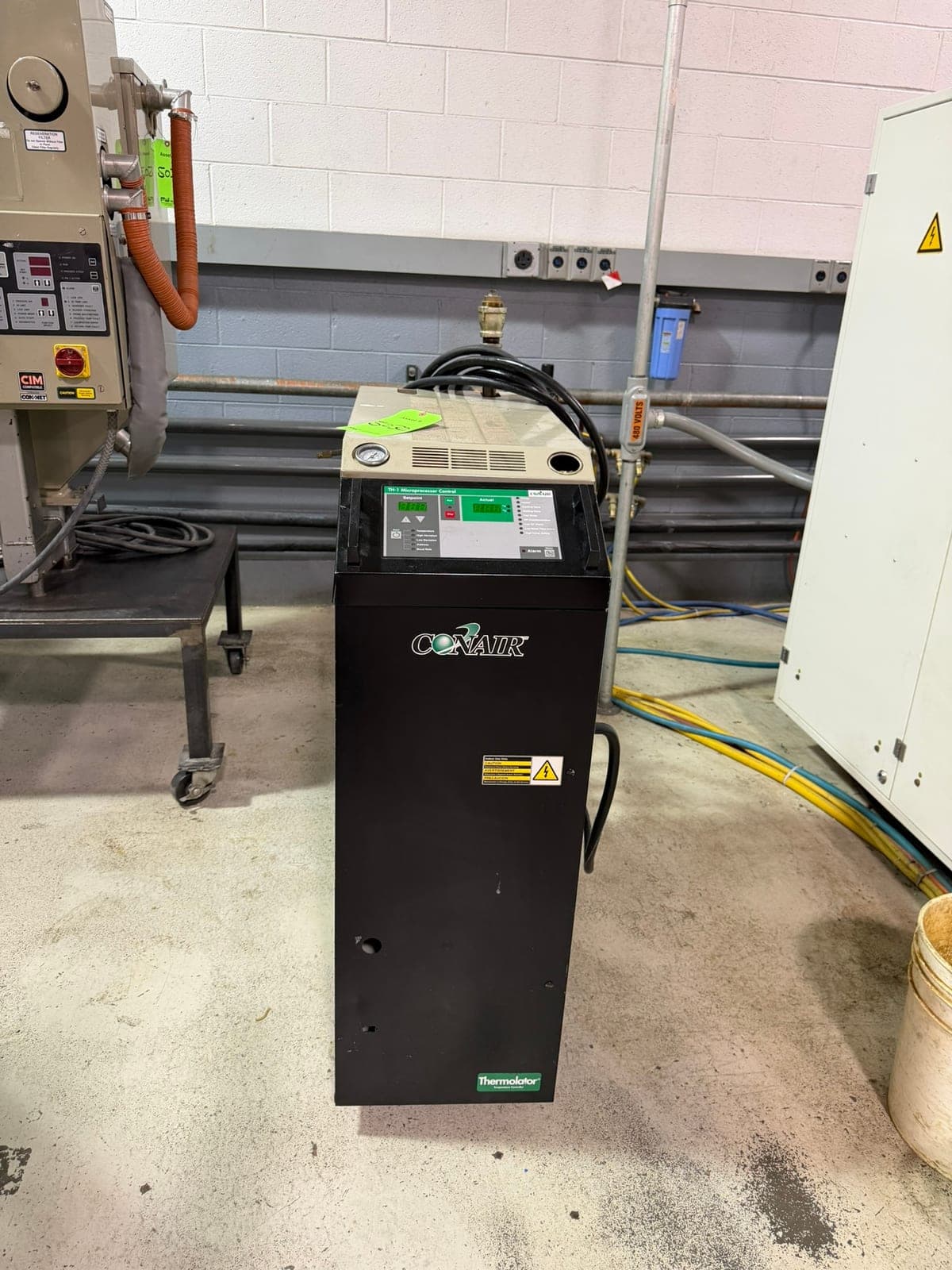
Lot 93
Conair Hot Oil Unit
Naperville, IL
Live auction · Tue, Oct 27, 10:00 AM CT
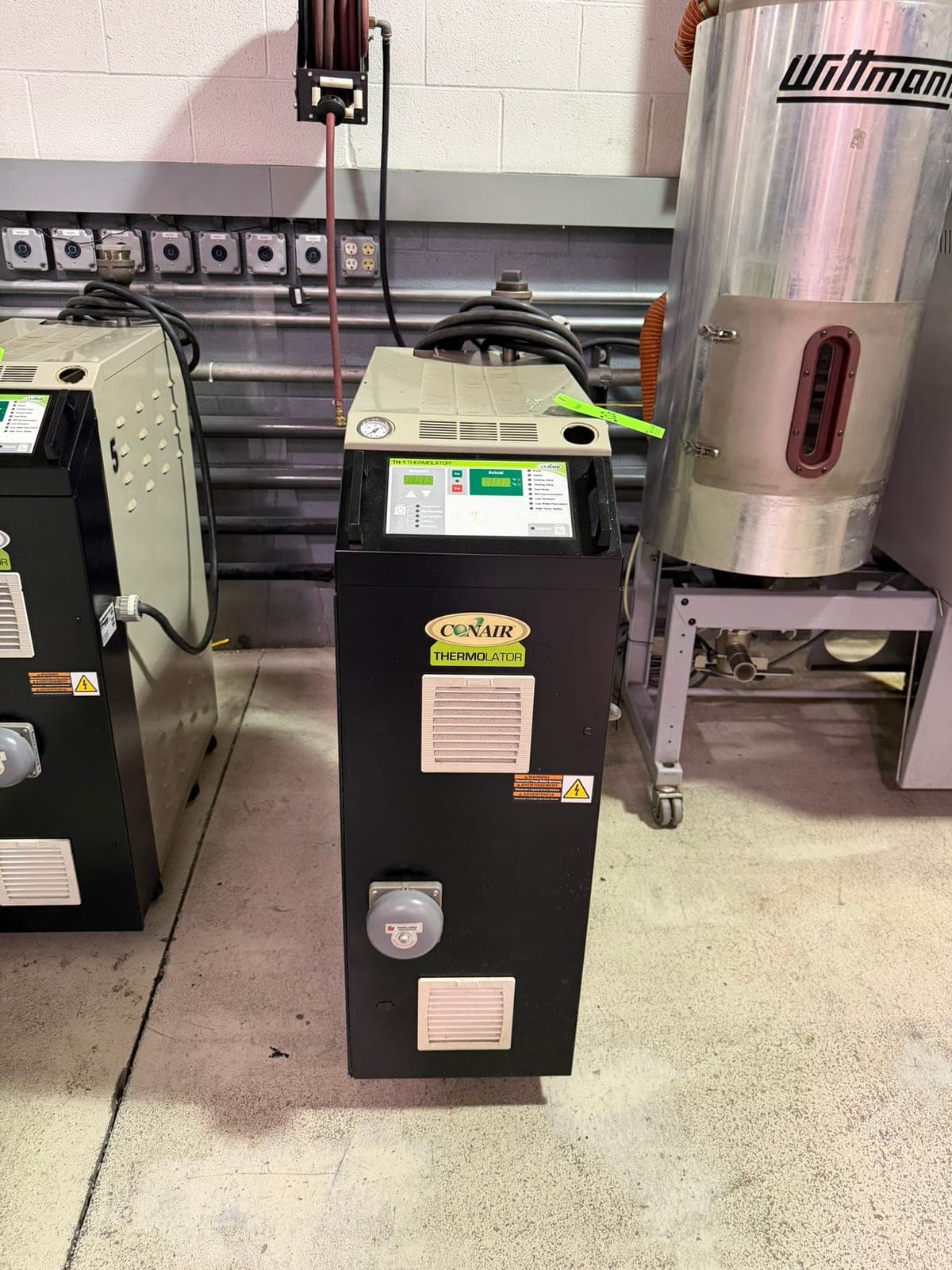
Lot 92
Conair Hot Oil Unit
Naperville, IL
Live auction · Tue, Oct 27, 10:00 AM CT
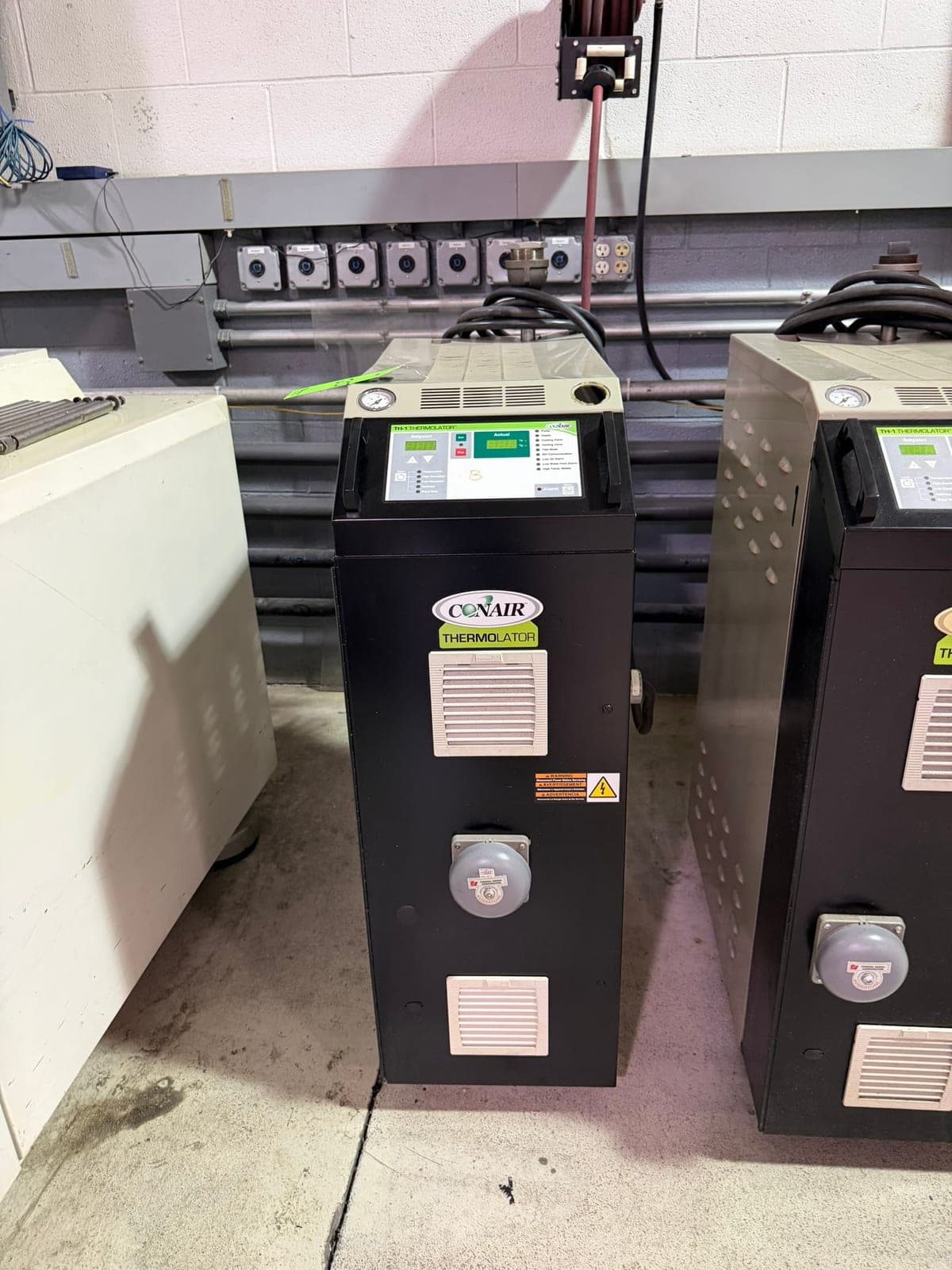
Lot 91
Conair Hot Oil Unit
Naperville, IL
Live auction · Tue, Oct 27, 10:00 AM CT
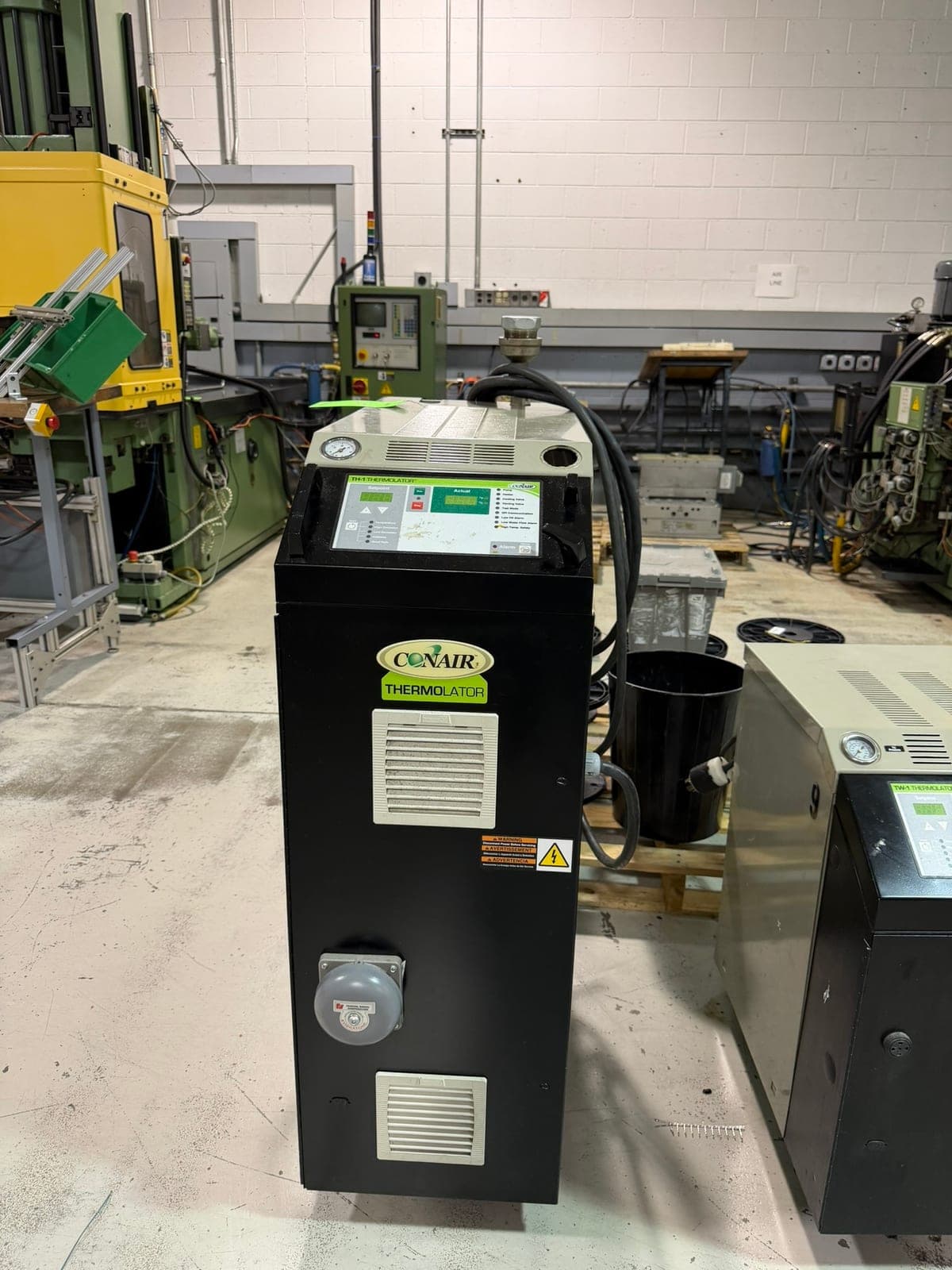
Lot 90
Conair Hot Oil Unit
Naperville, IL
Live auction · Tue, Oct 27, 10:00 AM CT
Looking for Something Specific?
Most of our inventory sells before we can list it online. If you need a specific brand, model, or specification, tell us what you need—we have access to unlisted equipment and machines coming in from plant closures.
Looking to Sell?
Meadoworks is an active cash buyer of used industrial equipment. Get a free valuation from our AMEA-certified appraisers.
About Used Hot Oil Units
A hot oil unit circulates heat-transfer oil through a mold, die or roll and holds a setpoint water cannot comfortably reach. The cabinet is a heater, a pump and a small reservoir, with a cooling exchanger for the pull-down. On the floor it is often called an oil thermolator. Most molding tools stay on water, up to about 250 F. Oil starts to make sense when the steel must sit hotter than that without turning the circuit into steam. Mokon builds oil systems in bands from about 400 F up to about 650 F. The nameplate, not the cabinet color, is the limit for the machine in front of you.
A single-zone cabinet is the common press-side package, one setpoint for one circuit. A dual-zone frame runs two temperatures when the cavity and the core must differ. Heater kilowatts set how fast a heavy mold climbs. Pump flow decides whether the far passage in the steel actually sees that heat. Fluid life is the quiet spec. Dark, burnt oil coats the heater and the passages, and a fresh fill does not repair a cracked element. The reservoir needs room for expansion, or heat-up pushes oil out the vent. Cooling water still has to be piped in if the mold must come back down. Mokon runs these loops at a fraction of the pressure saturated steam would need at the same temperature, which is the practical reason shops pick oil over a steam fitting.
The cabinet stands beside the press, in the spot a water unit would occupy, with short hoses to the tool. Water temperature controllers cover every mold that does not need oil. A portable chiller or a tower still throws heat out of the building. This cabinet only moves heat at the tool. Do not size it as if it were the plant chiller. Hoses, seals and the heater elements are what you will replace. The pump housing usually outlasts them. Putting oil in a water cabinet, or water in an oil cabinet, wrecks seals and can be dangerous on heat-up.
Consignment is the common path when a molder drops the hot tools and the cabinet no longer matches the work. Meadoworks offers a used hot oil unit from those cells. Inspection starts with the fluid color, the heater current and a pump that holds pressure, not with the paint. Write down the zone count and the maximum fluid temperature before the hoses are paired with a tool.
How to Choose a Used Hot Oil Unit
How to Size a Hot Oil Unit
Start from the mold, the setpoint and how fast you need to get there. A small tool that idles at 300 F can live on a modest heater. A large die that must climb every morning needs more kilowatts, and two setpoints need two zones or two cabinets. Pump flow has to push through the passages that were actually drilled, not just spin a motor. Then read the fluid limit on the plate. If the tool never needs to pass about 250 F, you want a water unit, not a larger oil cabinet. Cooling water has to be available for the exchanger when the cycle itself brings heat in. Voltage is usually 460, three phase. Burnt oil from the last owner is a flush and often a heater, so budget the time.
Oil Unit or Water Temperature Controller
Water is the everyday fluid up to about 250 F, and it is the right circuit for a normal mold. Oil is the fluid when the tool must run hotter than water can hold without a steam problem, which is common on some engineering resins, rubber and hot dies. An oil cabinet is slower to change temperature and it asks for hose and seals rated for the fluid. A water unit is simpler and it borrows cold water more directly. Neither replaces a chiller. If the job was only described as a thermolator, choose the fluid before you choose the cabinet. Putting oil in a water cabinet, or water in an oil cabinet, is how heaters and pumps get wrecked. A hot oil temperature controller is this cabinet, and a mold oil heater is the same machine.
Hot Oil Unit Specs to Compare
| Spec | Typical range | Why it matters |
|---|---|---|
| Heater size (kW) | Often 6–24 kW on press-side units | Sets how fast a heavy mold reaches setpoint and whether the unit can hold it once the resin arrives hot. |
| Maximum fluid temperature (F) | Often up to about 500 F | The plate, not the cabinet color, says whether this unit can hold the tool you actually run at setpoint. |
| Pump flow | Flow at the pressure of your oil passages matters more than the horsepower printed on the motor plate. | |
| Reservoir volume | Has to hold the expansion as cold oil heats, or the unit vents fluid onto the floor on the climb. | |
| Zones | 1, sometimes 2 | Two zones let the cavity and the core sit at different oil temperatures from one shared frame on the floor. |
| Supply voltage | Often 460 V, 3 phase | A voltage mismatch needs a different cabinet or a transformer before the heater can be connected and run. |
Heater size (kW)
Typical range: Often 6–24 kW on press-side units
Sets how fast a heavy mold reaches setpoint and whether the unit can hold it once the resin arrives hot.
Maximum fluid temperature (F)
Typical range: Often up to about 500 F
The plate, not the cabinet color, says whether this unit can hold the tool you actually run at setpoint.
Pump flow
Flow at the pressure of your oil passages matters more than the horsepower printed on the motor plate.
Reservoir volume
Has to hold the expansion as cold oil heats, or the unit vents fluid onto the floor on the climb.
Zones
Typical range: 1, sometimes 2
Two zones let the cavity and the core sit at different oil temperatures from one shared frame on the floor.
Supply voltage
Typical range: Often 460 V, 3 phase
A voltage mismatch needs a different cabinet or a transformer before the heater can be connected and run.
What to Inspect on a Used Hot Oil Unit
Read the oil color
Dark, sharp-smelling fluid has broken down and it coats heaters, so plan a flush before you trust the temperature.
Measure heater current
An element that draws no amps, or far less than the plate, will not climb no matter what the setpoint says.
Run the pump
A noisy pump, a leak at the seal or no pressure means the oil is not actually moving through the mold.
Check the expansion tank
A tank that was run overfull, or a vent packed with burnt oil, will push fluid out on the next heat-up.
Open the cooling exchanger
Scale on the water side leaves the mold hot after the cycle, even when the heater itself is healthy.
Inspect hoses and seals
Oil-soaked hoses and hardened seals are the leak you will find on the first night, and they are a fire risk.
Confirm zones and volts
Match zone count and nameplate voltage to the tool and the cell so a dual-zone frame is not wired as one.
Meadoworks Track Record
22
Sold through Meadoworks
5
Listed now
Makes we have handled most
Common models
Cincinnati Milacron EOTC-100C-EXT-SP, Conair HTR 1, Conair HTR1-500, Conair TC1-500
Related Equipment
- Thermolators & Temperature Controllers
Start here when the fluid is not chosen yet
- Water Temperature Controllers
The water units for molds under about 250 F
- Chillers & Cooling Towers
Plant cooling the oil unit borrows from
Hot Oil Units Brands We've Sold
Common Applications
Frequently Asked Questions
How do I size a hot oil unit for a hot mold?
Match heater kilowatts to the mold mass and the morning climb, not to press tonnage. A small tool can live on a modest cabinet. A large die that must reach setpoint before the shift needs more kilowatts, and two temperatures need two zones. Then match pump flow to the passages in the steel. Read the maximum fluid temperature on the plate and stay under it. If the tool never needs to sit above about 250 F, use a water unit. Voltage must match.
When should a mold move off water onto a hot oil unit?
When the setpoint sits above what a water circuit can hold, commonly treated as about 250 F on a molding floor. Engineering resins, some rubber tools and hot dies are the usual reasons. Below that, a water temperature controller is simpler, faster to pull down and easier to keep clean. An oil cabinet is not a better water unit. It is a different fluid with different hoses, seals and fire care. If the only word you have is thermolator, choose water or oil before you compare heaters.
What should I inspect on a used hot oil unit?
Look at the oil before you look at the paint. Dark, burnt fluid means a flush and often a coated heater. Measure heater current against the plate. Run the pump and watch for seal leaks and pressure. Check the reservoir vent and the cooling exchanger, because a unit that heats but cannot come back down is half a machine. Confirm zone count and voltage. Smell and hose condition tell you whether the last leak was ignored. Low oil is how elements fail.
Does a hot oil unit still need cooling water?
Yes, whenever the mold must come down or the resin itself is heating the steel. The exchanger in the hot oil unit borrows plant water to pull temperature back. Without that hookup the oil only climbs. The cooling water should be cooler than the setpoint and it should be on a hose that will not be kinked under the press. This does not make the unit a chiller. The chiller or the tower is still what throws heat out of the building.
Can one hot oil unit hold two mold temperatures?
Only if it is a dual-zone hot oil unit, with two pumps or two circuits and two setpoints. A single-zone cabinet will force the cavity and the core to share one number. Some tools need that split. Read the plate and look for a second controller before you assume the frame can do it. Two single-zone units side by side are the other answer, and they take more floor and more hoses. Do not tee one pump into two molds and hope.
What fluid belongs in a hot oil unit?
A heat-transfer oil rated for the temperature on the plate, not hydraulic oil and not water. The wrong fluid cracks, smells and coats the heater. Mixing water into an oil unit, or oil into a water unit, wrecks seals and can be dangerous on heat-up. If the last owner did not name the fluid, ask, and plan to flush if the color is already dark. Keep the reservoir at the mark. Running a hot oil unit low is how elements burn open.
