Used Vacuum Loaders for Sale
See all 22 Loaders, Hoppers & Conveying →
15 results

Wittmann Material Loader, New in 2025
USA

Wittmann Material Loader, New in 2025
USA

Wittmann Material Loader, New in 2022
USA

Wittmann Material Loader, New in 2022
USA

Wittmann Material Loader, New in 2022
USA

Wittmann Material Loader, New in 2019
USA

Wittmann Material Loader, New in 2019
USA

Wittmann Material Loader, New in 2019
USA

Wittmann Material Loader, New in 2019
USA

Wittmann Material Loader, New in 2019
USA

Wittmann Material Loader, New in 2019
USA

Wittmann Material Loader w/Conair Control, New in 2014
USA
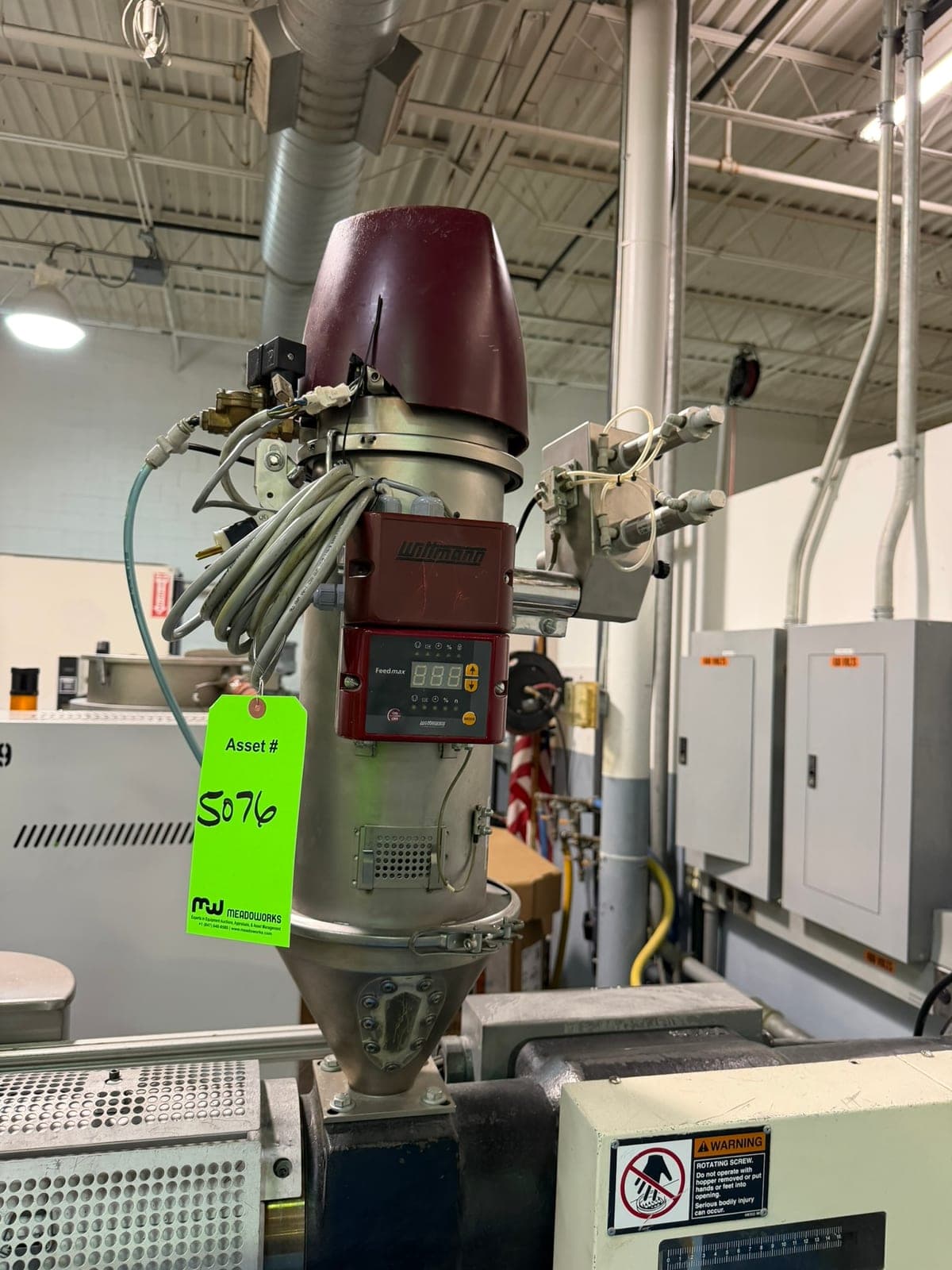
Lot 118
2008 Wittmann Hopper Loader
Naperville, IL
Live auction · Tue, Oct 27, 10:00 AM CT
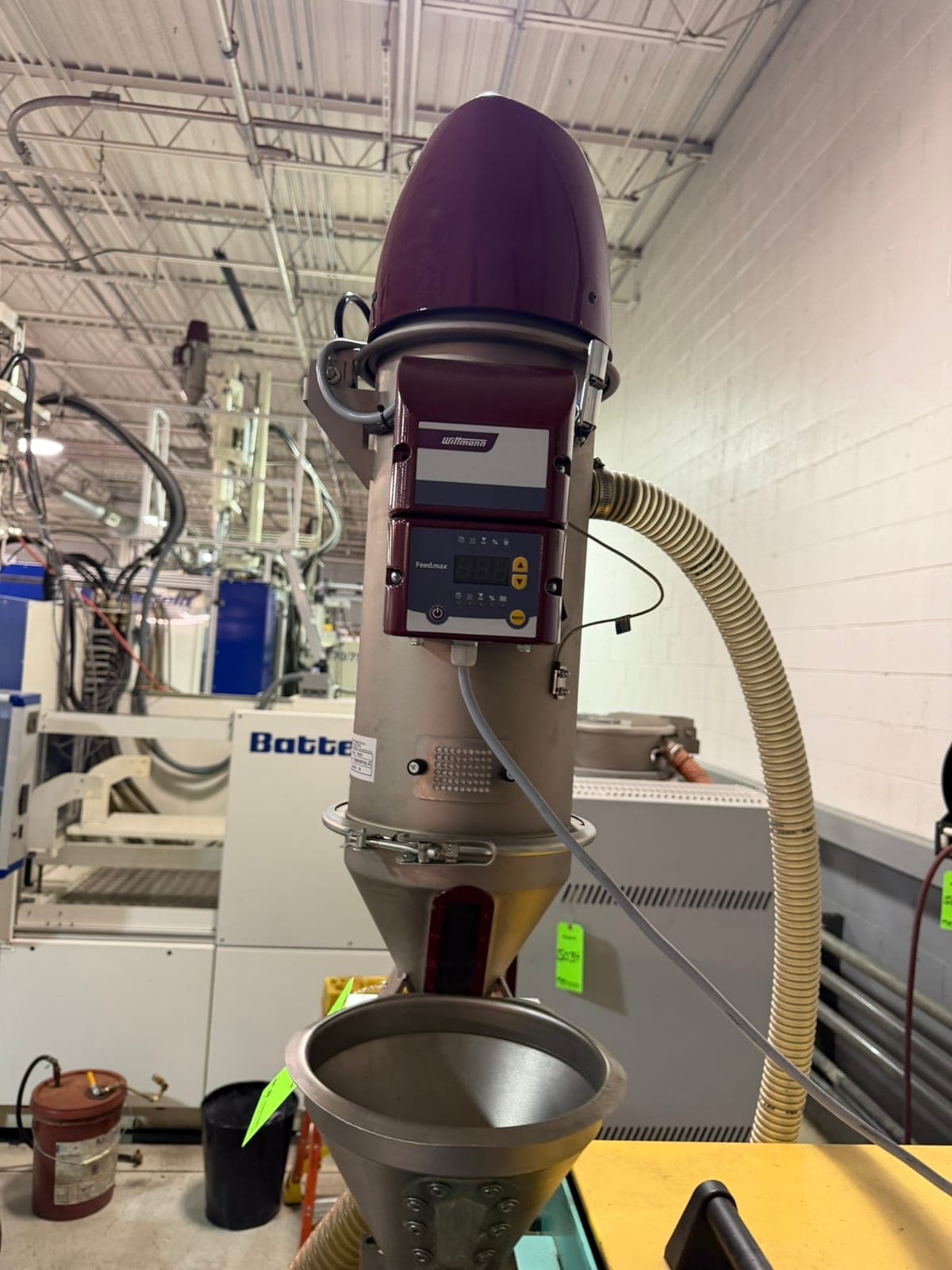
Lot 119
Wittmann Hopper Loader
Naperville, IL
Live auction · Tue, Oct 27, 10:00 AM CT
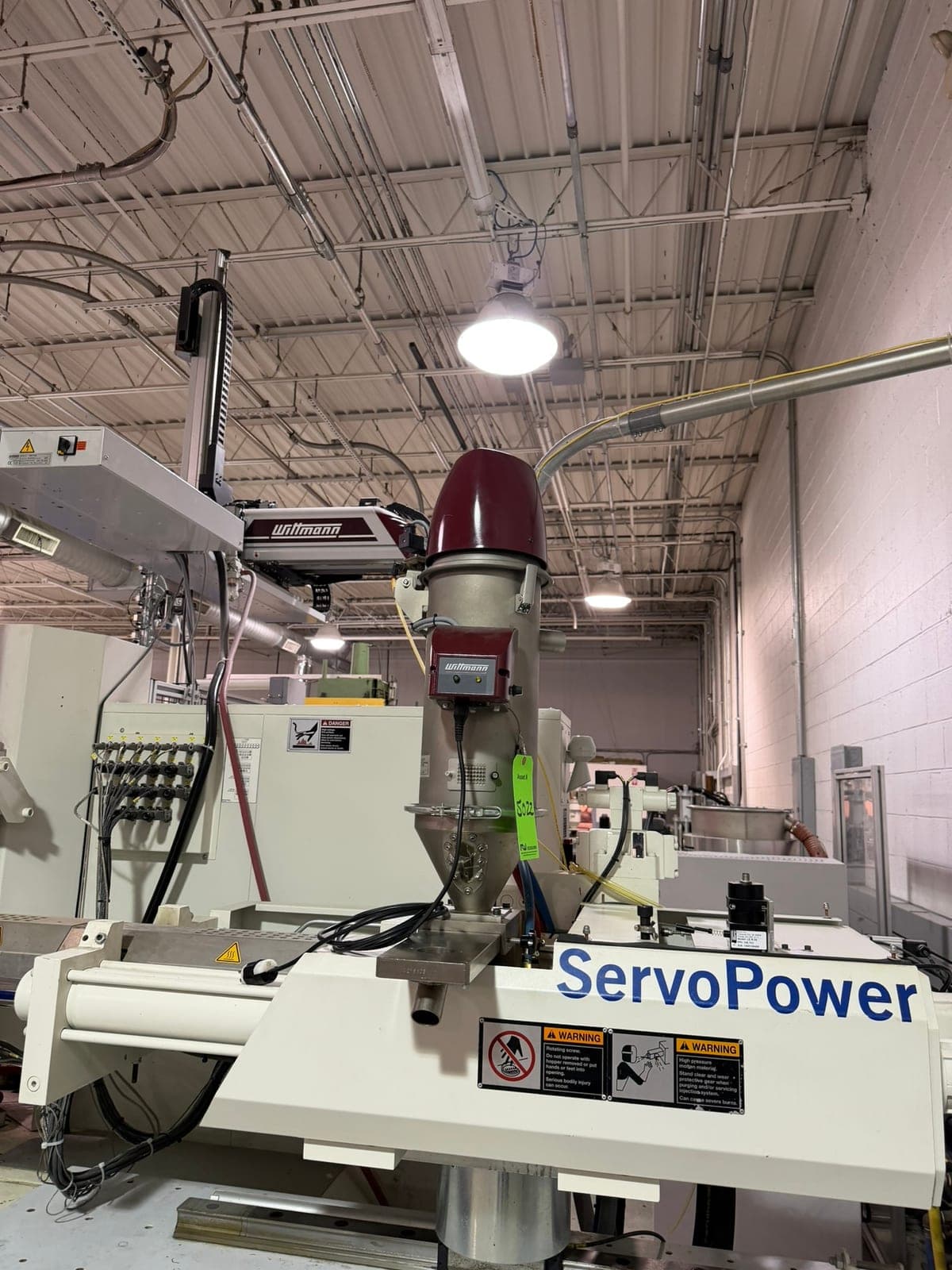
Lot 117
Wittmann Hopper Loader
Naperville, IL
Live auction · Tue, Oct 27, 10:00 AM CT
Looking for Something Specific?
Most of our inventory sells before we can list it online. If you need a specific brand, model, or specification, tell us what you need—we have access to unlisted equipment and machines coming in from plant closures.
Looking to Sell?
Meadoworks is an active cash buyer of used industrial equipment. Get a free valuation from our AMEA-certified appraisers.
About Used Vacuum Loaders
A vacuum loader is a press-side receiver with its own motor. It lifts pellets from a gaylord, a bin or a dryer up to the machine throat. It is not the central pump that serves a whole row of presses. Motor, filter and dump flapper live on the lid, and the body holds one charge until the vacuum breaks. Older nameplates call the same machine a material loader. Load time, dump time and a filter pulse are the whole cycle. Because the blower rides on the lid, one press can move to another bay without a new manifold.
Glass or steel bodies change how you watch the cycle. A clear body shows whether the flapper is dumping a full charge or a puff of dust. A proportioning lid adds a second inlet so regrind and virgin share one receiver. Cloth and disc filters blind faster on dusty regrind than a screen you can blow off. Conair's small self-contained lids are rated around 150 to 200 pounds an hour over about 20 to 50 feet, and the larger bodies toward 500 pounds an hour, with the warning that those rates assume virgin pellets and a short run. Hose diameter and vertical lift decide whether the nameplate is real. A unit that makes its rate across a flat floor can miss that rate at the top of a tall press with two elbows and a wand buried in a box. Three-phase motors belong on a plant bus. A small single-phase lid can sit on a light press.
The receiver sits on the drying vessel, or directly on the press throat when that vessel is the receiver itself. One pump and a valve at each station is the other way to move pellets, and it wins when many presses pull the same resins all day. Hoppers and surge bins are what the wand pulls from when it is not in a box. A gaylord tilter only aims the box. The lid still has to make the vacuum. Keep the hose short and the bends few. Every elbow is lost rate. The filter decides whether tomorrow's rate matches today's. Conair ships many of these lids with about 15 feet of hose, which is a useful reminder that a longer run is a different machine.
Meadoworks offers a used vacuum loader when a molder upgrades receivers and the old lids still run, separate from whole-plant auctions. Inspection starts with the motor brushes or bearings, the filter and the dump flapper, then a timed load on real pellets if power is available. Schedule it with the vessel it sits on when both move, so the lid and the cone stay a pair. Ask which hose length and inlet size were on the cell before you assume the nameplate rate.
How to Choose a Used Vacuum Loader
How to Size a Vacuum Loader
Ignore the brochure pounds per hour until you know the lift and the hose. A vacuum loader that makes its rate across ten feet on the floor can miss that rate at the top of a tall press with two elbows and a wand buried in a gaylord. Step the hose up before you step the motor up. A starved one-inch line will not be saved by a bigger blower. Then match the body volume to the press. The receiver should dump often enough that the throat never runs empty, but not so often that the motor never rests. Dusty regrind needs a filter you can clean every shift. Virgin pellets forgive a cloth filter longer. Voltage has to match the cell, three phase on most plant floors.
Self-Contained Loader or Central Conveying
A self-contained vacuum loader carries the blower, so the press is independent. You can roll the cell, unplug it and keep molding. The tradeoff is a motor and a filter on every press, and a room full of small blowers is louder than one pump in a closet. Central conveying uses one vacuum pump, a dust collector and a valve at each station. It wins when many presses pull the same resins all day and someone will maintain the manifold. It loses when one press changes color every hour and you do not want to purge a long line. Do not buy a central pump for a two-press shop. Do not hang twenty self-contained loaders in a plant that already has a pump room.
Vacuum Loader Specs to Compare
| Spec | Typical range | Why it matters |
|---|---|---|
| Throughput (lb/hr) | 150–500 lb/hr on a short hose | Nameplate rate assumes a short hose, and vertical lift plus elbows cut what the press actually receives each hour. |
| Motor (hp) | About 1 hp on many press lids | Has to make vacuum at the wand, not just spin, once the filter starts to load with dust. |
| Inlet hose (in) | Often 1.5–2 in | A line that is too small starves a strong motor, and a line that is too large will not keep velocity. |
| Filter style | Dusty regrind blinds a cloth filter and the loader looks weak when the motor on the lid is fine. | |
| Body volume | About 0.1–0.5 cu ft per dump | Sets how often the flapper cycles and whether the throat stays covered between dumps so the screw is fed. |
| Supply voltage | 115 V or 460 V, 3 phase | A single-phase lid will not land on a three-phase press circuit without a different motor or a transformer. |
Throughput (lb/hr)
Typical range: 150–500 lb/hr on a short hose
Nameplate rate assumes a short hose, and vertical lift plus elbows cut what the press actually receives each hour.
Motor (hp)
Typical range: About 1 hp on many press lids
Has to make vacuum at the wand, not just spin, once the filter starts to load with dust.
Inlet hose (in)
Typical range: Often 1.5–2 in
A line that is too small starves a strong motor, and a line that is too large will not keep velocity.
Filter style
Dusty regrind blinds a cloth filter and the loader looks weak when the motor on the lid is fine.
Body volume
Typical range: About 0.1–0.5 cu ft per dump
Sets how often the flapper cycles and whether the throat stays covered between dumps so the screw is fed.
Supply voltage
Typical range: 115 V or 460 V, 3 phase
A single-phase lid will not land on a three-phase press circuit without a different motor or a transformer.
What to Inspect on a Used Vacuum Loader
Run a timed load
Fill from a known box and time it, because a motor that spins can still miss rate once the hose goes vertical.
Open the filter
A packed cloth or a torn screen sends dust into the motor and makes a healthy blower look undersized.
Watch the dump flapper
A warped flapper leaks vacuum during the load and then dribbles pellets, so the throat level hunts.
Inspect motor brushes
Short brushes and a dry bearing are the usual end of a press-side motor, and they read as a weak load.
Check hose and wand
Crushed hose and a cracked wand leak vacuum at the gaylord, which no lid motor can overcome.
Read the nameplate volts
Match volts and phase to the press before the lid is bolted on, or the motor is the wrong machine.
Cycle the proportion valve
On a two-inlet lid, both gates have to open and seal, or regrind and virgin never reach the ratio you set.
Meadoworks Track Record
22
Sold through Meadoworks
15
Listed now
Makes we have handled most
Common models
Wittmann Material Loader, Conair DuraLoad - DL16 Vacuum Receiver, AEC-Whitlock 290696Q, Conair DuraLoad - DL8 Vacuum Receiver, Conair AR10
Related Equipment
- Hoppers & Bins
The vessel a loader fills or sits on
- Central Conveying
One shared pump instead of a motor per press
- Loaders, Hoppers & Conveying
Loaders, hoppers and tilters together
Vacuum Loaders Brands We've Sold
Common Applications
Frequently Asked Questions
How does hose length change vacuum loader throughput?
A vacuum loader nameplate assumes a short, straight hose. Add vertical lift, elbows and a wand in a gaylord and the same motor moves less resin. Step the hose diameter up before you buy a larger blower. A crushed inch-and-a-half line will not carry a two-inch rate. Time a real load at the height of your press, not on the floor beside the box. If the filter is dirty during that test, you measured the filter, not the motor.
Is a self-contained vacuum loader the same as central conveying?
No. A self-contained vacuum loader puts the blower on the receiver, so that press stands alone. Central conveying uses one pump, a dust collector and a station valve at each machine. The difference is where the vacuum is made. Pick the vacuum loader when cells move or colors change often. Pick the central pump when many presses pull the same resins all day and someone will keep the manifold tight. A crowd of small motors is the wrong plant if a pump room already exists.
What should I inspect on a used vacuum loader?
Run a timed load if you can. Then open the filter, watch the dump flapper and listen to the motor. Short brushes, a roaring bearing or a flapper that does not seal will miss rate even when the lid looks clean. Check the hose for flat spots and the wand for cracks. Read volts and phase. On a proportioning vacuum loader, cycle both inlets. A cloth filter full of regrind dust is a cleaning job. A torn filter is a motor full of fines. Ask what resin it last ran.
What is a material loader on a molding press?
A material loader is the shop name for a vacuum loader. Same lid motor, same filter, same flapper, same job of lifting pellets to the throat. Older nameplates say material loader. Newer ones say vacuum loader. Neither name means a central system. If the blower is on the lid, it is press-side. If the lid is only a receiver with a vacuum hose going to a pump room, you are looking at central conveying and the motor is somewhere else. Read the lid before you buy a second pump.
Why does a vacuum loader filter choke off?
Dust from regrind and angel hair from a long hose pack the cloth until the motor cannot pull. The vacuum loader still sounds like it is running. The charge just gets smaller every cycle. A screen you can blow off survives dusty scrap better than a thick cloth. A torn filter does the opposite and sends fines into the blower. Clean on a schedule, and do not wait for the throat to run empty. If the filter is clean and the rate is still low, look at hose lift.
Can a vacuum loader sit directly on the throat?
Yes. Many presses use the vacuum loader body as the only hopper, dumping straight into the feed throat. That works when the charge is small and the resin does not need hours of drying in a separate cone. It is a bad idea for nylon or PET that must sit in a drying hopper. In that cell the lid fills the drying hopper, and the hopper feeds the screw. Do not bolt a loader to the throat and skip the dryer the resin actually needs.
